
Finding winged termites indoors can be alarming, especially when several suddenly appear around windows, lights, floors, or doors. These insects are often termite swarmers, and their presence may indicate that a mature colony is nearby—or potentially inside the structure.
The good news is that seeing winged termites does not automatically mean your home has severe structural damage. The important part is knowing what you are looking at and what to check next. This guide explains how to identify winged termites, why they enter homes, what warning signs to look for, and when professional help makes sense.
In This Article
Winged Termites Indoors: What Does It Mean?
Winged termites are reproductive termites commonly called swarmers or alates. Their job is to leave an established colony, mate, and start new colonies when conditions are favorable.
Seeing one or two insects near an open door or window is different from finding dozens of termites or piles of shed wings inside your home. Repeated indoor sightings deserve attention because they can point to termite activity close to the structure or within it.
Termite swarmers are especially noticeable because they may suddenly appear in groups. Homeowners often find them around:
- Windows and windowsills
- Doors and door frames
- Light fixtures
- Floor areas near walls
- Wall openings
- Vents
- Crawl-space entrances
- Porches and attached structures
The insects may remain active for a relatively short period, then disappear. That does not necessarily mean the termite problem has disappeared.
What Are Termite Swarmers?
A mature termite colony eventually produces winged reproductive termites. When environmental conditions are right, these termites leave the colony in a process known as swarming.
Once they emerge, swarmers may be attracted to light. That is why you can sometimes find them clustered around windows, lamps, or other illuminated areas.
After landing, swarmers typically shed their wings. Those discarded wings can become one of the most useful clues that termites have been active nearby.
Finding several discarded wings indoors is more concerning than simply finding one flying insect.
Does Seeing Winged Termites Indoors Mean You Have an Infestation?
Not necessarily, but it should not be dismissed.
There are several possibilities:
- Swarmers entered from outside. They may have been attracted to indoor light after getting through a door, window, vent, or small opening.
- A termite colony is located close to the home. The insects may be emerging outdoors and moving toward the structure.
- Termite activity exists somewhere in the structure. Swarmers may emerge through cracks, wall voids, flooring, ceilings, or other concealed areas.
- An old termite problem has returned. Previous treatment does not guarantee that a structure will never experience termite activity again.
The number of insects, location, frequency of sightings, and presence of other termite evidence all matter.
Quick rule of thumb: One unexplained insect is worth identifying. Repeated sightings, numerous swarmers, or piles of discarded wings are worth investigating.
What Do Winged Termites Indoors Look Like?
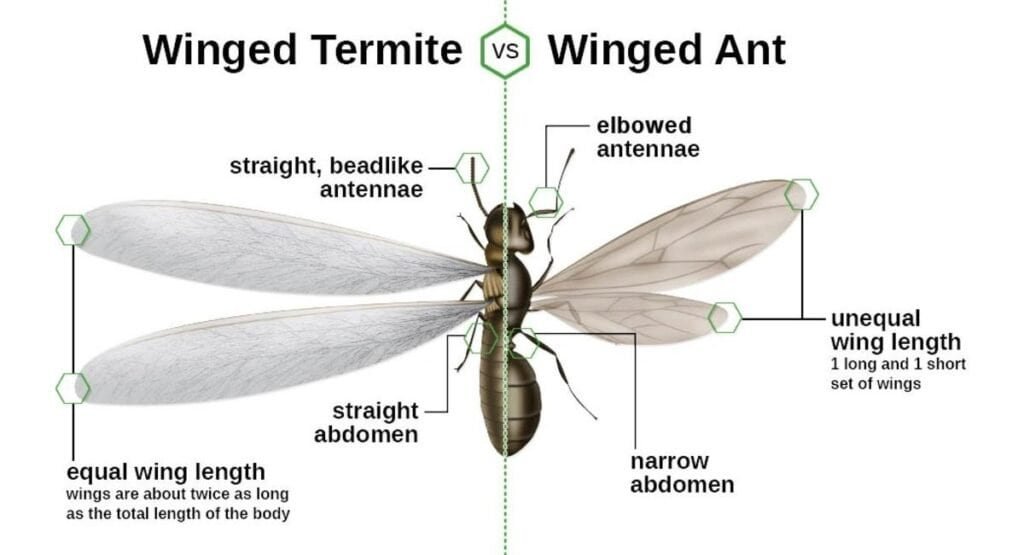
Correct identification is the first step because winged termites can look surprisingly similar to flying ants. The two insects behave differently and require very different approaches.
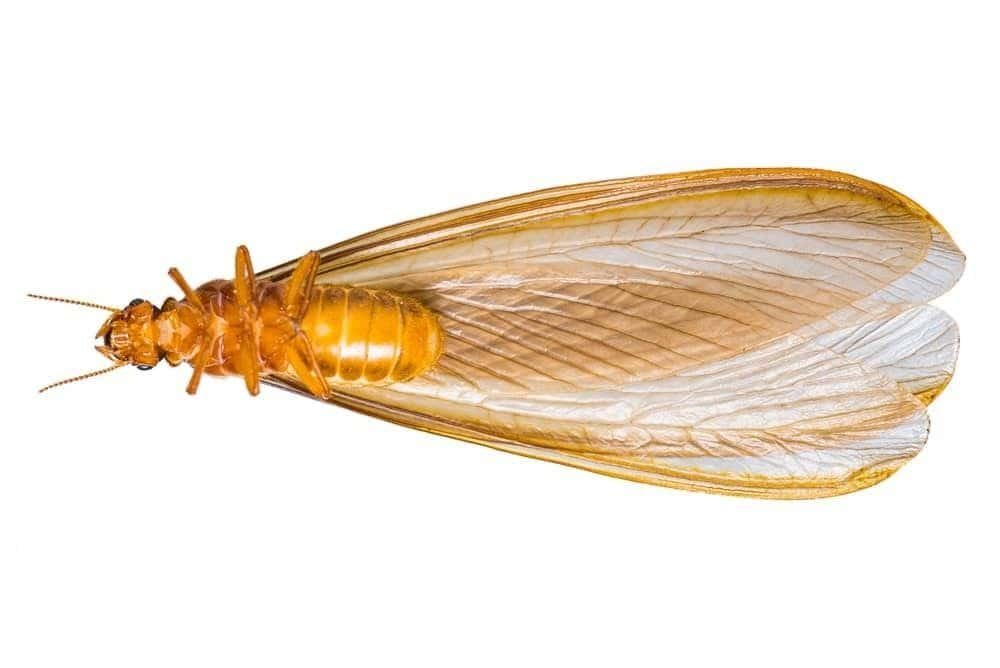
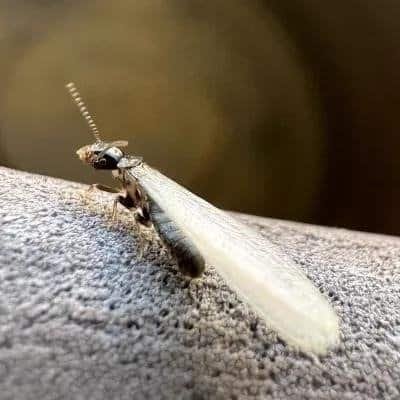
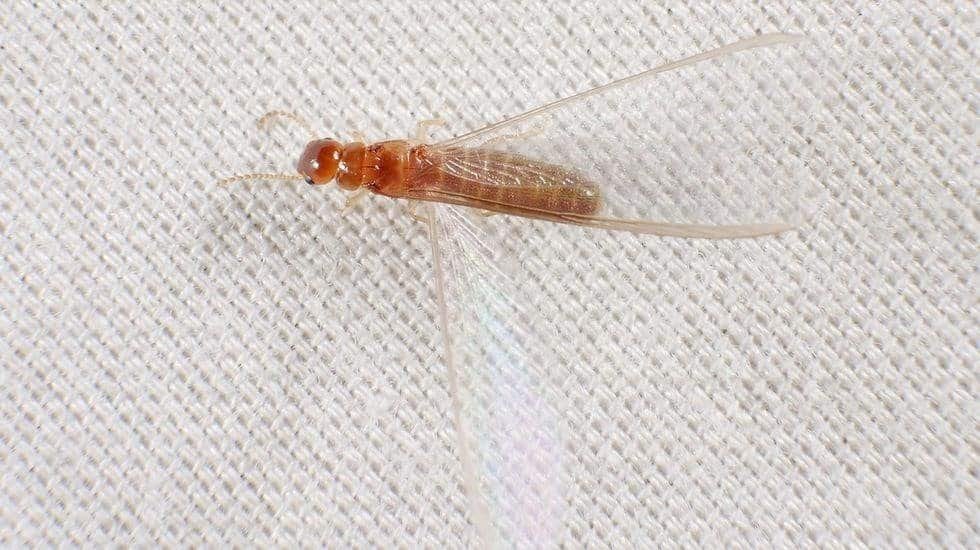
Winged termites generally have a soft, relatively uniform body with a broad waist. Their antennae are typically straight rather than sharply bent.
The wings provide another useful clue. Termite swarmers have two pairs of wings that are approximately equal in length. After swarming, the wings are often discarded, leaving small piles around windows or other areas where the insects gathered.
Key Features of Winged Termites
Look for these characteristics:
- Straight or relatively straight antennae
- Broad waist without a pronounced pinching
- Soft, fairly uniform body
- Two pairs of wings that are similar in length
- Wings that may extend well beyond the body
- Pale brown, tan, reddish-brown, or darker coloration depending on species
Individual termite species can look different, so color alone is not a reliable identification method.
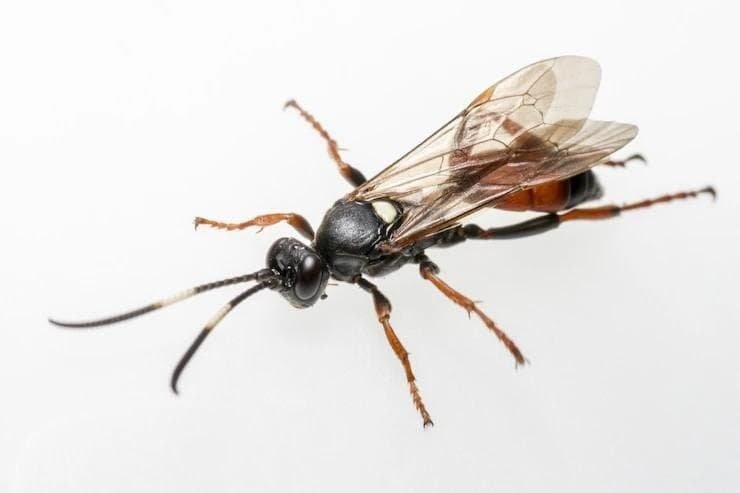
Winged Termites vs. Winged Ants
This is one of the most important comparisons to make when you discover flying insects indoors.
| Feature | Winged Termite | Winged Ant |
| Antennae | Straight | Elbowed |
| Waist | Broad and fairly uniform | Narrow and pinched |
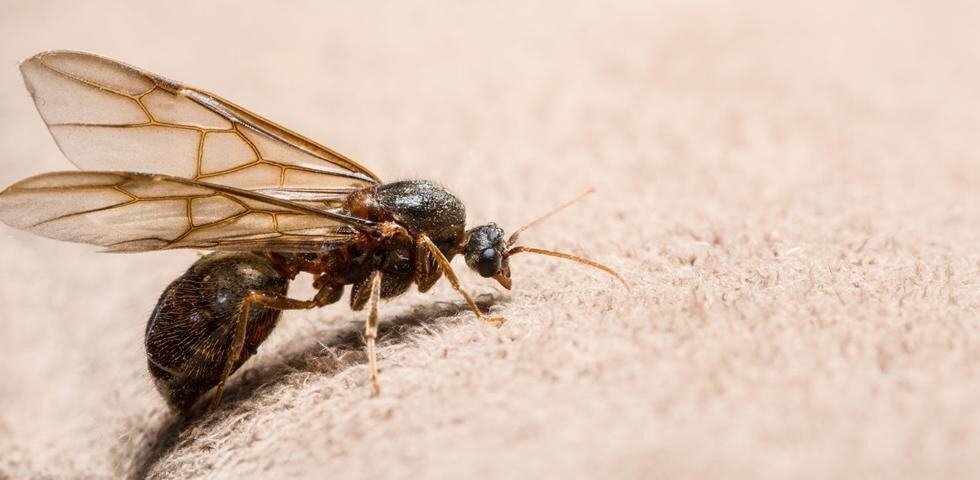
| Wings | Front and rear wings similar in length | Front wings longer than rear wings |
| Body | More uniform appearance | Distinct head, thorax, and abdomen |
| Typical wing loss | Wings may be shed after swarming | Wings may also be shed after mating |
| Identification clue | Straight antennae and broad waist | Bent antennae and narrow waist |
A close look at the antennae and waist is often more useful than simply judging the insect’s color.
Why Discarded Wings Matter
You may never get a good look at a live termite.
Swarmers can move quickly, and some homeowners simply notice what looks like a small pile of translucent insect wings near a window or light.
Those wings can provide an important clue.
Check for discarded wings around:
- Window tracks
- Windowsills
- Door thresholds
- Baseboards
- Light fixtures
- Floors near exterior walls
- Areas beneath wall openings
A sudden collection of identical shed wings indoors should not be ignored, particularly when you cannot explain where they came from.
What If the Insects Are Coming From a Wall?
This situation deserves more attention than insects simply flying through an open window.
If winged termites appear to emerge from a wall, ceiling, floor, baseboard, or another enclosed part of the structure, there could be a colony or termite activity in a concealed area.
Avoid immediately tearing into walls or removing wood to investigate. Document what you see and have the area evaluated if the activity continues.
Why Are Winged Termites Flying Inside Your House? 7 Common Causes
Understanding why winged termites come indoors helps you determine whether you are dealing with an occasional outdoor visitor or a more significant structural concern.
Several factors can bring termite swarmers into or around a home.
An Established Termite Colony May Be Nearby
The most important reason to investigate winged termites is that swarmers come from mature termite colonies.
A colony may be located in soil near the foundation, beneath a structure, inside wood, or somewhere else close enough for swarmers to reach the building.
The presence of swarmers does not tell you exactly where the colony is located. It does, however, tell you that reproductive termites are active somewhere nearby.
Repeated swarming around the same part of the home is a particularly useful clue.
Warm, Humid Conditions Can Trigger Swarming
Termite swarming is influenced by environmental conditions.
Warm temperatures, moisture, rainfall, and other seasonal conditions can create favorable circumstances for swarming. The exact timing varies by termite species and geographic region.
That means a homeowner may see a sudden increase in winged termites after a period of warm or humid weather.
Seasonal activity can make the problem seem to appear overnight, even though the underlying colony may have existed for much longer.
Indoor Lights Can Attract Swarmers
Light is another reason termite swarmers may end up inside.
If insects emerge outside near a building, they can move toward illuminated windows, doors, and other light sources. A small gap around a window or door may be enough for some insects to enter.
You may therefore find winged termites concentrated around the brightest area of a room rather than directly above the colony.
This is one reason location alone does not always reveal where the termites originated.
Termites May Be Entering Through Small Openings
Homes contain countless small gaps and penetrations.
Potential entry points include:
- Gaps around doors
- Window screens or damaged seals
- Cracks around foundations
- Utility penetrations
- Plumbing openings
- Vents
- Gaps around siding
- Openings around pipes and cables
Tiny houses can have many of the same vulnerabilities despite their smaller size.
Sealing unnecessary openings can help reduce insect entry, but it should not be treated as a substitute for investigating an established termite colony.
Moisture Can Create Favorable Conditions
Moisture is an important factor in many termite problems.
Pay particular attention to:
- Plumbing leaks
- Roof leaks
- Damp crawl spaces
- Poor drainage
- Condensation
- Wet framing
- Water collecting near the foundation
- Inadequate ventilation
A small leak under a sink may seem unrelated to termites, but persistent moisture can make nearby wood and surrounding areas more favorable for termite activity.
Fixing moisture problems is useful prevention, but it does not automatically eliminate an existing colony.
A Colony May Be Inside the Structure
Finding winged termites indoors becomes more concerning when they appear to originate from the building itself.
For example, you might notice swarmers emerging around:
- Baseboards
- Flooring
- Wall cracks
- Ceiling fixtures
- Window frames
- Door frames
- Wooden structural components
Repeated emergence from an enclosed area should prompt further investigation.
The same applies when you repeatedly find fresh piles of discarded wings in a room even after cleaning them up.
Previous Termite Activity May Still Be Present
A home that has experienced termite activity before deserves extra attention when winged termites reappear.
Previous treatment can reduce or eliminate termite activity, but new colonies can develop later or activity can occur in another part of the property.
Homeowners should keep records of previous inspections and treatments when available. Knowing where earlier activity was found can help narrow down areas that deserve another look.
A Quick Cause-and-Response Checklist
If you suddenly find winged termites indoors, ask yourself:
- How many did I see?
- Were they alive, or did I mainly find discarded wings?
- Where did I find them?
- Did they appear near a window or door?
- Have I seen them more than once?
- Are there moisture problems nearby?
- Can I see mud tubes, damaged wood, or other termite evidence?
- Has this property had termites before?
Those answers can help determine how urgently you need to investigate.
For small homes and tiny houses, pay particular attention to wood framing, under-floor areas, skirting, plumbing penetrations, and damp areas. Limited square footage does not make a structure immune to termite activity; it simply means problems can sometimes be easier to notice once you know what to look for.
Seeing Winged Termites Indoors? Do This Immediately
Finding winged termites indoors is a situation where a few simple steps can save you from overlooking an important warning sign. You do not need to panic, but you also should not assume the insects will disappear and take care of themselves.
Your first goal is evidence and identification, not trying to kill every insect you see.
Collect Evidence Before Cleaning Everything Up
Take clear photos of the insects, especially if you can capture their body shape, wings, and antennae.
If possible, keep a few specimens in a small sealed container or bag. Having an actual insect available can make identification much easier if you later need professional help.
Also photograph:
- Piles of discarded wings
- The exact location where you found the insects
- Any visible mud tubes
- Damaged or suspicious wood
- Cracks or openings where insects may be emerging
Do not immediately throw away all the evidence. A vacuum cleaner can remove visible swarmers, but it also removes clues that could help determine what is happening.
Check Where the Winged Termites Are Concentrated
Look at the area where you found the most insects.
If they are clustered around a window, they may have entered from outside. If you find them repeatedly emerging from a wall, floor, ceiling, or other structural area, the situation deserves closer attention.
Check nearby surfaces for:
- Shed wings
- Small holes
- Mud or soil-like tubes
- Cracked or blistered wood
- Unusual wood damage
- Moisture or water stains
The location of the insects does not prove where the colony is located, but it can provide useful clues.
Look for Moisture Problems
Inspect nearby plumbing, windows, ceilings, crawl spaces, and exterior drainage.
A leaking pipe or damp section of framing should be corrected even if termites are not ultimately responsible. Moisture problems can contribute to a variety of pest and structural issues.
For tiny homes, pay special attention to areas beneath sinks, around bathrooms, near water heaters, under the floor, and around exterior penetrations.
Remove Visible Swarmers, But Don’t Stop There
Once you have documented the evidence, you can vacuum visible termites and discarded wings.
That is reasonable for cleanup, but remember:
Killing the winged termites you can see does not necessarily eliminate the colony producing them.
Household insect spray may have the same limitation. It can kill exposed insects while leaving the underlying source untouched.
What Not to Do
Several common reactions can make it easier to miss the real problem.
Avoid these mistakes:
- Don’t assume the termites are harmless because they have wings.
- Don’t rely on household spray as the entire solution.
- Don’t immediately remove potentially damaged structural wood.
- Don’t seal every opening before determining where the insects are coming from.
- Don’t ignore repeated sightings after the swarmers disappear.
- Don’t confuse winged ants with termites.
A better approach is to document, identify, inspect, and then choose the appropriate response.
Where to Look for Signs of Termites After Finding Winged Termites Indoors
Once you’ve found winged termites inside, the next question is simple: Where should you look for additional evidence?
You do not need to dismantle your home. Start with accessible areas and work methodically.
Start With Windows and Doors
Windows and exterior doors are good places to begin because swarmers may be attracted to light and can enter through small gaps.
Check:
- Window tracks
- Sills
- Screen frames
- Door thresholds
- Door frames
- Trim around exterior openings
- Nearby baseboards
Look for discarded wings rather than only live insects.
A few wings near a window could indicate that outdoor swarmers entered through the opening. Fresh wings appearing repeatedly in the same area deserve more attention.
Check Baseboards and Flooring
Run a visual inspection along walls, particularly where floors meet baseboards.
Watch for:
- Small holes
- Crumbling wood
- Bubbling or distorted surfaces
- Unusual discoloration
- Mud-like material
- Areas that appear damp
- Repeated piles of discarded wings
Do not assume every damaged floorboard is termite damage. Water, age, poor installation, and other insects can create similar symptoms.
Inspect Crawl Spaces and Basements
Crawl spaces can provide ideal hiding places for termite activity because they may contain wooden framing and have elevated moisture levels.
If your home has an accessible crawl space or basement, look around:
- Floor joists
- Support posts
- Wooden beams
- Foundation areas
- Plumbing penetrations
- Damp insulation
- Areas with visible water intrusion
Do not enter an unsafe crawl space simply to investigate insects. Limited access, electrical hazards, structural concerns, mold, or standing water can make these areas unsuitable for casual inspection.
Check Attics and Ceiling Areas
Winged termites can sometimes appear near ceiling fixtures or upper-level windows.
Inspect accessible areas around:
- Roof leaks
- Wooden framing
- Ceiling penetrations
- Attic vents
- Chimneys
- Skylights
- Areas with previous moisture damage
A moisture problem in an attic should be corrected regardless of whether termites are eventually confirmed.
Look Around Plumbing and Utility Penetrations
Pipes, electrical lines, cables, and other utilities often create openings through walls, floors, and foundations.
These areas deserve attention because they can provide pathways into a structure.
Check around:
- Pipes beneath sinks
- Bathroom plumbing
- Water heaters
- HVAC penetrations
- Electrical service areas
- Cable and internet lines
- Exterior utility openings
Tiny homes can have a particularly high concentration of plumbing and utility penetrations because systems are packed into a small footprint.
Inspect Exterior Areas Too
Do not limit your investigation to the room where you found the swarmers.
Walk around the exterior of the home and look for:
- Mud tubes
- Wood touching or very close to soil
- Damp areas around the foundation
- Leaking outdoor faucets
- Poor drainage
- Decaying wood
- Wood debris
- Stumps or other cellulose material close to the structure
The exterior inspection can sometimes reveal conditions that are difficult to see from indoors.
Warning Signs You Shouldn’t Ignore
Some evidence deserves more attention than an isolated flying insect.
| Sign | Why It Matters |
| Several winged termites | May indicate active swarming nearby |
| Repeated sightings | Suggests the activity is not simply a one-time visitor |
| Fresh piles of wings | Indicates swarmers have emerged and shed their wings |
| Mud tubes | Can indicate subterranean termite activity |
| Damaged or hollow-sounding wood | May warrant closer inspection |
| Swarmers emerging from walls or floors | Potential indication of concealed activity |
| Moisture near suspected activity | Can create favorable conditions |
| Previous termite history | Makes recurring activity more important to investigate |
No single sign proves the location or size of a termite colony. The combination of several signs is much more useful.
Winged Termites Indoors vs. Winged Ants: How to Tell the Difference
One of the easiest mistakes to make is assuming every small flying insect with wings is a termite.
Winged ants and winged termites can look remarkably similar, particularly when they are moving quickly or viewed from a distance. Correct identification matters because finding a few flying ants does not carry the same implications as discovering termite swarmers inside a building.
The easiest way to distinguish them is to examine the antennae, waist, wings, and body shape.
Look at the Antennae First
Termites generally have relatively straight antennae.
Winged ants have elbowed or bent antennae, with a noticeable angle between segments.
This is one of the quickest identification clues when you have a clear view of the insect.
Check the Waist
A termite has a broad, relatively uniform connection between the thorax and abdomen.
An ant has a noticeably narrower, pinched waist.
This difference can be easier to see in a photograph than with the naked eye.
Compare the Wings
Winged termites have two pairs of wings that are generally similar in size and shape.
Winged ants have unequal wing pairs, with their front wings typically longer than their rear wings.
Termite swarmers also commonly shed their wings after landing, so piles of similarly sized wings can be an important clue.
Winged Termite vs. Winged Ant Comparison
| Identification Feature | Winged Termite | Winged Ant |
| Antennae | Straight | Bent or elbowed |
| Waist | Broad | Narrow and pinched |
| Front wings | Similar length to rear wings | Longer than rear wings |
| Body shape | More uniform | Clearly segmented |
| Appearance | Often soft-bodied | More defined, hardened body |
| Indoor significance | May indicate termite activity | Usually indicates an ant colony or outdoor activity |
Why Correct Identification Matters
Treating the wrong insect can waste time and money.
For example, spraying flying insects around a window may remove what you can see without addressing a colony elsewhere. Conversely, assuming every winged insect is a termite can create unnecessary concern.
If the insects are difficult to identify, save a specimen or take several close photographs before disposing of them.
A professional pest inspection can also help distinguish termite activity from other insects and determine whether there is evidence of an established colony.
What Most People Get Wrong
A common mistake is focusing entirely on the wings.
Wing color and body color can vary, and lighting can make identification even harder. The combination of antennae, waist, wing proportions, and overall body shape is much more reliable than color alone.
That simple distinction can prevent a lot of unnecessary guesswork when you discover winged insects inside your home.
Are Winged Termites Indoors a Sign of an Infestation?
Finding winged termites indoors can be a warning sign, but it does not automatically tell you how large a termite problem is or exactly where the colony is located.
The most useful clues are the number of swarmers, frequency of sightings, location, discarded wings, and other evidence of termite activity. Looking at all of these together gives you a much clearer picture than focusing on a single insect.
One Termite vs. Many Termites
An isolated winged insect near an open window may have simply entered from outside.
Finding dozens of swarmers inside the home is a different situation.
Repeated activity is particularly important. If you clean up the insects today and discover another group several days or weeks later, the recurring pattern deserves investigation.
Pay closer attention when you notice:
- Multiple winged termites in one room
- Swarmers appearing on different days
- Fresh piles of shed wings
- Termites emerging from walls or flooring
- Mud tubes near the foundation
- Damaged or hollow-sounding wood
- Termites appearing near moisture problems
The more signs you find together, the stronger the reason to investigate professionally.
Do Discarded Wings Mean You Have Termites in the House?
Not necessarily, but they are an important clue.
After swarming, reproductive termites commonly shed their wings. You may find those wings even when the live insects are gone.
A few isolated wings near an open window could have come from outdoor swarmers. A substantial or recurring collection of wings inside the home is more concerning.
Pay attention to where the wings appear and whether new ones show up after cleaning.
What If Winged Termites Are Coming From the Wall?
This is one of the situations that should not be casually dismissed.
If you actually see swarmers emerging from a wall, floor, ceiling, baseboard, or another enclosed structural area, there may be termite activity concealed behind or beneath the visible surface.
Do not start opening walls or removing structural components yourself just to find the source.
Instead:
- Photograph the activity.
- Record the exact location.
- Look for additional evidence nearby.
- Check for moisture problems.
- Arrange an inspection if the activity continues or appears to originate from the structure.
A Simple Risk Checklist
Use this quick checklist after discovering winged termites:
Lower concern, but still worth identifying:
- One or two insects
- Found near an open door or window
- No discarded wings
- No repeated sightings
- No other signs of termites
Higher concern:
- Many swarmers indoors
- Repeated sightings
- Fresh piles of shed wings
- Swarmers emerging from a structural area
- Mud tubes
- Suspicious wood damage
- Moisture problems near the activity
- Previous termite activity at the property
This checklist cannot diagnose an infestation, but it can help you decide whether further investigation is warranted.
How to Get Rid of Winged Termites Indoors
Getting rid of winged termites indoors is not simply a matter of killing the insects flying around your room.
The visible swarmers are reproductive termites. They are a symptom of a larger colony or nearby activity, not usually the entire problem.
The most effective approach is to identify the source and address the colony or conditions supporting it.
Step 1: Confirm What You’re Seeing
Before buying treatment products, make sure the insects are actually termites.
Compare their:
- Antennae
- Waist
- Wing proportions
- Body shape
Save a specimen or take close-up photographs if identification is uncertain.
Misidentifying flying ants as termites can lead to unnecessary treatment, while misidentifying termite swarmers as harmless flying insects can delay action.
Step 2: Find Where the Swarmers Are Appearing
Pay attention to where the insects first appear.
Are they:
- Around a window?
- Near an exterior door?
- On a bathroom floor?
- Around a light fixture?
- Coming from a baseboard?
- Emerging near plumbing?
- Appearing from a wall or ceiling?
The pattern can help determine whether insects are likely entering from outside or emerging somewhere within the structure.
Step 3: Investigate Moisture and Structural Conditions
Look for conditions that may contribute to termite activity.
Check for:
- Leaking pipes
- Roof leaks
- Damp crawl spaces
- Poor drainage
- Wet framing
- Condensation
- Water collecting around the foundation
Correcting moisture problems is an important part of protecting a home, although drying out an area does not by itself eliminate an established termite colony.
Step 4: Get a Professional Termite Inspection When Warranted
A professional inspection can help determine whether there is active termite evidence and where treatment may be necessary.
This becomes especially valuable when:
- Swarmers repeatedly appear indoors
- You find many insects
- Wings accumulate inside
- You see mud tubes
- Wood appears damaged
- Insects seem to emerge from structural areas
- The property has a history of termites
A good inspection should look beyond the room where you noticed the insects.
Step 5: Treat the Underlying Termite Problem
Treatment depends on the termite species, location, colony, construction of the home, and extent of activity.
Common professional approaches can include:
- Liquid termite treatments
- Termite bait systems
- Localized treatment
- Treatment of identified entry points
- Moisture and structural corrections
There is no single treatment that is appropriate for every termite situation.
The important distinction is that treatment should focus on the source of the activity, not just the swarmers visible inside.
Step 6: Monitor After Treatment
Seeing fewer swarmers after treatment is encouraging, but ongoing monitoring can help identify new activity.
Continue watching for:
- Fresh wings
- New swarmers
- Mud tubes
- Wood damage
- Activity around previous problem areas
Keep documentation of inspections and treatments when possible. This can be useful if the problem returns or if you eventually sell the property.
What About Killing Winged Termites With Spray?
Household insecticide can kill exposed insects, but it generally does not address the colony itself.
Think of it this way:
Visible swarmers = the symptom.
The colony = the underlying problem.
Spraying the symptom may make the room look better temporarily while leaving the source untouched.
Vacuuming is perfectly reasonable for cleanup after documenting the insects. Just don’t mistake cleanup for termite control.
Can You Get Rid of Winged Termites With Home Remedies?
Home remedies can help with cleanup and prevention, but they should not be confused with methods that reliably eliminate an established termite colony.
If you find winged termites indoors, your first priority should be identifying what is happening rather than experimenting with multiple household treatments.
Which DIY Methods Actually Help?
| Method | Kills Visible Termites? | Eliminates Colony? | Best Use |
| Vacuuming | Yes | No | Removing visible insects |
| Household insect spray | Sometimes | Usually no | Temporary control of exposed insects |
| Removing shed wings | No | No | Cleanup and monitoring |
| Fixing leaks | No | No | Correcting moisture conditions |
| Improving drainage | No | No | Reducing moisture around the structure |
| Sealing gaps | No | No | Reducing insect entry |
| Professional termite treatment | Yes | Designed to target termite activity | Addressing an infestation |
Vacuuming Winged Termites
Vacuuming is one of the simplest ways to remove visible swarmers.
It is useful because it:
- Removes insects quickly
- Avoids unnecessary spraying indoors
- Makes cleanup easier
- Allows you to keep the area under observation afterward
Vacuum the insects and shed wings after you have documented the activity.
Don’t assume an empty floor means the problem is solved.
Using Household Insect Spray
Spray can kill termites that are directly exposed to it, but it generally does not reach concealed colonies.
Using more product is not necessarily better. Excessive indoor pesticide use can create its own problems, especially in small, poorly ventilated spaces.
If you use any pesticide product, follow the label exactly and make sure it is specifically approved for the intended indoor use.
Fixing Moisture Problems
Moisture control is one of the most practical steps homeowners can take.
Look for leaks and drainage issues around:
- Plumbing
- Roofs
- Gutters
- Downspouts
- Foundations
- Bathrooms
- Crawl spaces
Fixing these problems can make the structure less favorable to moisture-related pest issues and can also help protect wood from deterioration.
Still, moisture correction is prevention, not a substitute for termite treatment when an active colony is present.
Sealing Entry Points
Once you’ve investigated the source, sealing unnecessary openings can help reduce future insect entry.
Check:
- Window screens
- Door seals
- Foundation cracks
- Utility penetrations
- Gaps around pipes
- Exterior vents
This is particularly useful for small homes where exterior openings can be concentrated around a relatively compact structure.
The Biggest DIY Mistake to Avoid
The most common mistake is treating only what you can see.
You might vacuum 50 swarmers from a room and feel like you’ve solved the problem. If those swarmers originated from an established colony, however, the colony remains.
Use DIY methods for cleanup, observation, moisture control, and basic prevention. Use professional evaluation when the evidence points toward an established termite problem.
That approach is usually more practical—and far less frustrating—than repeatedly fighting the insects that happen to show up on the surface.
How to Prevent Winged Termites From Coming Back Indoors
Preventing winged termites indoors starts with making your home less attractive and less accessible to termite colonies. Prevention cannot guarantee that termites will never appear, but it can reduce conditions that encourage activity and make warning signs easier to spot.
The most useful strategy combines moisture control, structural maintenance, reduced wood-to-soil contact, and regular monitoring.
Fix Leaks and Moisture Problems Quickly
Inspect areas where water can accumulate or remain hidden.
Pay particular attention to:
- Leaking plumbing
- Roof leaks
- Damaged gutters
- Poorly directed downspouts
- Standing water near the foundation
- Damp crawl spaces
- Condensation around pipes or HVAC equipment
- Wet or decaying wood
A small leak that goes unnoticed for months can create much bigger problems than one that is repaired promptly.
Improve Drainage Around the Home
Water should move away from the structure rather than collect against it.
Check whether soil, landscaping, gutters, or downspouts are directing water toward the foundation.
Keep the area around the structure reasonably dry and avoid creating places where wood or other cellulose materials remain constantly damp.
Keep Wood and Debris Away From the Structure
Firewood, lumber, cardboard, fallen branches, and other cellulose materials can provide food or shelter for termites.
Avoid storing unnecessary wood directly against the home.
Also inspect old stumps, buried wood, and decaying landscaping materials close to the structure.
Maintain Crawl-Space Ventilation and Access
Crawl spaces should not become forgotten areas of the home.
Periodically check accessible areas for:
- Excess moisture
- Plumbing leaks
- Wet insulation
- Damaged wood
- Mud tubes
- Poor drainage
- Standing water
Never enter a crawl space that appears unsafe.
Seal Unnecessary Openings
Check gaps around doors, windows, pipes, cables, and utility penetrations.
Sealing these openings can reduce opportunities for insects to enter, although it is important to remember that sealing an opening does not eliminate termites already established inside the structure.
Monitor During Swarming Periods
Termite swarming varies by species and region, so there is no single national date when every homeowner should expect swarmers.
Still, seasonal awareness can help.
During periods when termite activity is more likely in your area, keep an eye out for:
- Flying termites
- Shed wings
- Mud tubes
- New wood damage
- Repeated activity around windows and doors
Early detection is much easier than discovering a problem after significant damage has occurred.
Special Considerations for Tiny Houses
Small homes and tiny houses have less total space, but that does not make them immune to termites.
Compact construction can actually make moisture and wood components especially important to monitor.
Pay particular attention to:
- Under-floor framing
- Trailer or foundation areas
- Skirting
- Plumbing penetrations
- Bathroom floors
- Areas beneath sinks
- Water heaters
- Exterior wood trim
- Utility connections
A practical tiny-house maintenance routine should include checking for moisture and pest evidence at the same time.
When Should You Call a Termite Professional?
Not every winged insect requires an emergency pest-control visit. Repeated or substantial winged termite activity indoors, however, deserves professional attention.
The goal of an inspection is not simply to confirm that termites exist. A useful inspection should help determine where activity is occurring, what type of termite may be involved, and whether there is evidence of structural damage.
Call Promptly If You Notice These Signs
Professional evaluation is especially sensible when you notice:
- Large numbers of winged termites indoors
- Repeated swarming
- Fresh piles of discarded wings
- Swarmers emerging from walls, floors, or ceilings
- Mud tubes
- Wood that appears damaged or unusually hollow
- Persistent moisture near suspected termite activity
- Previous termite activity at the property
One or two insects near an open window are not necessarily evidence of an established infestation. The overall pattern matters.
What Should You Ask During an Inspection?
Don’t be afraid to ask specific questions.
A useful conversation can include:
- What species of termite is this?
- Where does the evidence suggest the activity is located?
- Is there evidence of structural damage?
- Could moisture be contributing to the problem?
- What treatment options are appropriate?
- What areas need to be monitored afterward?
- How will future termite activity be detected?
Getting clear answers can make it easier to compare treatment options rather than choosing a solution based solely on price.
Common Mistakes People Make After Finding Winged Termites Indoors
Finding flying insects inside can trigger a quick reaction, but several common mistakes can make the situation harder to understand.
Assuming the Problem Is Gone When the Swarm Ends
Termite swarming may stop, leaving the homeowner with an empty room.
That does not prove the colony has disappeared.
The end of visible swarming is not the same thing as confirmation that termite activity has ended.
Killing Every Insect Without Documenting Them
Cleaning up is fine, but take photographs first.
A close-up image can help with identification, while the location and number of insects can provide useful information during an inspection.
Confusing Winged Ants With Termites
This mistake can go in either direction.
A homeowner may panic over harmless outdoor ants, or they may dismiss genuine termite swarmers as ants.
Check the antennae, waist, and wing proportions before deciding what you are dealing with.
Treating Only the Room Where You Found Them
Termites do not necessarily stay in the room where they become visible.
If swarmers appear in a bedroom, the source could potentially be elsewhere in the structure.
Look at nearby structural areas and consider the entire building rather than focusing only on the visible insects.
Using Excessive Pesticide
More insecticide does not automatically mean better termite control.
Spraying every visible insect may provide temporary relief while leaving the colony untouched.
Use pesticide products only according to their labels and intended applications.
Ignoring Moisture
A persistent leak, damp crawl space, or drainage problem should not be overlooked.
Even when termites are ultimately ruled out, correcting excess moisture can protect the structure and reduce other pest problems.
Frequently Asked Questions About Winged Termites Indoors
Are winged termites indoors a bad sign?
They can be. Winged termites are reproductive swarmers, and finding multiple swarmers indoors, especially with discarded wings or other termite evidence, can indicate termite activity in or near the structure. One insect near an open window is less conclusive.
Why are winged termites suddenly flying in my house?
Termite swarmers leave mature colonies when environmental conditions are favorable. Warmth, moisture, seasonal conditions, and nearby colonies can contribute to sudden swarming. Indoor lighting may also attract swarmers that enter through doors, windows, or small openings.
Do winged termites mean I have termites in my walls?
Not necessarily. Swarmers can enter from outdoors, but insects repeatedly emerging from walls, ceilings, floors, or other structural areas are more concerning. Additional evidence is needed to determine where the colony is located.
How do I get rid of winged termites in the house?
Vacuuming can remove visible swarmers, but it does not eliminate the underlying colony. The better approach is to identify the insects, look for additional termite evidence, investigate moisture and entry points, and arrange a professional inspection when activity is repeated or substantial.
How can I tell winged termites from flying ants?
Winged termites generally have straight antennae, a broad waist, and two pairs of wings that are similar in length. Flying ants have elbowed antennae, a narrow waist, and front wings that are typically longer than their rear wings.
Do winged termites bite humans?
Winged termites are not considered a significant biting threat to people. Their presence indoors is more important as a possible indicator of termite activity than as a direct danger to household members.
Will winged termites go away on their own?
The visible swarm may stop naturally, but that does not prove the underlying colony is gone. If you repeatedly find swarmers or discarded wings indoors, investigate further even after the insects disappear.
Should I vacuum winged termites indoors?
Yes, vacuuming is a practical way to remove visible swarmers after you have photographed or otherwise documented the activity. Just remember that cleanup removes the insects you can see; it does not necessarily address the colony.
What attracts winged termites into a house?
Light can attract swarmers toward windows and illuminated areas, while small openings can allow them inside. Moisture and nearby termite colonies can also contribute to indoor activity.
Can winged termites damage a house?
The winged swarmers themselves are not usually the primary source of structural damage. The greater concern is the mature termite colony from which they came. Depending on the species and circumstances, an established colony can damage wood and other cellulose-containing structural materials.
When should I call a termite professional?
Consider professional evaluation when you find numerous swarmers, repeated indoor activity, piles of shed wings, mud tubes, suspected structural damage, or insects emerging from walls or floors. Professional help is also worthwhile when you cannot confidently identify the insects.
For additional general information about termites and other household pests, the U.S. Environmental Protection Agency’s pest-control resources are a useful starting point.
Finding winged termites indoors does not automatically mean your home has extensive damage, but it is a sign worth taking seriously. Identify the insects, preserve evidence, check for discarded wings and other warning signs, and investigate moisture or structural conditions that could be contributing to the activity.
Most importantly, don’t focus only on killing the termites you can see. The real question is where the swarmers came from and whether an established colony is nearby.
If you’ve found several winged termites, keep the evidence, document exactly where they appeared, and arrange an inspection when the signs point to possible indoor activity. Catching a termite problem early can make the situation much easier to manage.
