
Tiny spiders showing up in your home can feel unsettling—especially when they seem to appear out of nowhere. If you’re searching for how to get rid of tiny spiders, you’re not alone. This is one of the most common household pest concerns, particularly in bathrooms, ceilings, and small living spaces.
The good news? You don’t need expensive treatments or harsh chemicals to solve it. With the right approach, you can eliminate tiny spiders quickly and prevent them from coming back.
This guide will walk you through:
- Fast, effective removal methods
- Natural and chemical solutions that actually work
- The real reasons tiny spiders keep appearing
- Smart prevention strategies—especially for small homes and tight spaces
In This Article
Quick Answer: How to Get Rid of Tiny Spiders Immediately
Need a fast solution right now? Here’s a simple, effective plan you can follow in minutes:
The 3-Step Quick Fix
- Remove visible spiders and webs immediately
Use a vacuum with a hose attachment to clean ceilings, corners, and hidden edges. This eliminates both spiders and their egg sacs. - Spray a natural repellent
Mix water with a few drops of peppermint or vinegar and spray around windows, corners, and entry points. - Reduce their food source
Tiny spiders stick around because they’re feeding on small insects. Eliminate bugs, and spiders will disappear too.
When to Act Fast
- Multiple spiders appearing daily
- Webs forming overnight
- Spiders in bathrooms or near beds
What Are Tiny Spiders in Your Home? (Identification Guide)
Not all tiny spiders are the same. Understanding what you’re dealing with helps you choose the right solution.
Common Types of Tiny Household Spiders
- Baby spiders (spiderlings)
Often appear in clusters after hatching. Usually harmless but alarming due to numbers. - Small species like cobweb spiders
Found in corners, ceilings, and behind furniture. Known for messy, irregular webs. - Jumping spiders (juveniles)
Tiny, fast-moving, and curious. Typically harmless and don’t build webs.
Where You’ll Usually Find Them
- Ceiling corners and light fixtures
- Bathroom walls and near drains
- Behind furniture and appliances
- Closets, storage areas, and basements
Are Tiny Spiders Dangerous?
Most tiny spiders found indoors in the U.S. are harmless and non-aggressive. Bites are rare and usually occur only when provoked.
Important insight: Tiny spiders are more of a nuisance than a threat—but their presence often signals another issue, like hidden insects or excess moisture.
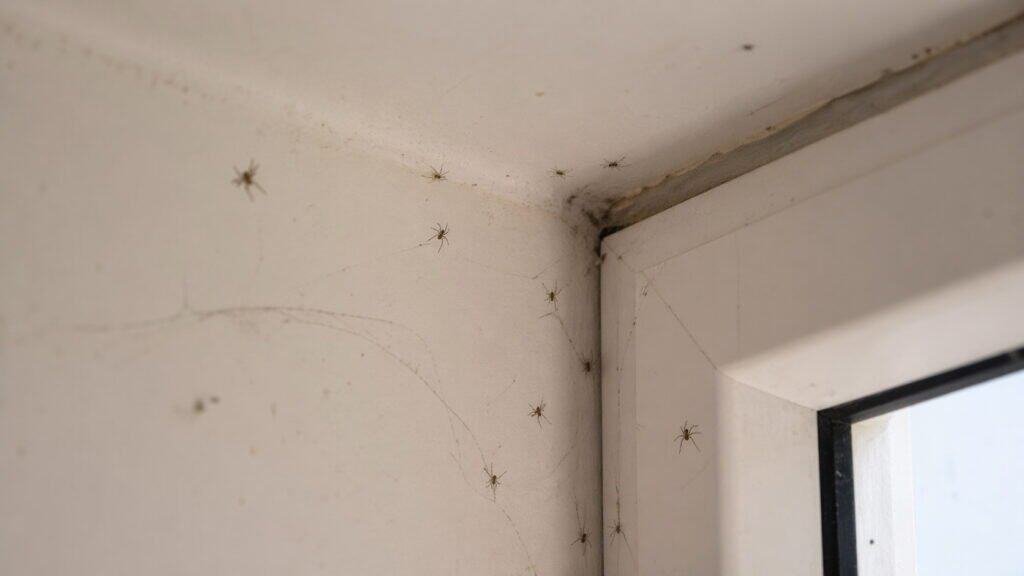
Top Causes: Why You Have Tiny Spiders Indoors
Understanding why tiny spiders are in your home is the key to getting rid of them permanently.
Hidden Food Sources (The #1 Reason)
Spiders feed on insects. If you have:
- Gnats
- Flies
- Ants
- Mosquitoes
…you’re essentially providing a steady food supply.
No bugs = no spiders.
Moisture and Humidity Problems
Bathrooms, kitchens, and basements create ideal conditions for both insects and spiders.
Common triggers:
- Leaky pipes
- Poor ventilation
- Damp corners and walls
Clutter and Undisturbed Spaces
Spiders love areas that aren’t frequently cleaned:
- Storage boxes
- Closets
- Under furniture
These spaces provide safe hiding spots and web-building zones.
Easy Entry Points
Tiny spiders can slip through:
- Window gaps
- Door frames
- Wall cracks
- Air vents
Even the smallest opening is enough.
Seasonal Changes and Breeding Cycles
Spider activity often increases:
- During warmer months
- When eggs hatch indoors
- When outdoor conditions push them inside
How to Get Rid of Tiny Spiders Naturally (Safe DIY Methods)
Natural solutions work surprisingly well for tiny spiders—especially if you’re dealing with light to moderate activity. They’re also ideal for homes with kids, pets, or limited ventilation, like apartments and tiny houses.
Vinegar Spray (Simple and Effective)
White vinegar disrupts spiders’ sensory receptors.
How to use:
- Mix equal parts water and white vinegar
- Spray along baseboards, corners, and window frames
- Reapply every 2–3 days for best results
Heads up: Vinegar has a strong smell initially, but it fades quickly.
Essential Oils Spiders Hate
Spiders avoid strong scents, making essential oils a powerful natural repellent.
Best options:
- Peppermint oil (most effective)
- Tea tree oil
- Eucalyptus oil
- Lavender oil
How to apply:
- Add 10–15 drops to a spray bottle with water
- Spray entry points, ceilings, and bathroom corners
Pro tip: Soak cotton balls in peppermint oil and place them in hidden areas like closets or under sinks.
Citrus-Based Repellents
Spiders dislike citrus scents.
- Rub lemon or orange peels along windowsills and baseboards
- Use citrus cleaners in problem areas
Decluttering & Deep Cleaning Checklist
Natural methods only work if your home is clean enough to remove hiding spots.
Weekly checklist:
- Vacuum ceilings, corners, and under furniture
- Wipe down walls and baseboards
- Remove unused boxes and clutter
- Clean behind appliances
Key insight: Clean spaces give spiders nowhere to hide or build webs.
Pros and Cons of Natural Methods
| Method | Pros | Cons |
| Vinegar spray | Cheap, easy, effective | Strong smell initially |
| Essential oils | Smells good, safe | Needs frequent reapplication |
| Citrus solutions | Non-toxic, simple | Mild effectiveness |
Best use case: Prevention and mild infestations.
How to Get Rid of Tiny Spiders Fast (Step-by-Step Action Plan)
When you want results quickly, you need a structured approach. This plan targets spiders, their eggs, and the root cause.
Step 1: Vacuum Everything Thoroughly
Focus on:
- Ceiling corners
- Behind furniture
- Under beds and sofas
- Closets and storage areas
Important: Empty the vacuum immediately to prevent spiders from escaping.
Step 2: Eliminate Their Food Source
Spiders stay where food exists.
- Use insect traps for gnats and flies
- Clean crumbs and food residue
- Fix fruit fly or ant issues
No insects = no reason for spiders to stay.
Step 3: Seal Entry Points
Block how they’re getting in.
- Use caulk for cracks and gaps
- Install weather stripping on doors/windows
- Repair torn screens
Even tiny openings matter.
Step 4: Apply Targeted Repellents
Choose based on your preference:
- Natural sprays (peppermint, vinegar)
- Commercial spider repellents
Focus on:
- Entry points
- Corners and ceilings
- Bathroom and kitchen edges
Step 5: Monitor and Repeat
Consistency is what makes this work.
- Reapply treatments every few days
- Check for new webs daily
- Adjust based on activity level
Result: Most homes see a noticeable reduction within 3–7 days.
Best Products to Kill or Repel Tiny Spiders (What Actually Works)
Sometimes DIY methods aren’t enough—especially for recurring problems. The right products can speed things up significantly.
Spider Sprays vs. Insecticides
| Type | Best For | Notes |
| Spider sprays | Direct killing + repelling | Works on contact |
| Insecticides | Long-term control | Also kills other bugs |
Tip: Choose products labeled for indoor use and safe for pets if needed.
Sticky Traps (Low Effort, High Insight)
Sticky traps don’t just catch spiders—they show you where activity is highest.
- Place along walls, under furniture, and in closets
- Check every few days
- Helps identify hidden hotspots
Ultrasonic Repellents: Do They Work?
Short answer: Not reliably.
- Mixed results in real-world use
- May work temporarily, but not a long-term solution
Better alternative: Combine physical cleaning + chemical or natural repellents.
What to Look for in a Good Spider Product
- Long-lasting effect (residual protection)
- Safe for indoor use
- Targets both spiders and insects
- Easy application (spray or trap)
Where Tiny Spiders Hide (Don’t Miss These Spots!)
You can clean all day and still miss the real problem if you don’t check the right places. Tiny spiders prefer quiet, dark, and undisturbed areas—exactly where most people rarely look.
High-Risk Hiding Spots
- Ceiling corners and light fixtures
Warm air rises, making these spots ideal for web-building. - Behind furniture and appliances
Sofas, refrigerators, and washing machines create perfect sheltered zones. - Bathroom drains and under sinks
Moisture attracts insects, which attracts spiders. - Closets and storage boxes
Especially areas with cardboard, fabric, or clutter. - Window frames and blinds
Easy access to the outdoors means more insect traffic.
Hidden Areas Most People Forget
- Under bed frames
- Inside rarely used cabinets
- Behind wall decor or frames
- Around baseboards and floor edges
Quick check tip: If you haven’t cleaned a spot in weeks, there’s a good chance spiders have noticed it.
How to Spot Active Spider Zones
Look for:
- Fresh webs (clean, sticky appearance)
- Tiny black or white specks (droppings)
- Egg sacs (small, round, silk-covered bundles)
Key insight: Finding webs is more important than finding spiders—it tells you where they live.
Common Mistakes That Make Tiny Spider Problems Worse
Many people try to get rid of tiny spiders but unknowingly make the situation worse. Avoid these common missteps.
Only Killing Visible Spiders
Seeing one spider and eliminating it feels productive—but it solves almost nothing.
Reality: Dozens more may be hiding nearby.
Ignoring Webs and Egg Sacs
Webs aren’t just mess—they’re home base.
- Egg sacs can release dozens of baby spiders
- Leaving webs intact invites spiders to return
Fix: Always remove webs completely, not just the spider.
Not Addressing Other Bugs
Spiders follow food. Ignoring insects guarantees spiders will come back.
- Fruit flies in the kitchen
- Gnats in bathrooms
- Ants along baseboards
Important: Treat the ecosystem, not just the spider.
Overusing Chemicals Without Fixing the Cause
Spraying repeatedly without cleaning or sealing entry points wastes time and money.
- Temporary results
- Potential health concerns in small spaces
Skipping Regular Cleaning
Tiny spiders thrive in neglected areas.
- Inconsistent cleaning = recurring infestations
- Dust and clutter = hiding spots
How to Prevent Tiny Spiders from Coming Back
Getting rid of tiny spiders is only half the job. Keeping them away requires a simple but consistent system.
Weekly Prevention Routine (Simple & Effective)
- Vacuum corners, ceilings, and under furniture
- Wipe down surfaces and baseboards
- Remove clutter and unused items
- Check for new webs
Consistency beats intensity.
Control Moisture and Humidity
Spiders love damp environments.
Easy fixes:
- Use exhaust fans in bathrooms
- Fix leaks immediately
- Open windows for ventilation when possible
- Consider a dehumidifier in problem areas
Seal Your Home Properly
Block access before spiders get inside.
- Seal cracks in walls and floors
- Add weather stripping to doors
- Repair window screens
Even tiny gaps can let spiders in.
Outdoor Maintenance Matters Too
What’s outside affects what gets inside.
- Keep plants and bushes trimmed away from walls
- Reduce outdoor lighting near entrances (attracts insects)
- Clear debris near the foundation
Pro-Level Prevention Tips
- Use peppermint oil spray weekly as a barrier
- Place traps in hidden areas for monitoring
- Rotate cleaning zones to avoid missed spots
Related Issues in Small Homes & Tiny Houses
Tiny spiders rarely show up alone. In many cases, they’re a symptom of a bigger indoor ecosystem issue—especially in compact living spaces.
Why Tiny Spiders Are More Noticeable in Small Spaces
- Less square footage means more visibility
- Webs appear quickly in tight corners
- Fewer hiding places for pests → more activity in open areas
The Connection Between Spiders and Other Pests
Spiders follow food. If you’re seeing them, there’s a strong chance you also have:
- Gnats around sinks or drains
- Fruit flies in the kitchen
- Ant trails along baseboards
Smart move: Solve the insect problem first to eliminate spiders long-term.
When Spiders Signal a Bigger Problem
- Constant spider sightings despite cleaning
- Increase in flying or crawling insects
- Activity concentrated in one area (like bathrooms)
That usually points to moisture issues, hidden food sources, or structural gaps.
If you’re noticing spiders in specific areas, it helps to go deeper:
- Learn how to handle tiny spiders on ceilings for targeted cleaning strategies
- Deal with moisture-related pests in your guide on tiny bugs in the bathroom
How Tiny Spiders Affect Small Spaces, Tiny Homes, and Minimalist Living
Tiny homes and compact apartments bring unique challenges when it comes to pests—including spiders.
Faster Spread in Compact Environments
In a small space:
- One egg sac can affect the entire home
- Spiders move easily between rooms
- Problems escalate faster than in larger houses
Cleanliness Feels More Critical
In a tiny home, even a single web can make the space feel less clean.
- Visual clutter stands out more
- Guests notice immediately
- It disrupts the minimalist aesthetic
Ventilation and Moisture Challenges
Small homes often struggle with:
- Limited airflow
- Condensation buildup
- Higher humidity in bathrooms and kitchens
These conditions attract insects—and in turn, spiders.
Practical Tips for Tiny Living
- Use vertical storage to reduce clutter
- Clean in short, frequent sessions (daily 5–10 minutes)
- Keep multi-use areas (like kitchen/living combos) spotless
- Use natural repellents regularly to maintain a fresh environment
Tiny Spiders vs. Other Small Bugs (How to Tell the Difference)
Not every tiny crawling creature is a spider. Misidentifying pests can lead to the wrong solution.
Quick Comparison Guide
| Pest Type | Appearance | Behavior | Risk Level |
| Tiny spiders | 8 legs, small round body | Build webs, hunt insects | Low |
| Mites | Almost microscopic | Crawl slowly, often in groups | Low–moderate |
| Gnats | Tiny flying insects | Hover near drains/food | Low |
| Ants | 6 legs, segmented body | Travel in lines | Low–moderate |
Why Identification Matters
- Spiders require removal + prevention
- Gnats need drain cleaning
- Ants require colony elimination
Wrong diagnosis = wasted effort.
Warning Signs You Have a Bigger Spider Problem
A few spiders are normal. Frequent sightings? That’s a different story.
Red Flags You Shouldn’t Ignore
- Daily spider sightings in multiple rooms
- New webs appearing overnight
- Clusters of tiny spiders (recent hatching)
- Egg sacs attached to walls or ceilings
- Increase in other insects indoors
What This Usually Means
- A hidden infestation of insects
- Poor sealing or structural gaps
- Long-term neglect of certain areas
What to Do Immediately
- Deep clean the entire home
- Vacuum and remove all webs and egg sacs
- Apply repellents to key areas
- Set traps to monitor activity
Act early: Small spider problems can escalate quickly if ignored.
FAQ: How to Get Rid of Tiny Spiders
Why do I suddenly have tiny spiders in my house?
Sudden appearances are usually caused by hatching eggs, increased insect activity, or seasonal changes pushing spiders indoors.
Are tiny spiders dangerous to humans?
Most tiny spiders found indoors are harmless and rarely bite. They’re more of a nuisance than a health risk.
How do I get rid of tiny spiders in my bathroom?
Focus on reducing moisture, cleaning drains, and applying natural repellents like vinegar or peppermint oil around sinks and corners.
Do spiders go away on their own?
Not usually. If food and shelter are available, they will stay and reproduce.
What smell do spiders hate the most?
Peppermint oil is one of the most effective scents for repelling spiders naturally.
How long does it take to eliminate a spider problem?
With consistent cleaning and treatment, most infestations improve within 3–7 days, with full control in a few weeks.
When to Call Pest Control (And What to Expect)
DIY methods work in most cases. Still, some situations require professional help.
Signs It’s Time to Call Experts
- Infestation keeps returning
- Large numbers of spiders appear regularly
- You find multiple egg sacs
- DIY methods show little to no improvement
What Pest Control Typically Includes
- Inspection of entry points and hiding spots
- Targeted treatment for spiders and insects
- Recommendations for prevention
Cost Expectations (U.S.)
- One-time treatment: $100–$300
- Ongoing service: $30–$70/month
Choosing a Reliable Service
Look for:
- Licensed professionals
- Positive reviews
- Safe, pet-friendly options
For additional guidance on safe pest control practices, you can check this resource from the U.S. Environmental Protection Agency:
https://www.epa.gov/safepestcontrol
Take Control of Tiny Spiders—Starting Today
Tiny spiders don’t have to take over your home. With the right combination of cleaning, prevention, and targeted treatment, you can eliminate them quickly and keep them from coming back.
Start with one simple action today:
- Vacuum hidden corners
- Spray a natural repellent
- Seal one visible gap
Small steps lead to big results—especially in compact living spaces.
If you’re dealing with recurring issues, consider upgrading your approach with better prevention systems or targeted solutions. A clean, well-maintained home isn’t just spider-free—it’s more comfortable, healthier, and easier to enjoy every day.
