
Building a tiny house on wheels is one of the most rewarding ways to create a flexible, affordable, and intentional lifestyle. Whether you’re dreaming of financial freedom, travel, or simply downsizing, learning how to build a tiny house on wheels gives you control over every detail—from layout to materials to long-term costs.
This guide walks you through the essential early steps, helping you avoid expensive mistakes and make smart, real-world decisions. You’ll learn how to plan your build, understand legal requirements, and set a realistic foundation before picking up a single tool.
In This Article
Why Build a Tiny House on Wheels? (Is It Right for You?)
A tiny house on wheels (THOW) offers something traditional homes can’t: mobility and simplicity without sacrificing comfort. Still, this lifestyle isn’t for everyone.
What Makes a THOW So Appealing?
- Lower cost of living compared to traditional housing
- Ability to move your home when needed
- A simpler lifestyle with less clutter
- Opportunity to live closer to nature or travel full-time
Many people build tiny homes for different reasons. Some want a full-time residence, while others create guest houses or Airbnb rentals for passive income.
When a Tiny House on Wheels Makes Sense
A THOW is a strong fit if you:
- Value flexibility and minimalism
- Want to avoid long-term mortgages
- Are comfortable living in a smaller space
- Like the idea of customizing your home
When It Might Not Be Ideal
- You need a lot of personal space or storage
- Local zoning laws are restrictive
- You prefer a permanent, fixed location
- You’re not ready for lifestyle adjustments
Honest insight: Many first-time builders underestimate how much lifestyle change is involved. Downsizing isn’t just physical—it’s mental too.
Tiny House on Wheels vs. Foundation Homes
- THOW: Mobile, often classified as RVs, more flexible parking options
- Foundation tiny homes: Permanent, easier to finance and insure, but less flexible
Choosing between the two depends on whether mobility or stability matters more in your daily life.
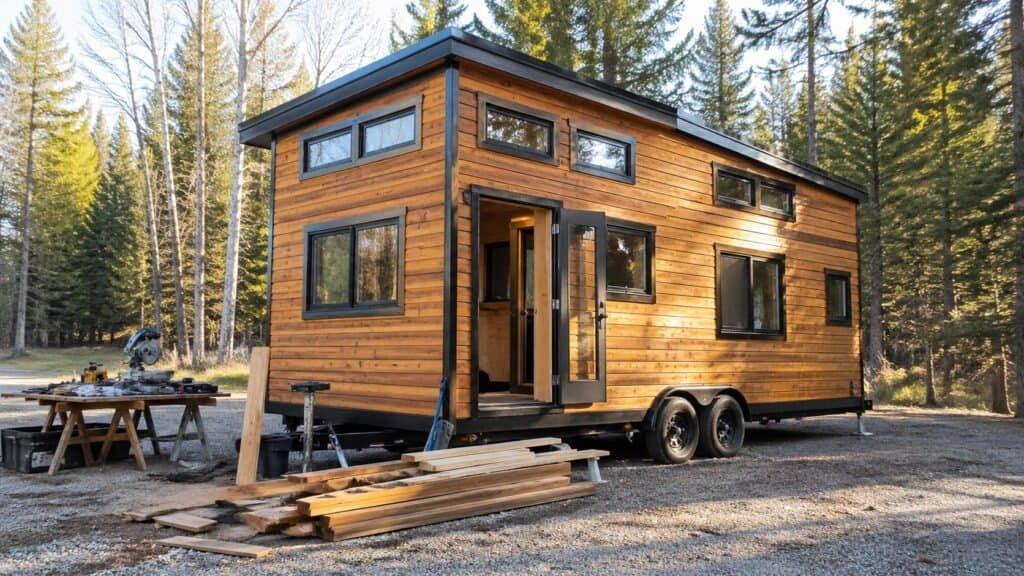
Planning Your Tiny House on Wheels: Start With a Clear Vision
Before you start building, planning is everything. A well-thought-out plan can save you thousands of dollars and months of frustration.
Define Your Purpose First
Ask yourself: What will this tiny house actually be used for?
- Full-time living
- Weekend getaway
- Rental property
- Travel lifestyle
Each purpose changes your design decisions. For example, a rental may need more sleeping areas, while a full-time home prioritizes storage and comfort.
Choosing the Right Size and Layout
Most tiny houses on wheels range from 16 to 30 feet long. Bigger isn’t always better—especially when towing and parking come into play.
Consider:
- Sleeping arrangements (loft vs. ground-level bed)
- Kitchen size and functionality
- Bathroom type (full bath vs. compact wet bath)
- Storage needs for everyday living
Tip: Sketch your layout on paper or use simple design tools before committing.
Understanding Weight Limits Early
Every trailer has a maximum weight capacity, and exceeding it can be dangerous.
- Average THOW weight: 10,000–15,000 lbs
- Heavy materials (tile, stone) can quickly add up
- Appliances and water tanks increase total load
Smart builders plan weight distribution from day one, not as an afterthought.
Finding Inspiration Without Copying Mistakes
Look at real builds, but don’t blindly copy them. What works for someone else may not work for your climate, budget, or lifestyle.
Focus on:
- Practical layouts over trendy designs
- Storage solutions used in real homes
- Builds that match your intended use
Understanding Legal Requirements and Zoning Challenges
One of the biggest surprises when learning how to build a tiny house on wheels is this: building the house is often easier than legally placing it.
Where Can You Park a Tiny House on Wheels?
Parking options vary widely depending on location:
- RV parks and campgrounds
- Private land (with local approval)
- Tiny house communities
- Backyard placements (ADU rules apply)
Some areas allow short-term stays but restrict full-time living.
RV vs. Tiny House Classification
Most THOWs are legally treated as recreational vehicles (RVs) rather than permanent homes.
This affects:
- Where you can live
- Insurance options
- Financing availability
To improve acceptance, many builders follow standards like RVIA certification or NOAH guidelines.
Building Codes and Safety Standards
Tiny houses on wheels usually don’t fall under traditional residential building codes. However, safety still matters.
Focus on:
- Proper electrical systems
- Secure structural framing
- Fire safety and ventilation
For reference, you can explore official housing guidelines from the U.S. Department of Housing and Urban Development:
https://www.hud.gov
Avoiding Common Legal Pitfalls
- Assuming you can park anywhere
- Ignoring local zoning laws
- Skipping certification standards
- Building before confirming land options
Important: Always check local regulations before starting your build. Many people finish their tiny house only to realize they have nowhere legal to place it.
Budget Breakdown: How Much Does It Cost to Build a Tiny House on Wheels?
Understanding the true cost of a tiny house on wheels is where many beginners either gain confidence—or get overwhelmed. The good news? With smart planning, you can control your budget and avoid costly surprises.
DIY vs. Professional Build: What’s the Difference?
- DIY build: $15,000 – $50,000
- Professional build: $60,000 – $120,000+
A DIY project saves money but requires time, skills, and patience. Hiring a builder offers convenience but limits customization and increases costs.
Reality check: Most first-time builders land somewhere in the middle—DIY with occasional professional help.
Major Cost Categories
Here’s where your money typically goes:
| Category | Estimated Cost Range |
| Trailer | $3,000 – $10,000 |
| Framing & Structure | $5,000 – $15,000 |
| Insulation | $500 – $3,000 |
| Windows & Doors | $1,500 – $6,000 |
| Electrical & Plumbing | $2,000 – $10,000 |
| Interior Finishes | $3,000 – $15,000 |
| Appliances | $1,000 – $5,000 |
Smart Ways to Save Money
- Use reclaimed or second-hand materials (carefully)
- Choose lightweight, affordable finishes
- Handle simple tasks yourself (painting, insulation)
- Buy materials in bulk when possible
Important: Never cut corners on structural safety, wiring, or plumbing. Those mistakes cost more later.
Hidden Costs Beginners Often Miss
- Tool purchases or rentals
- Permit and inspection fees
- Delivery or towing costs
- Utility hookups or off-grid systems
Planning for these early can prevent budget overruns.
Choosing the Right Trailer: The Foundation of Your Build
If you get one thing right when learning how to build a tiny house on wheels, make it this: choose the right trailer. Everything else depends on it.
Types of Trailers Explained
- Flatbed trailer: Most common, easy to build on
- Gooseneck trailer: Adds extra loft space over the hitch
- Deck-over trailer: Wider but raises the overall height
Each option impacts your layout, ceiling height, and towing experience.
Weight Capacity and Sizing
Your trailer must support the full weight of your finished home.
- Typical sizes: 16–30 feet long
- Weight rating: often 7,000–14,000 lbs or more
- Dual or triple axles improve stability
Tip: Always choose a trailer with more capacity than you think you’ll need.
New vs. Used Trailer: Pros and Cons
New trailer
- Reliable and structurally sound
- Built specifically for tiny houses
- Higher upfront cost
Used trailer
- More affordable
- May require repairs or modifications
- Risk of hidden damage
Safety Considerations You Can’t Ignore
- Proper braking system
- Strong steel frame (no rust damage)
- Correct hitch compatibility
- Even weight distribution
A weak trailer compromises your entire build. It’s not the place to save money.
How to Build a Tiny House on Wheels Step-by-Step
This is where your vision turns into reality. Building a tiny house on wheels follows a logical sequence, and skipping steps can create major issues later.
Step 1: Framing the Floor Structure
Start by attaching your subfloor to the trailer.
- Use pressure-treated lumber
- Install insulation beneath the floor
- Secure everything tightly to prevent movement
A solid floor is critical—it supports everything above it.
Step 2: Building Walls and Openings
Frame your walls based on your layout design.
- Include spaces for windows and doors
- Use lightweight but strong lumber
- Check alignment frequently
Tip: Pre-plan electrical routes before closing walls.
Step 3: Roof Framing and Weatherproofing
Your roof protects your entire investment.
- Choose between flat, shed, or gable styles
- Install waterproof sheathing and roofing material
- Ensure proper slope for drainage
A poorly built roof leads to leaks—one of the most common issues in DIY builds.
Step 4: Installing Windows and Doors
- Use energy-efficient windows when possible
- Seal all edges properly to prevent air leaks
- Position openings for ventilation and natural light
Natural light makes a small space feel significantly bigger.
Step 5: Insulation (Climate-Based Choices)
Your insulation choice depends on where you’ll live.
- Spray foam: best performance, higher cost
- Rigid foam board: good balance of cost and efficiency
- Fiberglass: budget-friendly but less effective
Important: Proper insulation keeps your home livable year-round.
Step 6: Electrical and Plumbing Rough-In
Install systems before closing walls.
- Plan outlets, lighting, and appliances
- Run water lines and drainage systems
- Decide between on-grid or off-grid setups
Hiring a professional for this step is often worth it.
Step 7: Interior Walls and Finishing
Now your tiny house starts to feel like a home.
- Install wall panels (wood, drywall, or alternatives)
- Add flooring, cabinets, and fixtures
- Customize with your design style
Final tip: Work slowly and double-check everything. Fixing mistakes later is far harder in a tiny space.
Utilities in a Tiny House on Wheels: On-Grid vs. Off-Grid Options
Designing utilities is where your tiny house on wheels becomes truly livable. The choices you make here affect your daily comfort, independence, and long-term costs.
Electrical Systems: Solar or Shore Power?
You have two main options:
- Shore power (grid-connected):
Plug into an external power source at RV parks or properties. It’s simple, reliable, and cheaper to set up. - Solar power (off-grid):
Requires panels, batteries, an inverter, and charge controller. Higher upfront cost, but offers full independence.
Real-world tip: Many tiny homeowners combine both—solar for daily use and shore power as backup.
Water Systems: Keeping It Simple or Fully Functional
A typical tiny house water setup includes:
- Fresh water tank (or direct hookup)
- Grey water tank (for sinks and showers)
- Black water tank (for toilets, if applicable)
If you plan to stay mobile, tanks are essential. For stationary setups, direct hookups are more convenient.
Toilet Options: Composting vs. Traditional
- Composting toilets:
No plumbing required, eco-friendly, low water use - Flush toilets:
More familiar, but require black tank or sewer connection
Many tiny house owners prefer composting toilets for simplicity and flexibility.
Heating and Cooling Solutions
Small spaces heat quickly—but also lose heat fast without proper planning.
- Mini-split systems (efficient heating & cooling)
- Electric heaters (budget-friendly but energy-heavy)
- Wood stoves (cozy but require ventilation and safety planning)
Important: Ventilation is just as critical as heating. Moisture buildup can damage your home over time.
Smart Space-Saving Design Ideas for Tiny Homes on Wheels
Design is what separates a cramped box from a comfortable home. In a tiny house on wheels, every inch must earn its place.
Multi-Functional Furniture That Works Harder
Look for ways to combine functions:
- Beds with built-in storage
- Fold-down tables for dining or work
- Staircases that double as drawers or cabinets
Smart design reduces clutter without sacrificing comfort.
Loft vs. Main-Floor Sleeping
- Loft sleeping:
Saves space, creates room for living areas below
Downside: Limited headroom, ladder or stairs required - Main-floor bed:
Easier access, better for long-term comfort
Downside: Takes up valuable floor space
Your choice depends on mobility, age, and personal comfort.
Make Vertical Space Your Best Friend
Tiny homes aren’t just small—they’re compact vertically too.
- Install shelving up to the ceiling
- Use wall hooks and hanging storage
- Add overhead cabinets in kitchens and bathrooms
This keeps your floor area open and functional.
Storage Hacks From Real Tiny Homeowners
- Hidden compartments under seating
- Magnetic strips for kitchen tools
- Slide-out pantry systems
- Under-floor storage (if trailer design allows)
Key takeaway: If you don’t plan storage early, clutter will take over quickly.
Materials and Tools You’ll Actually Need (No Guesswork)
Choosing the right materials and tools can make or break your build—both in durability and weight. Tiny houses on wheels require a careful balance between strength and lightness.
Essential Tools for a Smooth Build
You don’t need a full workshop, but these basics are non-negotiable:
- Circular saw or miter saw
- Drill and impact driver
- Level and measuring tools
- Nail gun (optional but speeds up work)
- Safety gear (gloves, goggles, hearing protection)
Tip: Renting tools can save money if you’re building short-term.
Best Materials for Durability and Weight Control
- Lightweight framing lumber
- Plywood or OSB for sheathing
- Metal roofing (lighter than shingles)
- Vinyl or composite siding for weather resistance
Avoid overly heavy materials like concrete or thick stone unless structurally planned.
Eco-Friendly and Sustainable Options
If sustainability matters to you, consider:
- Reclaimed wood for interior finishes
- Low-VOC paints and sealants
- Bamboo or cork flooring
- Energy-efficient windows and appliances
These choices improve both environmental impact and indoor air quality.
Where to Source Affordable Materials
- Local hardware stores and lumber yards
- Online marketplaces (Facebook Marketplace, Craigslist)
- Salvage yards and reuse centers
- Bulk suppliers for discounts
Pro tip: Buying locally reduces transport costs and gives you better control over material quality.
Common Mistakes to Avoid When Building a Tiny House on Wheels
Even with the best intentions, many first-time builders run into problems that could have been avoided with better planning. Learning from these mistakes can save you time, money, and serious frustration.
Overbuilding and Exceeding Weight Limits
It’s easy to fall in love with heavy materials like tile, hardwood, or stone—but they add up quickly.
- Exceeding trailer capacity creates safety risks
- Towing becomes difficult or even dangerous
- Repairs and modifications can be expensive
Always track your weight throughout the build—not just at the end.
Ignoring Ventilation and Moisture Control
Tiny homes are especially vulnerable to condensation.
- Cooking, showering, and breathing all create moisture
- Poor airflow leads to mold and long-term damage
Install roof vents, windows that open, and consider a small ventilation fan system.
Choosing the Wrong Trailer
A weak or undersized trailer can compromise your entire build.
- Structural issues may appear over time
- Uneven weight distribution causes instability
- Repairs are difficult once the house is built
This is one area where cutting corners rarely pays off.
Underestimating Time and Skill Requirements
Building a tiny house on wheels takes longer than most expect.
- DIY builds often take 6–12 months (or more)
- Learning new skills slows progress
- Unexpected issues are part of the process
Planning realistic timelines helps avoid burnout.
How Long Does It Take to Build a Tiny House on Wheels?
The timeline depends on your experience, availability, and complexity of the design.
Typical Build Timelines
- DIY (part-time): 6–12+ months
- DIY (full-time): 3–6 months
- Professional build: 2–4 months
What Affects Your Build Speed?
- Skill level and prior construction experience
- Availability of tools and workspace
- Weather conditions (for outdoor builds)
- Material delivery delays
Tips to Stay on Schedule
- Break the build into smaller milestones
- Order materials in advance
- Focus on one phase at a time
- Avoid constant design changes mid-build
Consistency matters more than speed. Even a few hours a day can keep your project moving forward.
Pros and Cons of Building vs. Buying a Tiny House on Wheels
Deciding whether to build or buy is one of the biggest choices in your tiny house journey.
Building Your Own Tiny House
Pros:
- Full customization
- Lower overall cost (if managed well)
- Personal satisfaction and learning experience
Cons:
- Time-intensive
- Requires skills or willingness to learn
- Risk of mistakes
Buying a Pre-Built Tiny House
Pros:
- Move-in ready
- Professionally built and certified
- Faster timeline
Cons:
- Higher cost
- Limited customization
- Delivery and transportation fees
Honest insight: If you enjoy hands-on projects and want to save money, building is worth it. If you value time and convenience, buying may be the better option.
Final Checklist Before Hitting the Road
Before moving into or traveling with your tiny house on wheels, take time to double-check everything.
Safety and Structural Checks
- Trailer brakes and lights functioning properly
- Tires in good condition and properly inflated
- Weight evenly distributed
- All structural elements securely fastened
Legal and Documentation Essentials
- Registration (if classified as RV)
- Insurance coverage
- Local parking approvals or permits
Interior Preparation for Travel
- Secure furniture and appliances
- Lock cabinets and drawers
- Remove or stabilize loose items
First Test Drive Tips
- Start with a short trip
- Drive slowly and carefully
- Check stability and handling
- Reinspect everything after arrival
Small issues are easier to fix early—don’t skip this step.
FAQs About Building a Tiny House on Wheels
Do you need a permit to build a tiny house on wheels?
In many areas, you don’t need a permit to build it, but you do need approval for where you park and live in it. Always check local zoning laws first.
Can I build a tiny house on wheels with no experience?
Yes, but expect a learning curve. Many beginners succeed by starting simple, researching thoroughly, and getting help with electrical or plumbing work.
What is the ideal size for a beginner?
Most first-time builders choose 20–24 feet. It offers a good balance between space and mobility.
How do I finance a tiny house build?
Options include personal savings, RV loans (if certified), personal loans, or financing through tiny house builders.
Is it cheaper to build or buy a tiny house on wheels?
Building is usually cheaper, but only if you manage your budget well and avoid costly mistakes.
Turning Your Tiny House on Wheels Dream Into Reality
Building a tiny house on wheels isn’t just a construction project—it’s a lifestyle decision that requires planning, patience, and adaptability. When done right, it offers freedom, flexibility, and a deeply personal living space that reflects your priorities.
Start by refining your vision, setting a realistic budget, and understanding your local regulations. From there, take it step by step—focusing on quality, safety, and smart design choices.
If you’re serious about making the move, begin sketching your layout or researching trailers today. The sooner you take action, the closer you are to living your tiny house dream.
