
A tiny house with soaking tub might sound like a luxury reserved for large homes—but it’s quickly becoming one of the most sought-after upgrades in modern tiny living. More homeowners are realizing that comfort doesn’t have to be sacrificed for simplicity.
This guide breaks down exactly how a soaking tub fits into a tiny home, what design decisions matter most, and whether it’s truly worth the space. Expect practical layout ideas, realistic limitations, and expert-level insights to help you decide if this upgrade belongs in your build.
In This Article
Why a Tiny House With Soaking Tub Is the Ultimate Upgrade
Tiny homes are often associated with minimalism, but that doesn’t mean they can’t feel indulgent. A soaking tub transforms a compact bathroom into a personal retreat.
What makes this feature so appealing?
- Daily comfort upgrade: A deep soak after a long day adds real quality-of-life value
- Wellness-focused living: Many tiny homeowners prioritize mental health and relaxation
- Luxury in small spaces: A soaking tub instantly elevates the feel of your home
- Stronger rental appeal: If you ever list your tiny home, a tub becomes a standout feature
In real-world tiny house living, comfort features matter more than square footage. People quickly learn that how a space feels often outweighs how big it is.
That said, adding a soaking tub isn’t just about aesthetics—it’s a decision that impacts layout, water usage, and overall livability.
Can You Really Fit a Soaking Tub in a Tiny House?
Short answer: yes—but it requires intentional design.
Most tiny houses range from 100 to 400 square feet, which means every inch has to earn its place. A soaking tub typically takes up more room than a standard shower, so trade-offs are inevitable.
Here’s what you need to consider:
Space Reality Check
- A standard bathtub can be 60 inches long or more
- Many tiny homes have bathrooms under 40 square feet
- Every added feature affects storage, movement, and layout flow
This is why traditional tubs rarely work in tiny homes. Instead, builders turn to compact alternatives designed for small footprints.
What You Might Need to Sacrifice
Adding a soaking tub often means adjusting other elements:
- Smaller vanity or sink
- Reduced storage space
- Combined shower-tub setup instead of separate fixtures
- Tighter bathroom layout overall
The key is prioritization. If soaking is a daily ritual, it may be worth scaling back elsewhere.
The Smart Approach
Experienced tiny house designers focus on:
- Vertical space instead of horizontal expansion
- Multi-functional layouts (like tub + shower combos)
- Strategic placement near walls or corners
A soaking tub can absolutely fit—but only when the entire bathroom is designed around it, not the other way around.
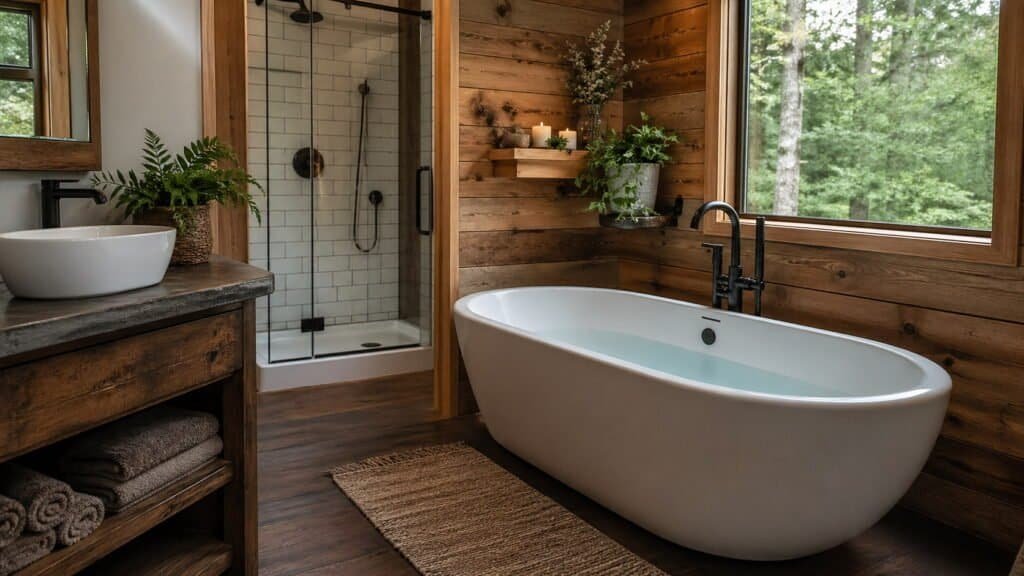
Types of Soaking Tubs That Work in Tiny Homes
Not all tubs are created equal. Choosing the right type makes the difference between a cramped bathroom and a functional spa-like space.
Japanese Soaking Tubs (Ofuro)
These are one of the best options for tiny homes.
- Deep and compact (often square or short rectangular shapes)
- Designed for sitting rather than lying down
- Use less floor space while still offering full-body immersion
Best for: Ultra-small bathrooms and minimalist layouts
Compact Freestanding Tubs
These are scaled-down versions of traditional tubs.
- Typically shorter in length but still visually striking
- Available in lightweight materials like acrylic
- Easier to install than custom-built options
Best for: Homeowners who want a balance of style and practicality
Corner Soaking Tubs
A smart way to use underutilized space.
- Fit neatly into bathroom corners
- Free up wall space for storage or fixtures
- Can make small bathrooms feel more open
Best for: Awkward layouts or maximizing tight floor plans
Built-In or Custom Micro Tubs
Custom solutions tailored to your exact space.
- Designed to fit specific dimensions
- Can double as a shower base
- Often integrated into a wet bath design
Best for: Fully custom tiny homes where every inch is planned
Choosing the Right Fit
When selecting your tub, focus on:
- Dimensions: Measure twice—tiny spaces leave no room for error
- Weight: Lighter materials reduce structural strain
- Water depth: Deeper isn’t always better if water supply is limited
- Ease of cleaning: Tight spaces can make maintenance tricky
A well-chosen soaking tub doesn’t just fit—it feels like it belongs in the space.
Designing a Tiny House Bathroom Around a Soaking Tub
Fitting a tiny house with soaking tub isn’t just about choosing the right fixture—it’s about designing the entire bathroom to support it. When done right, even a compact space can feel open, functional, and surprisingly luxurious.
Wet Bath vs. Dry Bath: Which Works Better?
The first big decision is layout style.
Wet bath (all-in-one space):
- Shower, tub, and toilet share the same waterproof area
- Easier to clean and more space-efficient
- Ideal for ultra-small tiny homes
Dry bath (separated zones):
- Tub/shower separated from toilet and sink
- Feels more like a traditional bathroom
- Requires more space but offers better comfort
Most tiny homes with soaking tubs lean toward a hybrid approach—a partially enclosed tub/shower area that keeps water contained without sacrificing too much room.
Smart Placement Ideas That Actually Work
Where you place the tub can make or break your layout.
- Against the back wall: Keeps plumbing simple and centralizes fixtures
- Under a window: Adds natural light and creates a spa-like feel
- In a corner: Maximizes unused space and improves flow
- Near the entrance: Works well in long, narrow floor plans
Tip: Avoid placing the tub in high-traffic pathways. Even a few extra inches of clearance can make the space feel dramatically more comfortable.
Combining Tub + Shower Without Feeling Cramped
Most tiny homeowners don’t have the luxury of separate bathing areas. A combo setup is the practical solution.
- Install a rainfall or handheld shower above the tub
- Use a curved shower rod or glass panel to increase elbow room
- Choose waterproof wall panels or tile to protect surrounding surfaces
This setup delivers flexibility while keeping the footprint compact.
Visual Tricks to Make the Bathroom Feel Bigger
A soaking tub can dominate a small room—unless you design around it carefully.
- Use light colors and reflective surfaces to open up the space
- Install large mirrors to create depth
- Opt for floating vanities or shelves to reduce visual clutter
- Choose clear glass partitions instead of opaque curtains
A well-designed tiny bathroom doesn’t feel small—it feels intentional.
Plumbing & Water System Considerations
Adding a soaking tub changes how your entire water system functions. This is where many tiny house builds run into trouble if not planned properly.
Water Supply: Can Your System Handle It?
Soaking tubs use more water than standard showers.
- Typical soaking tub: 40–80 liters (10–20 gallons) per use
- Off-grid tanks may need to be significantly larger
- Frequent use can quickly drain limited water reserves
If you’re off-grid, every soak needs to be planned—not spontaneous.
Drainage and Gray Water Management
All that water has to go somewhere.
- Ensure your gray water system can handle higher volume
- Use properly sloped drains to prevent standing water
- Check local regulations if you plan to reuse gray water
For guidance on safe water practices, refer to resources like the U.S. Environmental Protection Agency:
https://www.epa.gov/ground-water-and-drinking-water
Water Heating: The Hidden Challenge
A soaking tub is only enjoyable if the water stays hot.
- Tankless water heaters are the most popular option in tiny homes
- Provide continuous hot water without taking up much space
- Require sufficient power or gas supply
Traditional tank heaters often struggle to keep up with the volume needed for a full soak.
Off-Grid Considerations
If your tiny house is off-grid, things get more complex.
- Solar systems may not support high-energy water heating
- Propane heaters are a common alternative
- Water conservation becomes essential
A soaking tub off-grid is possible—but it requires discipline and smart system design.
Weight, Structure, and Safety: What Most People Overlook
A beautiful soaking tub can quickly become a problem if the structure beneath it isn’t prepared to handle the load.
How Heavy Is a Soaking Tub, Really?
Weight adds up fast.
- Empty tub: 20–70 kg (45–150 lbs)
- Water weight: ~1 kg per liter (8.3 lbs per gallon)
- Plus the person using it
A filled tub can easily exceed 200–300 kg (440–660 lbs) in a small area.
Reinforcing the Floor and Trailer
Tiny houses on wheels have strict weight limits.
- Reinforce floor joists beneath the tub area
- Distribute weight evenly across the trailer frame
- Consult a builder or structural expert if unsure
Ignoring this step can lead to sagging floors or long-term structural damage.
Choosing Lightweight, Durable Materials
Material choice matters more than you might think.
- Acrylic and fiberglass tubs are much lighter than cast iron
- Composite materials offer durability without excess weight
- Waterproof wall panels can reduce load compared to tile
Every kilogram counts in a tiny house build.
Moisture Control and Ventilation
Hot baths create humidity—and in a small space, that can lead to serious issues.
- Install a high-quality exhaust fan
- Use moisture-resistant materials on walls and floors
- Seal all joints and edges properly
Poor ventilation leads to mold, mildew, and long-term damage—fast.
Cost Breakdown: Adding a Soaking Tub to a Tiny House
A tiny house with soaking tub can range from budget-friendly to high-end, depending on your choices. The tub itself is only part of the expense—plumbing, structural work, and water heating often add more than expected.
What You’ll Actually Spend
Here’s a realistic breakdown based on common builds:
| Component | Estimated Cost (USD) |
| Soaking tub (compact models) | $300 – $1,500 |
| Japanese soaking tub (ofuro) | $800 – $3,000+ |
| Plumbing installation | $500 – $2,500 |
| Tankless water heater | $300 – $1,200 |
| Structural reinforcement | $200 – $1,000 |
| Waterproofing & finishes | $300 – $1,500 |
Estimated total: $1,500 to $8,000+
Costs vary widely depending on whether you’re DIY-ing or hiring professionals. Custom builds and premium materials can easily push the budget higher.
Hidden Costs That Catch People Off Guard
Even experienced builders sometimes overlook these:
- Upgrading water tanks for increased capacity
- Electrical or gas upgrades for heating systems
- Ventilation improvements to manage humidity
- Maintenance costs over time (sealing, cleaning, repairs)
Tip: Always add a 10–20% buffer to your budget for unexpected adjustments.
Budget vs. Luxury Builds
- Budget setup: Compact acrylic tub + basic plumbing + DIY install
- Mid-range: Japanese soaking tub + tankless heater + professional plumbing
- Luxury build: Custom tub + tiled bathroom + premium fixtures + full ventilation system
The right choice depends on how often you’ll use the tub. Daily use justifies a higher investment, while occasional soaking might not.
Pros and Cons of a Tiny House With Soaking Tub
Before committing, it’s worth weighing the real-life trade-offs. A soaking tub can be amazing—but it’s not for everyone.
The Upside
- Spa-like experience at home
A deep soak can turn a simple routine into a relaxing ritual - Boosts property and rental appeal
Unique features stand out in listings and attract higher rates - Adds a sense of luxury in a small space
Makes your tiny home feel more intentional and personalized - Great for cold climates or stress relief
Especially valuable if you live in cooler regions or lead an active lifestyle
The Downsides
- Takes up valuable square footage
Space you lose could have been storage or living area - Higher water and energy usage
Not ideal for strict off-grid setups - More complex plumbing and maintenance
More components mean more potential issues - Longer setup time for each use
Filling and heating water isn’t as quick as taking a shower
Bottom line: If you’ll use it often, it’s worth it. If it’s just a “nice idea,” it may end up wasting space.
Smart Space-Saving Ideas to Balance Luxury and Function
A tiny house with soaking tub only works when the rest of the space adapts around it. The goal is to keep the luxury without sacrificing everyday usability.
Make Every Element Multi-Functional
- Use a tub-shower combo instead of separate fixtures
- Install a fold-down sink or compact vanity
- Choose a toilet with built-in storage or shelving above it
Every item should serve more than one purpose when possible.
Go Vertical With Storage
When floor space is limited, look up.
- Add open shelves above the tub for towels and essentials
- Use tall, narrow cabinets instead of wide ones
- Install hooks and rails for quick-access storage
Vertical design is one of the biggest advantages in tiny homes.
Use Sliding and Space-Smart Fixtures
Traditional fixtures can waste valuable inches.
- Replace swing doors with sliding or pocket doors
- Use wall-mounted faucets and sinks
- Install compact lighting to reduce visual clutter
Small adjustments like these can make the bathroom feel significantly larger.
Keep the Layout Visually Clean
Clutter makes a tiny bathroom feel even smaller.
- Stick to a minimal color palette
- Hide plumbing lines where possible
- Use built-in niches instead of bulky storage units
A clean design makes the soaking tub feel like a feature—not an obstacle.
Off-Grid Living With a Soaking Tub: Is It Practical?
A tiny house with soaking tub can absolutely work off-grid—but it requires a different mindset. You’re no longer just designing for comfort; you’re managing limited resources every day.
Water Use: The Biggest Constraint
Off-grid systems depend on stored water, not unlimited supply.
- A single soak can use 40–80 liters (10–20 gallons)
- Small tanks (200–400 liters) can be depleted quickly
- Refilling may require hauling water or relying on rain catchment
Reality check: frequent baths may not be sustainable without a larger system.
Heating Water Without Breaking Your System
Heating that much water is energy-intensive.
- Propane heaters are the most reliable off-grid option
- Solar water heating can work in sunny climates but may be inconsistent
- Electric tankless systems often require more power than solar setups can provide
A hybrid approach—solar + propane backup—is common among experienced off-grid owners.
Smart Ways to Make It Work
If you’re committed to having a soaking tub off-grid:
- Limit use to a few times per week instead of daily
- Reuse gray water for irrigation where permitted
- Insulate your water heater and pipes to reduce heat loss
- Choose a smaller, deeper tub to minimize water usage
A soaking tub off-grid is less about convenience and more about intentional living. If you’re okay planning each soak, it can still be a rewarding feature.
Real-Life Tiny House With Soaking Tub Examples & Inspiration
Seeing how others have done it helps turn ideas into realistic plans. Many tiny homeowners have successfully integrated soaking tubs without compromising livability.
Minimalist Builds That Prioritize Function
- Japanese-style soaking tubs tucked into corner layouts
- Neutral tones, simple finishes, and minimal fixtures
- Focus on efficiency over visual impact
These setups prove that less can still feel luxurious.
Modern Luxury Tiny Homes
- Freestanding tubs placed under large windows
- Full tile surrounds with rainfall shower systems
- Integrated lighting for a spa-like atmosphere
Often found in high-end builds or short-term rentals, these designs maximize both comfort and visual appeal.
Lessons From Real Owners
- “I use it more than I expected.” Daily rituals justify the space
- “Water usage changed my habits.” Especially off-grid
- “I wish I planned storage better.” A common regret
Learning from real experiences helps you avoid costly redesigns later.
Common Mistakes to Avoid When Installing a Soaking Tub
Even well-planned tiny homes can run into problems if certain details are overlooked.
Choosing the Wrong Tub Size
A tub that’s even slightly too large can disrupt your entire layout.
- Measure the full space, including clearance
- Consider doorways and installation access
- Leave room for movement around the tub
Ignoring Weight Limits
This is one of the most serious mistakes.
- Overloading a trailer can cause structural damage
- Uneven weight distribution affects stability
- Reinforcements should be planned early—not added later
Poor Ventilation Planning
Moisture builds up quickly in small spaces.
- Skipping a proper exhaust fan leads to mold
- Windows alone aren’t enough in humid climates
- Waterproof materials must be paired with airflow
Underestimating Water and Energy Needs
A soaking tub isn’t just a fixture—it impacts your entire system.
- Insufficient hot water supply ruins the experience
- Small tanks limit usability
- Weak heating systems lead to inconsistent temperatures
Avoiding these mistakes saves time, money, and frustration.
Is a Tiny House With Soaking Tub Worth It for You?
This decision comes down to lifestyle, not just design.
Ask Yourself These Questions
- Do you realistically enjoy baths regularly?
- Are you willing to sacrifice space or storage?
- Will your water and energy systems support it?
- Are you building for personal use or rental income?
When It Makes Sense
- You value relaxation and daily comfort
- You’re building a stationary or well-equipped tiny home
- You want to increase rental appeal or resale value
When It Might Not Be Worth It
- You’re strictly off-grid with limited water
- Storage and space are already tight
- You rarely take baths
For many people, a luxury shower can deliver similar satisfaction with fewer compromises. The soaking tub is best when it aligns with your habits—not just your inspiration board.
FAQ: Tiny Houses With Soaking Tubs
How big should a soaking tub be in a tiny house?
Most tiny house soaking tubs range from 36 to 48 inches in length, with deeper designs allowing full-body immersion without needing extra floor space.
Can you use a soaking tub in an off-grid tiny home?
Yes, but it requires careful water management, efficient heating systems, and reduced frequency of use to remain practical.
Does a soaking tub increase tiny house resale value?
In many cases, yes. Unique features like soaking tubs can make your home stand out, especially in the rental or Airbnb market.
How much water does a tiny house soaking tub use?
Typically between 40–80 liters (10–20 gallons), depending on the size and depth of the tub.
Is a soaking tub better than a shower in a tiny house?
It depends on your lifestyle. Showers are more efficient, while soaking tubs offer relaxation and luxury.
Final Thoughts: Bringing Big Comfort Into a Small Home
A tiny house with soaking tub proves that small-space living doesn’t have to feel restrictive. With the right planning, you can create a home that feels both practical and deeply comfortable.
The key is designing with intention—balancing water use, space, and structure so the tub enhances your lifestyle instead of complicating it.
If you’re planning your build, start by mapping out your priorities. Decide what matters most, explore layout options, and make sure your systems can support your vision.
Ready to take the next step? Explore more tiny house design ideas, compare layout options, and start planning a space that truly fits how you want to live.
