
Fruit flies can take over your kitchen almost overnight, especially in small homes or tiny spaces where every surface counts. If you’re searching for how to get rid of fruit flies quickly and permanently, you’re in the right place.
This guide breaks down exactly why they show up, how to spot a real infestation early, and what actually works to eliminate them. You’ll learn practical, space-friendly solutions designed for compact kitchens, apartments, and tiny homes—without wasting time on methods that don’t deliver results.
In This Article
Why You Suddenly Have Fruit Flies (And Why They Multiply So Fast)
Fruit flies don’t appear randomly. They’re drawn in by specific conditions—and once they find them, they reproduce at a surprisingly fast rate.
What Attracts Fruit Flies Into Your Home
Fruit flies are highly sensitive to fermentation. Even a small amount of sugar breaking down can bring them in.
Common attractants include:
- Overripe fruits sitting on the counter
- Open trash bins with food scraps
- Sticky spills (juice, soda, alcohol)
- Recycling bins with unwashed bottles or cans
Even a tiny forgotten banana peel can trigger a full infestation.
In small kitchens, these smells concentrate faster, making your space even more appealing to them.
Why They Multiply So Quickly
Fruit flies reproduce at a speed most people underestimate.
- A single female can lay hundreds of eggs
- Eggs hatch within 24–48 hours
- Larvae mature into adults in about a week
That means a small problem can become overwhelming in just a few days.
Key takeaway: If you’re seeing multiple flies, the breeding cycle is already underway.
Common Entry Points You Might Overlook
Fruit flies don’t just come from inside your home—they often hitch a ride.
Watch for:
- Grocery store produce (especially bananas, tomatoes, berries)
- Cracks near windows or doors
- Drain pipes and plumbing areas
- Bags, containers, or compost brought indoors
In tight living spaces, one entry point is all they need to spread everywhere.
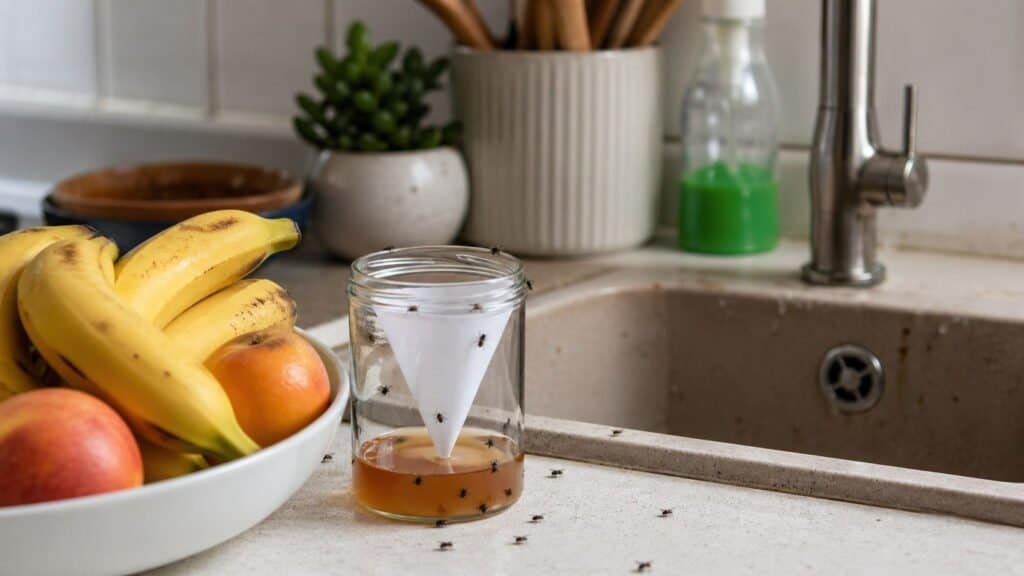
Top Causes of Fruit Fly Infestations in Your Home
Understanding the root cause is essential if you want to get rid of fruit flies for good—not just temporarily.
Overripe Fruits and Vegetables
Leaving produce out too long is the most common trigger.
- Bananas, avocados, and peaches ripen quickly
- Once soft, they release fermentation odors
- Fruit flies lay eggs directly on the surface
Tip: In small kitchens, switch to storing ripe fruit in the fridge to slow attraction.
Garbage Bins and Food Waste Buildup
Trash is a prime breeding ground, especially in compact homes.
- Food scraps break down rapidly
- Warm indoor temperatures accelerate decay
- Open lids make access easy
Even a “clean-looking” trash bin can host eggs and larvae.
Sink Drains and Hidden Moisture Areas
Many people miss this completely.
Your drain can hold:
- Food residue
- Grease buildup
- Moist organic matter
This creates a hidden breeding zone that traps alone won’t fix.
If fruit flies keep coming back, your drain is likely the reason.
Forgotten Spills, Bottles, and Containers
Tiny messes cause big problems.
Common culprits:
- Juice spills under appliances
- Empty wine or beer bottles
- Unwashed recycling containers
- Sticky cabinet surfaces
In small living spaces, these overlooked spots are closer together—making infestations spread faster.
Warning Signs You Have a Fruit Fly Problem (Not Just a Few Flies)
Seeing one or two flies doesn’t always mean an infestation—but certain signs indicate a bigger issue.
Visual Indicators of an Infestation
Look for patterns, not just presence.
- Flies hovering in groups (not alone)
- Increased activity near food or sinks
- Flies appearing consistently throughout the day
Clusters = breeding nearby.
Where Fruit Flies Tend to Gather
Fruit flies stay close to their food source.
Check these hotspots:
- Kitchen counters and fruit bowls
- Trash bins and recycling areas
- Sink drains and garbage disposals
- Pantry shelves with produce
In tiny homes, these zones often overlap—making it easier for infestations to spread quickly.
Fruit Flies vs. Gnats: Don’t Confuse Them
Misidentifying the pest can lead to ineffective solutions.
| Feature | Fruit Flies | Gnats |
| Color | Tan or light brown | Black or dark gray |
| Behavior | Hover near food | Hover near plants or soil |
| Common Source | Fruit, trash, drains | Houseplants, damp soil |
| Body Shape | Rounder, slightly larger | Slim, mosquito-like |
If they’re near your fruit or sink, you’re dealing with fruit flies—not gnats.
How to Get Rid of Fruit Flies Immediately (Do This First)
When you need fast results, focus on eliminating the source before relying on traps. Skipping this step is the reason most people fail.
Remove Breeding Sources Step-by-Step
Start here—this is non-negotiable if you want to get rid of fruit flies quickly:
- Toss out overripe or damaged produce
- Seal and take out trash immediately
- Rinse all recycling (especially bottles and cans)
- Wipe down counters, shelves, and sticky spots
- Check hidden areas (under appliances, inside cabinets)
If the food source stays, the flies stay.
Quick Kitchen Reset Checklist
Use this simple reset to stop the infestation within hours:
- Empty trash and recycling bins
- Clean sink and drain opening
- Store fruit in the fridge temporarily
- Dry out sponges and dishcloths
- Close windows or install screens if needed
In small kitchens, this reset can make a visible difference the same day.
Fast Sanitation Routine That Works Within Hours
Once the obvious sources are gone, go deeper:
- Use a disinfecting spray on surfaces
- Clean under small appliances (toaster, blender)
- Wipe cabinet handles and backsplash areas
- Mop or spot-clean the floor where spills may have dried
Pro tip: Fruit flies often lay eggs in places you don’t see—cleaning beyond eye level is what speeds up results.
Best DIY Fruit Fly Traps That Actually Work
Once you’ve removed the breeding sources, traps help eliminate the remaining adult flies. These are simple, effective, and ideal for small living spaces.
Apple Cider Vinegar Trap (Most Reliable)
This is the go-to method for a reason.
How to make it:
- Pour apple cider vinegar into a small bowl
- Add a few drops of dish soap
- Leave uncovered near problem areas
The vinegar attracts flies, while the soap breaks surface tension so they sink.
Dish Soap + Vinegar Method (Stronger Version)
A slightly more aggressive version of the classic trap.
- Mix vinegar with a bit of sugar
- Add dish soap
- Use a shallow container for more surface area
Best for: Moderate infestations where flies are highly active.
Paper Funnel Trap Method
This method physically traps flies inside a container.
Steps:
- Fill a jar with vinegar or overripe fruit
- Roll paper into a funnel and place it in the jar
- Narrow end faces downward
Flies enter easily but struggle to escape.
Wine or Beer Trap Trick
Got leftover alcohol? It works surprisingly well.
- Leave a small amount of wine or beer in a bottle
- Place it near the infestation
Fermentation smells are irresistible to fruit flies.
Quick tip for tiny homes:
Use small containers and place traps close to problem zones to avoid clutter while maximizing effectiveness.
Natural Ways to Get Rid of Fruit Flies Without Chemicals
If you prefer a chemical-free approach—especially in tight living spaces—natural methods can still be highly effective when used consistently.
Using Lemon, Cloves, and Herbs
Certain natural scents repel fruit flies.
Try this:
- Slice a lemon and stick cloves into it
- Place near windows or countertops
- Use fresh herbs like basil or mint nearby
Bonus: These also help your kitchen smell fresh.
Essential Oils That Repel Fruit Flies
Some scents disrupt fruit fly behavior.
Effective options:
- Lemongrass oil
- Peppermint oil
- Eucalyptus oil
How to use:
- Mix a few drops with water in a spray bottle
- Lightly spray surfaces (not directly on food)
Safe Solutions for Homes with Kids or Pets
Safety matters, especially in small or shared spaces.
- Stick to food-based traps (vinegar, fruit)
- Avoid chemical sprays in tight kitchens
- Keep traps out of reach but near hotspots
Key insight: Natural methods work best when paired with proper cleaning—not as a standalone fix.
Store-Bought Solutions: What Works vs. What’s a Waste of Money
DIY methods handle most infestations, but store-bought tools can speed things up—if you choose wisely.
Sticky Traps vs. Liquid Traps
Two common options, each with different strengths:
| Type | How It Works | Best For | Downsides |
| Sticky Traps | Flies land and get stuck | Monitoring + light problems | Less effective for heavy infestations |
| Liquid Traps | Attract + drown flies | Active infestations | Needs regular emptying |
Best pick: Liquid traps tend to outperform sticky ones when you need fast results.
Electric Fly Traps
These devices use light or scent to attract flies, then trap or eliminate them.
- Plug-in convenience
- Low maintenance
- Works continuously
They’re especially useful in small apartments where airflow is limited.
Watch out: Not all models are designed specifically for fruit flies—check before buying.
When to Consider Professional Pest Control
Sometimes the problem goes beyond DIY fixes.
Consider help if:
- Infestation lasts more than 2–3 weeks
- Flies keep returning despite deep cleaning
- You suspect hidden breeding areas (walls, pipes)
In most small homes, though, proper cleaning + traps will solve the issue without outside help.
How to Get Rid of Fruit Flies in Drains and Garbage Areas
If fruit flies keep coming back, your drain or trash area is likely the hidden source.
Deep-Cleaning Sink Drains Effectively
Surface cleaning isn’t enough—you need to target buildup inside the pipe.
Steps:
- Boil water and pour it down the drain
- Scrub the drain opening with a brush
- Use a degreasing cleaner if needed
This removes organic residue where eggs are often laid.
Baking Soda + Vinegar Method
A simple but powerful natural solution.
How to use:
- Pour baking soda into the drain
- Add vinegar and let it fizz
- Wait 10–15 minutes
- Flush with hot water
This helps break down buildup and neutralize odors that attract flies.
Preventing Drain Infestations Long-Term
Consistency matters more than intensity.
- Run hot water daily for a few seconds
- Avoid letting food scraps go down the drain
- Clean the disposal (if you have one) weekly
- Keep the area dry overnight
Key insight: Drains become breeding grounds when moisture and food combine—remove one, and the problem fades.
Common Mistakes That Make Fruit Fly Problems Worse
Many people unknowingly extend infestations by making small but critical mistakes.
Leaving Fruit Out Too Long
Countertop fruit bowls look nice—but they’re risky.
- Ripening speeds up at room temperature
- Odors intensify quickly
- Eggs can be laid before you notice
Switch to refrigeration once fruit is ripe.
Ignoring Hidden Breeding Spots
Cleaning visible areas isn’t enough.
Commonly missed places:
- Under trash bags
- Behind appliances
- Inside cabinets
- Drain interiors
If you miss the source, traps won’t solve the problem.
Ineffective Cleaning Habits
Quick wipes don’t cut it.
- Skipping deep cleaning
- Reusing dirty sponges
- Not drying surfaces
Fruit flies thrive in moist, organic residue—not just visible mess.
Using Traps Without Removing the Source
This is the biggest mistake.
- Traps kill adults
- Eggs and larvae remain
- New flies appear within days
No source removal = endless cycle.
How to Prevent Fruit Flies from Coming Back (Long-Term Fix)
Once you get rid of fruit flies, prevention is what keeps your home pest-free.
Daily and Weekly Cleaning Habits
Simple routines make a big difference:
Daily:
- Wipe counters after food prep
- Take out trash if it contains food
- Rinse dishes promptly
Weekly:
- Deep-clean sink and drain
- Empty and sanitize trash bins
- Check for hidden spills
Proper Food Storage Techniques
Storage can make or break your defense.
- Refrigerate ripe fruits
- Use sealed containers for leftovers
- Avoid leaving food uncovered
In small kitchens, sealed storage reduces scent spread dramatically.
Kitchen Organization Tips for Prevention
A clutter-free kitchen is easier to maintain.
- Limit open food storage
- Use stackable containers
- Keep surfaces clear and dry
Less clutter = fewer hiding spots for pests.
Fruit Flies vs. Gnats vs. Drain Flies: Know the Difference
Correct identification ensures you use the right solution.
Key Identification Differences
Each pest behaves differently:
- Fruit flies: Attracted to food and fermentation
- Gnats: Prefer plants and moist soil
- Drain flies: Live and breed inside drains
Why Correct Identification Matters for Treatment
Using the wrong method wastes time.
- Vinegar traps work for fruit flies
- Soil treatment works for gnats
- Drain cleaning is essential for drain flies
Misidentification is one of the top reasons infestations persist.
Quick Comparison Table
| Pest Type | Primary Location | Main Attraction | Best Solution |
| Fruit Flies | Kitchen, trash, fruit | Fermenting food | Traps + source removal |
| Gnats | Houseplants | Moist soil | Dry soil + plant treatment |
| Drain Flies | Sink drains | Organic buildup | Deep drain cleaning |
Kitchen Hygiene Upgrades That Eliminate Fruit Fly Risks
Getting rid of fruit flies is one thing—making sure they never come back requires a few smart upgrades. These changes are especially impactful in small homes and tiny kitchens where space is limited and odors concentrate quickly.
Better Trash Management Systems
Your trash setup plays a bigger role than you think.
Upgrade ideas:
- Use a trash can with a tight-sealing lid
- Choose smaller bins and empty them more frequently
- Line bins properly to prevent leaks and residue buildup
Pro tip: Compost bins should always be sealed or stored in the fridge in small spaces.
Food Storage Containers That Help Prevent Infestations
Open food equals open invitation.
Switch to:
- Airtight glass or BPA-free plastic containers
- Stackable storage to reduce clutter
- Produce containers with ventilation control
Key benefit: Less exposure means fewer odors—and fewer flies.
Smart Habits for Maintaining a Pest-Free Kitchen
Small habits create long-term protection.
- Dry sinks and counters overnight
- Avoid leaving dirty dishes out
- Clean as you cook instead of after
- Do a quick nightly check for spills or exposed food
Consistency beats intensity. A few minutes daily prevents hours of cleanup later.
FAQ: How to Get Rid of Fruit Flies (Quick Answers to Common Questions)
How long does it take to get rid of fruit flies?
Most infestations clear within 3–7 days if you remove the breeding source and use traps consistently.
What smells do fruit flies hate the most?
They dislike strong scents like peppermint, eucalyptus, and lemongrass, which can help repel them naturally.
Why are fruit flies still there after cleaning?
Eggs may still be hatching in hidden areas like drains or trash bins. Deep cleaning those spots is essential.
Can fruit flies survive in the fridge?
Cold temperatures slow them down significantly, but eggs on food can still survive. Washing produce helps prevent this.
What’s the fastest homemade trap?
Apple cider vinegar with a drop of dish soap works fastest because it attracts and traps flies effectively.
Are fruit flies harmful to humans?
They’re mostly a nuisance, but they can carry bacteria from contaminated surfaces to food.
When Fruit Flies Won’t Go Away: What to Do Next
Some infestations are more stubborn than others. If you’ve tried everything and still see flies, it’s time to escalate your approach.
Signs of a Severe Infestation
- Flies reappear daily despite cleaning
- Multiple rooms are affected
- Strong odors persist even after sanitation
This usually means hidden breeding zones are still active.
When DIY Methods Fail
If traps and cleaning aren’t enough:
- Reinspect drains and plumbing areas
- Check behind appliances and inside wall gaps
- Replace old trash bins that may harbor residue
Sometimes, the issue is deeper than surface-level cleaning can fix.
Escalation Steps for Complete Elimination
- Use a targeted drain cleaner for organic buildup
- Add multiple traps in different zones
- Temporarily remove all exposed food sources
- Consider professional pest control if the issue continues
For deeper insights into pest behavior and prevention, the U.S. Environmental Protection Agency provides helpful guidance:
https://www.epa.gov/safepestcontrol
Fruit flies are frustrating, but they’re also one of the easiest pests to eliminate once you understand the pattern. Take control of the source, stay consistent with cleaning, and use the right traps—and your space can stay completely fly-free.
If you’re dealing with a small kitchen or tiny home, these habits matter even more. Start with one change today—clear the source—and you’ll likely see results within 24 hours.
