
Tiny home living for seniors is quickly becoming one of the most practical and empowering ways to simplify retirement. With rising housing costs and a growing desire for independence, more retirees are choosing smaller, thoughtfully designed homes that are easier to maintain and more affordable to live in.
This guide walks you through whether tiny home living is right for seniors, what to watch out for, and how to design a space that supports comfort, safety, and long-term living. Whether you’re planning to downsize soon or just exploring your options, you’ll find real-world insights to help you make a confident decision.
In This Article
Why Tiny Home Living for Seniors Is Growing Faster Than Ever
The shift toward tiny home living isn’t just a trend—it’s a response to real challenges seniors face today.
Housing prices continue to rise, while retirement income often stays fixed. Maintaining a large home can feel overwhelming, both physically and financially. Tiny homes offer a practical alternative that aligns better with modern retirement lifestyles.
Here’s what’s driving the growth:
- Lower cost of living: Smaller homes mean reduced utility bills, property taxes, and maintenance costs
- Less physical strain: Cleaning and upkeep become manageable, even with limited mobility
- More freedom: Some seniors choose mobile tiny homes, giving them flexibility to relocate
- Simplified lifestyle: Downsizing encourages intentional living, focusing on what truly matters
Beyond the financial benefits, many seniors report a deeper sense of peace and control. A smaller space often leads to less clutter, fewer responsibilities, and more time to enjoy life.
Is Tiny Home Living for Seniors a Good Idea? (Honest Pros & Cons)
Tiny homes can be a great fit—but they’re not for everyone. Understanding both sides helps avoid costly mistakes.
✔️ Benefits of Tiny Home Living for Seniors
- Affordable retirement option
Many tiny homes cost significantly less than traditional houses, making them ideal for fixed incomes. - Easy maintenance
Fewer rooms and smaller spaces reduce daily chores and long-term upkeep. - Energy efficiency
Heating and cooling a tiny home is far cheaper, especially in well-insulated builds. - Encourages a clutter-free lifestyle
Downsizing can be emotionally freeing and simplify daily routines. - Flexible living arrangements
Tiny homes can be placed near family or within supportive communities.
❌ Challenges to Consider Before Downsizing
- Limited space for medical needs
Mobility aids, hospital beds, or caregivers may be difficult to accommodate in very small layouts. - Accessibility issues
Poorly designed tiny homes (especially with lofts or narrow layouts) can become unsafe over time. - Zoning and legal restrictions
Not all areas allow full-time tiny home living. Regulations vary widely. - Emotional attachment to belongings
Letting go of decades of possessions can be one of the hardest parts.
Essential Design Features That Make Tiny Homes Senior-Friendly
Not all tiny homes are created equal—especially for seniors. The right design can make the difference between a comfortable retirement and daily frustration.
Single-Level Living Is Non-Negotiable
Lofts may look charming, but they’re rarely practical for seniors.
- Stairs or ladders increase fall risk
- Nighttime access becomes difficult
- Future mobility issues make lofts unusable
Best option: A single-floor layout with everything accessible on one level.
Wider Doorways and Open Layouts
Standard tiny homes often prioritize compactness over accessibility. That can create problems later.
- Aim for at least 32–36 inch doorways
- Keep pathways clear and uncluttered
- Use open-plan layouts for easier movement
These small adjustments make a huge difference if mobility changes over time.
Bathroom Safety Upgrades That Actually Matter
Bathrooms are one of the most common places for accidents, so thoughtful design is critical.
Must-have features:
- Walk-in (curbless) shower
- Grab bars near the toilet and shower
- Non-slip flooring
- Comfort-height toilet
Skipping these now can lead to expensive retrofits later.
Smart Storage Without Sacrificing Accessibility
Tiny homes rely heavily on storage—but seniors need easy access, not hidden compartments that require bending or climbing.
- Use pull-out drawers instead of deep cabinets
- Install lower shelving within arm’s reach
- Avoid overhead storage for daily items
Smart Home Features for Safety and Convenience
Technology can add an extra layer of security without complicating daily life.
- Motion-sensor lighting for nighttime movement
- Voice-controlled assistants for hands-free control
- Emergency alert systems
- Smart thermostats for consistent comfort
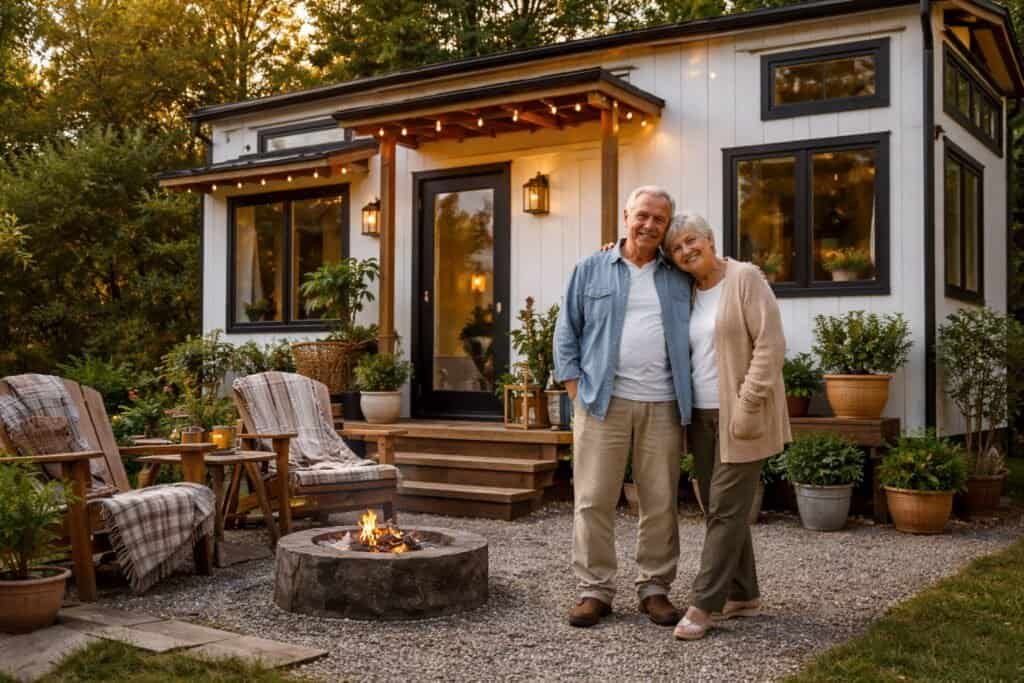
Tiny Home Living for Seniors: How to Downsize Without Regret
Downsizing is often the hardest part of transitioning into tiny home living for seniors. It’s not just about reducing belongings—it’s about reshaping your lifestyle in a way that still feels comfortable and familiar.
A rushed downsizing process is where most regrets happen. Taking a structured, thoughtful approach makes the transition smoother and far less stressful.
Start With Essentials, Not Sentimental Items
Jumping straight into emotional belongings can slow you down. Begin with practical categories:
- Kitchen items you use weekly
- Everyday clothing
- Essential documents
Once the basics are clear, it becomes easier to evaluate what truly matters.
Digitize What You Can
Old photo albums, paperwork, and even books take up valuable space.
- Scan family photos and store them digitally
- Keep important documents in secure cloud storage
- Consider e-readers instead of physical books
This allows you to keep the memories without sacrificing space.
Use the “One-Year Rule”
If you haven’t used something in the past year, chances are you won’t need it in a tiny home.
Exceptions may include:
- Seasonal items
- Emergency tools
- Truly irreplaceable keepsakes
Everything else should be reconsidered.
Plan Storage With Intention
Tiny homes don’t have “extra space.” Every item needs a purpose and a place.
- Choose multi-functional furniture (beds with drawers, foldable tables)
- Prioritize easy-access storage over hidden compartments
- Avoid overfilling—clutter builds up quickly in small spaces
Involve Family Early
Downsizing can be emotional, especially when it comes to heirlooms.
- Offer meaningful items to family members
- Share stories behind sentimental belongings
- Avoid last-minute decisions under pressure
Important reminder: Downsizing is not about losing your past—it’s about creating a more manageable future.
Cost Breakdown: Is a Tiny Home Cheaper for Retirement?
One of the biggest reasons seniors consider tiny home living is cost. While it’s generally more affordable than traditional housing, the real numbers depend on how and where you build or buy.
Average Tiny Home Costs (Realistic Ranges)
| Type of Tiny Home | Estimated Cost (USD) |
| DIY build | $15,000 – $50,000 |
| Professionally built | $50,000 – $120,000+ |
| Luxury/custom tiny homes | $120,000 – $200,000+ |
A professionally built home is often the better choice for seniors, especially when safety and durability are priorities.
Monthly Living Expenses Comparison
| Expense Type | Traditional Home | Tiny Home |
| Utilities | High | Low |
| Maintenance | Moderate–High | Low |
| Property Taxes | High | Low |
| Insurance | Moderate | Low–Moderate |
Key insight: Many seniors reduce their monthly expenses by 30%–70% after downsizing.
Hidden Costs Seniors Shouldn’t Overlook
Even small homes come with unexpected expenses:
- Land purchase or rental fees
- Utility hookups (water, electricity, sewage)
- Accessibility upgrades (ramps, wider doors, bathroom modifications)
- Insurance for tiny homes (can vary widely)
Planning for these upfront prevents budget surprises later.
Is It Worth It Financially?
For many retirees, the answer is yes—but only if the transition is planned carefully.
Tiny home living works best when:
- You minimize debt
- You choose the right location
- You design for long-term use (avoiding costly renovations later)
Best Living Options: Where Can Seniors Put a Tiny Home?
Finding the right place to live is just as important as choosing the tiny home itself. Location affects legality, lifestyle, and overall comfort.
Tiny House Communities (Social & Supportive Living)
Purpose-built tiny house communities are becoming increasingly popular among seniors.
Why they work well:
- Built-in social connections
- Shared amenities (gardens, walking paths, community spaces)
- Easier access to utilities and services
These communities can help reduce isolation, which is a common concern in retirement.
Backyard ADUs (Living Close to Family)
Accessory Dwelling Units (ADUs) allow seniors to place a tiny home on a family member’s property.
Benefits include:
- Close support from family
- Lower land costs
- Increased independence compared to living inside the main home
Before choosing this option, check local regulations to ensure ADUs are allowed.
Rural vs. Urban Placement
Each option has trade-offs:
Rural areas:
- More freedom and fewer zoning restrictions
- Lower land costs
- Less access to healthcare and services
Urban/suburban areas:
- Better access to hospitals, shops, and public transport
- Stricter zoning laws
- Higher land or rental costs
RV Parks and Mobile Tiny Homes
Tiny homes on wheels (THOWs) can sometimes be placed in RV parks.
- Flexible and often more affordable
- Access to utilities already set up
- Community-style living
However, not all parks allow long-term stays, so always confirm policies first.
A Quick Legal Reality Check
Tiny home placement rules vary significantly by location. Before committing, review local zoning regulations carefully.
A helpful starting point is the American Planning Association’s guide to zoning basics:
https://www.planning.org/publications/document/9148170/
Understanding these rules early can save you from costly relocation or legal issues later.
Legal & Zoning Rules Seniors Must Know Before Downsizing
Tiny home living for seniors can quickly become stressful if legal details are overlooked. Regulations vary widely depending on where you live, and what’s allowed in one area may be restricted in another.
Zoning Laws Can Make or Break Your Plan
Local zoning rules determine:
- Where you can place a tiny home
- Whether full-time living is allowed
- Minimum size requirements for dwellings
Some areas still don’t recognize tiny homes as permanent residences, especially tiny homes on wheels (THOWs).
Important: Always check with your local planning office before buying or building.
Minimum Size Requirements Still Exist
Many municipalities enforce minimum square footage rules, often ranging from 400 to 1,000 square feet.
This can affect:
- Whether your tiny home qualifies as a legal dwelling
- Your ability to connect to utilities
- Financing and insurance options
Some regions are becoming more flexible, but it’s not universal yet.
ADU Regulations Can Be a Smart Loophole
Accessory Dwelling Units (ADUs) are one of the most senior-friendly options.
- Often legal in residential neighborhoods
- Easier to permit than standalone tiny homes
- Ideal for living on family property
However, rules vary—some areas limit size, require owner occupancy, or restrict rentals.
Insurance and Financing Realities
Tiny homes don’t always fit traditional housing categories.
- Financing may require personal loans or RV loans instead of mortgages
- Insurance coverage can be limited or specialized
- Homes on wheels are often classified differently than permanent structures
Working with insurers familiar with tiny homes can save time and frustration.
Why Legal Research Matters More for Seniors
Relocating later in life is harder. That’s why getting the legal side right from the start is critical.
Mistakes to avoid:
- Buying a tiny home without a legal place to put it
- Assuming RV parks allow permanent living
- Ignoring permit requirements
Smart move: Confirm zoning, permits, and utility access before making any financial commitment.
Safety First: Making Tiny Home Living for Seniors Comfortable Long-Term
A well-designed tiny home should support you not just today, but years into the future. Safety isn’t an upgrade—it’s a necessity.
Preventing Falls Starts With Smart Design
Falls are one of the biggest risks for seniors, especially in compact spaces.
Simple but effective upgrades:
- Non-slip flooring throughout the home
- Minimal thresholds between rooms
- Secure handrails where needed
- Clear, uncluttered walkways
Even small design flaws can become hazards in tight layouts.
Plan for Emergency Accessibility
In a tiny home, every second counts during an emergency.
- Ensure doors and windows are easy to open
- Install smoke and carbon monoxide detectors
- Keep exits unobstructed at all times
- Use lever-style door handles instead of knobs
These details are often overlooked but make a huge difference in real situations.
Climate Control and Insulation Matter More Than You Think
Tiny homes heat up and cool down faster than traditional houses.
- Proper insulation keeps indoor temperatures stable
- Efficient heating/cooling systems reduce energy costs
- Good ventilation prevents moisture and mold
This is especially important for seniors who may be more sensitive to temperature changes.
Design for Future Mobility Needs
What works today might not work 10 years from now.
- Leave enough space for a walker or wheelchair
- Avoid tight corners or narrow layouts
- Choose furniture that’s easy to move or adjust
Forward-thinking design saves you from costly renovations later.
Community vs. Solo Living: What Works Best for Seniors?
Tiny home living for seniors isn’t just about the house—it’s about the lifestyle around it. One of the biggest decisions is whether to live independently or within a community.
The Benefits of Tiny House Communities
Tiny house communities offer more than just a place to park your home.
Key advantages:
- Built-in social connections
- Shared amenities (gardens, recreation areas, workshops)
- Safer, more supportive environments
- Opportunities for group activities and friendships
For many seniors, this setup helps reduce loneliness and creates a sense of belonging.
Living Alone: Freedom With Responsibility
Solo living appeals to those who value privacy and independence.
Pros:
- Full control over your space and routine
- Quiet, personalized environment
- No shared rules or community restrictions
Cons:
- Risk of isolation
- Limited immediate support in emergencies
- Less social interaction day-to-day
Hybrid Options: The Best of Both Worlds
Some seniors choose a middle ground.
- Placing a tiny home on family land
- Living near, but not inside, a community
- Small co-living setups with a few trusted neighbors
This approach balances independence with support, which is ideal for long-term comfort.
Choosing What Fits Your Lifestyle
The right choice depends on your personality, health, and support system.
- Prefer social interaction? A community may be the better fit
- Value privacy above all? Solo living could work well
- Want flexibility? Hybrid setups offer more options
There’s no one-size-fits-all solution—only what works best for you.
Real-Life Tiny Home Living for Seniors: What to Expect Daily
Tiny home living for seniors feels very different from traditional housing—but not in a bad way. Daily life becomes simpler, more intentional, and often less stressful once you settle in.
A Slower, More Manageable Routine
Morning routines tend to be easier:
- Less space to clean
- Everything within reach
- Faster meal prep in compact kitchens
Many seniors find they spend less time maintaining their home and more time enjoying their day.
Storage Becomes a Habit, Not a Chore
In a tiny home, organization isn’t optional—it’s part of daily life.
- Items need to be returned to their place after use
- Surfaces stay clear to avoid clutter buildup
- Seasonal rotation (clothes, gear) becomes normal
Once this habit forms, the space feels calm rather than cramped.
Entertaining Looks Different—but Still Possible
Hosting doesn’t disappear—it just changes.
- Small gatherings instead of large parties
- Outdoor spaces become extensions of your home
- Foldable furniture adds flexibility when needed
Tip: A simple patio or deck can double your usable living space.
Emotional Adjustment Is Real (But Temporary)
Downsizing can feel strange at first. It’s normal to miss the space or certain belongings.
Over time, most people experience:
- Less mental clutter
- A stronger sense of control
- Greater appreciation for what they kept
What surprises many seniors: The freedom often outweighs what was left behind.
Common Mistakes Seniors Make When Moving Into a Tiny Home
Even well-planned transitions can go wrong if certain details are overlooked. Learning from others’ mistakes can save time, money, and stress.
Choosing Style Over Accessibility
A beautiful tiny home isn’t always practical.
- Loft bedrooms may look appealing but are unsafe long-term
- Narrow layouts can limit movement
Always prioritize function first—especially for aging in place.
Underestimating Storage Needs
Minimalism sounds great until everyday items don’t fit.
- Kitchen tools, medications, and clothing still require space
- Lack of storage leads to clutter quickly
Solution: Design storage around your real daily habits, not ideal ones.
Ignoring Future Health Changes
What works today might not work in five or ten years.
- Tight bathrooms can become unusable
- Steps or raised entries can become obstacles
Planning ahead avoids expensive modifications later.
Skipping Legal Research
One of the most costly mistakes is assuming you can place your tiny home anywhere.
- Some areas restrict full-time living
- Others require permits or specific foundations
Never buy a tiny home without confirming where it can legally go.
Rushing the Downsizing Process
Trying to declutter too quickly often leads to regret.
- Important items get discarded
- Emotional stress increases
Take your time and make thoughtful decisions.
Who Should (and Shouldn’t) Consider Tiny Home Living in Retirement
Tiny home living for seniors isn’t a universal solution. It works incredibly well for some—and not at all for others.
Ideal for Seniors Who:
- Want to reduce living expenses significantly
- Prefer a simpler, low-maintenance lifestyle
- Enjoy organized, clutter-free spaces
- Are physically active and independent
- Value flexibility in where they live
Not Ideal for Seniors Who:
- Require frequent medical care or in-home assistance
- Feel uncomfortable in smaller spaces
- Need room for full-time caregivers
- Have difficulty letting go of belongings
A Quick Self-Check
If you’re unsure, ask yourself:
- Do I want less responsibility or more space?
- Am I comfortable adapting my lifestyle?
- Will this home support me long-term?
Honest answers lead to better decisions.
FAQs About Tiny Home Living for Seniors
Is tiny home living for seniors safe?
Yes—if the home is designed with safety in mind. Features like single-level layouts, non-slip flooring, and accessible bathrooms make a big difference.
Can seniors finance a tiny home?
Financing is possible, but options differ from traditional homes. Many seniors use personal loans, savings, or RV loans for tiny homes on wheels.
What size tiny home is best for retirement?
Most seniors find that 200–400 square feet works well, especially with smart storage and a single-level layout.
Can you legally live in a tiny home full-time?
It depends on local zoning laws. Some areas allow it, while others restrict where tiny homes can be placed. Always check local regulations first.
Are tiny homes suitable for couples in retirement?
Yes, but only with thoughtful design. Adequate storage, separate sleeping preferences, and personal space are key to comfort.
Final Thoughts: Is Tiny Home Living the Right Retirement Move?
Tiny home living for seniors offers a powerful combination of financial freedom, simplicity, and independence—but only when approached with careful planning.
The key is designing a space that supports not just your current lifestyle, but your future needs as well. From accessibility features to legal placement, every decision matters.
If you’re considering downsizing, take the next step thoughtfully:
- Explore different tiny home layouts
- Research zoning laws in your preferred area
- Talk to builders who understand senior-friendly design
A well-planned tiny home isn’t just smaller—it’s smarter, safer, and built for the life you actually want to live.
