
Pill bugs showing up indoors can feel unsettling—especially in small homes where every inch matters. If you’re searching for how to get rid of pill bugs in house, the good news is this problem is usually easy to fix once you understand what’s causing it.
This guide breaks down exactly why pill bugs enter your home, what attracts them, and the fastest ways to eliminate them—with practical, real-world solutions that work in tiny homes, apartments, and full-size houses alike. You’ll also learn how to stop them from coming back for good.
In This Article
Quick Answer: How to Get Rid of Pill Bugs in House (Fast Fixes That Work)
Need a quick solution right now? Start here.
The fastest way to get rid of pill bugs in your house is to remove moisture, seal entry points, and use natural treatments like diatomaceous earth.
Immediate actions you can take today:
- Dry out damp areas (bathrooms, basements, under sinks)
- Fix leaks or condensation issues
- Seal cracks and gaps around doors, windows, and foundations
- Sprinkle diatomaceous earth in problem areas
- Remove indoor clutter and organic debris
Best for: Light to moderate infestations.
Heavier problems usually require combining indoor fixes with outdoor prevention (covered later).
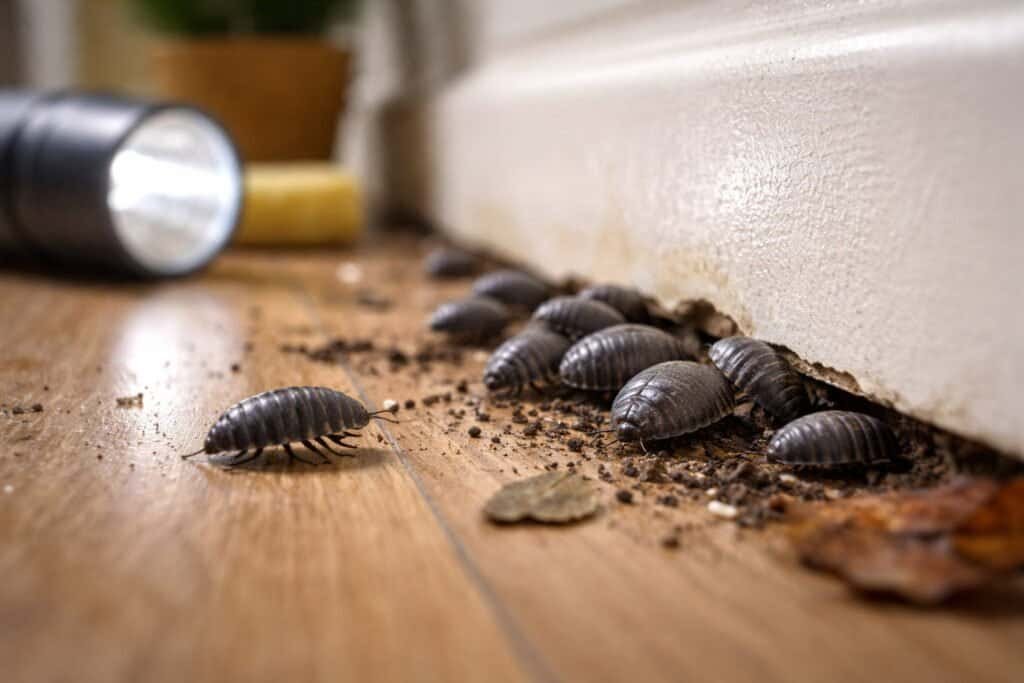
What Are Pill Bugs (and Why Are They in Your House?)
Pill bugs—often called roly-polies or woodlice—aren’t actually insects. They’re crustaceans, more closely related to shrimp than ants or spiders.
Why they show up indoors
Pill bugs don’t come inside randomly. They’re usually searching for one thing:
👉 Moisture
These creatures thrive in damp environments like:
- Soil and mulch
- Leaf piles
- Under rocks or wood
When outdoor conditions become too wet, too dry, or too crowded, they migrate—and your home can become an accidental refuge.
Common myths (that confuse homeowners)
- They don’t infest homes like roaches or termites
- They don’t damage structures or furniture
- They won’t survive long in dry indoor conditions
That last point is key: if pill bugs are staying alive in your house, there’s likely a moisture problem you shouldn’t ignore.
Top Causes: Why You Suddenly Have Pill Bugs Indoors
Seeing pill bugs out of nowhere can feel random—but there’s always a trigger. Identifying it is the fastest path to solving the issue.
Hidden moisture problems (the #1 cause)
- Leaky pipes under sinks
- Damp basements or crawl spaces
- Poor bathroom ventilation
- Condensation around windows
Even small moisture issues can attract pill bugs quickly.
Overwatered indoor plants
Houseplants are a common culprit—especially in small homes.
- Constantly damp soil creates the perfect habitat
- Water trays that don’t drain properly make things worse
Tip: Let the top layer of soil dry before watering again.
Cracks and gaps around your home
Pill bugs don’t need much space to get in.
Common entry points:
- Foundation cracks
- Gaps under doors
- Window frame openings
- Utility line penetrations
Once inside, they head straight for damp areas.
Outdoor conditions pushing them inside
Sometimes the issue starts outside:
- Heavy rain or seasonal humidity spikes
- Mulch or compost placed too close to walls
- Leaf piles against the foundation
Your home becomes the nearest dry (or stable) environment.
Clutter and organic debris indoors
Pill bugs feed on decaying organic matter.
Indoor attractants include:
- Cardboard boxes in damp storage areas
- Wet wood or paper materials
- Forgotten laundry piles in humid corners
Warning Signs of a Pill Bug Problem (Before It Gets Worse)
Pill bugs don’t usually explode into full infestations—but they do leave clues. Catching these early can save you time and frustration.
Where you’ll typically spot them
- Bathrooms (especially near tubs and sinks)
- Basements or crawl spaces
- Under kitchen sinks
- Around sliding doors or window tracks
Seeing one or two occasionally isn’t unusual. Seeing them repeatedly in the same spot is your warning sign.
When they appear
- Mostly at night (they avoid light)
- After rain or humid weather
- In the early morning near damp areas
A sudden increase after storms or seasonal changes usually points to outdoor conditions pushing them inside.
Subtle signs most people miss
- Persistent musty smell (hidden moisture)
- Condensation buildup on windows
- Soft or damp baseboards
- Soil that never dries in indoor plants
Important insight: Pill bugs are often a symptom, not the root problem. If they’re thriving, something in your home is staying too damp.
Step-by-Step Guide: How to Get Rid of Pill Bugs in House Naturally
If you want a safe, effective approach—especially in small spaces or homes with pets—natural methods work extremely well when done correctly.
Step 1: Eliminate moisture at the source
Start here before anything else.
- Fix leaking pipes or faucets
- Use a dehumidifier in damp areas
- Run exhaust fans in bathrooms and kitchens
- Open windows when possible for airflow
No moisture = no survival for pill bugs.
Step 2: Remove their hiding spots
Pill bugs love tight, dark, and damp spaces.
- Clear clutter from floors and corners
- Remove cardboard or paper stored in humid areas
- Elevate items off basement floors
- Keep storage areas dry and organized
Step 3: Apply natural treatments that actually work
Diatomaceous earth (top choice)
- Sprinkle along baseboards, cracks, and entry points
- Works by dehydrating pill bugs
- Safe for humans and pets when used properly
Coffee grounds
- Place in small bowls near problem areas
- Helps repel pill bugs naturally
Neem oil spray
- Mix with water and spray lightly in affected zones
- Acts as a natural deterrent
Pro tip: Focus on entry points and damp zones, not random areas.
Step 4: Improve ventilation
Airflow matters more than most people think.
- Use fans in low-airflow rooms
- Keep closet doors slightly open
- Avoid trapping humidity in tight spaces
This is especially important in tiny homes or compact layouts, where moisture builds up faster.
Step 5: Monitor and adjust
- Check treated areas daily for 3–5 days
- Reapply diatomaceous earth if needed
- Track where bugs appear most often
Consistency beats intensity. Small daily adjustments solve the problem faster than one-time treatments.
Best Products to Kill or Repel Pill Bugs (What Actually Works)
Natural solutions handle most cases. When you need extra help, certain products can speed things up—especially for recurring issues.
Top product types to consider
| Product Type | Best For | Pros | Cons |
| Diatomaceous earth | Light–moderate infestations | Non-toxic, long-lasting | Needs dry conditions |
| Sticky traps | Monitoring + light control | Easy to use | Doesn’t solve root cause |
| Indoor insecticides | Severe infestations | Fast-acting | Use cautiously indoors |
| Bait traps | Targeted areas | Low effort | Slower results |
Natural vs. chemical: which is better?
- Natural solutions
Best for small homes, pets, and long-term prevention
Focus on fixing the root problem - Chemical solutions
Useful for fast knockdown in heavy infestations
Should always be combined with moisture control
Bottom line: Products alone won’t solve the issue. Pair them with moisture and entry-point fixes for real results.
What to avoid using indoors
- Outdoor-only pesticides
- Over-spraying chemicals in living areas
- Strong treatments without ventilation
These can create bigger problems than the bugs themselves—especially in compact spaces.
How to Get Rid of Pill Bugs in House Permanently (Prevention Checklist)
Getting rid of pill bugs once is easy. Keeping them out for good is where most homeowners struggle. This checklist focuses on long-term prevention, so you don’t deal with the same issue again.
Seal every possible entry point
Even tiny gaps are enough for pill bugs to get inside.
- Caulk cracks in foundations and walls
- Install weather stripping around doors
- Seal gaps around pipes and utility lines
- Repair damaged window screens
Pro tip: Check entry points after heavy rain—water often reveals hidden gaps.
Fix drainage and moisture around your home
Outdoor moisture plays a bigger role than most people realize.
- Direct downspouts away from your foundation
- Keep gutters clean and functional
- Avoid water pooling near walls
- Slope soil away from your home
Control indoor humidity (especially in small spaces)
Pill bugs can’t survive long in dry conditions.
- Use a dehumidifier in basements or humid rooms
- Keep indoor humidity below 50%
- Run bathroom fans during and after showers
- Avoid drying clothes indoors without ventilation
Adjust landscaping near your home
Your yard can either attract or repel pill bugs.
- Keep mulch at least 6–12 inches away from walls
- Remove leaf piles and decaying plants
- Store firewood off the ground and away from the house
- Trim plants that touch exterior walls
Weekly prevention checklist
A simple routine goes a long way:
- Inspect damp areas indoors
- Empty plant trays and avoid overwatering
- Check for new cracks or gaps
- Clear debris near your foundation
Key takeaway: Permanent results come from controlling moisture + access + outdoor conditions at the same time.
Common Mistakes That Make Pill Bug Problems Worse
Many homeowners unknowingly make the problem harder to fix. Avoiding these mistakes can save you time, money, and frustration.
Ignoring the real issue (moisture)
Spraying bugs without fixing moisture is like treating symptoms instead of the cause.
Result: Pill bugs keep coming back.
Overusing pesticides indoors
More chemicals don’t equal better results.
- Can create health concerns in small spaces
- Doesn’t solve why pill bugs are there
- Often pushes them into new hiding spots
Only treating inside the house
Pill bugs usually come from outside.
- Skipping outdoor cleanup = ongoing reinfestation
- Ignoring mulch, soil, and debris near walls
Think of it as a two-part system: inside + outside.
Overwatering plants (a hidden trigger)
This is one of the most overlooked causes.
- Constantly damp soil attracts pill bugs
- Water trays become breeding zones
Letting clutter build up in damp areas
Storage spaces can quietly become problem zones.
- Cardboard absorbs moisture
- Packed items reduce airflow
- Hidden damp spots go unnoticed
Indoor vs. Outdoor Pill Bug Control: What’s the Real Difference?
Treating pill bugs effectively means understanding where the problem starts—and how it spreads.
Indoor control: short-term relief
Indoor solutions focus on immediate results.
- Removing visible bugs
- Drying affected areas
- Applying treatments like diatomaceous earth
Goal: Stop current activity.
Outdoor control: long-term protection
Outdoor strategies prevent new bugs from entering.
- Clearing mulch and debris near walls
- Creating a dry perimeter around your home
- Reducing moisture in soil close to the foundation
Goal: Eliminate the source.
The “no-entry zone” strategy (what actually works)
Create a barrier around your home:
- Keep a dry strip of soil or gravel around the foundation
- Avoid heavy mulch directly against walls
- Apply diatomaceous earth or outdoor-safe treatments near entry points
This approach is especially effective for tiny homes and small properties, where the boundary between indoor and outdoor spaces is much tighter.
Quick comparison
| Approach | Focus | Result |
| Indoor control | Current bugs | Immediate relief |
| Outdoor control | Source of the problem | Long-term prevention |
Smart strategy: Combine both.
Relying on just one side is the biggest reason pill bug problems come back.
Related Issues in Small Homes & Tiny Houses (Why Pill Bugs Show Up More Often)
Pill bugs tend to show up more frequently in compact living spaces—and there’s a reason for that.
Smaller homes, especially tiny houses, trap moisture faster and have less airflow, creating ideal conditions for these pests.
Why tiny homes are more vulnerable
- Limited ventilation compared to larger houses
- Moisture builds up quickly from cooking, showering, and breathing
- Less separation between indoor and outdoor environments
- Foundations or trailers sit closer to damp ground
Common problem areas in small spaces
- Under sinks with tight plumbing access
- Compact bathrooms with poor airflow
- Storage areas under beds or built-ins
- Floor edges near entry doors
Smart internal linking opportunity
If you’re dealing with recurring moisture or pest issues, it’s worth improving your setup.
You might want to explore topics like:
- Tiny house ventilation strategies that actually work
- Moisture control tips for small homes
- How to pest-proof a tiny house effectively
These upgrades don’t just prevent pill bugs—they improve overall comfort and air quality in small living spaces.
How Pill Bugs Affect Tiny Homes, Apartments, and Small Living Spaces
Pill bugs may not be destructive, but in small homes, their impact feels bigger.
Faster spread in compact layouts
In a tiny home or apartment:
- One damp area can affect the entire space
- Bugs move quickly between rooms
- Problems become noticeable much sooner
Hidden moisture problems become serious
Tight construction often hides issues like:
- Condensation under flooring
- Moisture behind walls
- Damp insulation in poorly ventilated areas
Pill bugs often act as an early warning system for these hidden problems.
Impact on comfort and hygiene
- Seeing bugs in a small space feels more intrusive
- Damp environments can lead to mold risks
- Air quality may suffer over time
Key insight: In small homes, solving a pill bug problem often means improving your entire living environment—not just removing pests.
When to Call Pest Control (and When You Don’t Need It)
Most pill bug problems can be handled without professional help. Still, there are situations where calling in an expert makes sense.
You probably don’t need pest control if:
- You’re seeing only a few bugs occasionally
- The issue is clearly linked to moisture
- Natural methods are already reducing activity
Consider professional help if:
- Pill bugs keep returning despite fixing moisture issues
- You’re seeing large numbers daily
- There’s a persistent damp or structural issue you can’t identify
DIY vs. professional treatment
| Option | Best For | Cost | Effectiveness |
| DIY methods | Mild to moderate issues | Low | High (if done right) |
| Pest control | Severe or recurring cases | Medium–High | Very high |
What professionals do differently
- Identify hidden moisture sources
- Treat both indoor and outdoor areas
- Apply longer-lasting barrier solutions
Reality check: Even professional treatments won’t work long-term if moisture problems remain.
FAQ: How to Get Rid of Pill Bugs in House
Do pill bugs damage your home?
No. Pill bugs don’t chew wood or damage structures. They’re more of a nuisance than a threat.
Why do pill bugs keep coming back?
They return when moisture and entry points are still present. Fixing both is essential for permanent results.
Are pill bugs harmful to humans or pets?
No. They don’t bite, sting, or carry diseases. They’re harmless but unwanted indoors.
What smells do pill bugs hate?
Strong natural scents like neem oil and coffee grounds can help repel them, though moisture control is more effective.
How long does it take to get rid of pill bugs indoors?
Most cases improve within a few days after fixing moisture issues. Full prevention may take 1–2 weeks.
Do This Immediately If You See Pill Bugs Tonight
Spotting pill bugs at night? Take these quick steps right away:
- Remove visible bugs using a vacuum or tissue
- Dry the area completely (use a fan or towel)
- Sprinkle diatomaceous earth near baseboards or cracks
- Check nearby moisture sources (pipes, plants, condensation)
- Close gaps or doors leading outside
This quick response can stop a small issue from turning into a recurring problem.
A Quick Note on Moisture and Home Health
Pill bugs are often just the beginning. Moisture problems can lead to bigger issues like mold, poor air quality, and structural damage.
For a deeper understanding of how indoor moisture affects your home environment, this guide from the EPA is worth reviewing:
https://www.epa.gov/mold/mold-course-chapter-2
Ready to Take Control of Your Space?
Getting rid of pill bugs in your house isn’t complicated—it just requires the right focus.
Start with moisture control, seal up entry points, and stay consistent with simple maintenance. Small changes can make a big difference, especially in compact homes.
If you’re serious about creating a cleaner, pest-free living space, now’s a great time to upgrade your setup—better airflow, smarter storage, and proper sealing can prevent not just pill bugs, but a wide range of common home issues.
Take action today, and you’ll likely see results faster than you expect.
