
Small flies in house spaces can turn a clean, cozy home into a frustrating mess almost overnight. Whether you’re living in a compact apartment or a carefully designed tiny house, these tiny pests seem to appear out of nowhere—and multiply fast.
This guide breaks everything down in a practical, no-nonsense way. You’ll learn how to identify the exact type of small flies, uncover the real reasons they’re showing up, and take immediate action to get rid of them quickly. Even better, you’ll find long-term strategies to keep them from coming back.
In This Article
Why Are There Small Flies in the House?
Small flies in your house are almost always caused by accessible food, moisture, or hidden breeding spots. Common triggers include overripe fruit, dirty drains, trash buildup, and damp areas like sinks or houseplants.
Do this immediately:
- Toss out overripe produce
- Take out trash and clean bins
- Pour boiling water or vinegar down drains
- Set a simple vinegar trap
Most infestations start small—so quick action can reduce them within 24–48 hours.
What Are These Small Flies in the House? (Identification Guide)
Not all small flies are the same. Identifying the type makes a huge difference in how you eliminate them.
Fruit Flies
- Light brown or tan with red eyes
- Hover near fruit, trash, or sugary liquids
- Fast breeders (eggs hatch in about 24 hours)
Common location: Kitchen counters, compost bins
Drain Flies (Moth Flies)
- Gray, fuzzy appearance (almost moth-like)
- Weak fliers, often seen resting on walls
- Thrive in slimy drain buildup
Common location: Bathroom sinks, showers, kitchen drains
Fungus Gnats
- Small, dark, mosquito-like insects
- Fly around indoor plants
- Larvae live in moist soil
Common location: Houseplants, especially overwatered ones
Small House Flies
- Slightly smaller than typical flies
- Attracted to garbage and organic waste
- More active flyers compared to others
Common location: Trash areas, near windows
Why Identification Matters
Each type has a different breeding source.
Spraying randomly won’t fix the problem—you need to target where they reproduce.
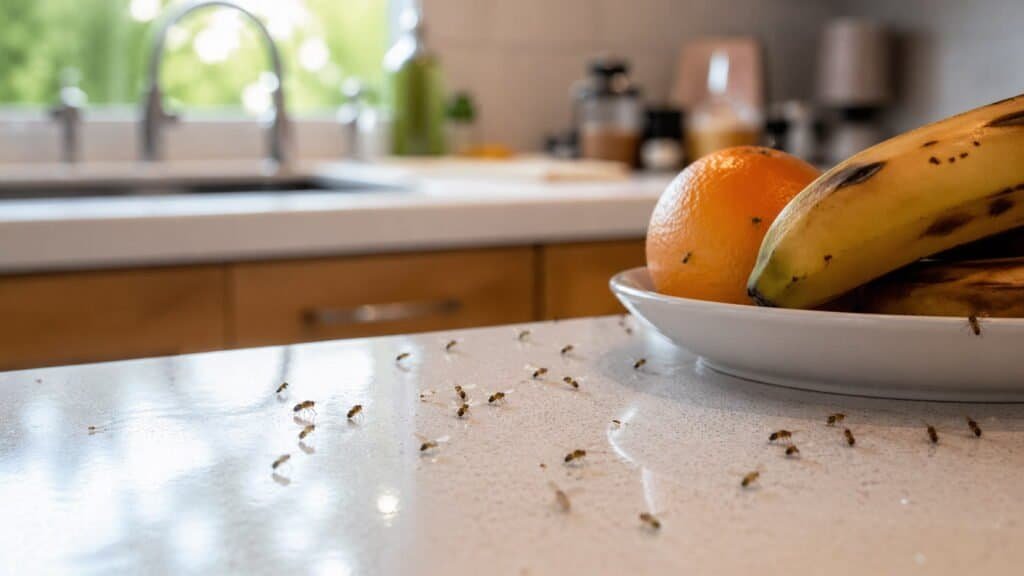
Top Causes of Small Flies in House (Most People Miss #3)
Understanding the root cause is the key to eliminating small flies for good. Most infestations come down to a few overlooked issues.
Food Left Out (The #1 Trigger)
- Overripe fruit on counters
- Open juice, soda, or alcohol containers
- Food scraps in sinks or garbage disposals
Even a small amount of residue can attract flies within hours.
Dirty or Clogged Drains
Organic buildup inside pipes creates the perfect breeding ground—especially for drain flies.
Hidden truth:
A drain can look clean on the surface but still harbor slime deep inside.
Trash and Recycling Bins
- Food residue in cans and bottles
- Trash bags sitting too long indoors
- Sticky spills at the bottom of bins
Warm indoor temperatures speed up fly reproduction.
Overwatered Houseplants
Moist soil attracts fungus gnats, especially in homes with lots of indoor greenery.
Most people miss this:
The problem isn’t the plant—it’s consistently damp soil.
Hidden Breeding Spots (Often Ignored)
- Wet sponges and mops
- Under appliances (fridge, dishwasher)
- Cracks with trapped organic debris
These areas quietly support fly populations without obvious signs.
Seasonal and Environmental Factors
- Warmer weather increases activity
- Open windows without screens
- Nearby outdoor sources (garbage, compost)
Do This Immediately: How to Get Rid of Small Flies Fast
When small flies show up, speed matters. The goal is to remove what attracts them and stop the breeding cycle at the same time.
Step-by-Step Quick Elimination Plan
Remove all food sources
- Store fruit in the fridge (temporarily)
- Wipe down counters, especially sticky spots
- Rinse bottles, cans, and food containers before tossing
Deep-clean drains (this is critical)
- Pour boiling water down each drain
- Follow with baking soda + vinegar
- Let it sit 10–15 minutes, then flush again
Take out trash daily
- Empty indoor bins—even if they’re not full
- Wash the bin with soap and warm water
- Dry completely before adding a new bag
Dry out problem areas
- Fix leaks or standing water
- Let sponges and cloths air dry
- Reduce humidity if possible
Set simple traps right away
- Place near sinks, trash, or fruit areas
- Use multiple traps if infestation is widespread
What to expect:
You should see a noticeable drop in flies within 24–48 hours if you’ve removed the main breeding source.
Best Home Remedies That Actually Work (Tested Solutions)
Plenty of DIY solutions claim to work, but only a few consistently deliver results. These options are simple, affordable, and effective when used correctly.
Apple Cider Vinegar Trap (Most Reliable)
- Fill a small bowl with apple cider vinegar
- Add a few drops of dish soap
- Leave uncovered or loosely covered with plastic wrap (poke small holes)
Why it works: The scent attracts flies, and the soap breaks surface tension so they sink.
Dish Soap + Water Spray
- Mix water with a few drops of dish soap
- Spray directly on flies when you see them
Best for: Immediate knockdown of visible flies
Limitation: Doesn’t address breeding sources
Sugar + Yeast Trap
- Mix warm water, sugar, and a pinch of yeast in a bottle
- Flies are drawn in by fermentation smell
Best for: Fruit flies in kitchens
Downside: Slight odor if left too long
DIY Drain Cleaner (for Drain Flies)
- ½ cup baking soda
- 1 cup vinegar
- Follow with boiling water
Use this nightly for a few days to break down organic buildup.
Which Remedy Should You Choose?
| Situation | Best Option |
| Kitchen fruit flies | Apple cider vinegar trap |
| Drain flies | DIY drain cleaner |
| Houseplant gnats | Reduce watering + traps |
| Quick visible control | Soap spray |
Pro tip: Combining traps + cleaning is far more effective than using one method alone.
How to Get Rid of Small Flies in House Permanently (Long-Term Fix)
Quick fixes help, but long-term success depends on breaking the life cycle completely. That means eliminating eggs, larvae, and breeding conditions.
Break the Breeding Cycle
Small flies reproduce quickly—some species go from egg to adult in under a week.
To stop the cycle:
- Clean problem areas daily for at least 5–7 days
- Keep traps active even after flies disappear
- Target hidden areas (not just visible ones)
Deep Cleaning Checklist (Don’t Skip These)
- Scrub inside trash bins and lids
- Clean under appliances (especially fridge and stove)
- Wash reusable grocery bags
- Disinfect sink overflows and drain covers
- Replace old sponges and cleaning cloths
Even small residues can restart the infestation.
Eliminate Moisture (The Hidden Trigger)
Moisture is one of the biggest drivers of recurring fly problems—especially in compact homes and tiny houses where airflow may be limited.
Focus on:
- Fixing slow leaks
- Improving ventilation
- Letting soil dry between plant watering
- Using a dehumidifier in humid climates
Why Infestations Keep Coming Back
Recurring small flies usually mean one thing:
A hidden breeding source still exists.
Common overlooked causes:
- Organic sludge deep in pipes
- Forgotten trash or spills behind furniture
- Constantly damp plant soil
- Recycling bins with residue
Smart Habit Changes That Work Long-Term
- Store produce in sealed containers
- Rinse recyclables immediately
- Clean drains weekly (quick vinegar flush works)
- Take trash out before it smells
Tiny Home Insight (Why This Matters More in Small Spaces)
In small homes and tiny houses, everything is closer together—which means smells, moisture, and food sources are more concentrated.
That makes prevention even more important:
- One overripe banana can attract flies faster
- A slightly dirty drain affects the entire space
- Poor airflow increases humidity issues
Good habits = fewer pests, better living comfort.
Small Flies in Specific Areas: Targeted Solutions
Different areas of your home attract different types of small flies. Zeroing in on the location helps you fix the problem faster and more effectively.
Kitchen (Fruit Flies Hotspot)
Fruit flies thrive where food and moisture meet.
What to do:
- Store fruit in the fridge until the problem is gone
- Wipe counters daily, especially sticky spots
- Clean garbage disposals with ice + vinegar or citrus peels
- Empty trash every night
Extra tip: Check forgotten areas like bread boxes or pantry corners.
Bathroom (Drain Flies Zone)
Bathrooms often harbor drain flies due to constant moisture.
What to do:
- Scrub inside drains using a brush (not just liquid cleaners)
- Use a baking soda + vinegar flush nightly for several days
- Clean sink overflows (a commonly missed breeding spot)
- Keep surfaces dry between uses
Around Houseplants (Fungus Gnats Problem)
Indoor plants are a major source of small flies when overwatered.
What to do:
- Let the top 1–2 inches of soil dry before watering
- Switch to well-draining soil if needed
- Use sticky traps near plants
- Remove dead leaves and organic debris
Pro insight: One overwatered plant can affect your entire living space.
Near Windows and Lights
Small flies are naturally drawn to light and often gather near windows.
What to do:
- Check window seals and screens for gaps
- Clean window tracks where debris collects
- Reduce indoor lighting at night near open windows
In Tiny Homes and Small Spaces
Compact layouts make it easier for flies to spread quickly.
What to do:
- Keep multi-use areas (kitchen/living) extra clean
- Improve airflow with fans or ventilation
- Stay consistent with daily cleaning routines
Warning Signs You Have a Bigger Infestation
A few flies are annoying. A growing population signals a deeper issue that needs immediate attention.
Sudden Increase in Numbers
Seeing dozens of flies within a day or two usually means active breeding nearby.
Visible Larvae or Maggots
Tiny worm-like larvae in drains, trash, or soil confirm that flies are reproducing inside your home.
Flies Keep Coming Back After Cleaning
Recurring flies often point to:
- Missed breeding spots
- Incomplete cleaning
- Hidden moisture issues
Unpleasant Odors
A sour or musty smell may indicate:
- Rotting organic matter
- Buildup inside drains
- Forgotten spills or trash
Activity Concentrated in One Area
If flies gather in a specific spot, that’s almost always where the problem starts.
What this means:
Ignoring these signs allows the infestation to grow quickly. Acting early saves time, effort, and frustration.
Common Mistakes That Make Small Flies Worse
Many homeowners unknowingly make the problem worse while trying to fix it. Avoid these common pitfalls.
Ignoring Drains
Surface cleaning alone won’t remove the organic buildup where flies breed.
Fix: Clean inside drains, not just around them.
Overwatering Plants
Constantly damp soil creates ideal conditions for fungus gnats.
Fix: Let soil dry between watering cycles.
Relying Only on Sprays
Sprays kill visible flies but don’t eliminate eggs or larvae.
Reality check:
No source removal = problem returns.
Leaving Trash Too Long
Even sealed bins can attract flies if waste sits for days.
Fix: Empty trash regularly and clean bins weekly.
Delaying Action
Small fly problems escalate quickly due to rapid breeding cycles.
Fix: Take action as soon as you notice the first few flies.
Missing Hidden Spots
Areas like under appliances or behind furniture often go unchecked.
Fix: Do occasional deep cleaning beyond visible surfaces.
Prevention Checklist: Keep Small Flies Out for Good
Once you’ve cleared the infestation, prevention becomes your best defense. Small flies only stick around when your home offers food, moisture, and breeding spots—remove those, and they’re gone for good.
Daily Habits That Make a Big Difference
- Wipe down kitchen surfaces after every meal
- Store fruits and vegetables properly (fridge or sealed containers)
- Rinse dishes instead of leaving them in the sink overnight
- Keep sink drains free of food scraps
Weekly Cleaning Routine (Quick but Powerful)
- Flush drains with hot water or vinegar
- Wash trash cans and recycling bins
- Clean under and behind small appliances
- Replace or sanitize sponges and cloths
Drain Maintenance Tips (Often Overlooked)
- Use a drain brush weekly to remove buildup
- Avoid pouring grease down the sink
- Run hot water after using the garbage disposal
Consistency here prevents one of the most common sources of small flies.
Indoor Plant Care Adjustments
- Water only when soil feels dry
- Use pots with proper drainage
- Remove decaying leaves immediately
Seasonal Prevention Tips
- Install or repair window screens
- Keep doors closed or use door sweeps
- Be extra cautious during warmer months when flies reproduce faster
Quick Prevention Checklist
Keep this simple checklist in mind:
- No exposed food
- No standing water
- No dirty drains
- No neglected trash
If those four are under control, small flies rarely become a problem.
Natural vs Chemical Solutions: What Works Best?
Choosing the right method depends on how severe the problem is and your living situation—especially in small homes where air quality matters.
Natural (DIY) Solutions
Pros:
- Safe for kids and pets
- Budget-friendly
- Easy to implement
Cons:
- May take longer for large infestations
- Requires consistency
Best for: Light to moderate problems, ongoing prevention
Chemical Solutions (Store-Bought Products)
Pros:
- Faster results for heavy infestations
- Designed for specific pests
Cons:
- Can introduce chemicals into small living spaces
- Doesn’t always address root causes
Best for: Severe infestations or when DIY methods fail
Professional Pest Control
Pros:
- Targets hidden breeding sources
- Long-term, reliable solutions
Cons:
- Higher cost
- Requires scheduling and access
Best for: Persistent or large-scale infestations
Side-by-Side Comparison
| Option | Speed | Safety | Best Use Case |
| DIY remedies | Moderate | High | Prevention & small issues |
| Chemical products | Fast | Moderate | Heavy infestations |
| Professional service | Very fast | High (managed) | Recurring problems |
What’s the Smart Choice?
For most homes—especially tiny homes or compact spaces—start with natural methods and strong cleaning habits.
Move to chemical or professional options only if the problem continues.
Related Problem: Tiny Bugs That Look Like Flies (Don’t Misidentify These)
Not every tiny flying insect in your home is actually a “fly.” Misidentifying them can lead to using the wrong solution—and wasting time.
Gnats vs Fruit Flies vs Drain Flies
| Pest | Appearance | Main Source | Key Behavior |
| Fruit flies | Tan, red eyes | Fruit, sugar | Hover near food |
| Drain flies | Fuzzy, gray | Drains | Rest on walls |
| Fungus gnats | Dark, thin | Soil | Fly around plants |
Other Lookalike Pests
- Phorid flies (similar to fruit flies but linked to decaying matter)
- Mosquito-like insects that thrive in damp areas
- Flying ants or termites (seasonal and more serious)
Why This Matters
Using the wrong treatment can make things worse. For example:
- Treating fungus gnats like fruit flies won’t fix overwatered soil
- Ignoring drain buildup allows drain flies to multiply
When to Call a Professional Pest Control Service
Most cases of small flies in house settings can be handled with cleaning and DIY methods. Still, some situations go beyond what home solutions can fix.
Signs It’s Time to Bring in a Pro
- Flies keep returning after multiple cleaning cycles
- You can’t locate the breeding source
- Large numbers appear daily despite traps
- Suspected hidden issues (inside walls, under flooring, or deep plumbing)
What Professionals Do Differently
- Use specialized tools to inspect hidden areas
- Apply targeted treatments based on the exact species
- Eliminate breeding sources you can’t easily reach
- Provide prevention plans tailored to your home layout
What It Typically Costs (U.S. Estimate)
- One-time treatment: $100–$300
- Ongoing service: $30–$70 per month
Prices vary depending on infestation severity and home size.
Is It Worth It?
For persistent infestations—especially in tiny homes or compact spaces where problems spread quickly—professional help can save time and prevent recurring issues.
FAQ: Small Flies in House
Why do I suddenly have small flies in my house?
They usually appear when food, moisture, or waste becomes available—often from overripe fruit, dirty drains, or trash buildup.
How long do small flies live indoors?
Most small flies live about 7–14 days, but they reproduce quickly, which is why infestations seem endless.
Can small flies be harmful?
While not dangerous in most cases, they can spread bacteria by landing on food and surfaces.
Do small flies go away on their own?
No. Without removing their breeding source, they will continue multiplying.
What smells attract small flies the most?
Fermenting fruit, sugary liquids, garbage, and organic buildup in drains are the biggest attractants.
How do I find where they’re coming from?
Watch where they gather most—near drains, trash, or plants. That area is usually the source.
Bonus: Simple 7-Day Plan to Eliminate Small Flies Completely
If you want a clear, no-guesswork approach, follow this practical 7-day reset plan.
Day 1–2: Remove the Source
- Throw out old food
- Deep-clean kitchen and drains
- Take out trash and wash bins
Day 3–4: Trap and Reduce Population
- Set vinegar traps in problem areas
- Use sticky traps near plants
- Spray visible flies if needed
Day 5–6: Target Hidden Spots
- Clean under appliances
- Scrub drains again
- Check for overlooked moisture
Day 7: Lock in Prevention
- Start daily cleaning habits
- Adjust plant watering routines
- Maintain drains weekly
Result:
By the end of the week, most homes see a near-complete elimination of small flies.
A Smarter, Cleaner Home Starts Here
Small flies in house environments aren’t just annoying—they’re a sign something in your home needs attention. The good news is that once you understand what’s causing them, the solution becomes straightforward.
Consistency beats complexity. A clean kitchen, dry surfaces, and well-maintained drains will stop most infestations before they even start.
For deeper insight into maintaining a clean and healthy home environment, you can also explore guidance from the CDC:
https://www.cdc.gov/healthywater/hygiene/index.html
Take a few minutes today to tackle the source—and you’ll enjoy a fresher, more comfortable space tomorrow.
