
2027 interior design trends represent more than a visual refresh—they signal a fundamental change in how homes are designed, experienced, and lived in. Homes are no longer static spaces built only for aesthetics. They now respond to emotional well-being, environmental responsibility, and daily adaptability.
Design research from global studios and housing reports shows that by 2027, over 60% of homeowners prioritize wellness, flexibility, and sustainability over purely decorative upgrades. This shift explains why interior design in 2027 feels warmer, more intentional, and deeply personal.
Key forces shaping 2027 interior design trends include:
- Remote and hybrid lifestyles becoming permanent
- Rising demand for low-impact, long-lasting materials
- Emotional comfort replacing visual excess
- Smaller, smarter spaces driving innovation
Design in 2027 is not about following trends—it’s about building spaces that age well, function effortlessly, and feel deeply human.
In This Article
The Core Philosophy Behind 2027 Interior Design Trends
At the heart of 2027 interior design trends lies a powerful philosophy: homes must serve people, not the other way around. Visual beauty remains important, yet it now works in harmony with usability, sustainability, and emotional comfort.
Human-Centered Design Takes Priority
Interior spaces in 2027 are shaped around how people move, rest, work, and connect. Layouts respond to real behavior patterns rather than showroom aesthetics.
Core principles defining 2027 interiors:
- Function-led layouts that reduce wasted space
- Emotionally grounding environments using natural cues
- Design longevity over trend-chasing décor
A growing number of designers follow the “slow interior” approach, where materials and layouts are chosen for a 10–20 year lifespan, not seasonal refresh cycles.
Personalization Replaces One-Size-Fits-All Interiors
Cookie-cutter interiors are fading fast. Homes now reflect personal routines, cultural identity, and lifestyle needs.
Examples of personalization in 2027 interior design trends:
- Custom storage tailored to daily habits
- Furniture scaled precisely to room proportions
- Finishes selected for sensory preference, not resale appeal
“The future of interior design belongs to spaces that feel honest, not perfect.” — Contemporary interior design studio insight
Wellness as a Design Foundation
Wellness-driven interiors go far beyond indoor plants. Designers integrate features that support mental clarity, physical comfort, and sensory balance.
Wellness elements commonly found in 2027 interiors:
- Acoustic-softening surfaces
- Circadian lighting strategies
- Low-toxicity finishes and adhesives
Color Evolution in 2027 Interior Design Trends
Color plays a central role in defining 2027 interior design trends, shifting away from stark contrasts toward emotionally resonant palettes. Shades feel grounded, layered, and quietly expressive rather than bold for attention’s sake.
Dominant Color Directions for 2027
Interior color forecasting points to hues inspired by nature, minerals, and organic environments.
Key color families shaping 2027 interiors:
| Color Group | Description | Common Applications |
| Warm Neutrals | Sand, clay, oat, limestone | Walls, large furniture |
| Mineral Tones | Iron, slate, basalt, chalk | Kitchens, bathrooms |
| Muted Earth Colors | Moss green, terracotta, umber | Accent walls, textiles |
| Soft Darks | Espresso, charcoal brown | Bedrooms, libraries |
Layered Color Over Flat Finishes
Flat white interiors give way to tonal layering, where multiple shades of the same color family create depth without visual clutter.
Effective color strategies in 2027 include:
- Monochromatic rooms with varied textures
- Low-contrast transitions between walls, ceilings, and cabinetry
- Matte and eggshell finishes reducing glare
Psychology-Driven Color Selection
Color choices now align closely with emotional outcomes. Designers select hues based on how spaces should feel, not just how they photograph.
Examples:
- Bedrooms favor warm, low-saturation tones to improve rest
- Living areas use grounding neutrals to encourage calm interaction
- Work zones incorporate muted greens and browns to reduce mental fatigue
According to environmental psychology studies summarized by the American Society of Interior Designers, earth-based palettes consistently improve perceived comfort and focus in residential spaces (https://www.asid.org).
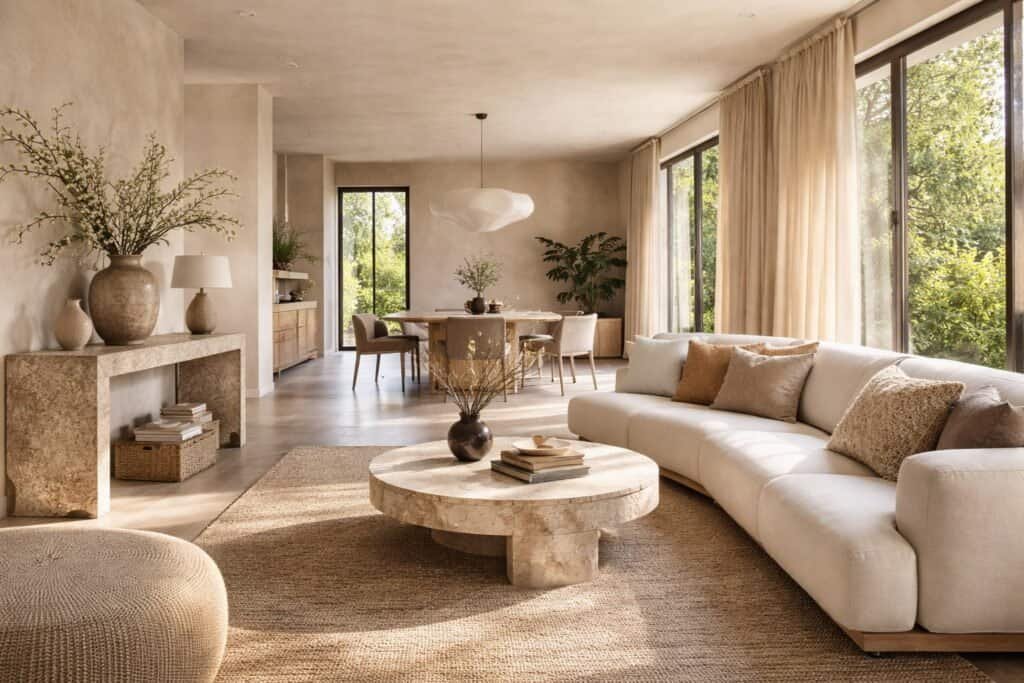
Material Innovation Defining 2027 Interior Design Trends
Materials take center stage in 2027 interior design trends, not as background elements but as defining features of a space. The focus shifts toward surfaces that feel honest, age gracefully, and leave a lighter environmental footprint.
Natural and Bio-Based Materials Lead the Way
Designers increasingly favor materials that require minimal processing while offering durability and character.
Most influential materials in 2027 interiors include:
- Solid wood with visible grain and knots
- Natural stone such as travertine, soapstone, and limestone
- Clay, terracotta, and ceramic composites
- Bio-resins and plant-based laminates
Unlike earlier trends that masked imperfections, 2027 interiors celebrate them. Veining, tonal variation, and subtle flaws add authenticity rather than detract from value.
Recycled and Engineered Materials Gain Prestige
Sustainability no longer signals compromise. Advanced engineering now produces recycled materials that outperform traditional options.
Examples gaining traction:
- Recycled glass countertops with refined finishes
- Reclaimed wood reprocessed for structural stability
- Composite panels made from agricultural waste
Fact: By 2027, recycled-content materials account for an estimated 35–40% of interior surface specifications in new residential builds across urban markets.
Surface Finishes Emphasize Touch and Depth
High-gloss surfaces fade as tactile finishes take over. Homeowners increasingly choose materials based on how they feel, not just how they look.
Preferred finishes include:
- Honed or brushed stone
- Limewash and mineral-based paints
- Hand-applied plaster walls
- Soft-touch cabinetry coatings
Furniture Silhouettes Shaping 2027 Interior Design Trends
Furniture design in 2027 interior design trends reflects evolving lifestyles. Pieces feel lighter, more fluid, and easier to adapt as spaces change throughout the day.
Soft Geometry Replaces Hard Angles
Straight lines and rigid forms give way to gentle curves and rounded edges. This shift improves both comfort and visual flow.
Popular furniture characteristics in 2027:
- Curved sofas and lounge chairs
- Rounded dining tables and islands
- Low-profile seating with deep proportions
Curves soften rooms psychologically, making spaces feel more welcoming and less formal.
Modular and Flexible Furniture Becomes Essential
With homes serving multiple purposes, furniture must adapt quickly.
High-demand furniture types include:
- Sectional sofas with reconfigurable modules
- Extendable dining tables
- Stackable or nesting side tables
- Storage-integrated seating
These designs allow a single room to function as a living area, workspace, and social hub without feeling crowded.
Smaller Footprints, Higher Comfort
Rather than oversized statement pieces, 2027 furniture prioritizes efficient scale.
Designers focus on:
- Slim arms and legs to maximize visual space
- Elevated bases to improve airflow and cleaning
- Multi-functional designs without visual bulk
“Comfort in 2027 isn’t about size—it’s about proportion and balance.”
Texture-Driven Interiors as a 2027 Design Priority
Texture becomes one of the most powerful tools within 2027 interior design trends, adding depth and warmth without relying on bold colors or heavy décor.
Layering Textures for Visual Balance
Successful interiors in 2027 combine multiple textures to create contrast while maintaining harmony.
Common texture pairings:
- Smooth plaster walls with woven textiles
- Raw wood furniture against stone surfaces
- Matte cabinetry alongside brushed metal accents
Rather than overwhelming a room, thoughtful layering enhances richness and subtle complexity.
Textiles Take a Natural Turn
Synthetic fabrics lose popularity as natural fibers regain dominance.
Top textile choices for 2027 interiors:
- Linen and linen blends
- Wool and felted wool
- Cotton canvas
- Jute and hemp for rugs and accents
These materials regulate temperature naturally and improve tactile comfort.
Handcrafted Details Add Depth and Meaning
Handmade elements play a vital role in preventing spaces from feeling sterile.
Examples include:
- Hand-thrown ceramics
- Artisan-woven rugs
- Custom wood joinery
- Hand-finished wall treatments
Imperfection becomes a design asset, signaling care, craftsmanship, and individuality.
Lighting Concepts Influencing 2027 Interior Design Trends
Lighting evolves into a design language of its own within 2027 interior design trends. Rather than acting as a finishing touch, lighting now shapes mood, functionality, and spatial perception from the very beginning of the design process.
Sculptural Lighting as Functional Art
Decorative fixtures double as visual anchors. Pendant lights, wall sconces, and floor lamps increasingly resemble art installations.
Defining characteristics of 2027 lighting:
- Organic and asymmetrical forms
- Natural materials such as stone, paper, ceramic, and wood
- Matte finishes replacing polished metals
Lighting pieces are intentionally fewer, yet more expressive. One carefully selected fixture often replaces multiple smaller lights.
Layered and Indirect Lighting Takes Over
Single overhead lighting fades out in favor of layered illumination. Designers combine ambient, task, and accent lighting to achieve balance.
Common layered lighting strategies:
- Cove lighting integrated into ceilings
- Wall-wash lighting to highlight texture
- Low-level lighting for evening comfort
This approach reduces eye strain and creates adaptable environments throughout the day.
Circadian-Friendly Lighting Design
Well-being strongly influences 2027 interior design trends, and lighting plays a major role. Circadian-aligned lighting adjusts color temperature based on time of day.
Benefits include:
- Improved sleep cycles
- Reduced fatigue
- Enhanced focus during daytime hours
Warm light dominates evenings, while neutral daylight tones support productivity during mornings and afternoons.
Sustainability as a Non-Negotiable in 2027 Interior Design Trends
Sustainability moves from trend to standard within 2027 interior design trends. Design decisions increasingly consider environmental impact alongside aesthetics and cost.
Low-Impact Materials Become the Default
Interior specifications prioritize materials that reduce carbon footprint and chemical exposure.
Most requested sustainable features include:
- FSC-certified or reclaimed wood
- Low-VOC paints and finishes
- Natural insulation materials
- Recycled metal and glass components
Designers now evaluate materials based on full lifecycle impact rather than surface appearance alone.
Longevity Over Disposable Design
Fast-changing décor cycles give way to long-term thinking. Homeowners prefer fewer items with higher quality and longer lifespan.
Key longevity principles:
- Neutral base layers with adaptable accents
- Durable surfaces designed to patina gracefully
- Timeless layouts over trend-driven floor plans
Fact: Homes designed with long-life materials can reduce renovation waste by up to 30% over a 15-year period.
Energy-Efficient Interiors Gain Visual Appeal
Energy efficiency no longer compromises style. Windows, insulation, and lighting integrate seamlessly into design concepts.
Popular energy-conscious design choices:
- High-performance glazing with minimal frames
- Built-in shading solutions
- Smart climate zoning
Technology Integration Within 2027 Interior Design Trends
Technology becomes nearly invisible in 2027 interior design trends, blending quietly into interiors rather than demanding attention.
Invisible Tech Replaces Gadget-Centered Design
Visible screens, wires, and bulky devices decline. Technology hides within walls, furniture, and architectural details.
Examples include:
- Voice-controlled lighting concealed within ceilings
- Flush-mounted smart panels
- Integrated charging surfaces in furniture
The goal is intuitive control without visual disruption.
Design-Led Automation Takes Priority
Rather than installing technology first, designers now plan interiors first, then integrate smart systems around them.
Key smart features in 2027 interiors:
- Automated lighting scenes aligned with daily routines
- Climate systems that respond to occupancy
- Window treatments synchronized with daylight levels
Digital Minimalism Shapes Tech Choices
Homeowners become selective about technology, focusing on features that genuinely improve comfort.
Preferred approach:
- Fewer devices with broader functionality
- Simplified interfaces
- Systems that work quietly in the background
Technology in 2027 homes exists to support life, not distract from it.
Space Planning and Layout Trends for 2027 Interiors
Space planning becomes a defining pillar of 2027 interior design trends, driven by the need for flexibility, efficiency, and emotional comfort. Homes must adapt seamlessly to changing daily rhythms without constant rearrangement.
Fluid Layouts Replace Rigid Room Definitions
Strict room boundaries continue to dissolve. Instead of designing spaces for single purposes, 2027 interiors support multiple activities within the same footprint.
Common layout strategies include:
- Living areas that double as work and social zones
- Dining spaces integrated into kitchens without visual clutter
- Bedrooms incorporating reading or wellness corners
Subtle zoning methods, rather than walls, define function.
Zoning Without Walls Becomes the Norm
Designers rely on visual and material cues to separate spaces while maintaining openness.
Effective zoning tools:
- Changes in floor material or texture
- Ceiling height variations or beams
- Area rugs anchoring functional zones
- Lighting layers defining activity areas
This approach improves flow while preserving privacy where needed.
Furniture-Led Space Definition
Furniture placement increasingly determines layout. Modular and movable pieces allow spaces to shift as needs change.
Examples:
- Sofas creating informal room dividers
- Open shelving acting as partial partitions
- Sliding panels offering temporary separation
Biophilic Elements Leading 2027 Interior Design Trends
Nature-inspired design deepens its influence within 2027 interior design trends, evolving beyond decorative greenery into a holistic design strategy.
Beyond Houseplants: Integrated Natural Design
Biophilic interiors now incorporate nature at an architectural level.
Key elements include:
- Maximized daylight through larger openings
- Natural airflow strategies
- Materials that echo outdoor textures and tones
Greenery becomes intentional rather than ornamental.
Indoor Landscaping Gains Popularity
Larger-scale plant integration defines many 2027 interiors.
Popular applications:
- Built-in planters dividing spaces
- Vertical green walls in living areas
- Herb walls integrated into kitchens
These features improve air quality and create a calming sensory experience.
Connection to Outdoor Spaces Strengthens
Visual and physical connections to outdoor environments become essential.
Design solutions include:
- Floor-to-ceiling glazing
- Continuous flooring materials extending outdoors
- Natural color palettes inspired by local landscapes
Fact: Homes with strong indoor–outdoor connections report higher occupant satisfaction and lower stress levels.
Artisanal Influence in 2027 Interior Design Trends
Handcrafted elements gain renewed importance within 2027 interior design trends, responding to the desire for authenticity and individuality.
Craftsmanship Over Mass Production
Mass-produced perfection loses appeal. Artisanal details add warmth and narrative to interiors.
Highly valued handcrafted elements:
- Custom millwork
- Hand-finished plaster walls
- Artisan lighting fixtures
- Locally made furniture pieces
Each item contributes a sense of place and story.
Imperfect Finishes as a Design Statement
Uniformity gives way to character. Slight variations in texture and tone are intentionally preserved.
Examples include:
- Uneven ceramic glazes
- Visible brush strokes in wall finishes
- Natural wood variations
These details prevent interiors from feeling sterile or overly curated.
Cultural Storytelling Through Design
Artisan pieces often reflect regional traditions and personal heritage.
Ways designers incorporate storytelling:
- Locally sourced materials
- Cultural motifs interpreted subtly
- Objects collected over time rather than purchased in sets
A home designed for 2027 feels collected, not decorated.
Minimalism Reimagined in 2027 Interior Design Trends
Minimalism evolves significantly within 2027 interior design trends, moving away from stark, empty spaces toward interiors that feel warm, layered, and deeply intentional.
From Cold Minimalism to Warm Simplicity
Ultra-white rooms and hard contrasts soften into warmer, more inviting environments.
Key shifts defining 2027 minimalism:
- Neutral palettes with depth and undertone variation
- Natural materials replacing synthetic finishes
- Thoughtful curation rather than visual emptiness
Every object serves a purpose or carries meaning.
Fewer Objects, Higher Impact
Rather than filling rooms with décor, designers select fewer pieces with stronger presence.
Examples:
- One sculptural chair instead of multiple accent pieces
- A single large artwork replacing gallery walls
- Statement lighting acting as both function and décor
This approach improves visual calm while increasing emotional connection.
Minimalism Designed for Daily Living
Function drives form. Storage, seating, and surfaces are planned to support real routines.
Practical features include:
- Hidden storage integrated into architecture
- Easy-to-maintain surfaces
- Flexible layouts that evolve over time
Room-by-Room Application of 2027 Interior Design Trends
Applying 2027 interior design trends successfully requires adapting principles to each space rather than copying a single look throughout the home.
Living Rooms
Living spaces prioritize comfort, adaptability, and connection.
Design highlights:
- Modular seating arrangements
- Layered lighting for different moods
- Textural rugs and soft furnishings
Kitchens
Kitchens blend seamlessly into living areas while maintaining strong functionality.
Trending features:
- Concealed storage systems
- Natural stone or composite countertops
- Integrated appliances with minimal visual presence
Bedrooms
Bedrooms become restorative sanctuaries.
Design elements include:
- Low-profile beds
- Warm, cocooning color palettes
- Soft textiles and indirect lighting
Bathrooms
Bathrooms adopt a spa-like atmosphere.
Popular choices:
- Stone or concrete-look surfaces
- Walk-in showers with minimal hardware
- Natural lighting wherever possible
Top Interior Design Trends for 2027 That Will Define Modern Homes
Interior design in 2027 reflects a deeper shift toward intentional living. Visual trends still matter, but function, comfort, and long-term livability now guide most decisions. Spaces are being designed to feel calm, flexible, and emotionally grounding rather than overly styled or trend-driven.
Color palettes are setting the tone for this evolution. Warmer neutrals, muted botanical shades, and layered earth tones are influencing everything from walls to upholstery. A broader look at interior color trends 2027 shows how cohesive palettes are helping create smoother transitions between rooms. Kitchens are also playing a major role in defining overall design direction, especially as layouts become more open and integrated. Inspiration drawn from kitchen trends 2027 highlights how cabinetry, surfaces, and lighting now work together as a unified system rather than separate elements.
Material choices are evolving just as strongly. Flooring, textiles, and architectural details are being selected for texture and longevity instead of dramatic contrast. Insights from 2027 flooring trends reinforce how surface continuity can visually expand a home while maintaining warmth.
Design in 2027 feels less about statement pieces and more about balance. Every element supports the overall atmosphere, creating spaces that feel cohesive, adaptable, and built for real life.
Final Thoughts: How to Future-Proof Your Home With 2027 Interior Design Trends
The essence of 2027 interior design trends lies in thoughtful decision-making rather than chasing fleeting styles. Interiors designed for 2027 balance beauty, comfort, sustainability, and adaptability.
Key Takeaways for Long-Term Design Success
- Choose materials that age gracefully
- Prioritize layout flexibility over fixed functions
- Invest in craftsmanship and quality
- Let technology support design, not dominate it
Homes that follow these principles remain relevant well beyond 2027, adapting naturally as lifestyles evolve.
Design organizations such as the American Society of Interior Designers continue to emphasize wellness, sustainability, and human-centered planning as the foundation of future interiors, reinforcing the long-term value of these trends: https://www.asid.org
Designing for 2027 means creating spaces that feel grounded today and resilient tomorrow.
