
Spotting white spiders in bathroom spaces can feel unsettling—especially when you don’t know why they’re there or if they’re dangerous. The good news? Most of the time, these pale spiders are harmless, but their presence usually signals something else going on in your home.
This guide breaks down exactly why white spiders show up in bathrooms, how to identify them, and what you can do right away to remove and prevent them. You’ll also learn how moisture, ventilation, and tiny home layouts can make the problem worse—and how to fix it efficiently.
In This Article
Quick Answer: Why Are There White Spiders in Your Bathroom?
White spiders appear in bathrooms because the environment gives them everything they need to survive: moisture, shelter, and food.
Here’s the quick breakdown:
- High humidity creates the perfect habitat
- Small insects (like flies or gnats) attract spiders as a food source
- Dark, quiet corners provide ideal hiding spots
- Cracks and vents allow easy entry
Are they dangerous?
In most cases, no. The majority of white or pale spiders found in bathrooms are harmless and more interested in catching bugs than bothering you.
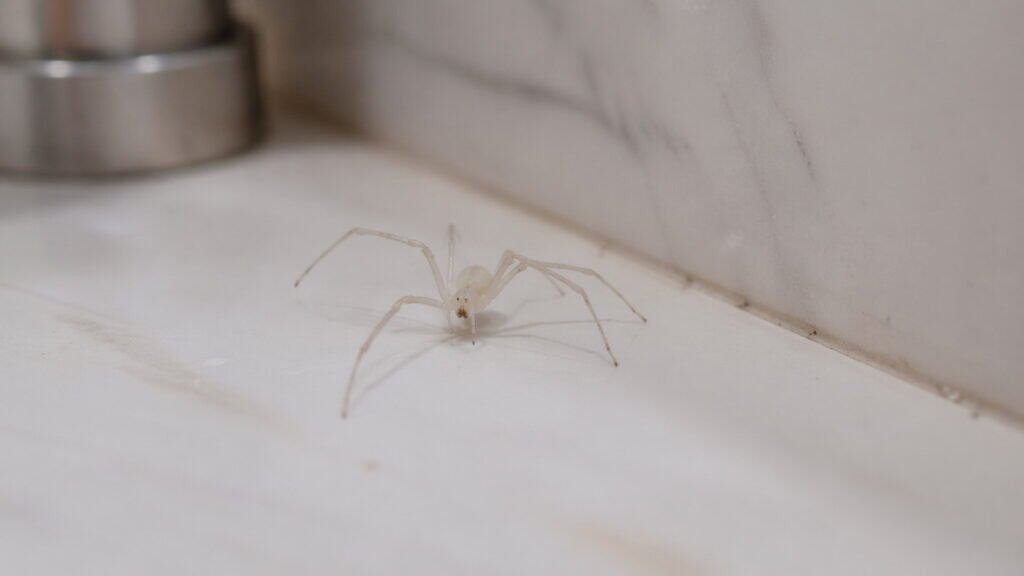
What Are White Spiders in Bathrooms? (Identification Guide)
Not all white spiders are the same. Many species simply appear pale due to lighting, age, or natural coloring.
Common Types of White or Pale Bathroom Spiders
- Yellow sac spiders (often appear off-white or cream)
- Small, fast-moving
- Common indoors across the U.S.
- Cellar spiders (light-colored variants)
- Long legs, thin bodies
- Often found in corners or ceilings
- Juvenile spiders
- Younger spiders tend to look lighter or translucent
Key Traits to Look For
| Feature | What It Tells You |
| Small size | Likely harmless household species |
| Pale/white color | Could be juvenile or light-colored species |
| Fast movement | Often a hunting spider (not aggressive) |
| Web presence | Indicates a settled spider vs. a wanderer |
When to Be Concerned
- You notice frequent bites or skin irritation
- There are multiple spiders appearing daily
- You spot egg sacs or clusters
Otherwise, most bathroom spiders are simply passing through or hunting insects already living in your space.
Top Causes of White Spiders in Bathrooms (Most People Miss #3)
Understanding the cause is the fastest way to solve the problem. Many homeowners focus only on the spider—but ignore what’s attracting it.
High Humidity and Moisture
Bathrooms naturally trap moisture from showers and sinks.
That humidity creates a comfortable environment for spiders and their prey.
Key insight:
Even a slightly damp bathroom can attract insects, which then attract spiders.
Hidden Food Sources (Insects You Don’t See)
Spiders don’t show up randomly—they follow food.
Common bathroom prey includes:
- Drain flies
- Gnats
- Small ants
- Moisture-loving bugs
No insects = no reason for spiders to stay.
Clutter and Overlooked Spaces (Most People Miss This)
Spiders love areas that rarely get cleaned.
Common hiding spots:
- Behind toilets
- Under sinks
- Around storage baskets
- Ceiling corners and vents
Important: Even a clean-looking bathroom can have untouched zones where spiders settle.
Entry Points You Haven’t Sealed
Tiny gaps make a big difference:
- Cracks around windows
- Gaps under doors
- Open vents or poorly sealed pipes
Spiders only need a small opening to get inside.
Poor Ventilation
Bathrooms without proper airflow stay humid longer.
That extended moisture window increases the chances of both insects and spiders settling in.
Are White Spiders Dangerous? (Bites, Myths & Facts)
Seeing white spiders in bathroom areas often triggers one big question: Can they hurt me?
The Reality Most People Don’t Know
- Most bathroom spiders are harmless
- They prefer avoiding humans, not biting them
- Bites are rare and usually defensive
The most common pale indoor spider in the U.S.—the yellow sac spider—can bite, but incidents are uncommon and typically mild.
What Happens If You Get Bitten?
In rare cases, symptoms may include:
- Mild redness or swelling
- Itching or slight burning sensation
- Temporary skin irritation
Symptoms usually fade within a few days without treatment.
When to Take It Seriously
Seek medical attention if you notice:
- Severe pain or spreading redness
- Fever or chills
- Signs of infection
Do This Immediately If You See a White Spider in Your Bathroom
No need to panic. A calm, simple approach works best.
Step-by-Step: Safe Removal Method
- Stay calm and observe
Identify where the spider is and whether it’s alone. - Use the cup-and-paper method
- Place a cup over the spider
- Slide paper underneath
- Carry it outside and release
- Clean the surrounding area
Wipe surfaces and remove any visible webs. - Check for egg sacs or hiding spots
Look under edges, behind items, and in corners.
What NOT to Do (Common Mistakes)
- Don’t spray randomly — chemicals without cleaning won’t solve the root issue
- Don’t ignore it repeatedly — frequent sightings signal a bigger problem
- Don’t squash it on surfaces — can leave stains and doesn’t prevent more spiders
Quick Reset Tip
After removing the spider:
- Run your bathroom fan for 15–20 minutes
- Wipe down damp surfaces
- Check for small insects nearby
This interrupts the environment that attracted it in the first place.
How to Get Rid of White Spiders in Bathroom (Step-by-Step Guide)
Eliminating white spiders in bathroom spaces requires more than just removing the spider—you need to fix the environment.
Deep Cleaning Checklist (Your First Line of Defense)
Focus on overlooked areas:
- Vacuum corners, ceilings, and baseboards
- Remove all visible webs
- Clean behind toilets and under sinks
- Wipe down vents and light fixtures
Pro tip: Use a vacuum with a hose attachment to reach tight spaces.
Natural Remedies That Actually Work
Safe, affordable, and effective options:
- Vinegar spray (1:1 water mix)
Disrupts scent trails and deters spiders - Peppermint oil spray
Strong scent spiders dislike - Tea tree oil solution
Helps repel insects and spiders
Apply around:
- Window edges
- Door frames
- Bathroom corners
Chemical Solutions (When Needed)
For recurring problems:
- Use indoor-safe spider sprays labeled for home use
- Apply only to cracks, baseboards, and entry points
Important: Always combine with cleaning and moisture control—sprays alone won’t fix the issue.
When to Call Pest Control
Consider professional help if:
- Spiders appear daily
- You find multiple egg sacs
- Infestation spreads beyond the bathroom
Professionals can identify hidden sources and seal entry points effectively.
Prevention Checklist: Keep White Spiders Out for Good
Getting rid of white spiders in bathroom areas is one thing—keeping them out is where most people struggle. The goal is to make your bathroom uninviting for both spiders and their food source.
Your Simple Weekly Prevention Routine
- Run the exhaust fan during and after showers (15–20 minutes)
- Wipe down wet surfaces (walls, floors, corners)
- Vacuum corners and ceilings once a week
- Empty trash regularly to avoid attracting insects
Moisture Control (The Game-Changer)
- Install or upgrade a bathroom fan
- Use a small dehumidifier if humidity stays high
- Fix leaks under sinks or behind toilets
- Keep shower curtains open to dry faster
Key insight:
Spiders follow moisture because insects do—control humidity and you break the chain.
Seal Entry Points Like a Pro
- Use caulk to seal cracks around:
- Windows
- Pipes
- Baseboards
- Install door sweeps if gaps are visible
- Cover vents with fine mesh (if safe and appropriate)
Reduce Insects = Reduce Spiders
- Clean drains regularly to prevent drain flies
- Avoid leaving lights on unnecessarily at night (they attract bugs)
- Store toiletries and organic materials neatly
Quick Prevention Checklist
✔ Keep bathroom dry
✔ Clean hidden areas weekly
✔ Seal small gaps and cracks
✔ Eliminate insects
✔ Maintain airflow
Stick to this routine and spiders will have no reason to return.
Signs You Might Have a Bigger Spider Problem
One spider is normal. Repeated sightings? That’s a signal you shouldn’t ignore.
Warning Signs to Watch For
- Spiders appearing daily or multiple times a week
- Egg sacs (small, round, silk-covered clusters)
- Multiple webs forming quickly after cleaning
- Spiders showing up in other rooms
Hidden Problems You Shouldn’t Ignore
- A growing insect population behind walls or drains
- Persistent moisture issues (leaks, condensation)
- Cluttered or rarely cleaned storage zones
Important:
Spiders are often a symptom, not the root problem.
What Most People Get Wrong
- Killing spiders but ignoring insects
- Cleaning visible areas but skipping hidden ones
- Assuming one room = isolated issue
In reality, spiders move where conditions are favorable—so the problem can spread if left unchecked.
White Spiders vs Other Bathroom Pests (Quick Comparison)
Misidentifying pests leads to wasted effort. Not everything crawling in your bathroom is a spider—and not every solution works the same.
Quick Comparison Table
| Pest Type | Appearance | Behavior | Main Cause | Solution Focus |
| White spiders | Pale, small, 8 legs | Hunt insects, may build webs | Moisture + prey | Reduce humidity + insects |
| Silverfish | Shiny, fish-like body | Fast, hides in dark areas | Humidity + paper/starch | Dry environment + cleaning |
| Drain flies | Tiny, moth-like wings | Hover near drains | Organic buildup in drains | Deep drain cleaning |
| Mold mites | Microscopic, pale clusters | Appear in large numbers | Mold growth | Remove mold + reduce moisture |
How to Tell the Difference Quickly
- Count the legs: Spiders have 8, insects have 6
- Look at movement: Spiders move deliberately; flies hover
- Check the location:
- Near drains → likely drain flies
- On walls/ceilings → likely spiders
Related Issues in Small Homes & Tiny Houses (Internal Link Opportunity)
Bathrooms in compact spaces behave differently. Limited airflow and tighter layouts make it easier for white spiders in bathroom areas to show up—and stick around.
Why Tiny Bathrooms Attract Pests Faster
- Moisture builds up quickly in small, enclosed areas
- Air circulation is limited, especially without a strong vent fan
- Everything is closer together, so insects and spiders spread faster
That’s why many tiny home owners deal with recurring moisture-related pests.
If you’ve noticed multiple issues—not just spiders—it’s worth addressing the bigger picture. For example, humidity often leads to other problems like mold or drain insects. A deeper dive into moisture control can make a huge difference.
👉 Check out our guide on tiny house humidity problems and how to fix them for good.
Common Connected Problems
- Drain flies and gnats
- Mold growth behind walls or under fixtures
- Musty odors caused by trapped moisture
Fixing one issue without addressing the others usually leads to repeat problems.
How White Spiders Affect Tiny Homes, Seniors, and Small Living Spaces
In larger homes, a single spider is easy to ignore. In smaller spaces, it feels much more noticeable—and sometimes overwhelming.
Impact on Tiny Homes
- Faster spread due to limited square footage
- Harder to isolate problem areas
- Moisture affects the entire space more quickly
Challenges for Seniors
- Fear or anxiety around pests
- Risk of slipping while trying to clean hard-to-reach spots
- Difficulty spotting entry points or hidden webs
Why Small Spaces Need Proactive Care
In compact environments, small problems escalate quickly.
A minor moisture issue today can turn into repeated pest sightings within weeks.
Simple, consistent maintenance goes a long way in keeping your space comfortable and stress-free.
Common Mistakes That Make the Problem Worse
Many homeowners unknowingly make the situation worse while trying to fix it.
What Most People Get Wrong
- Ignoring humidity issues
Killing spiders without reducing moisture guarantees they’ll return. - Focusing only on the spider
The real issue is usually insects or environmental conditions. - Overusing chemical sprays
Without cleaning, sprays only provide temporary relief. - Skipping hidden areas
Behind fixtures and inside cabinets are prime spider zones. - Not sealing entry points
Even tiny gaps allow continuous access.
Expert Tips to Keep Your Bathroom Spider-Free Year-Round
Consistency beats quick fixes. These habits keep your bathroom spider-free long term.
Weekly Maintenance Routine
- Vacuum corners, ceilings, and baseboards
- Wipe down damp surfaces
- Inspect under sinks and behind toilets
- Check for new cracks or gaps
Monthly Deep Check
- Clean drains thoroughly
- Inspect ventilation systems
- Reapply natural deterrents (like peppermint spray)
- Look for early signs of insects
Simple Habits That Make a Big Difference
- Keep bathroom doors slightly open when not in use
- Turn off unnecessary lights at night
- Avoid storing clutter in humid areas
Long-Term Pest-Proofing Strategy
- Upgrade ventilation if needed
- Seal your home’s exterior gaps
- Maintain consistent humidity levels
The goal isn’t just removal—it’s prevention.
FAQ: White Spiders in Bathroom
Why do I keep seeing white spiders in my bathroom at night?
Spiders are nocturnal hunters. Nighttime increases insect activity, which draws them out into visible areas.
Are white spiders attracted to water?
Not directly. They’re attracted to moisture because it brings insects, which serve as their food source.
Can white spiders live in drains?
Spiders don’t live in drains, but they often stay nearby to catch insects coming out of them.
Should I kill or release bathroom spiders?
Releasing is usually the better option since most are harmless and beneficial. However, removing them is fine if you’re uncomfortable.
How do I stop spiders from coming back permanently?
Focus on moisture control, eliminate insects, seal entry points, and maintain regular cleaning habits.
When to Call a Professional (And What It Costs)
DIY methods work in most cases. Sometimes, the problem goes deeper.
Signs You Need Professional Help
- Spiders appear daily despite cleaning
- Multiple egg sacs are found
- Infestation spreads beyond the bathroom
- You suspect hidden insect activity
Typical Pest Control Costs (U.S.)
| Service Type | Estimated Cost |
| One-time treatment | $100 – $300 |
| Ongoing service plan | $30 – $70/month |
| Inspection only | $50 – $150 |
Professionals don’t just remove spiders—they identify root causes and seal entry points effectively.
What Experts Do Differently
- Target hidden insect populations
- Use long-lasting treatments
- Identify structural vulnerabilities
For additional guidance on safe pest management practices, you can visit the EPA’s resource:
https://www.epa.gov/safepestcontrol
Take Control of Your Bathroom—Starting Today
White spiders in your bathroom aren’t random—they’re a signal. Fix the moisture, eliminate their food source, and block their entry points, and the problem disappears.
Start with a simple cleanup and humidity check today.
If you’re living in a small home or planning one, building these habits early will save you time, stress, and recurring pest issues down the line.
