
Spotting tiny black inchworms in house can feel unsettling—especially when they appear out of nowhere on walls, ceilings, or near windows. The good news? These little crawlers are usually harmless, but they do signal something in your home environment that needs attention.
This guide breaks down exactly what these inchworms are, why they’re showing up indoors, and how to eliminate them quickly—without overcomplicating things. You’ll also learn how to prevent them from coming back, especially if you live in a small space or tiny home where pests feel more noticeable.
In This Article
Tiny Black Inchworms in House: Quick Answer (What They Are & Why They’re Inside)
If you’re seeing tiny black inchworms indoors, you’re most likely dealing with the larval stage of moths, often from the geometer moth family. These larvae are commonly called inchworms because of their distinctive “looping” movement.
Here’s the quick breakdown:
- They’re not worms but caterpillars (moth larvae)
- Typically enter homes through windows, doors, or indoor plants
- Attracted to light sources at night
- Thrive in environments with moisture or plant material
Are they dangerous?
No. Tiny black inchworms don’t bite, sting, or spread disease. However, they can become a nuisance and may indicate hidden entry points or plant-related issues.
Why now?
Most indoor sightings happen during spring and early summer, when moths are actively laying eggs.
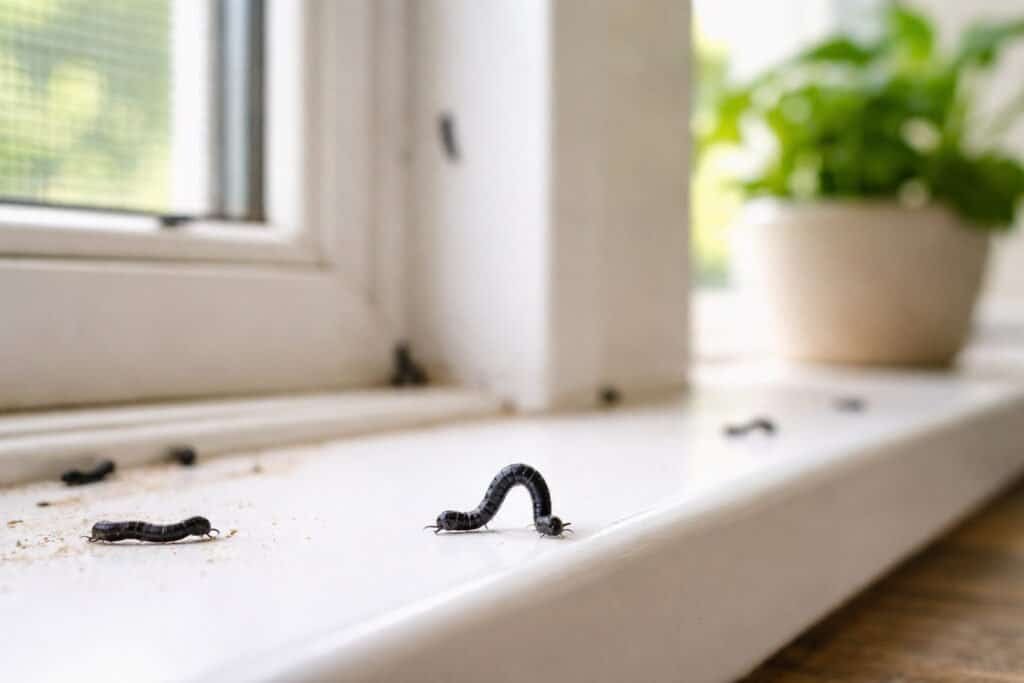
What Are These Tiny Black Inchworms in Your House? (Identification Guide)
Correct identification is the first step to solving the problem. Many homeowners confuse inchworms with other pests, which leads to ineffective treatments.
Physical Characteristics of Tiny Black Inchworms
- Length: About ¼ to 1 inch
- Color: Dark brown to black (sometimes slightly greenish)
- Body: Smooth, slender, no visible legs in the middle
- Movement: Distinct looping motion (they arch their bodies as they crawl)
Where You’ll Usually Find Them
- Walls and ceilings (especially near light fixtures)
- Window sills and door frames
- Around indoor plants
- Occasionally in sinks or near moisture sources
Quick Comparison: Are You Really Dealing With Inchworms?
| Pest Type | Movement Style | Common Location | Key Difference |
| Inchworms | Looping crawl | Walls, ceilings | No middle legs |
| Maggots | Slithering | Trash, drains | Thick, legless body |
| Fungus gnat larvae | Minimal movement | Soil | Stay in plant dirt |
| Carpet beetle larvae | Slow crawl | Fabrics, carpets | Hairy appearance |
What most people get wrong:
They assume these are drain worms or maggots, leading to unnecessary drain treatments. In reality, inchworms are usually coming from outside or plants—not your plumbing.
Top Causes of Tiny Black Inchworms in House (Why You’re Seeing Them)
Understanding the source is what actually solves the problem—not just removing the worms you see.
Seasonal Moth Activity (The #1 Cause)
Warmer months trigger moth breeding cycles. Adult moths lay eggs on:
- Exterior walls
- Window frames
- Nearby vegetation
Once the eggs hatch, the larvae find their way indoors.
Open Entry Points You Didn’t Notice
Even well-maintained homes have small gaps that let pests in:
- Tiny cracks around windows
- Gaps under doors
- Worn-out weather stripping
Inchworms don’t need much space—they slip in easily.
Indoor Plants (A Hidden Source)
Houseplants are a common but overlooked cause:
- Eggs can be laid in soil
- Larvae feed on plant matter
- Overwatering creates ideal conditions
If inchworms appear near plants, this is often the culprit.
Light Attraction at Night
Moths are drawn to light, especially:
- Porch lights
- Bright indoor lighting near open windows
Once attracted, they lay eggs nearby—leading to indoor infestations days later.
Moisture and Humidity Issues
Damp environments support insect activity:
- Bathrooms with poor ventilation
- Kitchens with excess moisture
- Tiny homes with limited airflow
High humidity increases the chances of recurring problems.
Are Tiny Black Inchworms Dangerous? (Risks You Should Know)
Finding tiny black inchworms in your house can be alarming, but most of the concern comes from not knowing what they are.
Do They Bite or Spread Disease?
No—tiny black inchworms are harmless to humans.
They don’t bite, sting, or carry diseases. Unlike some household pests, they pose no direct health risk to you, your family, or pets.
Can They Damage Your Home?
In most cases, structural damage isn’t a concern. However, there are a few indirect issues to watch for:
- Indoor plants: They may chew on leaves if they originated from plant soil
- Outdoor plants brought inside: Damage can continue indoors
- Fabric risk (rare): Some moth larvae feed on natural fibers, though this is uncommon with typical inchworms
Hidden Problem You Shouldn’t Ignore
While inchworms themselves are low-risk, their presence often signals:
- Moth activity nearby
- Entry points that need sealing
- Moisture or ventilation problems
Ignoring them can lead to repeated infestations.
When You Should Act Immediately
- You’re seeing them daily or in multiple rooms
- They’re concentrated near plants, windows, or ceilings
- You notice moths flying indoors at night
Key takeaway: The worms aren’t the real problem—the conditions allowing them in are.
Do This Immediately If You See Tiny Black Inchworms Indoors
Quick action can stop a minor issue from turning into a recurring annoyance. Focus on removal and prevention at the same time.
Fast Action Checklist
1. Remove Visible Inchworms
- Use a tissue, paper towel, or vacuum
- Dispose of them outside (not in indoor trash bins)
2. Vacuum and Clean Key Areas
- Walls, ceilings, and corners
- Window sills and baseboards
- Around light fixtures
3. Inspect Nearby Plants
- Check soil and leaf undersides
- Look for small larvae or eggs
- Isolate suspicious plants immediately
4. Close Entry Points
- Shut windows at night or install screens
- Add door sweeps if there are gaps
- Seal visible cracks
5. Reduce Night Lighting Near Open Windows
- Turn off unnecessary lights
- Use curtains or blinds after dark
What Most People Get Wrong
- Only removing visible worms without finding the source
- Overusing chemical sprays that don’t address entry points
- Ignoring plants as a potential origin
- Leaving windows open with lights on (this attracts more moths)
Quick win: Even a simple habit like turning off lights near open windows can significantly reduce new inchworms within days.
How to Get Rid of Tiny Black Inchworms in House (Step-by-Step Guide)
Getting rid of tiny black inchworms in your house requires a targeted, step-by-step approach. Skipping steps often leads to repeat problems.
Step 1: Identify the Source
Start by narrowing down where they’re coming from:
- Clustered near windows → likely outdoor entry
- Around plants → soil infestation
- Spread across ceilings → attracted by indoor lighting
Tip: Track where you see the highest concentration—that’s your starting point.
Step 2: Deep Clean Affected Areas
A thorough clean removes both larvae and potential eggs:
- Vacuum all surfaces (especially corners and edges)
- Wipe walls and window frames with mild cleaner
- Empty vacuum bags immediately after use
For small homes or tight spaces, this step is even more important since pests spread faster in compact areas.
Step 3: Treat Indoor Plants (If Applicable)
If plants are involved:
- Remove top layer of soil
- Rinse leaves gently
- Apply neem oil or mild soap solution
Let the soil dry slightly between watering—overwatering is a major trigger.
Step 4: Seal Entry Points
This is where long-term success happens:
- Apply caulk to cracks and gaps
- Install or repair window screens
- Add weather stripping around doors
Pro insight: Even high-end homes often have micro-gaps—don’t assume your space is sealed.
Step 5: Use Natural or Chemical Treatments
Choose based on severity:
Natural options (best for light infestations):
- Vinegar spray (repels and cleans surfaces)
- Essential oils (peppermint, eucalyptus)
- Soap and water solution
Chemical options (for persistent issues):
- Indoor-safe insect sprays
- Residual barrier treatments near entry points
Always follow product instructions carefully, especially in small or enclosed living spaces.
DIY vs Professional Pest Control
| Option | Best For | Pros | Cons |
| DIY methods | Mild to moderate infestations | Affordable, immediate action | Requires consistency |
| Professional service | Severe or recurring problems | Thorough, long-term results | Higher cost |
Bottom line: Most cases of tiny black inchworms can be handled without professionals—as long as you address the source, not just the symptoms.
Best Natural Remedies to Eliminate Inchworms Indoors
If you prefer a low-tox approach—especially important in small homes—natural remedies can be surprisingly effective when used consistently.
Vinegar Spray (Simple + Effective)
Mix equal parts white vinegar and water in a spray bottle.
- Spray along window frames, baseboards, and entry points
- Wipe down walls where inchworms were spotted
- Helps remove scent trails and discourage return
Best for: Light infestations and prevention
Neem Oil for Indoor Plants
Neem oil is a go-to solution if inchworms are coming from plant soil.
- Dilute according to label instructions
- Spray leaves (top and underside)
- Lightly treat the soil surface
Why it works: It disrupts the insect life cycle without harming most houseplants.
Soap and Water Treatment
A mild dish soap solution can kill soft-bodied larvae on contact.
- Mix a few drops of dish soap with water
- Spray directly on visible inchworms
- Use on plant leaves if needed
Important: Avoid overuse on delicate plants—test a small area first.
Essential Oils (Natural Repellent)
Certain scents repel moths and larvae:
- Peppermint oil
- Eucalyptus oil
- Tea tree oil
Add a few drops to water and spray near:
- Windows
- Doors
- Light fixtures
Bonus: Leaves your home smelling fresh while deterring pests.
Pros and Cons of Natural Methods
| Method | Pros | Cons |
| Vinegar spray | Cheap, easy, non-toxic | Needs frequent reapplication |
| Neem oil | Targets lifecycle | Slight odor, requires dilution |
| Soap solution | Fast-acting | Can affect sensitive plants |
| Essential oils | Pleasant scent | Mild effectiveness alone |
Key insight: Natural remedies work best when combined with cleaning and sealing entry points. Used alone, they often provide only temporary relief.
Tiny Black Inchworms vs Other Household Pests (Comparison Guide)
Misidentifying pests is one of the biggest reasons infestations keep coming back. Many people treat the wrong problem entirely.
Inchworms vs Drain Worms
- Inchworms: Found on walls, ceilings, windows
- Drain worms: Found near sinks, drains, and pipes
Mistake to avoid: Treating drains when the source is actually outside or from plants.
Inchworms vs Carpet Beetle Larvae
- Inchworms: Smooth, looping movement
- Carpet beetle larvae: Hairy bodies, found in fabrics
Key difference: Carpet beetles damage clothing and upholstery—inchworms usually don’t.
Inchworms vs Fungus Gnat Larvae
- Inchworms: Crawl visibly on surfaces
- Fungus gnat larvae: Stay hidden in moist soil
Clue: If you see flying gnats near plants, you’re likely dealing with a different issue.
Why This Comparison Matters
Using the wrong treatment leads to:
- Wasted time and money
- Recurring infestations
- Frustration from ineffective solutions
Bottom line: If you see a looping motion on walls or ceilings, you’re almost certainly dealing with inchworms—not something else.
How to Prevent Tiny Black Inchworms in House (Long-Term Solutions)
Eliminating inchworms once is good. Preventing them from coming back is what really matters.
Seal Cracks and Gaps
Small openings are the most common entry point:
- Use caulk for window and wall gaps
- Install door sweeps
- Replace worn weather stripping
Pro tip: Check areas around utility lines and vents—often overlooked.
Install and Maintain Window Screens
Screens are one of the simplest defenses:
- Repair tears immediately
- Keep windows closed at night if unscreened
- Use fine mesh screens for extra protection
Control Indoor Humidity
Moist environments attract insects:
- Use a dehumidifier if needed
- Run exhaust fans in bathrooms and kitchens
- Avoid overwatering plants
This is especially important in tiny homes, where airflow is limited and moisture builds up faster.
Inspect Plants Before Bringing Them Indoors
Plants are a common entry point:
- Check leaves and soil carefully
- Quarantine new plants for a few days
- Repot if you suspect contamination
Smart habit: Treat plants preventively with neem oil when bringing them inside.
Adjust Outdoor and Indoor Lighting
Light attracts moths—the source of inchworms:
- Use warm or yellow-toned outdoor bulbs
- Turn off unnecessary lights at night
- Close curtains to reduce visibility from outside
Quick Prevention Checklist
- ✔ Seal all visible gaps and cracks
- ✔ Keep windows screened or closed at night
- ✔ Reduce indoor humidity levels
- ✔ Monitor and treat indoor plants
- ✔ Limit light exposure near open windows
What most homeowners overlook: Prevention isn’t about one big fix—it’s about stacking small habits that make your home less inviting to pests.
How Tiny Black Inchworms Affect Tiny Homes and Small Spaces
In a larger house, a few inchworms might go unnoticed. In a tiny home or compact living space, they feel like a full-blown invasion.
Why Small Spaces Make It Worse
- Higher visibility: One or two inchworms on a wall stand out immediately
- Faster spread perception: Open layouts make it seem like they’re everywhere
- Limited separation: Kitchen, sleeping, and living areas are close together
Moisture Builds Up Faster
Tiny homes often deal with:
- Condensation on windows
- Limited ventilation
- Multi-use spaces (cooking, sleeping, bathing nearby)
These conditions can quietly support insect activity.
Practical Pest-Proofing for Tiny Homes
- Use compact dehumidifiers to control moisture
- Install tight-fitting window screens
- Keep surfaces clutter-free for easy inspection
- Store plants in well-drained containers with airflow
Key takeaway: Small-space living doesn’t cause inchworms—but it amplifies the problem if prevention is overlooked.
Related Pest Issues in Small Homes (Internal Linking Opportunity)
Tiny black inchworms in your house often show up alongside other small, moisture-loving pests. Addressing one issue can help prevent several others.
Common Related Problems
- Fungus gnats in overwatered indoor plants
- Drain worms in kitchens and bathrooms
- Pill bugs around damp areas and entry points
- Ceiling or wall crawlers attracted to light and warmth
If you’ve noticed multiple pests at once, it’s usually a sign of moisture imbalance or unsealed entry points.
👉 If you’re dealing with moisture-related bugs, you might also want to read our guide on pill bugs and how to eliminate them in small homes—many of the prevention strategies overlap.
Common Mistakes That Make Inchworm Problems Worse
Even well-intentioned fixes can backfire if they miss the root cause.
What Most People Get Wrong
- Ignoring early signs
Waiting too long allows more larvae to appear - Overwatering indoor plants
Creates the perfect breeding ground - Relying only on sprays
Kills visible worms but doesn’t stop new ones - Leaving lights on near open windows
Continues attracting moths nightly - Skipping entry point inspection
The problem keeps coming back
Quick “Avoid This” Checklist
- ❌ Don’t assume it’s a drain problem
- ❌ Don’t treat symptoms without finding the source
- ❌ Don’t keep windows open at night with lights on
- ❌ Don’t ignore plant soil as a possible cause
Smart approach: Combine cleaning + sealing + prevention habits for lasting results.
When to Call Pest Control (And What to Expect)
Most cases of tiny black inchworms can be handled on your own. However, some situations call for professional help.
Signs You Need a Pro
- Inchworms keep returning after treatment
- You’re seeing them in multiple rooms daily
- There’s a noticeable increase in moths indoors
- You can’t identify the source
What Pest Control Professionals Do
- Inspect entry points and exterior walls
- Identify the exact insect species
- Apply targeted treatments at the source
- Recommend long-term prevention strategies
Cost vs DIY
| Option | Cost Range (US) | Best For |
| DIY solutions | $10–$50 | Mild infestations |
| Professional service | $100–$300+ | Persistent or widespread issues |
Insight: Hiring a pro makes sense when the issue becomes recurring—not just inconvenient.
FAQ: Tiny Black Inchworms in House
Why do I keep finding tiny black inchworms in my house?
They usually come from outdoor moth activity or indoor plants. Recurring sightings often mean there are unsealed entry points or moisture issues.
Do inchworms turn into moths inside the house?
Yes. If left alone, they can pupate and eventually become moths, continuing the cycle indoors.
Are inchworms coming from my indoor plants?
Often, yes. Eggs or larvae can exist in soil, especially if plants are overwatered or recently brought inside.
How long do inchworms live indoors?
Typically a few weeks, depending on conditions. However, new ones may keep appearing if the source isn’t addressed.
Can inchworms infest furniture or beds?
No. Unlike some pests, inchworms don’t live in bedding or furniture.
What kills inchworms instantly?
A simple soap-and-water spray or direct removal works immediately. Vinegar solutions also help repel them.
Expert Tips to Keep Your Home Worm-Free Year-Round
Consistency beats quick fixes when it comes to pest control.
Seasonal Prevention Strategy
- Spring: Inspect windows, seal gaps, check plants
- Summer: Reduce lighting near open windows
- Fall: Deep clean and prepare for indoor living
- Winter: Monitor humidity and ventilation
Simple Habits That Make a Big Difference
- Wipe down window sills weekly
- Vacuum corners and ceilings regularly
- Check plants before watering
- Keep airflow steady, especially in small homes
Learn More About Safe Indoor Pest Prevention
For additional guidance on keeping your home pest-free—especially in compact living environments—this resource from the U.S. Environmental Protection Agency offers practical, safe strategies:
https://www.epa.gov/safepestcontrol
Take Control Before They Come Back
Tiny black inchworms in your house are manageable once you understand the cause. Focus on eliminating entry points, controlling moisture, and maintaining simple daily habits.
If you’re living in a small or tiny home, these steps matter even more. A few proactive changes can make your space feel cleaner, calmer, and completely pest-free.
Start with one quick fix today—seal a gap, check a plant, or adjust your lighting—and you’ll likely see results faster than you expect.
