
Spotting tiny spiders in house on ceiling can feel unsettling—especially when they seem to appear out of nowhere. One day your ceiling is spotless, the next it’s dotted with tiny webs and crawling specks.
Here’s the good news: in most cases, these spiders are harmless and easy to manage once you understand why they’re there. This guide breaks down exactly what causes ceiling spiders, how to identify them, and what you can do right now to get rid of them—and keep them from coming back.
In This Article
Quick Answer: Why Are There Tiny Spiders on My Ceiling?
Tiny spiders gather on ceilings because that’s where their food and ideal conditions are.
The short answer:
- Ceilings trap warm air, which spiders prefer
- Lights attract small flying insects, giving spiders an easy food source
- Corners and edges provide perfect web-building spots
- Small cracks or vents allow spiders to enter and settle unnoticed
Most of the time, these are young or harmless house spiders, not dangerous pests.
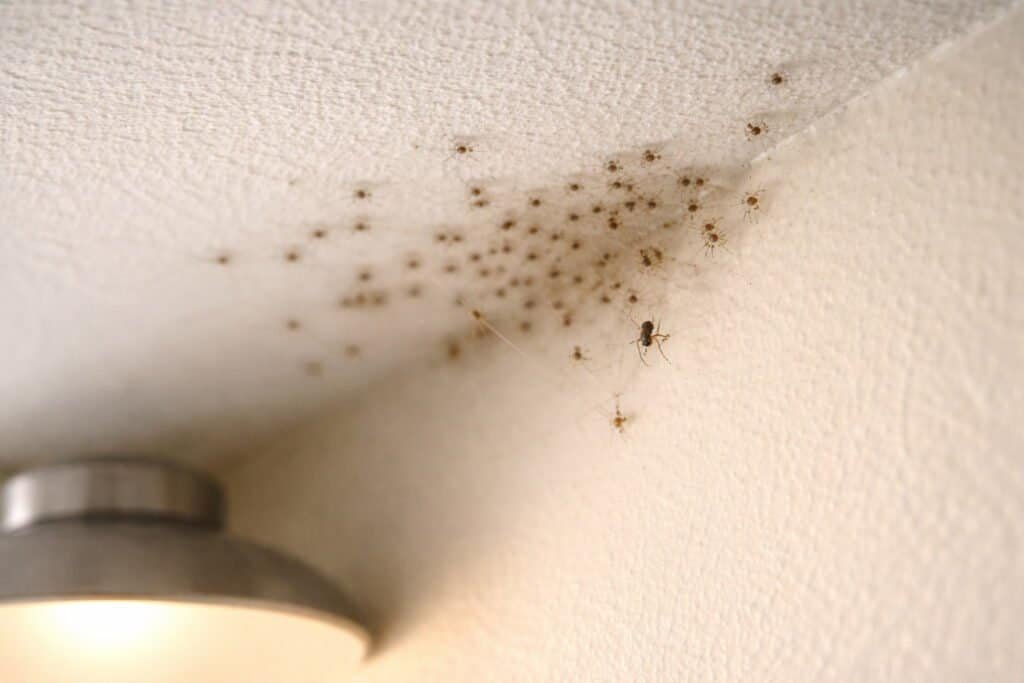
What Are These Tiny Spiders in Your House on the Ceiling? (Identification Guide)
Before you try to remove them, it helps to know what you’re dealing with. Most ceiling spiders fall into a few common categories.
Common Types of Tiny Ceiling Spiders
Baby House Spiders
- Extremely small, often newly hatched
- Light brown or translucent
- Found in clusters at first
Cellar Spiders (Daddy Long Legs)
- Long, thin legs with tiny bodies
- Build loose, messy webs in corners
- Prefer ceilings, basements, and high corners
Cobweb Spiders
- Small, round bodies
- Irregular, sticky webs
- Often hide in ceiling corners or behind fixtures
How to Tell Them Apart Quickly
| Feature | Baby House Spiders | Cellar Spiders | Cobweb Spiders |
| Size | Very tiny | Small body, long legs | Small |
| Web Type | Minimal | Loose, messy | Sticky, tangled |
| Movement | Slow | Floaty/erratic | Quick |
| Common Location | Ceilings, walls | Corners, ceilings | Corners, fixtures |
Why They Prefer Ceilings
Ceilings aren’t random—they’re strategic.
- Less disturbance: Humans rarely reach ceiling corners
- Better airflow: Helps webs catch insects
- Proximity to light fixtures: Insects gather there at night
- Safe nesting spots: Ideal for laying eggs undisturbed
Important insight:
If spiders are on your ceiling, they’ve found both safety and a steady food supply.
Top Causes of Tiny Spiders in House on Ceiling
Understanding the root cause is the key to getting rid of them for good. Most people focus on killing spiders—but ignore what’s attracting them in the first place.
Hidden Causes You Shouldn’t Ignore
1. Small Flying Insects (The #1 Trigger)
Gnats, flies, and mosquitoes are the main reason spiders show up. No bugs = no spiders.
2. Indoor Lighting at Night
Lights near windows attract insects, which then attract spiders. Ceilings near bulbs become hunting zones.
3. Warm Air Rising
Heat naturally rises, making ceilings a comfortable environment—especially in colder months.
4. Easy Entry Points
Tiny gaps around:
- Windows
- Air vents
- Ceiling fixtures
- Attic access points
5. Humidity and Moisture Imbalance
Damp air increases insect activity, which indirectly feeds spiders.
6. Seasonal Changes (Breeding Cycles)
Sudden spikes in tiny spiders often happen when eggs hatch—especially in spring and fall.
What Most People Get Wrong
Many homeowners assume:
- “My house is dirty”
- “I have a spider infestation”
That’s rarely true.
Are Tiny Ceiling Spiders Dangerous or Harmful?
Seeing tiny spiders in your house on the ceiling can trigger concern, especially if they’re hovering above beds or living areas. The reality is far less alarming in most cases.
Are They Dangerous?
- Bite risk is extremely low
Most small indoor spiders don’t bite unless provoked—and even then, bites are rare. - Venom is typically harmless to humans
Common house spiders and cellar spiders are not medically significant. - No disease transmission
Spiders don’t spread diseases like some insects do.
When Should You Be Concerned?
Certain situations deserve closer attention:
- You notice larger, unfamiliar spiders
- There are frequent sightings across multiple rooms
- Someone in the home has allergies or sensitivity to bites
- You live in regions where venomous species are common (rare indoors, but possible)
The Hidden Benefit Most People Overlook
Spiders are actually helping you.
- They reduce flies, mosquitoes, and gnats
- They act as natural pest control
- They keep other unwanted bugs in check
Do This Immediately: How to Get Rid of Tiny Spiders on Your Ceiling
If you want them gone right now, quick action works. The goal is to remove both spiders and their webs without spreading them around.
Fast, Effective Removal Methods
Use a vacuum with a hose attachment
- Safest and cleanest method
- Removes spiders, webs, and egg sacs in one step
- Works well for high ceilings and corners
Try a microfiber duster or extendable wand
- Ideal for light infestations
- Captures webs without scattering debris
Use a mild spray solution
- Mix water with a few drops of dish soap
- Lightly spray webs to immobilize spiders before wiping
What NOT to Do (Common Mistakes)
- Don’t smash spiders on the ceiling
Leaves stains and may spread eggs - Don’t ignore webs
Old webs attract new spiders quickly - Don’t rely only on sprays
Killing spiders without removing webs solves nothing
Quick Win Tip
Always remove the web—not just the spider.
That’s where eggs and scent markers are, which attract more spiders later.
Step-by-Step: How to Eliminate the Root Cause (Not Just the Spiders)
Getting rid of visible spiders is easy. Keeping them from coming back requires a more strategic approach.
Step 1: Remove Their Food Source (Insects)
Focus on reducing the bugs spiders feed on:
- Install or repair window screens
- Keep food sealed and surfaces clean
- Use insect traps if needed
Pro insight:
If insects disappear, spider activity drops dramatically within days.
Step 2: Seal Entry Points
Inspect areas where spiders can enter:
- Gaps around windows and doors
- Ceiling light fixtures
- Air vents and attic openings
Use caulk or weatherstripping to close even tiny gaps.
Step 3: Reduce Indoor Humidity
Spiders thrive where insects thrive—and insects love moisture.
- Use a dehumidifier in damp rooms
- Improve ventilation in kitchens and bathrooms
- Fix leaks or condensation issues
Step 4: Adjust Lighting Habits
Outdoor and indoor lighting plays a bigger role than most people realize.
- Turn off unnecessary lights at night
- Use warm or yellow bulbs (less attractive to insects)
- Keep lights away from windows when possible
Step 5: Clean Ceiling Corners Regularly
Consistency matters more than intensity.
- Vacuum or dust ceilings weekly
- Focus on corners, edges, and light fixtures
- Remove webs as soon as they appear
Expert Tip Most Homeowners Miss
Spiders return to familiar spots.
Cleaning regularly disrupts their pattern and forces them to relocate—often outside your home.
Best Natural and Chemical Solutions to Prevent Ceiling Spiders
Once you’ve removed visible spiders, prevention becomes the priority. The right mix of natural deterrents and targeted products can keep tiny spiders in your house on the ceiling from returning.
Natural Repellents (Safe and Budget-Friendly)
These options work well for ongoing maintenance, especially in small homes.
Peppermint Oil Spray
- Mix 10–15 drops with water in a spray bottle
- Apply along ceiling edges, corners, and entry points
- Strong scent repels spiders without harming your home
White Vinegar Solution
- Combine equal parts vinegar and water
- Spray lightly in problem areas
- Helps disrupt scent trails spiders use to navigate
Citrus-Based Cleaners
- Spiders dislike citrus oils
- Wipe down ceiling corners and fixtures regularly
Best for: light infestations and prevention
Limitation: requires consistent reapplication
Chemical Solutions (Stronger, Longer-Lasting)
When spiders keep coming back, targeted products offer more control.
Residual Insect Sprays
- Designed for indoor use along ceilings and corners
- Create a barrier that deters spiders and kills insects
Spider-Specific Sprays
- Fast-acting formulas for direct contact
- Useful for immediate removal
Insect Control Products
- Reducing bugs indirectly eliminates spiders
Natural vs Chemical: What’s Better?
| Factor | Natural Solutions | Chemical Solutions |
| Safety | Very high | Moderate (follow labels) |
| Effectiveness | Moderate | High |
| Longevity | Short-term | Long-lasting |
| Best Use | Prevention | Active infestations |
Smart Strategy That Actually Works
Combine both approaches:
- Use natural repellents weekly
- Apply chemical barriers only if needed
That balance keeps your home low-toxicity while still effective.
Warning Signs You Have a Growing Spider Problem
A few spiders on the ceiling isn’t unusual. A pattern, however, signals something bigger.
Signs You Shouldn’t Ignore
Webs reappear quickly after cleaning
- Indicates active spider presence and food supply
Frequent sightings of baby spiders
- Suggests egg sacs are hatching nearby
Spiders appearing during daytime
- May signal overcrowding or limited hiding spaces
Multiple rooms affected
- Points to a broader issue, not just one area
Hidden Problem Behind the Problem
Spider activity often reveals another issue:
- Insect infestations
- Poor sealing or insulation
- High humidity levels
Important insight:
Spiders rarely multiply without a reason—something in your home is supporting them.
When It’s No Longer “Normal”
- You’re removing spiders daily
- Webs form overnight
- Activity spreads rapidly
At that point, deeper intervention is needed (not just cleaning).
Common Mistakes That Make Tiny Spider Infestations Worse
Many homeowners unintentionally make the problem worse while trying to fix it.
What Most People Get Wrong
Ignoring small webs
- Early webs are easy to remove
- Leaving them allows spiders to settle and reproduce
Leaving lights on near windows at night
- Attracts insects → attracts spiders
- One of the biggest overlooked triggers
Killing spiders but ignoring insects
- Removes the predator, not the cause
- Leads to repeated infestations
Overusing sprays without cleaning
- Dead spiders + leftover webs = new spiders move in
Subtle Mistakes in Small Spaces
Smaller homes and apartments face unique challenges:
- Limited airflow traps insects indoors
- Closer ceilings make spiders more noticeable
- Clutter near walls and ceilings creates hiding spots
Expert Fix
Focus on the ecosystem, not just the spider.
Control insects, seal entry points, and clean regularly—this breaks the cycle completely.
How This Problem Affects Tiny Homes and Small Living Spaces
In compact homes, spotting tiny spiders in your house on the ceiling feels more intense—mainly because everything is closer and more visible.
Why Tiny Homes Attract More Noticeable Spider Activity
- Limited space = higher visibility
A few spiders can feel like many when ceilings are just a few feet away - Faster air circulation issues
Warm air and humidity concentrate quickly, creating ideal conditions - Lighting is more concentrated
One light source can attract insects to the entire space - Storage and clutter challenges
Ceiling edges, loft areas, and corners often become undisturbed zones
Practical Fixes for Small Spaces
- Use multi-purpose cleaning tools for frequent ceiling maintenance
- Switch to insect-reducing lighting (warm LEDs)
- Keep vertical spaces (walls, loft edges) clean and minimal
- Improve airflow with fans or ventilation systems
Smart Internal Upgrade for Tiny Homes
Airflow and layout play a major role in pest control. If you’re optimizing your space, improving ventilation can make a huge difference.
Consider upgrading your setup with better airflow strategies—this ties directly into overall comfort and pest prevention in small living environments.
Related Issues in Small Homes: Bugs That Attract Ceiling Spiders
Spiders don’t appear randomly—they follow food. In small homes, even a minor insect issue can quickly lead to visible spider activity.
Common Insects That Attract Ceiling Spiders
- Gnats – thrive in damp areas and indoor plants
- Mosquitoes – enter through small openings
- Flies – attracted to food and light
- Pantry pests – indirectly support spider populations
Why This Matters More in Small Spaces
- Insects have fewer places to hide, making them easier prey
- A small infestation spreads faster across the entire home
- Spiders quickly identify and settle in high-traffic insect zones
Break the Cycle (Simple Strategy)
- Eliminate standing water
- Clean food areas consistently
- Use insect traps where needed
If you’re dealing with persistent flying bugs, tackling that issue first will dramatically reduce spider sightings. This is especially important in compact homes where pest cycles accelerate.
Prevention Checklist: Keep Tiny Spiders Off Your Ceiling for Good
Consistency beats intensity. A simple routine can keep your ceilings spider-free long term.
Weekly & Monthly Checklist
Cleaning Routine
- Vacuum or dust ceiling corners weekly
- Remove webs immediately
Entry Point Control
- Seal cracks around windows and fixtures
- Check vents and attic access
Lighting Adjustments
- Turn off unnecessary lights at night
- Use warm-toned bulbs
Humidity Management
- Use a dehumidifier if needed
- Fix leaks and improve ventilation
Natural Repellents
- Apply peppermint or vinegar sprays regularly
Quick Summary
- Remove food sources (insects)
- Clean regularly
- Seal entry points
- Control light and moisture
Stick to these basics, and spider problems rarely return.
FAQ: Tiny Spiders in House on Ceiling
Why do I suddenly have tiny spiders on my ceiling?
Sudden appearances usually mean eggs have hatched or insect activity has increased, giving spiders a reason to stay.
How do I stop spiders from hanging above my bed?
Remove nearby webs, reduce lighting that attracts insects, and apply natural repellents around ceiling edges.
Are ceiling spiders a sign of a dirty house?
No. Even clean homes can attract spiders if insects are present or entry points exist.
Do spiders go away on their own?
They may leave if food disappears, but most will stay as long as insects are available.
What smell do spiders hate the most?
Peppermint, citrus, and vinegar are commonly effective natural repellents.
Should I kill or leave small spiders in my house?
Removing them is fine for comfort, but keeping a few can help control other pests naturally.
When to Call a Professional Pest Control Service
Sometimes DIY methods aren’t enough.
Signs You Need Expert Help
- Spider activity continues despite regular cleaning
- You’re seeing large numbers or unusual species
- Infestations spread across multiple rooms
- Egg sacs keep appearing
A professional can identify hidden issues and apply targeted treatments safely.
Helpful Resource for Safe Pest Management
For trusted guidance on managing household pests safely, visit the Environmental Protection Agency (EPA):
https://www.epa.gov/safepestcontrol
This resource offers practical advice on safe pesticide use and long-term prevention.
Take Back Your Ceiling (Without Overthinking It)
Tiny spiders on your ceiling aren’t a mystery—and they’re definitely manageable. Once you understand that they’re driven by food, warmth, and easy access, the solution becomes straightforward.
Focus on the fundamentals:
- Remove insects
- Clean consistently
- Seal your space
Small, consistent actions make a bigger impact than aggressive treatments.
If you’re living in a compact home or tiny house, these habits matter even more. A well-maintained space doesn’t just look better—it stays pest-free, healthier, and more comfortable every day.
Ready to make your space work smarter? Start with these simple fixes today, and you’ll notice the difference almost immediately.
