
There’s a point when the days start to feel… a little too similar. The morning routine stays the same, the afternoons stretch longer, and evenings come quietly. For many older adults, especially those spending more time at home, finding meaningful ways to stay engaged becomes just as important as staying comfortable.
That’s where indoor hobbies for seniors come in—but not the kind that simply “kill time.” The right hobby can sharpen the mind, lift your mood, and even give your day a sense of direction again.
In this guide, we’ll look beyond the usual suggestions. You’ll discover hobbies that actually stick, why some don’t, and how to choose something that fits your energy, space, and lifestyle.
In This Article
The Moment the Days Start Blending Together
It often happens gradually.
Maybe you’ve retired after decades of routine. Maybe mobility has changed, or your social circle isn’t as active as it once was. Suddenly, there’s more time indoors—and fewer reasons to get excited about the day ahead.
At first, it feels like a break. Then it starts to feel repetitive.
This isn’t just boredom—it’s a lack of meaningful engagement.
And that matters more than people realize. Studies from organizations like the National Institute on Aging suggest that staying mentally and socially active can help maintain cognitive health and emotional well-being as we age.
The goal isn’t to stay “busy.”
It’s to stay engaged in something that feels worthwhile.
What Makes an Indoor Hobby Worth It After 60?
Not every hobby is created equal—especially later in life. What worked in your 30s or 40s might not feel right now, and that’s completely normal.
Here’s what actually makes a hobby worth your time:
Engages the Mind (Without Overwhelming It)
- Activities like puzzles, journaling, or learning something new help keep your brain active
- But overly complex tasks can feel frustrating instead of stimulating
Sweet spot: Something that challenges you just enough
Feels Meaningful—Not Just Distracting
Watching TV fills time. Writing your life stories, sketching, or nurturing plants creates a sense of purpose.
Ask yourself:
- Does this feel satisfying after I’m done?
- Would I look forward to doing it again?
Matches Your Energy Level
Energy fluctuates more with age, and that’s okay.
A good hobby should:
- Be easy to start and stop
- Adapt to both high-energy and low-energy days
For example, reading or light crafting works when energy is low, while indoor gardening or stretching suits more active moments.
Respects Physical Limitations
Arthritis, vision changes, or fatigue shouldn’t block you from enjoying a hobby.
Look for:
- Large-print materials
- Ergonomic tools
- Seated or low-impact activities
The best hobbies adjust to you—not the other way around.
9 Indoor Hobbies for Seniors (Ranked by Engagement, Not Trendiness)
Instead of listing random ideas, here are hobbies that consistently hold attention and bring lasting satisfaction.
Creative & Expressive
• Journaling or Life Story Writing
Reflecting on memories, lessons, or daily thoughts can be deeply rewarding. Many seniors turn this into something to share with family.
• Painting or Sketching
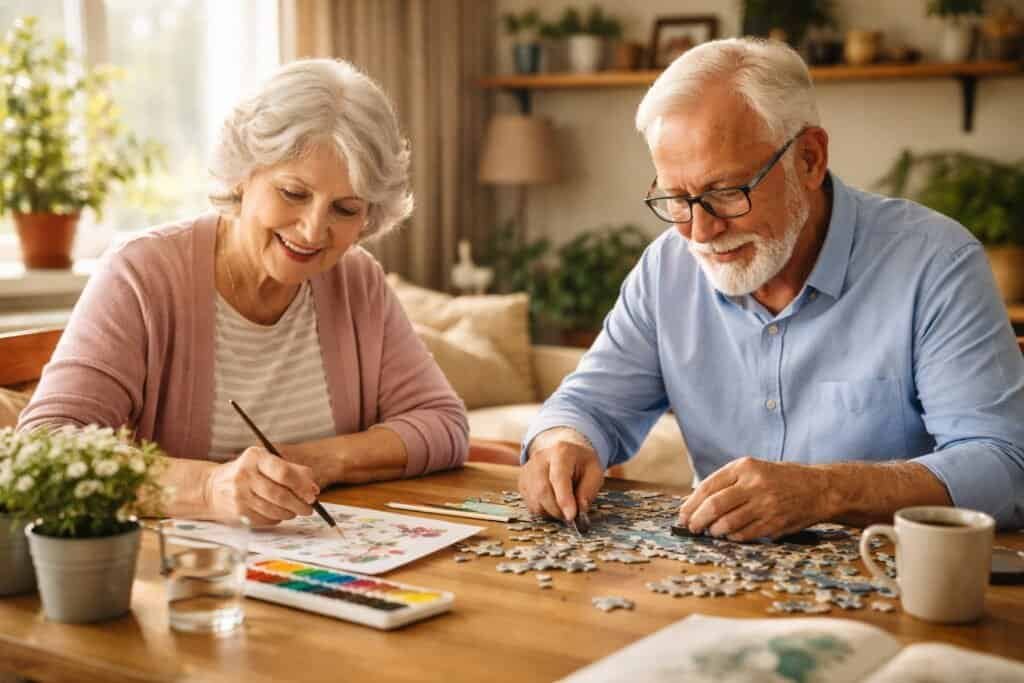
No need for perfection. Even simple watercolor or pencil sketches can become a relaxing daily ritual.
Light Physical & Sensory
• Indoor Gardening
Caring for herbs or small plants near a window adds routine and a sense of growth—literally.
• Chair Yoga or Gentle Stretching
Improves flexibility and mood without strain. Even 10 minutes can make a difference.
Brain-Stimulating Activities
• Puzzles (Crosswords, Sudoku, Jigsaw)
Great for memory and focus. Choose difficulty levels that feel satisfying, not stressful.
• Learning Something New (Language, Skill, Topic)
Apps, books, or audio courses make this easier than ever. Even learning a few new words a day can feel rewarding.
Social & Connection-Based
• Virtual Clubs or Group Calls
Book clubs, hobby groups, or even weekly family video calls add structure and connection.
• Phone-Based Games with Friends
Simple games played remotely can recreate a sense of shared activity.
Purpose-Driven Activities
• Mentoring or Remote Volunteering
Sharing knowledge—whether tutoring, advising, or helping online—creates a strong sense of purpose.
According to the Mayo Clinic, staying socially and mentally active is closely linked to better emotional health and reduced feelings of isolation.
The Hidden Reason Some Hobbies Don’t Stick (And How to Fix That)
It’s surprisingly common: you try a new hobby, feel a spark of interest… and then quietly drop it a few days later.
This isn’t a lack of discipline. It’s usually a mismatch between the hobby and how it fits into your life.
Here’s what often goes wrong:
Starting Too Big, Too Fast
Buying a full painting kit or committing to an hour-long routine can feel exciting—but also overwhelming.
Fix:
Start with a “10-minute version.”
- Sketch one small object
- Water one plant
- Write a short paragraph
Consistency builds naturally when the barrier is low.
No Natural Time to Do It
If a hobby doesn’t have a place in your day, it gets pushed aside.
Fix: Attach it to something you already do:
- After your morning coffee → crossword puzzle
- Before evening TV → journaling
- After lunch → water plants
This creates a gentle rhythm without forcing a strict schedule.
Choosing What Sounds Good (Instead of What Feels Right)
Sometimes hobbies are picked because they’re recommended—not because they genuinely interest you.
Fix: Pay attention to small signals:
- Do you lose track of time while doing it?
- Do you feel lighter or more focused afterward?
If not, it’s okay to switch. There’s no rule that says you have to stick with something that doesn’t fit.
Expecting Motivation to Show Up First
Waiting to “feel like it” is one of the biggest traps.
Try this instead:
- Start anyway, just for a few minutes
- Let motivation catch up after you begin
Action creates motivation—not the other way around.
Low-Energy Days: What to Do When Motivation Just Isn’t There
Some days, even the simplest hobby can feel like too much. That’s normal.
Instead of skipping the day entirely, it helps to have low-effort alternatives ready.
Gentle, No-Pressure Options
These require minimal setup and energy:
- Listening to an audiobook while resting
- Light coloring or doodling
- Watching a documentary with a notebook nearby for small reflections
Passive-Active Combos (The “Middle Ground”)
These are especially effective when energy is low but you still want to feel engaged.
Examples:
- Listening to music while organizing photos
- Watching a show while knitting or folding laundry
- Following a simple guided meditation
You’re not forcing productivity—you’re staying lightly involved.
Why Consistency Beats Intensity
It’s easy to think you need to “make up” for low-energy days. You don’t.
Doing a hobby for 5–10 minutes regularly:
- Keeps the habit alive
- Reduces guilt or pressure
- Makes it easier to return the next day
Small actions, repeated often, matter more than occasional bursts of effort.
Small Space, Big Impact: Indoor Hobbies That Fit Tiny Living
Whether you’re living in a smaller home, downsizing, or simply prefer a clutter-free environment, space can feel like a limitation.
But here’s the twist: less space often leads to more consistent hobbies.
Why? Fewer distractions, simpler setups, and easier cleanup.
Compact Hobby Ideas That Work Anywhere
• Foldable or Portable Craft Setups
- A small box for art supplies
- A tray for puzzles or journaling
Easy to store, easy to restart anytime.
• Window-Based Gardening
Even a single sunny window can support:
- Herbs like basil or mint
- Small decorative plants
This adds a daily routine without taking up much room.
• Digital Hobbies (Minimal Physical Space Needed)
- Reading on a tablet
- Brain-training apps
- Writing or storytelling digitally
Voice assistants and large-font settings make these more accessible than ever.
Why Smaller Spaces Can Improve Focus
In larger homes, hobbies can get “lost” in unused rooms or cluttered corners.
In a smaller space:
- Everything is within reach
- Setup takes seconds, not minutes
- You’re more likely to return to it daily
This is one reason hobbies pair so well with intentional living and downsizing. When your environment is simpler, your routines become clearer—and your hobbies feel less like effort, more like part of daily life.
The Surprising Mental Health Benefits No One Talks About
Most people think of hobbies as something to “fill time.” But for seniors, the right indoor hobby can quietly reshape how each day feels.
It’s not dramatic. It’s subtle—but powerful.
A Sense of Identity Beyond Routine
After retirement or lifestyle changes, it’s easy to feel like roles have shifted or even disappeared.
A hobby brings back a simple but important feeling:
- “This is something I do. This is part of who I am.”
Whether it’s writing, gardening, or solving puzzles, that identity matters more than it seems.
Small Wins That Add Up Emotionally
Finishing a crossword. Watching a plant grow. Completing a sketch.
These aren’t big achievements—but they create micro-moments of satisfaction throughout the day.
And those moments:
- Boost mood
- Reduce feelings of stagnation
- Create something to look forward to
Quiet Protection Against Loneliness
Even solo hobbies can reduce loneliness—especially when they involve:
- Sharing progress with family
- Talking about what you’re working on
- Participating in light social interaction (even occasionally)
According to the Centers for Disease Control and Prevention, social engagement and mental stimulation are key factors in maintaining emotional well-being as we age.
A Simple Example That Says a Lot
Imagine this:
Every afternoon, around 3 PM, you sit by the window with a cup of tea and tend to a few small plants. You check the leaves, adjust the light, maybe trim something.
It takes 10–15 minutes.
But over time, it becomes:
- A daily anchor
- A calming ritual
- A quiet highlight in your routine
That’s what a good hobby does—it gives shape to your day.
Mistakes Families Make When Recommending Hobbies to Seniors
Family members often mean well. They want to help their parents or relatives stay active and engaged.
But sometimes, their suggestions miss the mark.
Pushing Overly Complicated or Tech-Heavy Options
Not every senior wants to learn complex apps, digital platforms, or new devices.
Even if they can, it might feel like work—not enjoyment.
What works better:
Start simple. Let curiosity—not pressure—lead the way.
Ignoring Personal History
A hobby that fits one person perfectly might feel completely wrong for another.
For example:
- Someone who enjoyed hands-on work might prefer gardening or crafts
- Someone who loved reading might lean toward writing or discussion groups
The best clues are in the past.
Turning Hobbies Into “Tasks”
When a hobby starts to feel like something you should do, it loses its appeal.
Common signs:
- “You should try this every day”
- “This will be good for you”
Even if true, the tone matters.
Hobbies should feel like an invitation—not an obligation.
What Actually Helps
If you’re suggesting hobbies (for yourself or someone else), try this approach:
- Offer 2–3 simple options
- Keep the entry point easy
- Let interest grow naturally
Curiosity creates consistency. Pressure does the opposite.
How to Turn a Simple Hobby Into Something to Look Forward To
A hobby becomes meaningful not just because of what you do—but how it fits into your life.
Here’s how to make it something you genuinely anticipate.
Create a Light Ritual Around It
Instead of squeezing it into random moments, give it a small, consistent place in your day.
Examples:
- Morning journaling with coffee
- Afternoon puzzles by the window
- Evening reading before bed
Rituals turn activities into experiences.
Add a Social Layer (Without Overcomplicating It)
You don’t need a big group.
Even small connections help:
- Share a photo of your progress with family
- Talk about your hobby during a weekly call
- Join a low-pressure online group
This adds meaning without turning it into a commitment-heavy activity.
Set Gentle, Flexible Goals
Avoid rigid expectations like:
- “I must do this every day”
- “I need to improve quickly”
Instead, try:
- “I’ll spend a few minutes on this when I can”
- “I’ll enjoy the process, not just the result”
Progress should feel satisfying—not stressful.
Let It Evolve Naturally
What you enjoy today might change in a few months—and that’s a good thing.
You might:
- Start with puzzles → move into writing
- Begin with gardening → explore indoor décor or design
A hobby isn’t something you lock into. It’s something that grows with you.
When Indoor Hobbies Become More Than Just Hobbies
At first, a hobby is just something to do.
But over time, something interesting happens—it starts to mean more.
Not because you planned it that way, but because consistency naturally builds:
- Skill
- Confidence
- A sense of ownership
And sometimes, that opens doors you didn’t expect.
From Simple Activity to Small Income (Without Pressure)
Not every hobby needs to make money—but some naturally can.
For example:
- Selling handmade crafts occasionally
- Writing short stories or memoir pieces for blogs
- Growing herbs and sharing or selling small batches locally
The key is keeping it low-pressure.
This isn’t about turning work into your life again—it’s about letting value grow organically from something you already enjoy.
Sharing Knowledge Across Generations
One of the most meaningful shifts happens when a hobby becomes something you can pass on.
You might:
- Teach a grandchild how to draw or garden
- Share life stories through writing or audio recordings
- Help someone learn a skill you’ve practiced over time
These moments create connection—and a lasting sense of contribution.
Building Structure Without Feeling Restricted
A good hobby quietly organizes your day.
Instead of time feeling empty or repetitive, you start to notice:
- A reason to get started in the morning
- Something to return to in the afternoon
- A calm way to wind down in the evening
It’s not a strict routine—it’s a natural rhythm.
A Simple Way to Choose the Right Hobby (Without Overthinking It)
If you’re unsure where to start, keep it simple.
Use this quick mental checklist:
- Do I feel curious about this, even a little?
- Can I start it in under 5 minutes?
- Do I feel slightly better after doing it?
If the answer is “yes” to most of these, you’re on the right track.
If not, try something else—no pressure, no commitment.
Where This Fits in a Simpler, Smaller Lifestyle
There’s a reason indoor hobbies feel especially powerful in smaller living spaces.
When life becomes more intentional—whether through downsizing, simplifying, or even moving into a smaller home—you remove a lot of distractions.
And what’s left?
- More clarity
- More presence
- More appreciation for small, meaningful activities
In a compact space:
- Hobbies are easier to access
- Setup takes seconds, not effort
- You’re more likely to stay consistent
That’s why many people find that hobbies become more enjoyable, not less, when they simplify their environment.
The Real Goal Isn’t to Stay Busy—It’s to Stay Engaged
Indoor hobbies for seniors aren’t about filling empty hours.
They’re about:
- Feeling mentally active
- Creating small moments of progress
- Adding something personal to each day
You don’t need the perfect hobby.
You just need one that feels good enough to return to tomorrow.
Start small. Keep it simple. Let it grow naturally.
And if you’ve been waiting for the “right time” to begin something new—this is it.
