
A temporary septic system can be a practical solution when you want to live in a tiny home before installing a permanent wastewater system. Whether you’re building on rural land, waiting for septic installation approval, or setting up a tiny house on wheels, managing wastewater safely is one of the first challenges you’ll need to address.
Unlike traditional homes, tiny houses can have different plumbing arrangements, water supplies, and waste disposal needs. Some rely on holding tanks, while others use portable wastewater tanks, approved temporary septic connections, or composting toilets with separate graywater management.
Choosing the right setup involves more than finding a tank that fits your property. You also need to understand local regulations, installation requirements, pumping costs, and how long the arrangement can legally remain in use.
This guide explains how temporary septic systems work, compares five practical options for tiny homes, and helps you determine which solution makes sense for your property and living situation.
In This Article
What Is a Temporary Septic System and How Does It Work?
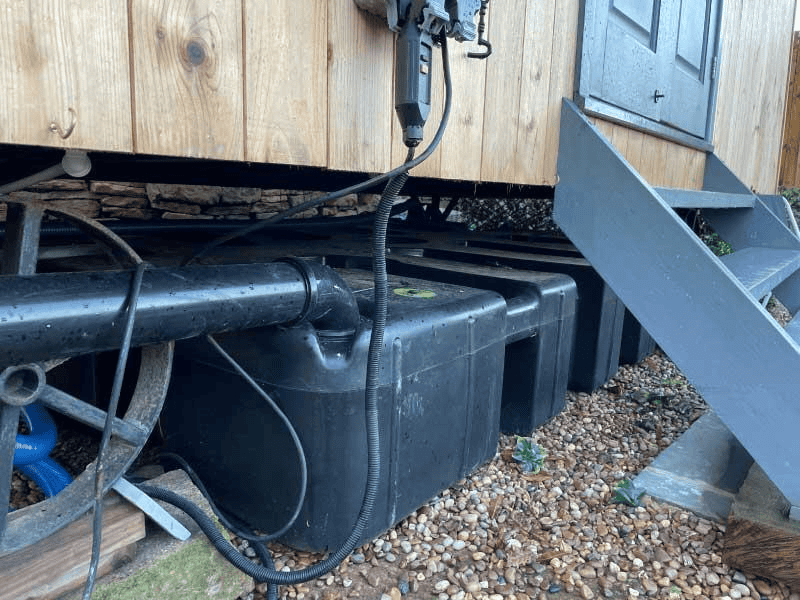
A temporary septic system is a wastewater management arrangement designed for short-term or transitional use rather than permanent residential service. It allows wastewater from a property to be collected, treated where applicable, stored, or transported to an approved disposal facility.
Tiny house owners may need one while constructing a home, preparing rural land, repairing an existing septic system, or waiting for permanent infrastructure to be installed.
However, not every temporary wastewater arrangement is technically a septic system. A sealed holding tank, for example, stores wastewater without treating it. Understanding this difference helps you choose the right equipment and avoid problems with local authorities.
Temporary Septic System vs. Permanent Septic System
The main difference between temporary and permanent systems is their intended use, installation, and wastewater management process.
A permanent septic system is generally designed to handle household wastewater over many years. It typically includes a septic tank and an approved soil-based treatment or dispersal area.
A temporary setup may use a sealed storage tank, portable wastewater container, or an approved temporary treatment arrangement. Its design depends on the property’s conditions and the length of time it will be needed.
| Feature | Temporary Septic System | Permanent Septic System |
| Primary purpose | Short-term wastewater management | Long-term residential use |
| Installation | May be simpler, depending on approval | Usually requires more extensive work |
| Wastewater handling | Storage, pumping, or approved treatment | Treatment and approved dispersal |
| Maintenance | Often requires frequent pumping | Periodic inspection and maintenance |
| Initial expense | Can be lower | Usually higher |
| Long-term suitability | Depends on local authorization | Designed for ongoing use |
For example, someone placing a tiny house on rural property may install an approved holding tank while preparing the site for a permanent septic system.
The arrangement can provide a transitional solution, but only if the local authority allows it.
One important distinction: A temporary holding tank does not automatically become a legal alternative to a conventional septic system simply because it is professionally installed.
How a Temporary Septic System Handles Wastewater
The way wastewater moves through a temporary system depends on the equipment being used.
A holding tank arrangement generally follows a straightforward process:
- Wastewater leaves the tiny house through its plumbing connections.
- Pipes carry the wastewater into a sealed holding tank.
- The tank stores wastewater until it reaches the designated pumping level.
- A wastewater service provider removes the accumulated contents.
- The wastewater is transported to an authorized treatment or disposal facility.
Unlike a conventional septic system, a basic holding tank does not discharge treated wastewater into a drain field.
This distinction matters because untreated sewage should never be released onto the ground, into ditches, or near wells and surface water.
Tiny houses with separate graywater and blackwater plumbing may use different collection arrangements for each wastewater stream. However, graywater from showers, sinks, and washing machines still requires an approved management method.
Temporary Septic System Components
A temporary wastewater setup may contain several components, depending on its design.
Holding tank: A sealed container that stores wastewater until it can be pumped and transported for approved disposal.
Inlet pipes: Plumbing connections that carry wastewater from the tiny house into the tank.
Access opening: A secure opening that allows a service provider to inspect and pump the tank.
Level alarm: A monitoring device that alerts the homeowner when wastewater reaches a specified level. This is particularly useful for tanks that receive wastewater continuously.
Ventilation: Properly designed ventilation helps manage sewer gases and pressure within the plumbing system.
Pumping connection: An accessible connection that allows a vacuum truck or approved pumping equipment to remove wastewater.
Tank size, plumbing compatibility, ventilation, and access should be considered together. A large tank is not necessarily a good choice if a pumping truck cannot reach it or the property cannot accommodate its installation.
Temporary Septic System Options for Tiny Homes
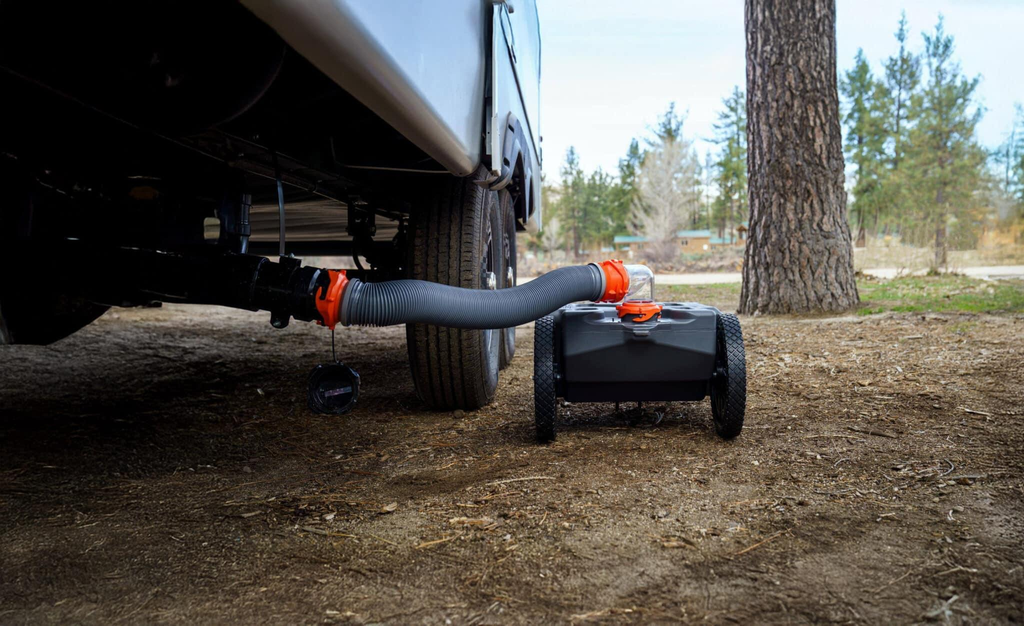
Not every tiny home needs the same wastewater arrangement. A stationary tiny house used by a family has different requirements from a small home on wheels occupied by one person on weekends.
The right option depends on occupancy, available water, property conditions, local regulations, and whether you need a solution for a few weeks or several months.
Temporary Septic System Using a Holding Tank
A sealed wastewater holding tank is one of the most straightforward options for properties where an approved connection to a conventional septic system is not yet available.
The tank collects wastewater from the tiny home’s plumbing and stores it until a professional service provider pumps it out.
Holding tanks can be installed underground or above ground, depending on the equipment and local requirements.
Advantages:
- Can provide a centralized collection point for household wastewater.
- Does not require a conventional drain field.
- Can be useful during approved construction or temporary occupancy.
- Allows wastewater to be removed by a licensed or authorized hauler.
Disadvantages:
- Requires regular pumping.
- Ongoing service costs can become expensive.
- Tank capacity limits how long the system can operate between visits.
- Some jurisdictions severely restrict residential holding tank use.
For example, a couple living in a tiny house while their permanent wastewater infrastructure is being prepared might consider a permitted holding tank.
Before purchasing one, check whether the local health department allows this type of installation for the intended occupancy period.
Portable Wastewater Tanks for Tiny Houses on Wheels
Portable wastewater tanks are particularly relevant to tiny houses built on trailers.
These containers collect wastewater from the plumbing system and can be transported to an approved dump station or emptied through an authorized service arrangement.
Some tiny houses on wheels use separate tanks for toilet waste and graywater, similar to recreational vehicles.
Advantages:
- Suitable for mobile tiny homes when properly designed.
- Easier to relocate than permanently installed tanks.
- Available in different capacities.
- Can work with compatible RV-style plumbing systems.
Disadvantages:
- Storage capacity is limited.
- Frequent emptying may be necessary.
- Transporting full tanks can be inconvenient and physically demanding.
- Disposal must take place at an approved facility.
A portable wastewater tank is most practical when the tiny home is occupied occasionally or has access to a nearby approved dumping facility.
Full-time occupants should calculate their daily wastewater production before relying on a small portable container.
A tank that seems adequate during a weekend stay may become inconvenient after several days of showers, cooking, dishwashing, and toilet use.
Temporary Septic Tank Connected to an Approved Drain Field
Some properties may qualify for an approved septic installation that can serve as part of a phased construction or development plan.
This arrangement differs from a basic holding tank because wastewater receives treatment through a properly designed septic system.
A typical setup includes a septic tank and an approved soil absorption area. Wastewater enters the tank, where solids settle and natural biological processes help break down organic material. The liquid portion then moves to the approved treatment or dispersal area.
However, installing a septic tank and connecting it to an improvised drain field is not a suitable shortcut.
The property must meet applicable soil, groundwater, setback, design, and permitting requirements.
When this option may make sense:
- You own land intended for long-term tiny house living.
- The property can support an approved onsite wastewater system.
- You want to establish permanent infrastructure during the initial construction phase.
- Local authorities approve the proposed installation and occupancy.
A properly approved septic system may be more economical than repeatedly paying for holding tank pumping if you expect to live on the property for many years.
Composting Toilets and Separate Graywater Systems
Composting toilets provide another approach for tiny homes, particularly those designed for reduced water consumption.
Instead of flushing human waste into a conventional septic tank, a composting toilet uses a managed process to handle toilet waste.
Some models use little or no water, making them attractive for off-grid tiny homes and properties with limited plumbing infrastructure.
However, installing a composting toilet does not eliminate every wastewater requirement.
Showers, bathroom sinks, kitchen sinks, and washing machines still produce graywater. Local regulations determine how that water must be collected, treated, or discharged.
Benefits of this arrangement include:
- Reduced toilet-related water consumption.
- Less blackwater entering a holding tank.
- Potentially lower wastewater pumping frequency.
- Compatibility with certain off-grid tiny house designs.
The main challenge is that composting toilet products differ in their operation, capacity, and disposal requirements.
Some jurisdictions require specific approvals for composting toilets, and others may still require a conventional approved wastewater system for graywater.
Portable Toilets and Self-Contained Sanitation Units
Portable toilets are another option for temporary situations, especially during tiny house construction or short-term property use.
These units contain a waste collection compartment and are serviced by a sanitation company.
They can be useful when the tiny house does not yet have a functioning bathroom or when workers need temporary facilities during construction.
Advantages:
- No permanent underground plumbing is required.
- Installation is relatively quick.
- Professional servicing is available.
- Useful for construction sites and temporary activities.
Limitations:
- They may not provide the comfort of a residential bathroom.
- Regular cleaning and waste removal are necessary.
- They are not generally a complete household wastewater solution.
- Local sanitation requirements still apply.
Portable toilets are better suited to temporary sanitation needs than everyday long-term tiny house living.
How to Choose the Right Temporary Septic System for Your Property
Selecting a temporary septic system requires looking at the entire property rather than focusing only on the tank.
Two tiny homes with identical floor plans may need completely different wastewater arrangements because one sits on a developed residential lot while the other is located on undeveloped rural land.
Consider the following factors before making a decision.
Evaluate Your Tiny Home’s Wastewater Needs
Start by estimating how much wastewater your household produces.
The number of occupants is important, but daily habits can make an equally significant difference.
A person who takes short showers, uses water-efficient fixtures, and does laundry infrequently will generally produce less wastewater than someone with high water consumption.
Consider these factors:
- Occupancy: How many people will live in the tiny home?
- Water usage: Do you use a regular shower, low-flow shower, or water-efficient fixtures?
- Toilet type: Does the home have a flushing toilet or composting toilet?
- Laundry: Will you use a washing machine inside the tiny home?
- Kitchen facilities: How frequently will you cook and wash dishes?
- Occupancy schedule: Will the property be occupied every day or only on weekends?
For example, a tiny house occupied by two people full-time will usually need a more reliable wastewater arrangement than a weekend cabin used occasionally.
Don’t estimate tank capacity based only on toilet use. Showers, sinks, and laundry can contribute substantially to the total wastewater volume.
Check Your Land and Site Conditions
The property itself can determine which temporary septic options are practical.
A flat rural lot with good vehicle access may accommodate a holding tank more easily than a steep property with limited access.
Before choosing a location, consider:
Soil conditions: Soil characteristics matter if you’re considering an approved septic system with a drain field. A qualified professional may need to conduct a soil evaluation or percolation test.
Groundwater levels: Shallow groundwater can restrict where certain wastewater systems can be installed.
Flooding risks: Areas prone to flooding may create problems for underground tanks, plumbing connections, and wastewater containment.
Property access: Pumping trucks need enough room to reach the tank or an approved pumping connection.
Required setbacks: Tanks and wastewater treatment areas may need minimum distances from wells, buildings, property lines, and waterways.
A location that looks convenient during construction may become difficult to service once the tiny house, driveway, landscaping, and other structures are in place.
Compare Temporary Septic System Options
The following comparison can help narrow down your choices.
| System | Best suited for | Main advantage | Main limitation |
| Holding tank | Approved temporary property use | Centralized wastewater storage | Regular pumping |
| Portable wastewater tank | Tiny houses on wheels | Mobility and flexibility | Limited capacity |
| Approved septic system | Longer-term property use | Onsite wastewater treatment | Installation and permitting |
| Composting toilet with graywater management | Certain off-grid homes | Reduced toilet water use | Separate graywater solution needed |
| Portable toilet | Construction and short-term use | Quick setup | Limited residential convenience |
There is no universal winner.
A holding tank may be suitable for an approved temporary arrangement, while a portable RV-style tank may make more sense for a mobile tiny home.
A properly designed and permitted septic system is often the better long-term investment when you intend to occupy the same property permanently.
Estimate How Long You Need the System
The expected duration of use can change the economics of your decision.
A temporary arrangement used for a few weeks may be affordable, while the same setup could become expensive if you continue relying on it for several years.
Consider these scenarios:
- A few weeks: A portable toilet or approved temporary wastewater arrangement may be sufficient during construction.
- Several months: A professionally managed holding tank may be worth evaluating if local regulations permit it.
- One year or longer: Compare recurring pumping expenses with the cost of installing permanent wastewater infrastructure.
- Full-time living: Confirm that the proposed system is legally approved for residential occupancy, not simply available for purchase.
A common mistake is treating temporary wastewater infrastructure as a permanent solution without checking whether its approval has an expiration date or occupancy restrictions.
Planning the transition early can prevent unexpected expenses and interruptions to daily living.
Temporary Septic System Installation: Steps, Permits, and Legal Requirements
Installing a temporary septic system for a tiny home involves more than placing a tank on the property and connecting the plumbing. You need to make sure the equipment, installation location, wastewater collection method, and disposal arrangements comply with local requirements.
Rules vary significantly across the United States. Some jurisdictions allow temporary holding tanks under specific conditions, while others restrict their use to emergencies, septic repairs, or approved construction projects.
A system that is acceptable in one county may not be permitted in another. Checking the requirements before purchasing equipment can save you from expensive installation changes or problems with residential occupancy.
Step 1: Contact Your Local Health Department
Start by contacting the county health department or local environmental health authority responsible for onsite wastewater management.
Explain how you intend to use the tiny home and why you need a temporary system.
Questions worth asking include:
- Are temporary septic holding tanks permitted for residential use?
- Can a tiny house on wheels connect to an approved temporary wastewater system?
- Is a separate permit required for a composting toilet?
- Are there restrictions on how long a temporary system can remain in service?
- Does the property need a soil evaluation or site inspection?
- Are there approved wastewater hauling companies in the area?
Be specific about whether the tiny home will be occupied full-time, used occasionally, or occupied only during construction.
The distinction matters because approval for temporary construction facilities does not necessarily authorize someone to live in a tiny house on the property.
Step 2: Arrange a Property and Site Assessment
Once you understand the local requirements, determine where the temporary wastewater equipment can be installed.
A professional assessment can help identify a suitable location while reducing the risk of contamination, flooding, and difficult maintenance access.
Consider the following:
Distance from drinking water sources: Tanks and wastewater infrastructure must comply with local separation requirements for private wells and other water sources.
Distance from buildings: Required setbacks may apply to the tiny home, neighboring structures, and property boundaries.
Ground conditions: Soil and groundwater conditions are particularly important when the proposed arrangement includes an approved treatment or dispersal area.
Vehicle access: Pumping trucks need a practical route to the tank. A tank placed behind a narrow driveway or inaccessible landscaping can create unnecessary service problems.
Flood exposure: Avoid locations where flooding could damage equipment or cause wastewater to escape.
Never assume that an unused corner of your property is automatically suitable for wastewater storage.
Step 3: Select an Approved Temporary System
After evaluating the property, choose equipment that matches your household’s needs and local requirements.
For a tiny house with conventional plumbing, this might involve a professionally installed holding tank.
A tiny house on wheels may instead use a compatible portable wastewater tank connected to an approved disposal facility.
Check the following before purchasing:
- Tank capacity and material suitability.
- Compatibility with existing plumbing.
- Secure inlet and outlet connections.
- Access for pumping and inspection.
- Appropriate ventilation.
- Level monitoring and overflow prevention.
- Manufacturer installation requirements.
Tank capacity deserves particular attention.
A system that is too small can require frequent pumping, while an oversized tank may cost more than necessary and take up valuable space.
Your installer should consider the number of occupants, expected water consumption, available pumping services, and the maximum permitted storage period.
Step 4: Arrange Pumping and Wastewater Disposal
A holding tank only works when there is a reliable plan for removing its contents.
Before installation, contact wastewater pumping companies and ask whether they service your property.
Confirm:
- Whether they handle residential holding tanks.
- Whether they can access your chosen tank location.
- Their service charges and minimum pumping fees.
- How quickly they can respond to an urgent request.
- Where collected wastewater is transported.
- Whether scheduled pumping services are available.
Do not wait until the tank is nearly full before arranging service.
Unexpected delays, bad weather, or limited availability can create serious problems when the household depends on the tank every day.
Keep the service provider’s contact information accessible and establish a pumping schedule based on actual usage and tank capacity.
Step 5: Complete Inspection and Approval
Depending on local requirements, an inspector may need to approve the installation before the system can be used.
The inspection may involve checking tank placement, plumbing connections, access openings, installation specifications, and compliance with approved plans.
Keep copies of:
- Permits and approvals.
- Installation documentation.
- Tank specifications.
- Inspection records.
- Pumping and maintenance receipts.
These documents can be useful if you sell the property, change the wastewater arrangement, or apply for approval to install a permanent system.
Important Legal Considerations for Tiny House Owners
Temporary wastewater arrangements can create confusion because buying approved equipment does not automatically mean you have permission to use it for residential occupancy.
The rules depend on the location, property classification, and intended use.
For example, a jurisdiction may allow a holding tank during septic repairs but prohibit its use as a permanent wastewater solution for a full-time residence.
Other jurisdictions may have specific provisions for temporary facilities under controlled conditions.
The US Environmental Protection Agency provides an overview of onsite wastewater management and explains the role of state and local authorities. You can read its Septic Systems guidance before discussing your project with local officials.
For tiny house owners, the most important distinction is between permission to install a wastewater system and permission to occupy the property. Both may involve separate requirements.
Temporary Septic System Costs: Installation, Pumping, and Maintenance
The cost of a temporary septic system depends on the type of equipment, installation requirements, property conditions, and frequency of wastewater removal.
A portable wastewater tank may have relatively low upfront costs, while a professionally installed holding tank can require a much larger investment.
The ongoing expenses also matter. A system that appears inexpensive initially may become costly if it requires frequent pumping or specialized servicing.
Initial Temporary Septic System Costs
The initial investment usually includes equipment, delivery, installation, and any required professional services.
Typical expense categories include:
| Expense | What it covers |
| Holding tank | Purchase or rental of wastewater storage equipment |
| Portable wastewater tank | Collection container for mobile tiny homes |
| Excavation | Preparing the site for underground equipment |
| Plumbing | Pipes, fittings, connections, and installation |
| Delivery | Transportation of equipment to the property |
| Permits | Applicable application and approval fees |
| Inspection | Required professional or government inspections |
Costs can vary substantially by region and equipment size.
For budgeting purposes, you should request at least two or three local estimates rather than relying on a single national price range.
An above-ground tank may avoid some excavation expenses, but it still needs suitable placement, protection, and approved connections.
Underground installation may require more preparation, particularly where soil conditions, groundwater, or vehicle access create additional challenges.
Ongoing Pumping and Service Expenses
Pumping is often the biggest recurring expense associated with a temporary holding tank.
Every time wastewater enters the tank, its available storage capacity decreases. The more water your household uses, the sooner the tank will need servicing.
Your ongoing expenses may include:
- Scheduled wastewater pumping.
- Transportation and disposal charges.
- Emergency service calls.
- Tank inspections.
- Replacement of damaged fittings or hoses.
- Alarm and monitoring equipment maintenance.
For example, a household of two that uses conventional plumbing may fill a holding tank much faster than expected if showers, laundry, and dishwashing are frequent.
Reducing unnecessary water use can help extend the time between pumping visits, although it does not eliminate the need for proper servicing.
Before committing to a holding tank, ask local service providers for their standard rates and calculate the expected annual expense.
What Makes a Temporary Septic System More Expensive?
Several factors can increase the total cost of a temporary wastewater arrangement.
Household size: More occupants generally produce more wastewater, increasing pumping frequency.
Water consumption: Long showers, frequent laundry, and water-intensive appliances can fill storage tanks quickly.
Property accessibility: Difficult access may increase delivery, installation, and pumping charges.
Tank location: Underground installations can require excavation, specialized equipment, and additional site preparation.
Local regulations: Permit applications, inspections, and professional assessments can add to the initial budget.
Length of use: Recurring pumping expenses can accumulate when a temporary arrangement remains in place for several years.
A good approach is to calculate both the initial investment and the expected annual operating expenses.
Temporary vs. Permanent Septic System: Which Costs Less?
The cheapest option depends largely on how long you intend to occupy the property.
A temporary holding tank may be more affordable for a short construction period because it avoids the immediate expense of installing a complete septic treatment and dispersal system.
However, regular pumping can make it expensive over time.
| Cost consideration | Temporary holding tank | Permanent septic system |
| Initial investment | Often lower | Usually higher |
| Excavation | May be required | Usually required |
| Pumping | Frequent, depending on usage | Periodic maintenance and pumping |
| Wastewater treatment | Requires offsite disposal unless separately treated | Onsite treatment and approved dispersal |
| Long-term expenses | Can accumulate quickly | Often more predictable |
| Best application | Approved temporary use | Long-term residential use |
Suppose you plan to live in your tiny home on the same property for several years.
Paying for regular wastewater removal throughout that period could eventually cost more than investing in a permanent septic system.
However, a permanent installation is not always possible immediately. Soil conditions, permitting delays, available funds, and property development plans can influence the decision.
Compare the total projected costs over your expected occupancy period before choosing.
Temporary Septic System Maintenance, Safety, and Common Mistakes
Even a temporary septic arrangement needs regular attention. Poor maintenance can lead to unpleasant odors, wastewater backups, contamination, and expensive emergency repairs.
Tiny homes often have limited storage and plumbing space, which makes it particularly important to monitor wastewater levels and keep connections in good condition.
How to Maintain a Temporary Septic System
A simple maintenance routine can help prevent avoidable problems.
Monitor tank levels regularly.
If your system includes a level alarm, make sure it works correctly. Never rely entirely on memory or an estimated pumping schedule.
Inspect pipes and connections.
Look for loose fittings, damaged hoses, leaks, and signs of corrosion. Even a small leak can become a serious sanitation problem.
Keep the access point clear.
Pumping technicians need safe access to the tank. Avoid placing heavy objects, landscaping materials, or permanent structures over service openings.
Schedule professional pumping.
Follow the tank manufacturer’s recommendations and the service provider’s advice. Pumping frequency should reflect actual wastewater production and available capacity.
Keep service records.
Record pumping dates, maintenance work, repairs, and any unusual changes in tank levels.
These records help you recognize patterns and plan future service appointments.
Warning Signs Your Temporary System Needs Attention
Wastewater problems can develop quickly when a storage tank approaches capacity or plumbing connections fail.
Watch for these symptoms:
- Sewage odors: Persistent unpleasant smells around the tiny home or tank may indicate a leak, ventilation problem, or other plumbing issue.
- Slow drains: Sinks and showers that drain slowly may indicate a blockage or full holding tank.
- Wastewater backups: Sewage backing up into the home requires immediate attention.
- Unexpectedly high tank levels: A sudden increase may indicate excessive water use, an incorrect level reading, or another system problem.
- Visible leaks: Wet areas, wastewater pooling, or damaged connections should be addressed immediately.
Stop using water-intensive fixtures if the tank is full or wastewater is backing up.
Contact a qualified service provider to identify the problem. Avoid opening a tank or attempting to repair a wastewater connection without proper training and protective equipment.
Common Temporary Septic System Mistakes to Avoid
Some mistakes happen because homeowners assume a temporary system is simpler than conventional septic infrastructure.
That assumption can lead to problems with permits, property conditions, and everyday maintenance.
Installing a tank without checking local requirements
A tank sold for residential or RV use is not automatically approved for every property. Verify the intended use with the relevant authority before installation.
Allowing a holding tank to overflow
An overflowing tank can contaminate soil, create health hazards, and damage the surrounding property. Monitor capacity and arrange pumping before storage becomes critical.
Discharging graywater directly onto the ground
Graywater is not automatically safe to release outdoors. Kitchen wastewater, soap residues, food particles, and other contaminants can affect the environment. Follow local wastewater requirements.
Underestimating pumping expenses
A small tank may seem affordable until frequent service visits become necessary. Estimate the annual cost of pumping before deciding.
Assuming an RV tank is suitable for permanent residential use
Portable tanks are useful in certain mobile living arrangements, but they have capacity, connection, and disposal limitations. Check whether your proposed setup is approved for the intended occupancy.
Ignoring the long-term wastewater plan
Temporary infrastructure can become a permanent arrangement simply because homeowners postpone the next step. Plan ahead if you expect to remain on the property.
Protecting Groundwater and Nearby Water Sources
Wastewater management is not just about convenience. It also affects drinking water, soil quality, and the surrounding environment.
A leak or uncontrolled discharge can introduce harmful microorganisms and contaminants into areas where people obtain water.
Protect your property by following these practices:
- Keep tanks properly sealed and maintained.
- Prevent wastewater from entering storm drains or nearby waterways.
- Use authorized wastewater collection and disposal services.
- Follow local setback requirements for wells and water sources.
- Avoid placing tanks in locations vulnerable to flooding.
- Arrange professional repairs when equipment becomes damaged.
Private wells deserve particular attention. If your tiny home relies on well water, the wastewater system must be planned carefully to reduce contamination risks.
Plan Your Tiny Home’s Wastewater System Before Moving In
A temporary septic system can make tiny house development more manageable when permanent wastewater infrastructure is not immediately available. Holding tanks, portable wastewater containers, composting toilets, and approved temporary septic arrangements each serve different needs.
The best choice depends on how you use your tiny home, how long you plan to stay, and what your property allows.
For short-term use, a professionally managed temporary arrangement may be practical. For long-term living, investing in an approved permanent wastewater system may offer better convenience and financial value.
Before moving your tiny home onto a property, contact the local health department, confirm the permitted wastewater options, and arrange a reliable disposal plan. A little planning now can prevent expensive sanitation problems and help you enjoy tiny house living with greater peace of mind.
