
Living in a tiny house requires more thoughtful planning than furnishing a traditional home. With limited square footage, every appliance, piece of furniture, and household item needs to serve a purpose. Choosing the right tiny house essentials can make the difference between a cramped living space and a comfortable home that works for everyday life.
Whether you’re preparing to move into your first tiny house, building a small home from scratch, or downsizing from a larger property, knowing what to buy is an important first step. You need practical furniture, compact kitchen appliances, bathroom equipment, reliable utility systems, and smart storage solutions without filling every available corner.
The good news is that you don’t need dozens of expensive products to create a functional tiny home. The best approach is to prioritize items that save space, perform multiple functions, reduce energy consumption, and make daily routines easier.
This guide covers 35 must-have tiny house essentials, from multifunctional furniture and kitchen equipment to bathroom necessities, safety devices, and organization products. You’ll also learn what to purchase first, what can wait, and how to avoid spending money on things you don’t really need.
In This Article
Tiny House Essentials: The Furniture That Makes Every Square Foot Count
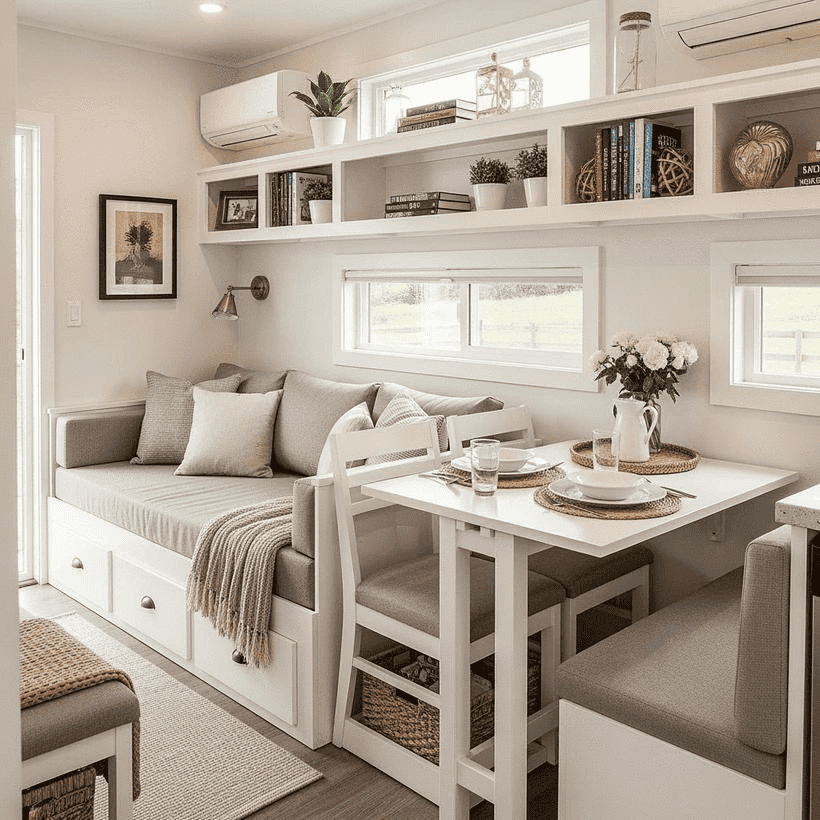
Furniture has a major influence on how comfortable and practical a tiny house feels. Traditional sofas, large dining tables, bulky wardrobes, and oversized beds can quickly consume the limited floor space available.
The smartest approach is to choose furniture that serves multiple purposes. A sofa with hidden storage, for example, provides seating while creating extra room for household belongings. Similarly, a fold-down table can function as a dining area, workspace, or food preparation surface.
Multifunctional furniture isn’t just a design preference in a tiny house. It’s one of the most effective ways to make limited space work harder.
Essential Furniture for a Tiny House
You don’t need to furnish every corner immediately. Start with the pieces that support your everyday activities, including sleeping, relaxing, eating, and working.
Here are some of the most useful furniture essentials.
1. Convertible sofa bed
A convertible sofa bed provides comfortable seating during the day and an additional sleeping area when needed. It’s particularly useful for tiny houses without a separate guest bedroom.
Look for a model that opens easily and doesn’t require moving several other pieces of furniture. Some designs also include storage compartments underneath the seating area.
2. Fold-down dining table
A traditional dining table can take up valuable floor space, especially in a tiny house with an open-plan kitchen and living area.
A wall-mounted fold-down table provides a practical alternative. You can open it for meals, laptop work, or food preparation and fold it away when it’s no longer needed.
3. Storage benches and ottomans
Storage benches are useful additions near the entrance, beneath windows, or alongside a dining area.
They provide seating while hiding items such as shoes, blankets, books, and seasonal accessories. An upholstered storage ottoman can also serve as a footrest or occasional table.
4. Murphy beds and loft beds
A Murphy bed folds vertically against the wall when not in use, allowing the same room to function as a living area during the day.
Loft beds are another popular solution, particularly in tiny houses with higher ceilings. They free up the floor underneath for a desk, wardrobe, or additional storage.
However, loft beds aren’t suitable for everyone. Consider ceiling clearance, ladder access, ventilation, and whether climbing up and down will remain comfortable over time.
How to Choose Furniture Without Wasting Space
Buying compact furniture doesn’t automatically guarantee a functional layout. A small sofa can still create problems if it blocks a doorway or leaves insufficient room to walk through the living area.
Measure your available space before purchasing anything. Include the dimensions of the furniture when fully opened, extended, or converted.
Consider these practical guidelines:
- Measure walking paths: Leave enough room to move comfortably between the kitchen, bathroom, sleeping area, and entrance.
- Choose lightweight designs: Furniture that’s easy to move makes cleaning and rearranging simpler.
- Use vertical space: Tall shelving and wall-mounted furniture can reduce the need for bulky floor cabinets.
- Avoid unnecessary pieces: A dining bench might eliminate the need for additional chairs.
- Consider storage capacity: Furniture with built-in compartments can replace separate storage units.
Another factor worth considering is furniture weight. This is particularly important in tiny houses on wheels, where the total weight of furniture, appliances, water, and personal belongings affects towing requirements.
Smart Furniture Features Worth Paying For
Some furniture features are more valuable than decorative details, particularly when the same piece needs to perform several functions.
| Furniture feature | Why it matters |
| Built-in storage | Reduces the need for additional cabinets |
| Foldable design | Creates more usable floor space |
| Expandable surfaces | Provides flexibility for meals and work |
| Lightweight construction | Makes rearranging easier |
| Durable hinges and hardware | Improves long-term reliability |
| Removable covers | Makes cleaning and maintenance easier |
Pay particular attention to hinges, sliding mechanisms, and locking systems. These components may be used several times a day, so inexpensive hardware can become frustrating when it starts sticking or breaking.
The best tiny house furniture is comfortable enough for everyday use but flexible enough to adapt when your needs change.
Kitchen Essentials for Tiny House Living: What You Really Need
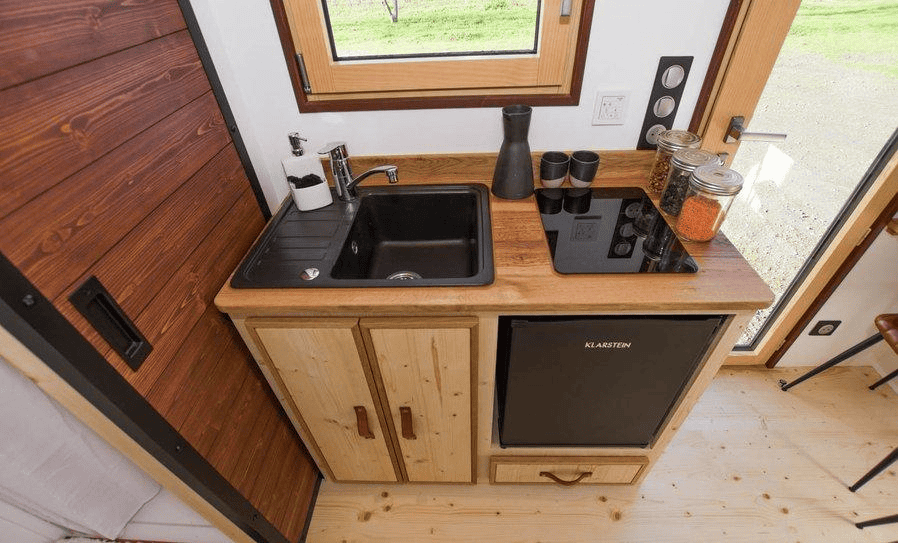
The kitchen is one of the busiest areas in a tiny home. Even a compact cooking space needs to accommodate food preparation, refrigeration, cooking, cleaning, and storage.
The challenge is deciding which appliances deserve permanent space. A traditional kitchen might accommodate a full-size refrigerator, large oven, dishwasher, coffee machine, and multiple countertop gadgets. A tiny house usually requires a more selective approach.
Start by thinking about your actual cooking habits. Someone who prepares fresh meals every day will need different equipment from someone who mostly reheats food or cooks simple dishes.
Must-Have Tiny House Kitchen Appliances
The right appliances make cooking easier without consuming too much electricity, countertop space, or storage capacity.
5. Compact refrigerator
A refrigerator is essential for storing fresh food, dairy products, leftovers, and other perishable ingredients.
Compact refrigerators are available in different configurations, including under-counter models and narrow upright designs. Some tiny homeowners prefer apartment-sized refrigerators because they offer more storage capacity without requiring a full-size kitchen layout.
Before purchasing, consider:
- Available cabinet or floor dimensions.
- Internal freezer capacity.
- Daily electricity consumption.
- Door-opening clearance.
- Ventilation requirements around the appliance.
A refrigerator that’s too small can become inconvenient, particularly for couples or families who prefer shopping once or twice a week.
6. Two-burner cooktop or induction stove
A two-burner cooktop provides enough cooking capacity for most everyday meals while taking up less counter space than a traditional range.
Induction cooktops are particularly attractive because they heat compatible cookware efficiently and provide precise temperature control. However, they require suitable cookware and sufficient electrical capacity.
Propane cooktops are another option, especially for certain off-grid homes. They require appropriate ventilation, safe installation, and compliance with applicable fuel-gas requirements.
7. Microwave or compact convection oven
A microwave is useful for reheating leftovers, defrosting ingredients, and preparing quick meals.
If you enjoy baking or cooking more substantial dishes, a compact convection oven may offer greater flexibility. Some appliances combine microwave and convection functions, reducing the number of separate machines you need.
Choose based on your cooking habits rather than buying both automatically.
8. Range hood or suitable kitchen ventilation
Cooking produces moisture, odors, grease, and heat. These can become noticeable quickly in a small home.
A properly selected range hood helps remove cooking pollutants and improves indoor air quality. Where possible, choose a system that exhausts outdoors rather than simply circulating air through a filter.
Ventilation is especially important in tiny houses with limited windows and tightly sealed insulation.
9. Small dishwasher
A compact dishwasher can make everyday cleaning easier, particularly for people who cook frequently.
Countertop and slimline models are available for homes with limited cabinet space. However, they still require suitable plumbing connections, drainage, and enough electrical capacity.
If you rarely cook or have very limited water availability, washing dishes manually may be more practical.
Cookware and Kitchen Tools That Deserve a Place
Appliances are only part of a functional kitchen. You also need cookware and utensils that support everyday meal preparation without filling every drawer.
The following items are particularly useful:
10. Nesting pots and pans
Nesting cookware fits together, reducing the amount of cabinet space required. Choose a small selection of versatile pieces rather than purchasing a large cookware set.
A medium saucepan, frying pan, and multipurpose cooking pot are often enough for basic meals.
11. Stackable bowls and measuring cups
Stackable kitchenware keeps cabinets organized and makes it easier to access frequently used items.
Look for durable materials that can handle regular use without taking up unnecessary space.
12. Multipurpose knives and cutting boards
A good chef’s knife, a smaller utility knife, and a compact cutting board can handle most everyday food preparation.
You don’t need a separate specialized knife for every ingredient.
13. Collapsible colanders and food containers
Collapsible kitchen accessories are particularly useful because they can be flattened or nested when they’re not being used.
Food containers with stackable designs also make refrigerator storage more efficient.
14. Compact electric kettle or coffee maker
An electric kettle is useful for preparing tea, coffee, instant meals, and hot water for cooking.
A small coffee maker is worth considering if you regularly prepare coffee at home. However, avoid buying several appliances that perform similar functions.
Kitchen Storage Essentials
Limited cabinet space can make even a well-designed tiny house kitchen feel cluttered. Good organization allows you to store cooking equipment without sacrificing access to countertops or frequently used items.
Consider these storage solutions:
- Magnetic knife holders: Keep knives accessible without occupying a countertop drawer.
- Wall-mounted racks: Provide convenient storage for frequently used utensils.
- Pull-out pantry organizers: Make narrow cabinets easier to access.
- Stackable food containers: Reduce wasted space inside cabinets and refrigerators.
- Cabinet dividers: Prevent cookware, lids, and kitchen accessories from becoming disorganized.
- Overhead shelving: Create additional storage for lightweight items.
One common mistake is filling every available cabinet with food and kitchen equipment. This leaves little room for groceries and makes it difficult to maintain an organized kitchen.
Practical tip: Start with the cookware and appliances you use regularly. Live with your initial setup before purchasing additional equipment. You’ll quickly discover which items genuinely improve your cooking routine and which ones simply occupy valuable space.
Tiny House Bathroom Essentials for Comfort and Everyday Convenience
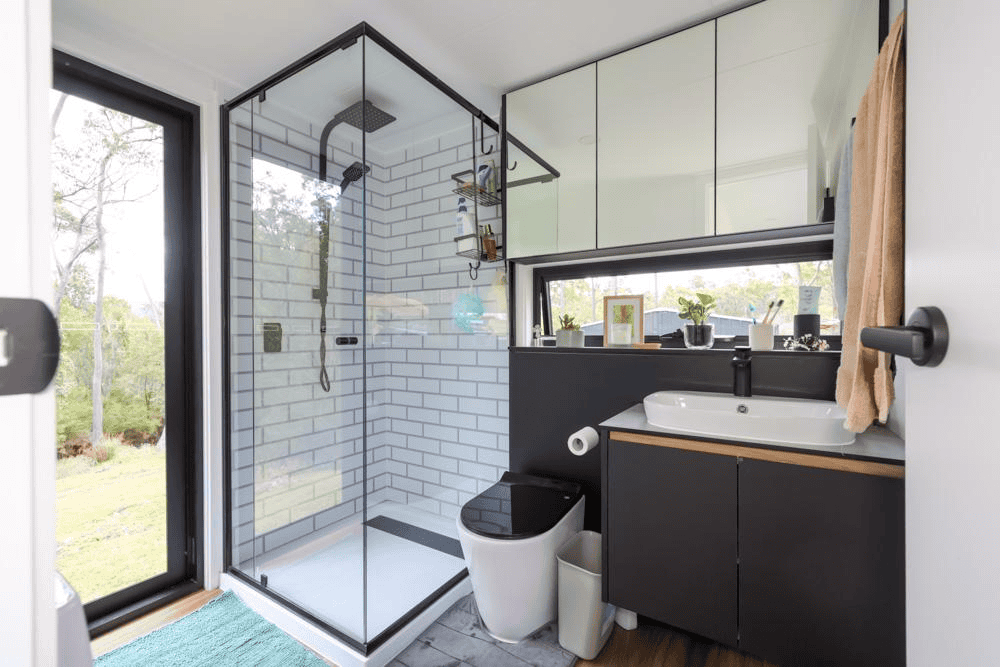
A tiny house bathroom needs to do everything a traditional bathroom does, but within a much smaller footprint. The challenge is fitting essential fixtures, maintaining privacy, managing moisture, and keeping everyday toiletries organized.
A compact bathroom doesn’t have to feel uncomfortable. Good fixture selection, efficient ventilation, and thoughtful storage can create a practical space that’s easy to maintain.
The most important decision is choosing bathroom equipment that matches your plumbing arrangement, available water supply, and lifestyle.
Essential Bathroom Fixtures and Equipment
Bathroom fixtures should be selected early in the design process because they influence plumbing locations, floor space, and overall layout.
15. Compact shower enclosure
A compact shower enclosure provides a dedicated bathing area without consuming excessive floor space.
Corner showers and rectangular shower bases are common options for tiny homes. Some layouts use a wet bath, where the shower and toilet occupy the same waterproofed room.
When choosing a shower, consider:
- Available floor dimensions.
- Door-opening clearance.
- Water pressure and drainage.
- Waterproof wall and floor materials.
- Ventilation after showering.
A shower that’s too small can become uncomfortable, so don’t sacrifice usability just to save a few inches.
16. Space-saving toilet
The toilet is one of the most important tiny house essentials because its installation affects plumbing, waste management, and bathroom layout.
There are several options depending on how your tiny house is connected to utilities.
| Toilet type | Best suited for | Main consideration |
| Traditional flush toilet | Grid-connected homes | Requires water and suitable sewer or septic arrangements |
| Composting toilet | Certain off-grid homes | Requires proper maintenance and waste management |
| Incinerating toilet | Specialized installations | Requires appropriate power or fuel and ventilation |
Composting toilets can reduce water consumption, but they aren’t maintenance-free. Owners need to understand the manufacturer’s instructions for waste handling, ventilation, and cleaning.
Local regulations may also determine which toilet systems are permitted.
17. Compact vanity with integrated storage
A small vanity provides a convenient place for washing and storing bathroom supplies.
Choose a design with drawers or shelves underneath rather than an entirely open structure. This helps keep toiletries, cleaning products, and spare supplies out of sight.
Wall-mounted vanities can also make a compact bathroom feel more open by exposing more of the floor.
18. Water-efficient showerhead and faucet
Water-efficient fixtures help reduce water consumption without necessarily sacrificing comfort.
This is particularly useful in tiny houses that rely on limited water storage or off-grid systems.
Check the flow rate before purchasing and make sure the fixtures are compatible with your water heater and plumbing arrangement.
19. Bathroom exhaust fan
Ventilation is essential in a small bathroom because showering creates moisture that can accumulate quickly.
Without adequate ventilation, condensation may form on windows, walls, ceilings, and concealed surfaces. Persistent moisture can eventually contribute to mold growth and material deterioration.
A properly sized exhaust fan helps remove humid air. Ideally, it should discharge outdoors rather than into an enclosed roof or wall cavity.
Everyday Bathroom Accessories
Once the main fixtures are installed, a few practical accessories can make the bathroom easier to use.
20. Over-the-door organizers
These organizers provide additional storage for toiletries, hair products, and small bathroom supplies without requiring more cabinets.
21. Wall-mounted towel hooks
Hooks are often more space-efficient than traditional towel racks. They can be installed behind the door or on an unused wall.
22. Compact laundry hamper
A narrow laundry hamper or hanging laundry bag helps prevent dirty clothes from accumulating on the bathroom floor.
Choose a design that fits inside a cabinet or beside the washing machine.
23. Refillable soap dispensers
Wall-mounted or refillable dispensers reduce countertop clutter and eliminate the need to store several bulky bottles.
24. Space-saving toiletry containers
Small containers and organizers help keep personal care products accessible without filling the vanity.
Choosing the Right Toilet for Your Tiny House
Toilet selection deserves additional consideration because different tiny houses have different waste-management arrangements.
A home connected to a conventional sewer system may use a standard flush toilet. A property with an approved septic system may also support a flush toilet, depending on system capacity and local requirements.
Off-grid homeowners sometimes prefer composting toilets because they reduce the need for conventional wastewater infrastructure. However, installation and ongoing maintenance must be planned carefully.
Incinerating toilets offer another alternative, although their electrical or fuel requirements and operating costs may make them unsuitable for some homes.
Before making a purchase, evaluate:
- Water availability: Does your home have a reliable water supply?
- Waste disposal: Where will wastewater and solid waste go?
- Maintenance: Are you comfortable following the required cleaning and servicing routine?
- Installation: Does the bathroom have the necessary space, ventilation, and connections?
- Local requirements: Does your jurisdiction permit the selected toilet system?
Choosing a toilet based only on its compact size can lead to expensive installation changes later. It’s better to coordinate the fixture with your plumbing and waste-management plans from the beginning.
Essential Tiny House Systems: Electricity, Water, Heating, and Safety
Furniture and appliances make a tiny house comfortable, but the systems behind the walls keep it functional. Electricity, plumbing, heating, cooling, and ventilation all need to work reliably, especially when several people share a small living space.
These systems deserve careful planning before moving in. A poorly designed electrical setup or inadequate ventilation can create problems that are expensive and difficult to correct after construction.
The right equipment depends on whether your tiny house connects to public utilities, uses an independent system, or combines both approaches.
Electricity Essentials for a Tiny House
Electrical planning should account for everything you expect to use, including refrigerators, cooking appliances, lighting, heating equipment, computers, and entertainment devices.
A tiny house may have fewer rooms than a traditional home, but its electrical requirements can still be substantial.
25. Electrical panel and circuit protection
A properly sized electrical panel distributes electricity throughout the home and protects individual circuits.
Circuit breakers help prevent overloads, while appropriate ground-fault and arc-fault protection can reduce certain electrical hazards.
Have the electrical system designed according to the applicable electrical code and inspected where required.
26. Adequate outlets and LED lighting
Strategically placed outlets make a small home easier to use. Include convenient locations near the kitchen countertop, sleeping area, workspace, and living room.
LED lighting is another practical choice because it consumes less electricity than traditional incandescent lighting and produces relatively little heat.
Consider combining:
- Recessed ceiling lights for general illumination.
- Under-cabinet lighting for kitchen work.
- Reading lights beside the bed.
- Adjustable task lighting for desks.
- Exterior lighting near entrances.
27. Surge protection and suitable wiring
Surge protection helps protect sensitive electronics from certain voltage spikes.
Proper wiring is equally important. Electrical cables, outlets, and protective devices must be appropriate for the system’s voltage, current, installation environment, and expected loads.
Avoid using extension cords as permanent substitutes for properly installed outlets.
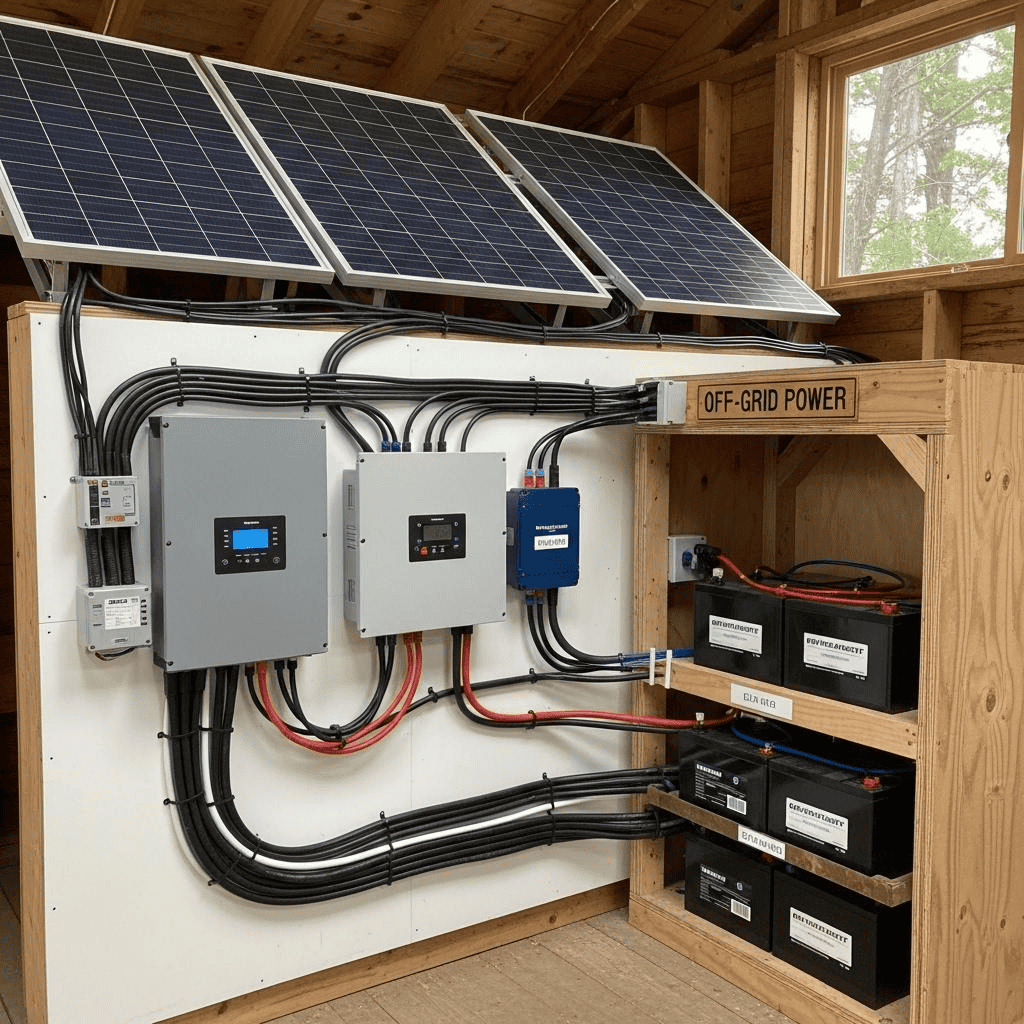
28. Solar panels, batteries, and inverter equipment
Solar equipment is particularly useful for tiny houses designed for off-grid living.
A typical solar setup includes several components:
- Solar panels that collect energy from sunlight.
- A charge controller that regulates electricity flowing into the battery.
- Batteries that store energy for later use.
- An inverter that converts battery electricity into the type of power required by household appliances.
System capacity should be based on actual electricity consumption rather than the number of solar panels that can fit on the roof.
For example, refrigerators, electric cooking equipment, water heaters, and air conditioners can consume considerably more energy than LED lights and phone chargers.
A professional load calculation helps determine the appropriate panel, battery, and inverter sizes.
Water and Plumbing Essentials
Reliable water access is essential for cooking, cleaning, bathing, and drinking. Tiny houses connected to municipal services usually have simpler arrangements, while off-grid homes may require additional storage and treatment equipment.
29. Water storage and filtration
An off-grid tiny house may need a dedicated water storage tank, depending on its water source and supply arrangement.
Tank capacity should reflect the number of occupants, daily consumption, delivery frequency, and available storage space.
Water filtration can improve water quality when the incoming supply contains unwanted particles or contaminants. However, different filters remove different substances.
Choose a filtration system based on water testing and the specific contaminants you need to address.
30. Water heater
A compact water heater provides hot water for showers, kitchen cleaning, and everyday household activities.
Common options include:
| Water heater type | Advantages | Considerations |
| Electric tank | Familiar operation and stored hot water | Requires space and sufficient electrical capacity |
| Electric tankless | Compact and heats water on demand | May require substantial electrical power |
| Propane tankless | Compact and suitable for some off-grid setups | Requires fuel, ventilation, and proper installation |
| Heat pump water heater | Can use less electricity than conventional electric resistance models | Needs appropriate space and operating conditions |
Choose a water heater based on household size, available energy, climate, and simultaneous hot-water demand.
31. Proper plumbing, drainage, and leak detection
Good plumbing prevents everyday inconvenience and protects the structure from water damage.
Make sure your tiny house has:
- Properly sized supply and drainage pipes.
- Accessible shutoff valves.
- Suitable pipe insulation where freezing is possible.
- Correctly installed drain traps and venting.
- Leak detection in vulnerable areas.
- Accessible connections for maintenance.
Water leaks can become particularly damaging in tiny houses because plumbing often runs through compact cabinets, floors, and concealed wall cavities.
Heating, Cooling, and Ventilation
Temperature control can be challenging in a small home. Limited interior space heats up quickly, while inadequate insulation can make cold weather uncomfortable.
Your heating and cooling equipment should match the home’s insulation, climate, floor area, and ventilation requirements.
32. Mini-split heat pump or suitable heating system
A mini-split heat pump is a popular choice for many tiny homes because it provides both heating and cooling without requiring extensive ductwork.
Other options include electric heaters and appropriately installed fuel-burning systems.
When selecting equipment, consider:
- Heating and cooling capacity.
- Energy consumption.
- Outdoor temperature performance.
- Installation requirements.
- Maintenance accessibility.
An oversized system isn’t necessarily better. Equipment should be properly sized for the home’s actual heating and cooling loads.
33. Fans, insulation, and ventilation equipment
Ceiling fans and portable fans can improve comfort during warm weather, while suitable insulation helps stabilize indoor temperatures.
Good insulation should be combined with proper air sealing and ventilation. Sealing every gap without providing controlled fresh-air exchange can contribute to indoor moisture and air-quality problems.
Consider these features:
- Insulated walls, floors, and ceilings.
- Efficient windows and weatherstripping.
- Bathroom exhaust fans.
- Kitchen ventilation.
- Mechanical fresh-air ventilation where appropriate.
- Window coverings to manage heat and sunlight.
Tiny House Safety Essentials You Should Never Skip
Safety equipment should be installed before moving furniture, appliances, and personal belongings into your home.
Small spaces make early detection particularly important because smoke, heat, and carbon monoxide can affect the entire living area quickly.
Essential safety equipment includes:
- Smoke alarms: Install appropriate alarms in required locations and test them regularly.
- Carbon monoxide detectors: Use them where fuel-burning appliances or other potential carbon monoxide sources are present.
- Fire extinguisher: Keep an appropriate, accessible extinguisher and learn how to use it.
- First-aid kit: Include basic supplies for minor injuries and everyday emergencies.
- Emergency flashlight: Keep battery-powered lighting available during power outages.
- Fire escape access: Make sure doors, windows, and escape routes remain accessible.
A fire extinguisher should never be treated as a substitute for safe cooking, electrical installation, or proper fuel storage.
Storage, Cleaning, and Organization Essentials That Prevent Tiny House Clutter
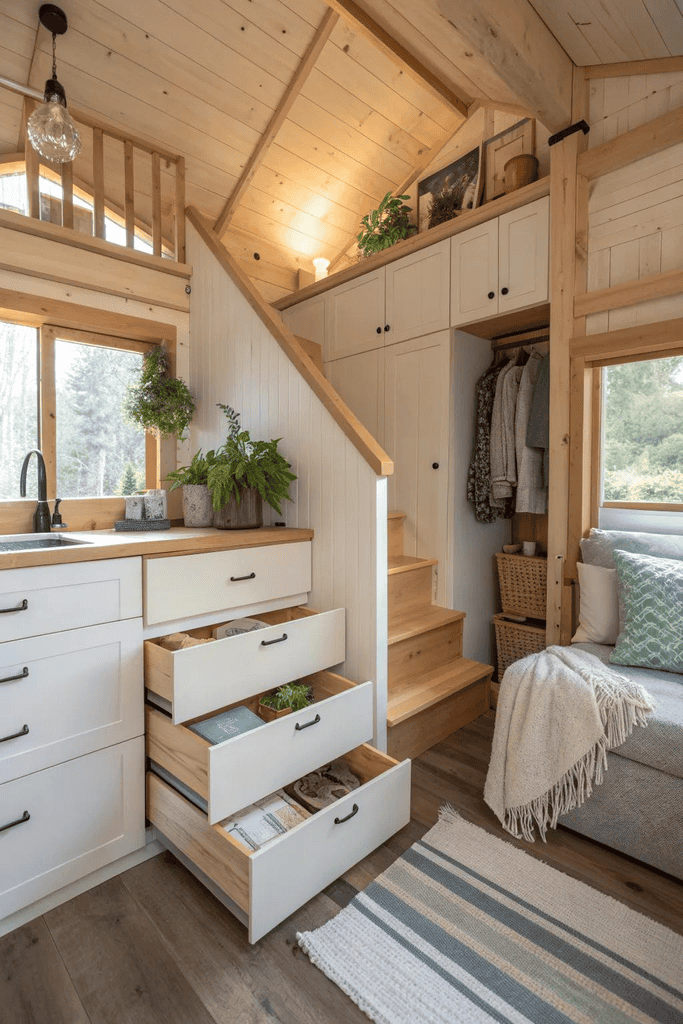
Storage is one of the biggest challenges of tiny house living. Even a relatively small collection of clothing, kitchen supplies, cleaning products, and personal belongings can quickly overwhelm a compact home.
The solution isn’t simply adding more cabinets. Too many storage units can make rooms feel crowded and reduce usable floor space.
Instead, focus on using existing areas more efficiently and choosing organizational products that fit your daily routines.
Storage Solutions Every Tiny Homeowner Should Consider
Good storage makes frequently used items easy to reach while keeping less frequently used belongings out of the way.
Under-bed drawers and storage containers
The area beneath a bed is valuable storage space. Use drawers or appropriately sized containers for seasonal clothing, spare bedding, shoes, and other belongings.
If you have a loft bed, consider storage compartments along the stairs or in nearby cabinetry.
Built-in staircase storage
Staircases leading to lofts can serve more than one purpose.
Individual steps can incorporate drawers or pull-out compartments for clothing, books, tools, and household supplies.
This arrangement can reduce the need for a separate dresser or storage cabinet.
Wall-mounted shelves
Wall shelves are useful in kitchens, bathrooms, bedrooms, and living areas.
They allow you to store lightweight items without occupying additional floor space. However, heavy objects should be secured using suitable mounting hardware and structural support.
Hooks and hanging organizers
Hooks can provide convenient storage for coats, bags, towels, kitchen utensils, and cleaning tools.
Hanging organizers are particularly useful inside closets, behind doors, and in narrow utility areas.
Overhead cabinets and ceiling-height shelving
Vertical storage makes use of areas that might otherwise remain empty.
Overhead cabinets can accommodate seasonal belongings and items that aren’t needed every day. Make sure cabinets are securely installed, particularly in tiny houses on wheels.
Cleaning Essentials for Small Spaces
Cleaning a tiny house is generally easier than cleaning a large home, but limited storage makes equipment selection important.
Large vacuum cleaners, oversized mops, and bulky cleaning buckets can take up more room than necessary.
These compact cleaning products are particularly useful.
34. Cordless vacuum cleaner
A cordless vacuum makes it easier to clean floors, stairs, furniture, and tight corners without managing a long electrical cable.
Choose a lightweight model with suitable attachments for the flooring and upholstery in your home.
35. Compact mop and cleaning supplies
A small mop, microfiber cloths, multipurpose cleaning products, and a compact broom and dustpan are enough for many everyday cleaning tasks.
Store them together in a narrow cabinet or designated utility compartment.
Other useful cleaning supplies include:
- Reusable cleaning cloths.
- Small scrub brushes.
- Glass cleaner.
- Dishwashing liquid.
- Bathroom cleaning products.
- Compact dustpan.
- Small cleaning caddy.
Simple Organization Habits That Make Tiny Living Easier
Even the best storage system won’t remain effective without regular organization.
Tiny homes have little room for forgotten purchases, unused equipment, and belongings that don’t have a designated place.
A few everyday habits can prevent clutter from becoming a recurring problem:
- Give everything a home: Return frequently used items to the same storage location after using them.
- Keep countertops clear: Store appliances and utensils that aren’t used daily.
- Follow a one-in, one-out rule: When purchasing a new item, consider removing something you no longer use.
- Rotate seasonal belongings: Keep winter clothing, holiday decorations, and seasonal equipment out of everyday storage areas.
- Review your belongings regularly: Donate, sell, or responsibly dispose of items that no longer serve a purpose.
A useful approach is to organize storage according to how frequently you use something. Everyday items should remain easy to reach, while occasional-use belongings can occupy higher shelves or less accessible compartments.
Tiny House Essentials Checklist: What to Buy First and What Can Wait
Furnishing a tiny house can become expensive if you purchase everything at once. It’s easy to get distracted by clever gadgets, attractive furniture, and compact appliances that look useful but may not fit your actual lifestyle.
A better approach is to divide your purchases into three groups: essential items you need before moving in, useful additions that improve everyday comfort, and optional upgrades you can purchase later.
This approach helps you control your budget while avoiding unnecessary clutter.
The Essential Tiny House Shopping Checklist
Use this checklist when preparing your tiny house for full-time living. It covers the main household necessities without assuming that every tiny home needs the same equipment.
| Category | Essential items |
| Living room | Convertible sofa, storage bench, fold-down table |
| Bedroom | Comfortable mattress, bedding, blackout curtains |
| Kitchen appliances | Refrigerator, cooktop, suitable ventilation |
| Kitchen equipment | Pots, pans, knives, cutting board, food containers |
| Bathroom | Toilet, shower, vanity, towels, toiletries |
| Electricity | Electrical panel, outlets, lighting, circuit protection |
| Water | Water supply, plumbing, water heater, drainage |
| Heating and cooling | Suitable heating and cooling equipment, fans |
| Safety | Smoke alarms, CO detectors where required, fire extinguisher, first-aid kit |
| Storage | Shelves, drawers, organizers, storage containers |
| Cleaning | Vacuum, mop, microfiber cloths, cleaning supplies |
Your actual shopping list should reflect your floor plan and household size. A single occupant may need considerably less kitchen equipment and storage than a couple or family.
It’s also worth distinguishing between equipment required for safe occupancy and accessories that simply make a home more convenient. Electrical protection, appropriate ventilation, reliable plumbing, and fire safety should come before decorative purchases.
Items You Can Buy Later
Some products are useful but aren’t necessary when you first move into a tiny house.
Buying them later gives you time to understand your available space and identify which upgrades would genuinely improve your daily routine.
Consider postponing these purchases:
- Decorative accessories, artwork, and ornamental lighting.
- Extra kitchen gadgets and specialty appliances.
- Additional seating and occasional furniture.
- Expensive smart home systems.
- Specialty cleaning equipment.
- Outdoor entertainment furniture.
- Additional storage organizers.
- Seasonal decorations and accessories.
For example, you might initially think you need a separate coffee machine, electric kettle, toaster, and blender. After living in your tiny house for a few weeks, you may discover that you regularly use only two of them.
The same applies to furniture. A second armchair might look attractive in a showroom but leave very little room to move around your living area.
Give yourself time to understand how you use your home before investing in optional equipment.
How to Avoid Overspending on Tiny House Essentials
The cost of furnishing a tiny house varies considerably. A basic setup with affordable furniture and essential appliances will cost less than a fully equipped home with premium appliances, custom cabinetry, and advanced off-grid systems.
The biggest expense isn’t always furniture. Utility equipment, installation work, plumbing, electrical upgrades, and specialized appliances can account for a significant portion of the overall budget.
Use these strategies to make your money go further.
Set a realistic furnishing budget
Separate your spending into categories such as furniture, kitchen appliances, bathroom equipment, storage, safety, and household supplies.
Keep utility installation and construction costs separate from the budget for movable household items. This makes it easier to understand how much you actually need to furnish the home.
Measure everything before buying
Never assume that a product advertised as compact will fit your tiny house.
Measure the available width, height, and depth, including the space needed to open doors, pull out drawers, and access appliances.
For refrigerators, washing machines, and other large equipment, check delivery access as well. A product that fits inside the kitchen may still be impossible to bring through the entrance.
Compare energy consumption and maintenance costs
An inexpensive appliance isn’t necessarily the cheapest option over its lifetime.
Check electricity consumption, replacement parts, warranty coverage, and maintenance requirements. This is particularly important for off-grid homeowners who need to manage limited battery capacity.
Choose durable products over disposable alternatives
Furniture hardware, plumbing fixtures, kitchen equipment, and appliances receive regular use.
Spending more on a durable product can be worthwhile if it reduces repair costs and replacement frequency.
Start with the basics and upgrade gradually
You don’t need to create a perfectly furnished tiny house on moving day.
Purchase essential equipment first, establish your daily routines, and add products when you identify a genuine need.
This gradual approach also makes it easier to avoid clutter because every new purchase has a clear purpose.
How to Make a Tiny House Feel Bigger Without Spending More
A comfortable tiny house isn’t necessarily one with the most expensive furniture or the largest number of storage compartments.
Simple layout decisions can make a noticeable difference without requiring major purchases.
Consider these ideas:
- Keep the main walking paths clear.
- Use light-colored curtains to allow natural light into the home.
- Position furniture to avoid blocking windows.
- Store frequently used belongings near the areas where you need them.
- Use mirrors to reflect natural light.
- Choose furniture with exposed legs to create a more open visual appearance.
- Avoid filling empty walls and corners simply because space is available.
Storage should also be planned around everyday activities. Kitchen supplies belong near the cooking area, cleaning products should remain accessible, and frequently worn clothing should be easy to reach.
These small decisions make a tiny home feel more organized and comfortable without requiring additional square footage.
Related Guide: Space-Saving Design and Off-Grid Tiny House Living
Choosing the right essentials becomes easier when you understand how your home’s layout and utility systems work together.
A multifunctional dining table, for example, can reduce furniture requirements, while a properly planned solar system can determine which kitchen appliances are practical for an off-grid household.
If you’re planning a new tiny home, explore related guides on space-saving tiny house design, smart storage solutions, and off-grid tiny house living to make better decisions before purchasing equipment.
For additional guidance on reducing household energy consumption, the U.S. Department of Energy’s Energy Saver resources provide information about insulation, efficient appliances, heating, cooling, and home energy improvements.
Make Your Tiny House Comfortable With the Right Essentials
Creating a comfortable tiny house doesn’t require filling every corner with furniture, appliances, and storage products. It requires choosing items that support your daily routines while making the most of the space available.
Start with the basics: comfortable furniture, practical kitchen equipment, suitable bathroom fixtures, reliable utility systems, essential safety devices, and well-planned storage. These are the foundations of a functional home.
Remember that the best setup depends on your household size, floor plan, climate, budget, and whether you rely on public utilities or independent systems. What works for one tiny homeowner may not be necessary for another.
Planning your first tiny house or upgrading your current one? Start with this tiny house essentials checklist, measure your available space, and prioritize the purchases that will make everyday living easier. Build your home around the things you genuinely need, and let comfort come from thoughtful choices rather than unnecessary belongings.
