
Tiny house floor plans for seniors are becoming one of the most searched tiny living topics for a simple reason: more retirees want affordable, low-maintenance homes that still feel safe and comfortable long-term. A well-designed tiny house can support aging in place beautifully, but only if the layout is planned with mobility, accessibility, and daily comfort in mind from the beginning.
Many traditional tiny house designs focus heavily on aesthetics or maximizing sleeping lofts. Those features may work for younger owners, but they often create challenges later in life. Steep ladders, tight bathrooms, and limited storage can quickly turn a dream home into a frustrating space.
This guide explores the best tiny house floor plans for seniors aging in place, including smart layouts, accessibility features, realistic costs, and design mistakes to avoid. Whether you’re planning retirement, helping a parent downsize, or researching accessible tiny homes, these insights will help you make practical decisions that actually work in real-world living.
In This Article
Why Tiny House Floor Plans for Seniors Are Growing in Popularity
Retirement housing has changed dramatically over the last decade. Rising home prices, expensive assisted living facilities, and the desire for simpler living have pushed many older adults toward smaller homes with lower ongoing costs.
Tiny houses are no longer viewed as temporary minimalist experiments. Many seniors now see them as realistic long-term housing solutions that support independence and reduce financial stress.
Lower Costs Without Sacrificing Comfort
One of the biggest reasons seniors choose tiny homes is affordability. Downsizing from a traditional home can free up retirement savings and reduce monthly expenses substantially.
A smaller home often means:
- Lower utility bills
- Reduced property taxes
- Less maintenance
- Smaller repair costs
- Easier cleaning routines
Many retirees also prefer putting money toward travel, hobbies, or healthcare rather than maintaining unused square footage.
Aging in Place Is Driving New Tiny House Designs
Older tiny homes were often designed around extreme minimalism. Modern senior-friendly layouts are very different.
Today’s tiny house floor plans for seniors focus more on:
- Single-level living
- Wider walkways
- Accessible bathrooms
- Safer kitchen layouts
- Better lighting
- Main-floor bedrooms
Builders increasingly understand that aging in place requires flexibility, not just smaller square footage.
Tiny Homes Offer More Independence Than Assisted Living
Many seniors want privacy and autonomy for as long as possible. Tiny homes can provide that middle ground between a large suburban house and an assisted living facility.
Some owners place tiny houses:
- On family property
- Inside retirement-focused tiny house communities
- In RV parks with long-term stays
- On private rural land
This flexibility gives retirees more control over lifestyle and living expenses.
Simpler Living Can Reduce Daily Stress
Large homes often become physically and emotionally exhausting to maintain over time. Tiny living encourages a simpler routine.
Daily tasks like cleaning, organizing, and maintaining the home become far easier in a thoughtfully designed small space. Many seniors also appreciate having fewer stairs and less clutter.
That said, successful tiny living depends heavily on choosing the right floor plan. Poor layouts create mobility problems quickly, especially as physical needs change with age.
What Makes a Tiny House Floor Plan Senior-Friendly?
Not every tiny house is suitable for aging in place. Some popular designs actually become unsafe or impractical for older adults within just a few years.
The best tiny house floor plans for seniors prioritize comfort, accessibility, and long-term usability over trendy features.
Single-Level Living Matters More Than Most People Realize
Lofts may look cozy online, but climbing ladders every day becomes difficult and risky over time.
Senior-friendly tiny homes usually include:
- Ground-floor bedrooms
- Minimal elevation changes
- Wide walking paths
- Open layouts without tight corners
A single-level design reduces fall risks and makes the home easier to navigate during temporary injuries or future mobility challenges.
Wider Doorways Create Long-Term Flexibility
Many people overlook doorway width when choosing a tiny house plan. Standard narrow openings can become major obstacles later.
Wider doorways help accommodate:
- Walkers
- Wheelchairs
- Medical equipment
- Caregiver access
Even seniors without current mobility concerns benefit from planning ahead. Retrofitting tiny homes later is often expensive and complicated.
Bathroom Design Can Make or Break the Layout
Bathrooms are one of the most important parts of a senior-friendly tiny home.
Look for features such as:
- Curbless showers
- Grab bar reinforcements
- Non-slip flooring
- Comfortable toilet height
- Adequate turning space
Tiny bathrooms that feel manageable at age 60 may feel extremely restrictive by age 75 or 80.
Open Kitchens Improve Safety and Functionality
Compact kitchens work best when movement feels natural and unrestricted.
Helpful design features include:
- Lower countertops
- Pull-out storage drawers
- Easy-reach shelving
- Lever-style faucets
- Wide appliance clearance
Storage placement matters too. Constant bending or climbing becomes frustrating quickly in poorly designed kitchens.
Lighting Is More Important in Tiny Spaces
Tiny houses naturally have tighter pathways and more obstacles. Good lighting dramatically improves safety.
Senior-friendly designs often include:
- Large windows
- Under-cabinet lighting
- Motion-sensor lights
- Bright bathroom lighting
- Illuminated pathways near entrances
Natural light also helps tiny homes feel larger and more emotionally comfortable.
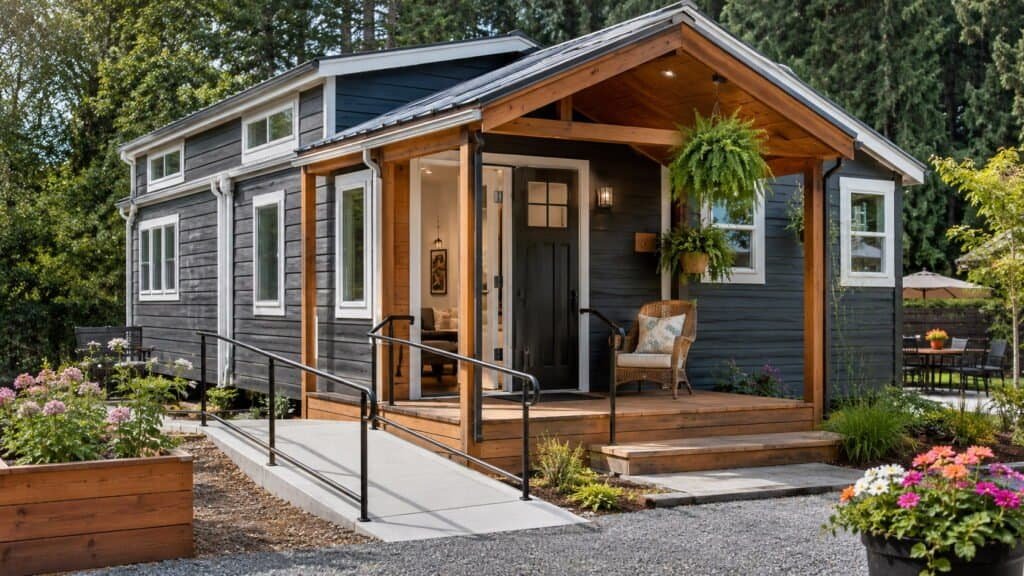
Best Tiny House Floor Plans for Seniors Aging in Place
The best layout depends on lifestyle, mobility needs, budget, and whether the home will be used full-time or seasonally. Some seniors prefer highly compact homes, while others prioritize extra space for long-term comfort.
Below are the most practical tiny house floor plans for aging in place.
The Accessible Studio Layout
Studio-style tiny homes are popular among solo retirees who want simplicity without sacrificing comfort.
These layouts typically place everything on one level:
- Bed area
- Kitchen
- Bathroom
- Living room
Because there are fewer walls, movement feels easier and more open.
Why This Layout Works Well for Seniors
Benefits include:
- Fewer tripping hazards
- Easier nighttime mobility
- Better wheelchair accessibility
- Lower construction costs
- Simpler maintenance
Most accessible studio layouts work best between 250 and 400 square feet.
The One-Bedroom Open Layout
This is one of the most balanced tiny house floor plans for seniors aging in place.
A separate bedroom creates:
- Better privacy
- Improved sleep quality
- Reduced clutter visibility
- More traditional home comfort
Couples often prefer this layout because it allows one person to rest while the other uses the kitchen or living area.
Key Features to Prioritize
Look for:
- Main-floor bedroom access
- Wide hallway spacing
- Large bathroom entrance
- Minimal sharp corners
- Comfortable furniture clearance
Open living and kitchen areas help prevent the home from feeling cramped.
The Split-Bedroom Companion Plan
Some seniors plan ahead for caregivers, visiting family members, or multigenerational living arrangements.
Split-bedroom layouts create flexibility by separating sleeping spaces on opposite sides of the home.
These designs work especially well for:
- Adult children assisting parents
- Couples with different sleep schedules
- Future live-in care situations
- Long-term guest accommodations
Pros and Cons of Split Layouts
| Pros | Cons |
| More privacy | Requires larger footprint |
| Better caregiver flexibility | Higher build costs |
| Easier shared living | More utility usage |
| Better long-term adaptability | Less compact efficiency |
Many retirees find the added space worthwhile because it increases future housing flexibility.
The Park Model Tiny House
Park model homes are technically RVs in many areas, but they often feel much closer to traditional small homes.
These homes usually range from 399 to 500 square feet and offer more spacious interiors than standard tiny houses on wheels.
Why Seniors Often Prefer Park Models
Park model advantages include:
- Larger bathrooms
- Full-size kitchens
- Ground-floor bedrooms
- Better storage capacity
- Easier furniture arrangements
They also tend to feel less cramped emotionally during long-term living.
Some retirement-focused tiny home communities specifically cater to park model owners because they blend affordability with comfort.
The Cottage-Inspired Tiny Home
Many seniors want a tiny house that still feels warm and familiar rather than ultra-modern or industrial.
Cottage-style layouts focus on comfort-driven design features like:
- Traditional rooflines
- Cozy living rooms
- Functional porches
- Residential-style kitchens
- Comfortable seating areas
These homes often feel psychologically easier to transition into after downsizing from a traditional house.
Best Features for Long-Term Comfort
Look for cottage-inspired plans that include:
- Main-floor sleeping
- Covered outdoor space
- Abundant windows
- Easy-access storage
- Residential-style bathrooms
A comfortable emotional connection to the home matters just as much as square footage when aging in place successfully.
Tiny House Design Features That Make Aging in Place Easier
The right layout is only part of the equation. Small design details can dramatically improve safety, comfort, and independence inside a tiny home.
Many seniors discover that a few thoughtful upgrades make everyday living far easier over time.
Curbless Showers Reduce Fall Risks
Bathrooms are one of the most common places for household injuries. Tiny house showers with raised edges may save space, but they can become dangerous later.
Curbless showers are one of the best investments for aging in place because they:
- Eliminate stepping hazards
- Improve wheelchair accessibility
- Make caregiver assistance easier
- Create a more open bathroom feel
Pairing the shower with built-in seating and reinforced grab bars adds even more long-term functionality.
Slip-Resistant Flooring Makes a Big Difference
Tiny houses often have compact walkways, meaning even a small slip can cause serious injuries.
Safer flooring choices include:
- Textured vinyl plank
- Cork flooring
- Low-slip tile
- Rubber-backed laminate
Highly polished surfaces may look attractive online, but they are usually poor choices for senior living.
Area rugs should also be minimized unless securely fastened.
Accessible Storage Prevents Daily Frustration
Storage is one of the biggest challenges in tiny house living. Poorly placed cabinets can quickly become exhausting for older adults.
The best tiny house floor plans for seniors include:
- Pull-out pantry drawers
- Lower shelving
- Deep storage baskets
- Easy-access closets
- Soft-close cabinets
Frequent bending, climbing, or stretching becomes harder with age, so accessibility matters more than maximizing every inch of vertical space.
Smart Home Features Add Convenience and Safety
Technology has become surprisingly useful in senior-friendly tiny homes.
Helpful smart features include:
- Voice-controlled lighting
- Smart thermostats
- Video doorbells
- Motion-sensor night lights
- Automatic blinds
- Emergency alert systems
Many systems are affordable now and can improve independence without making the home feel overly technical.
Heating and Cooling Need Extra Attention in Tiny Homes
Tiny houses heat and cool quickly because of their smaller interior volume. That can be helpful, but it also means temperatures fluctuate faster.
Seniors generally benefit from:
- Mini-split HVAC systems
- High-quality insulation
- Energy-efficient windows
- Ceiling fans for airflow
- Backup heating systems during outages
Poor climate control can make small spaces uncomfortable surprisingly fast.
Better Lighting Improves Comfort Every Day
Lighting affects both safety and emotional well-being.
Good tiny house lighting plans often include:
- Natural daylight from multiple windows
- Under-cabinet kitchen lights
- Bedside reading lights
- Motion-activated hallway lighting
- Exterior entry lighting
A bright tiny house usually feels larger, calmer, and easier to navigate.
Tiny House Floor Plans to Avoid for Seniors
Some tiny house designs look incredible on social media but become difficult to live in long-term. What feels adventurous at age 55 may feel exhausting at 70.
Avoiding problematic layouts early can save expensive renovations later.
Loft-Only Sleeping Arrangements
Sleeping lofts are one of the biggest challenges in many tiny homes.
Ladders and steep staircases create risks such as:
- Falls during nighttime bathroom trips
- Joint strain
- Limited emergency access
- Difficulty carrying items upstairs
Even healthy, active seniors often tire of loft access after a few years.
If a loft is unavoidable, safer alternatives include:
- Wide staircase access
- Handrails on both sides
- Stair storage systems
- Reduced loft height requirements
Still, a main-floor bedroom remains the best option for aging in place.
Ultra-Minimalist Layouts Often Sacrifice Comfort
Tiny homes designed for extreme minimalism may lack practical features seniors genuinely need.
Common issues include:
- Insufficient storage
- Tiny bathrooms
- Cramped kitchens
- Limited seating space
- Poor accessibility
A slightly larger floor plan often creates a much better long-term living experience.
Narrow Hallways and Tight Corners
Many older tiny homes were built with very tight movement spaces to maximize efficiency.
Those layouts can become problematic when using:
- Walkers
- Canes
- Wheelchairs
- Medical equipment
Even carrying groceries through narrow pathways becomes frustrating over time.
Multi-Level Tiny Homes Create Long-Term Challenges
Split-level designs may seem creative, but elevation changes become harder with age.
Multiple floor levels can lead to:
- Increased fall risk
- Mobility limitations
- Difficult cleaning routines
- Reduced accessibility for visitors or caregivers
Single-level layouts almost always age better.
Hidden Storage Can Become Impractical
Tiny homes often use hidden compartments beneath furniture or elevated platforms.
While clever, these systems may require:
- Heavy lifting
- Frequent crouching
- Reaching into awkward spaces
Storage should feel easy and intuitive rather than physically demanding.
Poor Bathroom Placement Causes Problems
Bathrooms located far from sleeping areas can become inconvenient, especially at night.
The best tiny house floor plans for seniors place bathrooms:
- Close to the bedroom
- On the main floor
- Near easy lighting access
- Within clear walking pathways
Nighttime accessibility becomes increasingly important with age.
How Much Space Do Seniors Actually Need in a Tiny House?
One of the most common misconceptions about tiny living is that smaller always equals better. In reality, the ideal size depends heavily on mobility, lifestyle, health needs, and daily routines.
Many seniors discover that comfortable tiny living is more about layout efficiency than extreme downsizing.
Is 200 Square Feet Too Small?
A 200-square-foot tiny house can work for highly minimalist individuals, but it often feels restrictive long-term.
Challenges may include:
- Limited storage
- Tiny bathrooms
- Minimal seating space
- Reduced accessibility
- Difficulty hosting visitors
These ultra-compact homes are usually better suited for temporary living, vacation use, or highly mobile lifestyles.
Why 300–500 Square Feet Is Often the Sweet Spot
Many retirees find that homes between 300 and 500 square feet provide the best balance between affordability and comfort.
This size range typically allows for:
- A ground-floor bedroom
- A functional bathroom
- Comfortable seating
- Better kitchen layouts
- More practical storage
The home still feels manageable without becoming claustrophobic.
Couples Usually Need More Space Than Expected
Tiny living as a couple requires thoughtful planning.
Couples often benefit from:
- Separate seating areas
- Larger kitchens
- More storage zones
- Wider walkways
- Dedicated personal space
Without enough breathing room, even beautifully designed tiny homes can start to feel stressful.
Medical Equipment and Accessibility Require Extra Planning
Future mobility needs should influence floor plan decisions early.
Space may eventually be needed for:
- Walkers
- Wheelchairs
- Oxygen equipment
- Adjustable beds
- Caregiver access
Tiny homes with flexible layouts adapt much better over time.
Outdoor Living Space Can Reduce Indoor Crowding
Many successful senior tiny homes extend living areas outdoors.
Helpful additions include:
- Covered porches
- Screened patios
- Outdoor seating zones
- Small garden spaces
Outdoor areas make compact interiors feel much larger psychologically.
Bigger Isn’t Always Better Either
Large tiny homes can sometimes lose the simplicity that attracts retirees in the first place.
More square footage may also mean:
- Higher construction costs
- Larger utility bills
- More maintenance
- More cleaning responsibilities
The goal is finding the smallest space that still supports comfort, safety, and long-term independence.
A carefully designed 400-square-foot tiny house often functions better for seniors than a poorly designed 700-square-foot small home.
Cost Breakdown: Senior-Friendly Tiny House Floor Plans
Tiny house costs vary widely depending on size, materials, accessibility upgrades, and whether the home is professionally built or DIY. Senior-friendly features can increase the initial budget, but many of those upgrades improve long-term safety and reduce future remodeling expenses.
Planning realistic costs early helps avoid unpleasant surprises later.
Average Cost by Tiny House Type
Here’s a general breakdown of what seniors can expect to pay for different tiny house styles:
| Tiny House Type | Average Cost Range |
| Basic DIY Tiny House | $30,000–$60,000 |
| Professionally Built THOW | $70,000–$130,000 |
| Senior-Friendly Park Model | $90,000–$160,000 |
| Fully Accessible Custom Tiny Home | $120,000–$200,000+ |
Homes designed specifically for aging in place usually cost more because they require wider layouts, upgraded bathrooms, and accessibility-focused construction.
Accessibility Upgrades Worth Paying For
Certain upgrades provide major long-term value for seniors.
The most worthwhile investments often include:
- Curbless showers
- Wider doorways
- Reinforced bathroom walls for grab bars
- Slip-resistant flooring
- Main-floor bedrooms
- Better insulation and climate control
- Stair-free entrances
These features may not look exciting in listing photos, but they dramatically improve daily living over time.
Features That Commonly Increase Costs
Some design choices can push budgets higher quickly.
Cost-driving upgrades include:
| Feature | Estimated Added Cost |
| Wheelchair-accessible bathroom | $5,000–$15,000 |
| Custom cabinetry | $3,000–$10,000 |
| Premium insulation package | $2,000–$8,000 |
| Smart-home systems | $1,500–$6,000 |
| High-end appliances | $3,000–$12,000 |
| Covered porch additions | $4,000–$15,000 |
Balancing comfort with budget is important. Many seniors prioritize bathroom accessibility and climate efficiency first because those upgrades affect everyday quality of life the most.
DIY vs. Professional Builds
DIY construction can save money, but it is not always ideal for retirement-focused tiny homes.
Professional builders usually provide:
- Better code compliance
- Safer structural engineering
- Improved insulation
- More reliable accessibility planning
- Warranty protection
DIY projects may work well for experienced builders, but mistakes can become expensive later.
Hidden Costs Many Buyers Overlook
The structure itself is only part of the total expense.
Additional costs often include:
- Land purchase or lease
- Utility hookups
- Foundation work
- Transportation fees
- RV park fees
- Insurance
- Maintenance
- Zoning permits
Many retirees underestimate placement costs, especially when moving into tiny house communities.
Readers researching budgets may also want to explore your related guide on hidden costs of tiny house living for a deeper financial breakdown.
Financing Tiny Homes Can Be Complicated
Tiny houses still fall into legal gray areas in some states.
Depending on the structure type, financing may resemble:
- RV loans
- Personal loans
- Manufactured home financing
- Construction loans
Park models and foundation-built tiny homes are often easier to finance than tiny houses on wheels.
The U.S. Department of Housing and Urban Development provides useful housing guidance and accessibility resources for seniors here: HUD Housing Resources for Older Adults
Best Locations for Seniors Living in Tiny Houses
Location matters just as much as floor plans. A beautiful tiny home can quickly become frustrating if local zoning rules, harsh weather, or limited healthcare access create daily challenges.
Many seniors prioritize locations that balance affordability, safety, community, and healthcare convenience.
Tiny House Communities Are Becoming More Senior-Friendly
Retirement-focused tiny house communities have expanded significantly in recent years.
These communities often provide:
- Shared amenities
- Maintenance support
- Social opportunities
- Security features
- Easier utility access
- Age-friendly environments
Some communities specifically cater to retirees seeking simpler lifestyles without the isolation that sometimes comes with rural living.
States With Better Tiny House Regulations
Tiny house legality varies heavily across the United States.
Several states tend to be more tiny-home friendly, including:
- Florida
- Texas
- Oregon
- North Carolina
- Arizona
- Tennessee
These states often have:
- More flexible zoning
- Larger rural land availability
- Growing tiny house communities
- Better acceptance of ADUs and park models
Local county regulations still matter, though. State-level friendliness does not guarantee every town allows tiny homes.
Climate Plays a Bigger Role Than Many Expect
Weather affects tiny house comfort more dramatically because of the smaller interior space.
Many seniors prefer moderate climates that reduce heating and cooling strain.
Popular retirement regions often offer:
- Mild winters
- Lower humidity
- Reduced snow maintenance
- Fewer extreme temperature swings
Severe climates can increase energy costs and make accessibility harder during storms or icy conditions.
Healthcare Access Should Never Be an Afterthought
Remote off-grid living sounds peaceful, but healthcare access becomes increasingly important with age.
When evaluating locations, seniors should consider:
- Distance to hospitals
- Nearby pharmacies
- Specialist availability
- Emergency response times
- Transportation access
Living 45 minutes from the nearest clinic may feel manageable initially but become difficult later.
Urban vs. Rural Tiny House Living
Both settings have advantages and drawbacks.
| Urban Tiny Living | Rural Tiny Living |
| Closer healthcare access | More privacy |
| Easier shopping access | Lower land costs |
| Better transportation | More space |
| Higher costs | Greater zoning flexibility |
| Smaller lots | Potential isolation |
Many retirees find suburban or semi-rural locations offer the best balance.
Family Property Is Becoming a Popular Option
Accessory dwelling units (ADUs) are increasingly used for multigenerational living.
Placing a tiny home on family land can offer:
- Lower housing costs
- Built-in support systems
- Easier caregiving
- Greater independence than shared housing
Before committing, seniors should carefully research local zoning laws and utility regulations.
Tiny House Safety Tips for Aging in Place Long-Term
A tiny house should feel comfortable, but it also needs to support long-term physical safety. Small spaces naturally increase the importance of thoughtful design and emergency planning.
Many safety problems in tiny homes are preventable with proper preparation.
Fall Prevention Should Be a Top Priority
Falls are one of the biggest risks for older adults, especially in compact homes with tighter pathways.
Simple improvements can greatly reduce risks:
- Install grab bars early
- Use slip-resistant flooring
- Keep pathways uncluttered
- Improve nighttime lighting
- Avoid raised thresholds
Even small obstacles feel larger in compact spaces.
Fire Safety Requires Extra Attention in Tiny Homes
Tiny houses have less separation between living areas, kitchens, and heating systems.
Important fire safety measures include:
- Smoke detectors in multiple locations
- Carbon monoxide detectors
- Fire extinguishers near exits
- Safe heater clearance spacing
- Emergency escape windows
Wood stoves, while cozy, require especially careful installation and ventilation.
Safe Stair Alternatives Make a Huge Difference
If loft access is unavoidable, traditional ladders are rarely the safest choice for seniors.
Safer alternatives include:
- Wide staircases
- Gentle staircase angles
- Handrails on both sides
- Stair treads with traction
- Built-in lighting
Some owners eventually convert lofts into storage instead of sleeping areas to eliminate climbing risks entirely.
Backup Power Can Protect Comfort and Health
Tiny homes lose indoor temperature stability faster during power outages.
Backup solutions may include:
- Portable generators
- Solar battery systems
- Propane heating backups
- Battery-powered lighting
Reliable backup power becomes especially important for seniors using medical equipment.
Ventilation Matters More Than Many People Think
Tiny homes can develop moisture and air-quality problems quickly without proper airflow.
Good ventilation helps prevent:
- Mold growth
- Excess humidity
- Respiratory irritation
- Condensation damage
Senior-friendly tiny homes often include:
- Roof vents
- Bathroom exhaust fans
- Cross-ventilation windows
- Dehumidifiers in humid climates
Healthy indoor air quality becomes increasingly important with age.
Emergency Accessibility Should Be Planned Early
Emergency situations are harder inside compact spaces.
Helpful planning steps include:
- Keeping exits clear
- Installing easy-open door hardware
- Creating visible emergency pathways
- Sharing home access plans with family
A tiny house designed for aging in place should support independence and emergency preparedness equally well.
How to Customize Tiny House Floor Plans for Future Mobility Needs
One of the smartest things seniors can do is design for future mobility challenges before they become necessary. Retrofitting a tiny house later is often expensive, complicated, and sometimes impossible without major reconstruction.
Future-proofing the layout early usually creates a safer and more comfortable home for decades.
Plan for Wheelchair Accessibility Even if You Don’t Need It Yet
Many retirees assume accessibility upgrades can wait until later. In tiny homes, that approach often backfires because space is already limited.
Features worth considering from the start include:
- 36-inch doorways
- Wider bathroom entrances
- Open floor plans
- Lower countertop sections
- Reinforced walls for future grab bars
Even if mobility devices are never needed, these upgrades generally improve comfort and usability.
Flexible Spaces Work Better Long-Term
The best tiny house floor plans for seniors adapt as needs change.
Flexible layouts may include:
- Convertible guest rooms
- Fold-away furniture
- Open living areas
- Expandable dining spaces
- Multi-purpose storage zones
A home that can evolve over time usually supports aging in place far more successfully than rigid minimalist layouts.
Main-Floor Everything Is the Safest Choice
Single-level living remains one of the most important aging-in-place principles.
Prioritize keeping these areas on the main floor:
- Bedroom
- Bathroom
- Kitchen
- Laundry
- Daily storage
Some seniors initially choose lofts for extra space but later regret the decision once mobility changes.
Think About Caregiver Access Early
Even highly independent seniors may eventually require occasional assistance.
Design features that help caregivers include:
- Wider pathways
- Larger bathroom turning space
- Easy bed access
- Good lighting throughout the home
- Minimal furniture obstacles
Tiny homes with cramped layouts can become difficult for two people to navigate comfortably.
Universal Design Principles Make Tiny Homes More Comfortable
Universal design focuses on making spaces usable for people of all ages and abilities.
Key universal design ideas include:
- Lever-style handles instead of knobs
- No-step entrances
- Easy-reach controls
- Consistent flooring surfaces
- Simple navigation throughout the home
These features rarely make a home feel “medical.” In fact, many simply create cleaner, more functional living spaces.
Questions to Ask Before Choosing a Floor Plan
Before committing to a layout, seniors should ask:
- Can I comfortably live here 15 years from now?
- Is nighttime bathroom access easy?
- Would this layout work during an injury?
- Can someone assist me here if necessary?
- Is storage truly accessible daily?
Those practical questions often reveal flaws that beautiful photos hide.
Common Mistakes Seniors Make When Choosing Tiny House Floor Plans
Tiny homes can absolutely support aging in place, but some common mistakes create avoidable frustrations later.
Many buyers focus too heavily on appearance while overlooking long-term practicality.
Prioritizing Style Over Accessibility
Modern tiny homes often emphasize trendy aesthetics:
- Industrial ladders
- Loft sleeping spaces
- Ultra-minimalist kitchens
- Hidden storage systems
While visually appealing, those features may become physically exhausting over time.
A comfortable home should work well every day, not just photograph well online.
Underestimating Storage Needs
Retirees often need more storage than expected.
Commonly overlooked items include:
- Medical supplies
- Seasonal clothing
- Mobility aids
- Important documents
- Hobby equipment
- Cleaning supplies
Poor storage planning quickly creates clutter in small spaces.
Ignoring Climate and Insulation Quality
Tiny houses react to outdoor temperatures faster than traditional homes.
Poor insulation can lead to:
- Drafty winters
- Overheated summers
- High utility bills
- Moisture problems
Many seniors regret prioritizing cosmetic upgrades over insulation and HVAC quality.
Choosing Tiny Homes That Are Too Small
Extreme downsizing sounds appealing at first, but tiny homes that are overly cramped can feel emotionally draining long-term.
Signs a layout may be too small include:
- No comfortable seating area
- Tiny bathroom clearance
- Lack of personal space
- Constant furniture rearranging
- Minimal storage flexibility
Comfort matters just as much as efficiency.
Forgetting About Legal Placement Rules
Some buyers purchase tiny homes before confirming where they can legally place them.
Always research:
- Local zoning rules
- Minimum square footage requirements
- RV regulations
- ADU restrictions
- Utility hookup rules
Placement challenges are one of the most common frustrations in the tiny house world.
Assuming Mobility Will Never Change
Healthy retirees sometimes underestimate how quickly physical needs can evolve.
Designing for future flexibility is far easier than rebuilding later.
A slightly wider hallway or larger bathroom may not seem important today, but those features can become invaluable over time.
Frequently Asked Questions About Tiny House Floor Plans for Seniors
Are tiny houses practical for seniors?
Yes, especially when designed for aging in place. Single-level layouts, accessible bathrooms, wider pathways, and good lighting make tiny homes much more senior-friendly.
What is the best tiny house size for retirement?
Many retirees find that 300–500 square feet offers the best balance between affordability, comfort, and accessibility.
Can a tiny house be wheelchair accessible?
Absolutely. Wider doorways, open floor plans, curbless showers, and lower countertops can make a tiny home fully wheelchair accessible.
Are loft bedrooms safe for older adults?
Lofts are usually not ideal for aging in place because ladders and steep stairs increase fall risks. Main-floor bedrooms are typically much safer.
How much does a senior-friendly tiny house cost?
Most professionally built senior-friendly tiny homes range from $70,000 to $160,000 depending on size, accessibility upgrades, and customization.
Can seniors legally place tiny houses on family property?
Sometimes, but local zoning laws vary widely. Many areas allow ADUs or secondary dwellings, while others have strict restrictions.
What flooring is best for seniors in tiny homes?
Slip-resistant vinyl plank, cork flooring, and textured laminate are popular because they provide traction while remaining easy to maintain.
Do tiny house communities exist for retirees?
Yes. Retirement-focused tiny house communities are becoming more common across states like Florida, Arizona, Texas, and North Carolina.
Finding the Right Tiny House Floor Plan for Long-Term Comfort
The best tiny house floor plans for seniors aging in place are not necessarily the smallest or trendiest designs. The most successful layouts focus on comfort, accessibility, safety, and flexibility for the future.
A well-designed tiny home can reduce expenses, simplify daily life, and support independence for many years. Thoughtful choices like single-level living, accessible bathrooms, smart storage, and climate-efficient construction often matter far more than luxury finishes or flashy features.
Taking time to evaluate mobility needs, local zoning laws, and realistic space requirements before building can prevent expensive mistakes later.
Whether you’re planning retirement, downsizing from a larger home, or helping a family member transition into simpler living, the right tiny house layout can create a safer and more comfortable future.
Explore different floor plans carefully, visit real tiny homes whenever possible, and prioritize long-term livability over short-term trends.
