
Retirement looks very different today than it did a decade ago. More older adults are searching for affordable, low-maintenance housing that still keeps them close to hospitals, pharmacies, and medical specialists. That’s exactly why tiny house retirement communities near healthcare facilities are becoming one of the fastest-growing trends in senior living.
These communities offer a simpler lifestyle without giving up convenience or safety. Many retirees like the idea of lowering housing costs, reducing upkeep, and joining close-knit communities while still having easy access to quality healthcare. Whether you’re planning your own retirement, helping aging parents downsize, or simply exploring tiny house living for seniors, this guide covers the practical details that matter most.
You’ll learn how these communities work, what features seniors should prioritize, realistic costs, ideal locations, legal concerns, and how to avoid expensive mistakes before moving into a tiny home community.
In This Article
Why Tiny House Retirement Communities Are Growing Fast
Tiny homes were once associated mostly with younger minimalists and off-grid enthusiasts. Today, retirees are driving a huge part of the market. Rising home prices, increasing healthcare costs, and the desire for a simpler lifestyle have made tiny house retirement communities especially attractive to seniors.
Many retirees discover they no longer need a large suburban home after children move out. Downsizing into a tiny home can free up retirement income while reducing maintenance stress.
Financial Freedom Matters More in Retirement
One of the biggest reasons seniors choose tiny house communities is affordability. Traditional retirement housing can become extremely expensive, especially in areas with high property taxes or costly assisted living facilities.
A tiny home often allows retirees to:
- Lower monthly expenses
- Reduce utility bills
- Avoid large mortgage payments
- Spend less on maintenance
- Free up retirement savings for healthcare or travel
In many cases, retirees can purchase a small home outright and only pay monthly lot rent or HOA fees.
Healthcare Access Is Now a Top Priority
Healthcare proximity has become one of the most important factors in retirement planning. Seniors increasingly want homes near:
- Hospitals
- Urgent care centers
- Primary care clinics
- Pharmacies
- Physical therapy facilities
- Specialty medical services
Living close to healthcare providers reduces stress during emergencies and makes routine appointments easier to manage.
Many newer tiny house retirement communities are intentionally being developed near medical hubs for this exact reason.
Community Living Helps Fight Isolation
Isolation is a major issue for older adults, especially after retirement or the loss of a spouse. Tiny house communities often create a more social environment compared to traditional suburban neighborhoods.
Residents commonly share:
- Community gardens
- Walking paths
- Clubhouses
- Fitness areas
- Group activities
- Shared outdoor spaces
That social interaction can have a real impact on mental health and overall quality of life.
Simpler Living Appeals to Many Retirees
Tiny house living naturally encourages people to simplify possessions and daily routines. Many seniors appreciate having less clutter, fewer repairs, and easier cleaning responsibilities.
Smaller homes also tend to use less energy, which helps lower utility costs while supporting a more sustainable lifestyle.
What Makes a Tiny House Retirement Community “Healthcare-Friendly”?
Not every tiny home community is ideal for retirees. Some are located in remote rural areas far from medical services, while others are specifically designed with aging residents in mind.
A healthcare-friendly tiny house retirement community goes beyond simply being “near a hospital.” The best communities consider accessibility, transportation, emergency response, and long-term aging needs.
Distance to Hospitals and Clinics
Location matters enormously for retirees. A beautiful mountain community may sound appealing until the nearest emergency room is over an hour away.
Ideally, seniors should look for communities located:
| Healthcare Service | Recommended Distance |
| Hospital or ER | Within 15–30 minutes |
| Urgent Care | Within 10–20 minutes |
| Pharmacy | Within 10 minutes |
| Primary Care Doctor | Within 20 minutes |
| Specialist Clinics | Within 30–45 minutes |
Quick access becomes even more important for residents managing chronic conditions or mobility challenges.
Transportation Options Make a Huge Difference
Many retirees eventually drive less or stop driving altogether. A good community should offer reliable transportation access.
Helpful transportation features include:
- Nearby public transit
- Senior shuttle programs
- Walkable retail areas
- Rideshare availability
- Medical transportation services
Communities near urban or suburban healthcare corridors usually provide the best balance between convenience and affordability.
Accessibility Features Should Never Be an Afterthought
Tiny homes can work very well for aging adults when designed correctly. Unfortunately, some tiny houses prioritize aesthetics over accessibility.
Retirees should prioritize homes with:
- Single-floor layouts
- Wide entry doors
- Step-free entrances
- Walk-in showers
- Non-slip flooring
- Grab bar reinforcements
- Accessible kitchen storage
A home that feels comfortable at age 65 may become difficult by age 80 if accessibility isn’t considered early.
Emergency Services Need Easy Access
Some tiny home parks were originally designed for vacation living rather than permanent retirement housing. Narrow roads, difficult parking, or poor infrastructure can create problems during emergencies.
Before choosing a community, retirees should confirm:
- Ambulances can easily access homes
- Roads remain accessible during severe weather
- Emergency response times are reasonable
- Nearby hospitals accept Medicare plans commonly used in the area
Telemedicine Is Becoming Increasingly Important
Healthcare access no longer depends entirely on physical visits. Many retirees now rely on telehealth appointments for routine care.
That makes reliable internet access surprisingly important in tiny house retirement communities. Rural areas may offer lower housing costs, but poor internet service can become frustrating for seniors using virtual healthcare.
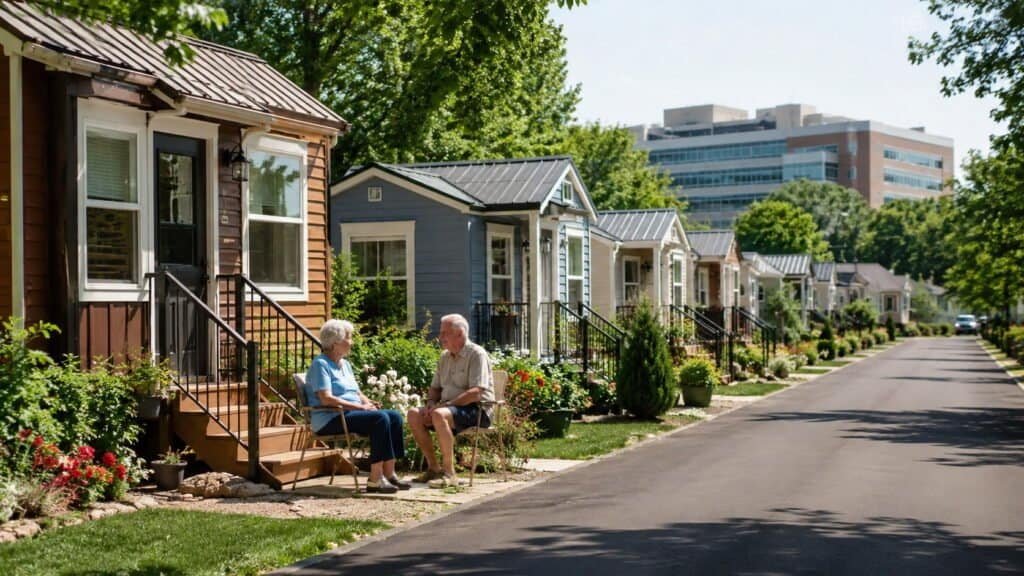
Best Locations for Tiny House Retirement Communities Near Healthcare Facilities
Choosing the right location can dramatically affect both quality of life and long-term affordability. Some states are far more tiny-house-friendly than others, while certain cities offer stronger healthcare systems for retirees.
The ideal location balances:
- Affordable living costs
- Good medical access
- Mild climate
- Tiny-home-friendly zoning
- Strong senior services
Sunbelt States Continue Dominating Retirement Trends
Warm-weather states remain some of the most popular locations for tiny house retirement communities.
Arizona
Arizona attracts retirees because of its dry climate, strong healthcare networks, and active senior communities.
Popular areas include:
- Mesa
- Tucson
- Prescott
- Phoenix suburbs
Many communities are located near major hospital systems while still offering lower housing costs than California.
Florida
Florida remains one of the largest retirement markets in the country. Tiny home parks and small cottage communities continue expanding across the state.
Advantages include:
- Large healthcare infrastructure
- Senior-focused services
- Warm weather year-round
- Strong retirement community culture
However, insurance costs and hurricane risks are important considerations.
Texas
Texas offers relatively affordable land and a growing number of tiny-home-friendly developments.
Retirees often look at:
- San Antonio
- Georgetown
- Tyler
- Hill Country communities
Healthcare access in larger Texas metro areas is often excellent, though rural communities vary significantly.
North Carolina
North Carolina has become increasingly attractive for retirees who want moderate weather and lower living costs without moving to extremely hot climates.
Areas around Asheville, Raleigh, and Charlotte offer good healthcare systems combined with growing tiny home developments.
Smaller Cities Often Offer Better Value
Large retirement destinations can become expensive quickly. Smaller cities with regional hospitals sometimes provide a better balance between affordability and healthcare access.
College towns are particularly interesting because they often include:
- Teaching hospitals
- Reliable public transportation
- Walkable neighborhoods
- Cultural activities
- Better internet infrastructure
Climate Risks Should Be Part of the Decision
Retirees sometimes focus heavily on sunshine while overlooking natural disaster risks.
Important considerations include:
- Hurricane zones
- Wildfire risks
- Extreme summer heat
- Flooding concerns
- Winter accessibility
Tiny homes can be more vulnerable to severe weather than traditional houses depending on construction quality and foundation type.
Research Local Tiny House Laws Before Moving
Some retirement-friendly states still have restrictive zoning laws for tiny homes. Regulations vary widely between counties and cities.
The International Code Council provides guidance on tiny house standards through Appendix Q of the residential building code:
https://www.iccsafe.org/building-safety-journal/bsj-dives/tiny-houses-and-the-2018-irc/
Types of Tiny House Retirement Communities Seniors Can Choose
Tiny house retirement living is not one-size-fits-all. Some communities feel like traditional RV parks, while others are carefully planned neighborhoods built specifically for older adults. Understanding the differences can help retirees avoid ending up in a community that doesn’t match their lifestyle or healthcare needs.
Age-Restricted Tiny House Communities
These communities are designed specifically for adults over a certain age, commonly 55+.
Residents usually benefit from:
- Quieter environments
- Senior-focused amenities
- Organized social activities
- Lower noise levels
- Community maintenance services
Many retirees prefer age-restricted communities because neighbors are often in similar life stages and share similar routines.
Some communities also include wellness programs, fitness classes, or healthcare partnerships with nearby clinics.
RV-Style Tiny Home Parks
Many tiny homes on wheels are located in RV-style parks. These communities can be affordable and flexible, especially for retirees who enjoy travel.
Pros include:
- Lower entry costs
- Flexible lease terms
- Easier relocation options
- Utility hookups already installed
Challenges may include:
- Smaller lots
- Less privacy
- Fewer permanent community features
- Limited accessibility infrastructure
Healthcare access varies widely, so location research is especially important with RV-style developments.
Co-Housing Communities for Active Seniors
Co-housing communities focus heavily on social interaction and shared resources.
Residents often share:
- Gardens
- Workshops
- Outdoor gathering areas
- Community kitchens
- Recreational spaces
Tiny homes remain private, but the overall design encourages neighbor interaction. This setup works well for retirees who want community support without moving into assisted living.
Assisted Living-Inspired Tiny Home Developments
Some newer retirement developments blend tiny homes with healthcare support services.
Features may include:
- On-site wellness staff
- Transportation assistance
- Shared dining options
- Medical alert systems
- Accessibility-focused design
These communities are appealing to seniors who want independence while planning ahead for aging-related needs.
Hybrid Cottage and Tiny Home Communities
Not every retiree wants an ultra-small home under 300 square feet. Hybrid communities combine tiny houses with slightly larger cottage-style homes.
This setup provides:
- More storage space
- Easier accessibility
- Flexible floor plans
- Better long-term comfort
Many retirees eventually realize that a slightly larger small home can feel more practical than an extremely compact tiny house.
Tiny House Design Features That Matter Most for Aging in Place
A beautiful tiny house isn’t automatically a good retirement home. Features that work for younger minimalists may become frustrating or even unsafe for seniors over time.
Retirees should focus on designs that support comfort, safety, and long-term mobility.
Single-Level Layouts Are Usually Best
Lofts are common in tiny homes, but climbing ladders daily can quickly become difficult with age.
Single-level designs eliminate many long-term mobility risks while making the home easier to navigate during illness or injury.
Important layout priorities include:
- Main-floor sleeping areas
- Open walking paths
- Wide hallways
- Easy bathroom access
- Minimal elevation changes
Many retirees discover that avoiding lofts is one of the smartest decisions they can make.
Bathrooms Need Extra Attention
Tiny house bathrooms often sacrifice comfort to save space. That can create serious problems later.
A retirement-friendly tiny home bathroom should ideally include:
- Walk-in showers
- Grab bar support
- Slip-resistant flooring
- Comfort-height toilets
- Good lighting
- Space for mobility aids if needed
Even small upgrades can make daily life much safer.
Smart Storage Helps Reduce Clutter
Clutter becomes a bigger issue in tiny homes because limited floor space can quickly feel overwhelming.
Effective storage solutions include:
- Pull-out pantry systems
- Under-bed storage
- Built-in seating with storage compartments
- Vertical shelving
- Hidden storage cabinets
A well-designed tiny house often feels much larger than its square footage suggests.
Natural Light Improves Comfort
Good lighting matters more than many people expect. Tiny homes with poor natural light can feel cramped and emotionally draining over time.
Features that improve comfort include:
- Large windows
- Skylights
- Glass entry doors
- Light interior colors
- Open floor plans
Natural light also helps older adults with visibility and daily routines.
Smart Technology Can Improve Safety
Modern tiny homes increasingly include technology designed for aging residents.
Useful upgrades include:
- Smart thermostats
- Voice-controlled lighting
- Video doorbells
- Remote medical alert systems
- Leak detectors
- Automatic shut-off devices
These tools can help seniors remain independent longer.
Outdoor Accessibility Matters Too
Many retirees focus only on the interior while forgetting the outdoor setup.
Important exterior features include:
- Gentle walkway slopes
- Covered entrances
- Non-slip decking
- Good nighttime lighting
- Accessible parking spaces
Outdoor safety becomes especially important during bad weather or nighttime emergencies.
Real Costs of Living in a Tiny House Retirement Community
Tiny house retirement living can absolutely reduce costs, but many retirees underestimate ongoing expenses. Understanding the full financial picture helps avoid surprises later.
Costs vary dramatically depending on location, home size, community amenities, and healthcare access.
Upfront Tiny House Purchase Costs
Retirement-friendly tiny homes often cost more than minimalist recreational tiny homes because they require better accessibility and higher-quality materials.
Here’s a realistic price breakdown:
| Expense | Estimated Cost |
| Tiny home purchase | $60,000–$150,000+ |
| Foundation installation | $5,000–$20,000 |
| Delivery/setup | $3,000–$15,000 |
| Accessibility upgrades | $2,000–$20,000 |
| Utility hookups | $5,000–$25,000 |
Luxury retirement-focused tiny homes can exceed $200,000 in high-demand areas.
Monthly Community Costs Add Up
Even retirees who fully own their tiny homes usually pay monthly fees.
Common recurring expenses include:
- Lot rent
- HOA fees
- Utilities
- Internet service
- Trash collection
- Landscaping fees
- Community maintenance
Monthly costs typically range from $400 to over $1,500 depending on location and amenities.
Healthcare Proximity Can Increase Housing Costs
Communities near major hospitals or desirable healthcare systems often charge higher lot fees and home prices.
Still, many retirees find the convenience worthwhile because nearby healthcare can reduce:
- Long travel times
- Transportation expenses
- Emergency stress
- Caregiver burdens
Comparing Tiny House Retirement Costs to Traditional Housing
Here’s how tiny house retirement living often compares financially:
| Housing Type | Average Monthly Cost |
| Traditional suburban home | $2,000–$5,000+ |
| Assisted living facility | $4,000–$8,000+ |
| Retirement apartment | $1,500–$4,000 |
| Tiny house community | $700–$2,500 |
Tiny homes are usually cheaper than assisted living, though they may not provide the same level of medical support.
Hidden Costs Retirees Sometimes Miss
Unexpected expenses can catch retirees off guard.
Common overlooked costs include:
- Tiny home insurance
- Property tax differences
- HVAC maintenance
- Accessibility retrofits later
- Generator backups
- Weather-related repairs
- Rising community fees
Low upfront pricing doesn’t always mean low long-term costs.
Downsizing Saves More Than Housing Money
Many retirees discover the biggest savings come from lifestyle changes rather than housing itself.
Tiny living naturally reduces spending on:
- Furniture
- Home repairs
- Energy use
- Impulse shopping
- Unused space
That simplicity is one reason many seniors say tiny house living feels financially freeing rather than restrictive.
Zoning Laws and Legal Issues Seniors Should Understand
Tiny house retirement communities can look ideal online, but legal problems are one of the biggest reasons retirees regret rushing into a purchase. Tiny house laws still vary heavily across states, counties, and even individual neighborhoods.
A community that allows tiny homes today may face new restrictions later if local zoning rules change or permits were handled incorrectly.
Tiny Homes on Wheels vs Foundation-Built Homes
The legal classification of a tiny home affects almost everything, including where it can be parked, insured, and occupied full-time.
Tiny homes generally fall into two categories:
| Type | Common Classification | Key Legal Difference |
| Tiny house on wheels (THOW) | RV or recreational vehicle | Often limited for permanent living |
| Foundation-built tiny house | Residential dwelling | More likely to qualify for full-time residency |
Many retirees prefer foundation-built homes because they usually face fewer residency restrictions. However, they can involve higher setup costs and stricter building codes.
Some “Tiny House Communities” Aren’t Fully Legal
This surprises many buyers. Some developments advertise permanent tiny house living even though zoning only permits temporary RV occupancy.
Before signing anything, retirees should confirm:
- Full-time residency is legally permitted
- The property has proper utility approvals
- Septic and water systems meet code
- Homes comply with local building regulations
- The community has valid permits
Verbal promises from developers are never enough.
HOA Rules Can Affect Daily Living
Homeowners associations in retirement communities sometimes impose unexpected restrictions.
Rules may regulate:
- Guest stays
- Exterior modifications
- Pet ownership
- Parking
- Outdoor storage
- Gardening
- Rental restrictions
Some retirees appreciate structured communities, while others find the rules limiting after downsizing for freedom.
Insurance Can Be Complicated
Tiny homes don’t always fit traditional insurance categories. Retirees sometimes discover their coverage options are more limited than expected.
Insurance costs depend on:
- Foundation vs wheels
- Storm risks
- Fire protection access
- Community infrastructure
- Home certification standards
Communities near wildfire zones, hurricane regions, or flood-prone areas may carry significantly higher premiums.
Healthcare Access Can Influence Property Values
Communities located near major healthcare systems often experience rising demand from retirees. That can increase:
- Lot rental fees
- Property taxes
- HOA costs
- Insurance rates
A location that feels affordable today may become more expensive over the next decade.
Questions Retirees Should Ask Before Buying
Retirees should never rely solely on marketing materials.
Important questions include:
- Is permanent residency legally approved?
- Are utilities individually metered?
- What happens if the park changes ownership?
- Are there age restrictions?
- How stable are monthly fees?
- Does the community have emergency evacuation plans?
Doing legal research early can prevent expensive relocation problems later.
How to Evaluate a Tiny House Retirement Community Before Moving
Photos and online listings rarely tell the full story. Visiting communities in person often reveals issues retirees would never notice from brochures alone.
Taking time to evaluate the environment carefully can make the difference between a peaceful retirement and a stressful move.
Visit at Different Times of Day
A community that feels quiet during a weekday afternoon may become noisy or crowded later.
Try visiting:
- Weekday mornings
- Evenings
- Weekends
- Different weather conditions
This helps reveal traffic patterns, lighting quality, noise levels, and general atmosphere.
Pay Attention to Healthcare Logistics
Healthcare access should be tested realistically, not just estimated on a map.
Retirees should physically drive routes to:
- Hospitals
- Pharmacies
- Urgent care clinics
- Grocery stores
- Specialist offices
Travel times during traffic can be very different from online estimates.
Talk to Current Residents
Residents often provide the most honest information.
Questions worth asking include:
- How responsive is management?
- Have fees increased unexpectedly?
- Are maintenance issues handled quickly?
- Is the community friendly year-round?
- How reliable are utilities and internet service?
Many retirees learn more from one resident conversation than hours of online research.
Check Emergency Accessibility
Some tiny home parks have narrow roads or difficult layouts that can slow emergency response.
Look carefully at:
- Road width
- Street lighting
- Drainage systems
- Fire hydrant access
- Parking congestion
Accessibility becomes even more important for aging residents with medical concerns.
Evaluate Long-Term Comfort, Not Just Appearance
Beautiful tiny homes can become uncomfortable surprisingly quickly if the design doesn’t support daily routines.
During tours, retirees should consider:
- Kitchen usability
- Bathroom comfort
- Storage practicality
- Temperature control
- Noise insulation
- Accessibility over time
A stylish loft ladder may seem manageable during a short visit but become exhausting months later.
Red Flags That Shouldn’t Be Ignored
Certain warning signs deserve serious attention.
Be cautious if a community has:
- Poor road maintenance
- Weak cell service
- Unclear zoning answers
- Frequent management turnover
- Unfinished infrastructure
- Excessive rule changes
- Very limited medical access
Retirement housing decisions should prioritize stability and long-term livability over trendy aesthetics.
Healthcare Access vs Rural Tiny Living: Finding the Right Balance
Many retirees are drawn to rural tiny house living because of the peaceful scenery, lower costs, and slower pace of life. However, remote living can create serious healthcare challenges as medical needs increase with age.
Finding the right balance between independence and accessibility is one of the most important retirement decisions seniors can make.
Rural Living Has Clear Benefits
Remote tiny house communities can offer:
- Lower housing costs
- Larger lots
- More privacy
- Reduced noise
- Better access to nature
- Stronger sense of simplicity
For retirees seeking a calm lifestyle, rural communities often feel emotionally rewarding.
Distance Becomes More Difficult Over Time
Driving long distances may not seem like a major issue during early retirement. That can change quickly after health events or mobility limitations develop.
Common rural challenges include:
- Limited specialists nearby
- Longer ambulance response times
- Fewer pharmacies
- Reduced transportation options
- Harsh weather affecting travel
What feels manageable at 65 may become stressful at 80.
Telemedicine Is Changing Retirement Living
Virtual healthcare has improved significantly in recent years. Many retirees now handle routine appointments online rather than driving to clinics.
Telemedicine works especially well for:
- Medication management
- Follow-up appointments
- Mental health services
- Minor illness consultations
- Chronic condition monitoring
Reliable internet service has become nearly as important as road access in some retirement communities.
Hybrid Locations Often Offer the Best Compromise
Many retirees eventually discover that small suburban towns offer a better balance than either dense cities or isolated rural land.
Ideal middle-ground locations usually provide:
- Hospital access within 30 minutes
- Lower housing costs than major cities
- Reliable utilities and internet
- Smaller, quieter communities
- Access to retail and pharmacies
This setup allows retirees to maintain independence without sacrificing convenience.
Emergency Planning Matters More in Rural Areas
Retirees considering remote tiny house communities should prepare carefully for emergencies.
Important considerations include:
- Backup generators
- Severe weather evacuation routes
- Nearby family support
- Emergency communication systems
- Prescription refill access
Planning ahead becomes increasingly important as healthcare needs evolve.
Independence Should Be Sustainable
One of the biggest mistakes retirees make is choosing a location based only on current health rather than future realities.
The best tiny house retirement communities support independence long-term, not just during the first few years after downsizing.
A location that balances privacy, affordability, social connection, and healthcare access usually creates the most sustainable retirement lifestyle.
Community Lifestyle: What Daily Life Looks Like for Retirees
Tiny house retirement communities are about much more than smaller homes. Daily life often feels very different compared to traditional suburban neighborhoods or large retirement complexes.
Many retirees describe the lifestyle as simpler, calmer, and more connected.
Social Connections Tend to Happen Naturally
Traditional neighborhoods can sometimes feel isolated, especially for older adults living alone. Tiny home communities usually encourage more interaction because homes and shared spaces are closer together.
Residents often participate in:
- Morning walks
- Gardening groups
- Potluck dinners
- Community workshops
- Fitness classes
- Outdoor movie nights
That sense of connection can become incredibly valuable during retirement years.
Less Home Maintenance Creates More Free Time
Large homes often become physically and financially exhausting to maintain as people age.
Tiny homes dramatically reduce responsibilities like:
- Lawn care
- Deep cleaning
- Roof repairs
- HVAC servicing
- General upkeep
Many retirees say they spend more time traveling, socializing, or enjoying hobbies after downsizing.
Sustainability Becomes Easier in Smaller Spaces
Tiny homes naturally encourage lower energy use and more mindful consumption.
Many retirement communities include eco-friendly features such as:
- Community gardens
- Solar systems
- Rainwater collection
- Walking trails
- Shared green spaces
Even retirees who never considered themselves environmentally focused often appreciate the lower utility bills and reduced waste.
Privacy Still Matters
One misconception about tiny house communities is that residents are constantly socializing.
Most communities balance private living with optional social opportunities. Retirees can usually participate as much or as little as they prefer.
Good communities provide:
- Private outdoor patios
- Sound-conscious layouts
- Landscaped spacing between homes
- Quiet hours
- Flexible social programming
That balance helps communities feel welcoming without becoming overwhelming.
Downsizing Can Be Emotionally Challenging at First
Many retirees underestimate the emotional side of moving into a smaller home.
Letting go of decades of belongings can feel difficult initially. However, many seniors later describe the process as surprisingly freeing.
Successful downsizing usually involves:
- Starting early
- Keeping meaningful items only
- Digitizing paperwork and photos
- Prioritizing functionality over storage
The adjustment period varies, but most retirees adapt faster than expected.
Common Mistakes Retirees Make When Choosing a Tiny House Community
Tiny house retirement living can be rewarding, but poor planning can create expensive problems later. Many common mistakes happen because retirees focus too heavily on aesthetics or price while overlooking long-term practicality.
Prioritizing Scenery Over Healthcare Access
A beautiful mountain view loses appeal quickly if medical appointments require exhausting travel.
Retirees sometimes underestimate:
- Future mobility limitations
- Emergency response needs
- Specialist appointment frequency
- Harsh weather travel difficulties
Healthcare convenience often becomes more important over time than scenic surroundings.
Choosing a Home That’s Too Small
Minimalism sounds appealing until daily routines become uncomfortable.
Some retirees regret choosing extremely tiny homes because they lack:
- Adequate storage
- Comfortable kitchens
- Space for medical equipment
- Room for visiting family
- Accessible bathrooms
A slightly larger small home often works better for long-term retirement living.
Ignoring Accessibility Until It’s Needed
Accessibility upgrades are usually cheaper and easier during the initial build.
Waiting until mobility issues develop can create expensive retrofits later.
Smart retirees plan ahead with:
- Wider doorways
- Step-free entrances
- Walk-in showers
- Main-floor sleeping areas
Future-proofing matters even for active seniors.
Underestimating Community Fees
Low home prices sometimes distract buyers from recurring monthly expenses.
Retirees should review:
- HOA fee history
- Lot rent increases
- Utility billing policies
- Maintenance obligations
Communities with rapidly rising fees can become financially stressful over time.
Failing to Research Zoning Stability
Some retirees buy homes before fully understanding local regulations.
That can lead to problems involving:
- Residency restrictions
- Parking limitations
- Utility compliance
- Permit disputes
Researching local tiny house laws carefully is essential before committing financially.
Treating Tiny Living Like a Vacation Lifestyle
Vacation-style tiny living feels very different from permanent retirement living.
Features that seem exciting during short stays may become frustrating daily, including:
- Loft sleeping
- Tiny appliances
- Limited closet space
- Poor insulation
- Minimal counter space
Practicality matters more than novelty in long-term retirement housing.
Frequently Asked Questions About Tiny House Retirement Communities Near Healthcare Facilities
Are tiny house retirement communities cheaper than assisted living?
In most cases, yes. Tiny house communities are generally far less expensive than assisted living facilities because they provide independent housing rather than full medical or daily care services. However, retirees may still need separate healthcare or in-home support as they age.
Which states are most tiny-house-friendly for retirees?
States like Arizona, Texas, Florida, North Carolina, and parts of Oregon and Colorado tend to offer better tiny house acceptance, growing retirement communities, and stronger healthcare access. Local county zoning still varies widely within each state.
How close should a retirement community be to a hospital?
Most experts recommend staying within 15–30 minutes of a full-service hospital, especially for retirees managing chronic health conditions or mobility concerns.
Are tiny homes safe for seniors with mobility issues?
They can be very safe when properly designed. Single-level layouts, walk-in showers, wide doors, good lighting, and step-free entrances make a major difference for aging residents.
Can Medicare help cover tiny house retirement living costs?
Medicare typically does not cover housing costs for independent tiny homes. It may help cover medical services, home healthcare, or approved equipment depending on eligibility and care needs.
Do tiny house retirement communities allow pets?
Many communities do allow pets, although restrictions on breed, size, or number of animals are common. Reviewing community rules before moving is important.
Is it better to buy or rent a tiny home in retirement?
Buying can provide long-term stability and lower housing costs over time, while renting offers flexibility for retirees still testing the tiny house lifestyle or relocating closer to family or healthcare.
Is a Tiny House Retirement Community the Right Choice for You?
Tiny house retirement communities near healthcare facilities offer something many retirees are searching for: lower costs, simpler living, stronger social connection, and easier access to medical care.
That combination can create a more flexible and financially sustainable retirement, especially for older adults who no longer want the burden of maintaining a large house.
Still, the best outcomes happen when retirees plan carefully. Community quality, healthcare proximity, accessibility, zoning laws, and long-term comfort all matter far more than trendy design photos online.
Taking time to visit communities, compare costs realistically, and think about future healthcare needs can help retirees avoid expensive mistakes later.
Tiny living works best when it supports both independence and long-term peace of mind.
If you’re considering downsizing, start exploring tiny house retirement communities in healthcare-friendly areas now. The right location and design can make retirement simpler, safer, and far more enjoyable for years to come.
