
Tiny house communities for seniors are becoming one of the most practical and affordable retirement living options in the United States. Many retirees are trading large homes and rising maintenance costs for smaller spaces, lower expenses, and stronger community connections.
The appeal goes beyond saving money. Senior-friendly tiny house communities often offer a quieter lifestyle, walkable neighborhoods, social interaction, and simpler daily living. For older adults who want independence without the burden of a traditional house, tiny living can feel surprisingly freeing.
This guide covers the best tiny house communities for seniors, what features matter most, expected costs, legal considerations, and how to choose the right place for long-term comfort and safety.
In This Article
Why Tiny House Communities Are Becoming Popular With Seniors
Retirement looks very different today than it did twenty years ago. Rising home prices, healthcare costs, and property taxes are pushing many older adults to rethink how and where they want to live.
Tiny house communities offer a realistic alternative.
Instead of spending retirement maintaining a large property, many seniors are choosing smaller homes that reduce expenses and simplify daily life. Utility bills are lower, cleaning takes less time, and maintenance becomes far more manageable.
Lower Living Costs Make Retirement Easier
One of the biggest reasons seniors move into tiny house communities is affordability.
Traditional retirement housing can easily cost thousands per month. Tiny homes often provide a more budget-friendly option while still allowing residents to own their space or lease land at a lower monthly rate.
Common savings include:
- Lower utility bills
- Reduced property taxes
- Smaller insurance premiums
- Less home maintenance
- Minimal landscaping costs
Many retirees also use proceeds from selling a larger family home to purchase a tiny house outright, reducing or eliminating mortgage debt entirely.
Simpler Living Reduces Stress
Large homes often become difficult to manage later in life. Extra bedrooms sit unused, stairs become inconvenient, and upkeep can feel exhausting.
Tiny homes encourage a more intentional lifestyle. Seniors often discover they enjoy owning fewer possessions and spending more time on hobbies, travel, or social activities.
Less housework means more freedom and flexibility.
Community Matters More During Retirement
Isolation is a common concern for older adults, especially after retirement or the loss of a spouse.
Tiny house communities are designed to encourage interaction. Shared gardens, walking paths, clubhouses, and community events naturally create opportunities for connection.
Unlike traditional suburbs where neighbors may rarely interact, tiny home communities often develop close-knit social environments.
Tiny House Communities Are Different From RV Parks
Some people assume tiny house communities are simply upgraded RV parks, but the experience is usually very different.
Tiny homes are often built with residential-style features, including:
- Full kitchens
- Standard bathrooms
- Permanent foundations or semi-permanent setups
- Better insulation
- Residential appliances
- Long-term living infrastructure
Many communities are specifically designed for full-time residents rather than temporary travelers.
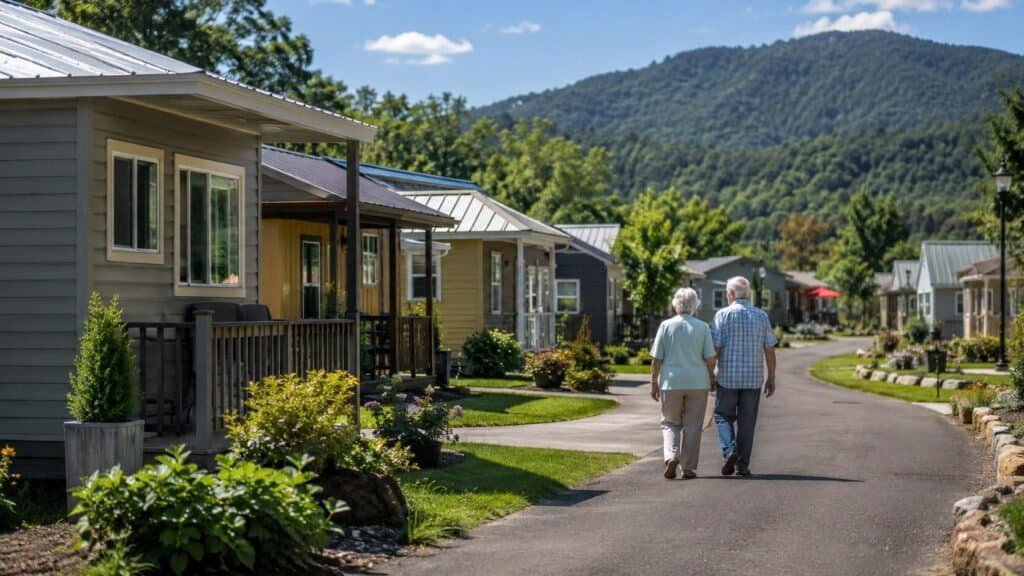
What Makes a Tiny House Community Senior-Friendly?
Not every tiny house community works well for retirees. Some are designed for vacation rentals or younger off-grid enthusiasts, while others focus heavily on accessibility, comfort, and long-term living.
Choosing the right community can make the difference between an enjoyable retirement and daily frustration.
Single-Level Living Is a Major Advantage
Lofts may look charming online, but they are not practical for many seniors.
The best tiny house communities for seniors prioritize single-level layouts with easy movement throughout the home. Ground-floor sleeping arrangements eliminate climbing ladders or steep stairs every day.
Important accessibility features include:
- Wide doorways
- Step-free entrances
- Walk-in showers
- Non-slip flooring
- Lever-style door handles
- Bright lighting throughout the home
Aging-in-place design matters far more than trendy aesthetics.
Access to Healthcare Should Never Be Overlooked
Beautiful scenery is important, but proximity to healthcare matters more for long-term retirement planning.
Senior-friendly communities are often located within reasonable distance of:
- Hospitals
- Urgent care clinics
- Pharmacies
- Primary care doctors
- Physical therapy centers
Many retirees make the mistake of prioritizing remote locations without considering future medical needs.
Walkability and Social Spaces Improve Daily Life
One overlooked benefit of great tiny house communities is how easy they make everyday routines.
Walkable communities with benches, sidewalks, gardens, and gathering areas encourage residents to stay active and connected.
Popular shared amenities often include:
| Feature | Why It Matters for Seniors |
| Community gardens | Encourages outdoor activity |
| Clubhouses | Supports social interaction |
| Walking paths | Promotes low-impact exercise |
| Shared workshops | Creates hobby opportunities |
| Pet-friendly areas | Helps residents with companion animals |
Climate Plays a Bigger Role Than Many Expect
Weather affects comfort more in tiny homes because smaller spaces heat and cool differently than larger houses.
Many seniors prefer regions with:
- Mild winters
- Lower humidity
- Reduced storm risk
- Stable year-round temperatures
States like Arizona, Tennessee, North Carolina, and parts of Texas remain popular partly because of climate and retirement affordability.
Best Tiny House Communities for Seniors Across the U.S.
Finding the best tiny house community depends on lifestyle goals, climate preferences, healthcare access, and budget. Some retirees want peaceful mountain living, while others prefer coastal weather or affordable southern communities.
Several regions in the U.S. have become especially popular among seniors looking for tiny home living.
Mountain Retreat Tiny House Communities
Mountain communities attract retirees seeking quiet surroundings, scenic views, and cooler temperatures.
Areas in:
- Western North Carolina
- Eastern Tennessee
- Colorado mountain towns
- Northern Georgia
have seen growing interest from retirees moving into tiny home developments.
These communities often provide:
- Nature-focused lifestyles
- Hiking and outdoor recreation
- Lower population density
- Strong community atmosphere
The trade-off can be limited healthcare access in more remote areas, so location planning is critical.
Coastal Tiny House Communities for Warm-Weather Retirement
Coastal regions remain attractive for seniors who want mild winters and outdoor living year-round.
Popular areas include:
- Florida Gulf Coast
- Coastal Texas
- Southern California
- Parts of South Carolina
Many coastal tiny house communities combine retirement living with resort-style amenities like pools, clubhouses, and organized activities.
However, insurance costs and hurricane risks can significantly impact affordability in some coastal regions.
Affordable Southern Tiny House Communities
The South continues to offer some of the best value for retirees interested in tiny homes.
States like:
- Alabama
- Arkansas
- Tennessee
- Kentucky
often provide lower land costs, reduced property taxes, and more flexible zoning laws compared to expensive coastal states.
Some communities specifically market themselves toward retirees seeking lower-cost living without sacrificing comfort.
Eco-Friendly Tiny Villages Designed for Seniors
Sustainability-focused communities are becoming increasingly common among retirees who want environmentally conscious living.
These developments may include:
- Shared gardens
- Solar power systems
- Rainwater collection
- Community composting
- Energy-efficient tiny homes
Many residents appreciate the balance between simplicity, sustainability, and social connection.
Communities With Strong Long-Term Living Infrastructure
The best senior tiny house communities usually focus on permanent living rather than short-term rentals.
Look for communities that offer:
- Reliable utilities
- Internet access
- Mail delivery
- Year-round road maintenance
- Clear legal zoning status
Checking zoning compliance is extremely important before committing to any property. The U.S. Department of Housing and Urban Development (HUD) offers useful housing resources and standards here: HUD Housing Information
Tiny House Community Costs for Seniors: What to Expect
Tiny house living is usually more affordable than traditional retirement housing, but costs vary more than many people expect. Some communities are surprisingly budget-friendly, while others charge premium fees similar to upscale retirement developments.
Understanding the full financial picture helps seniors avoid unexpected expenses later.
Land Lease Fees vs Owned Lots
Most tiny house communities operate under one of two models:
| Community Type | How It Works | Typical Cost Structure |
| Land lease community | You own the tiny home but rent the lot | Monthly lot rent |
| Owned-lot community | You own both the home and the land | Higher upfront purchase cost |
Land lease communities are often cheaper initially, making them attractive for retirees on fixed incomes. Monthly fees commonly range from $400 to $1,200 depending on location and amenities.
Owned lots provide more long-term stability, but entry costs can be significantly higher.
Utility and Maintenance Expenses Stay Lower
One major advantage of tiny homes is reduced utility usage.
Most senior tiny homeowners spend less on:
- Electricity
- Heating and cooling
- Water usage
- General maintenance
- Landscaping
Average monthly utility costs for a tiny home often fall between $80 and $250, depending on climate and energy efficiency.
Smaller spaces naturally cost less to maintain over time.
HOA Fees and Shared Amenities
Some tiny house communities include HOA or maintenance fees that cover:
- Road maintenance
- Shared amenities
- Landscaping
- Security
- Trash collection
- Clubhouse upkeep
Communities with pools, fitness centers, or organized events generally charge higher monthly fees.
Retirees should always request a full breakdown of recurring charges before moving in.
Insurance Can Be More Complicated Than Expected
Tiny home insurance depends heavily on how the home is classified.
Coverage may vary based on whether the home is:
- Built on wheels
- Permanently installed
- RV-certified
- Built to local residential code
Annual insurance costs commonly range from $600 to $1,500.
Some retirees discover late in the process that financing and insurance options are more limited for non-traditional homes.
Comparing Tiny House Living to Traditional Retirement Housing
Tiny homes are not always the cheapest retirement option upfront, but they often reduce long-term expenses substantially.
| Housing Type | Average Monthly Cost | Ownership Potential |
| Traditional retirement community | $2,000–$5,000+ | Limited |
| Assisted living facility | $4,000–$7,000+ | None |
| Tiny house community | $500–$2,000 | Often yes |
The financial flexibility appeals to retirees who want more control over their lifestyle and budget.
Accessibility Features Seniors Should Prioritize in a Tiny Home
Tiny homes can work extremely well for aging in place, but only if they are designed with long-term comfort and mobility in mind.
Some tiny homes look stylish online yet become difficult to live in after a few years. Seniors should focus on functionality first and aesthetics second.
Skip Loft Bedrooms Whenever Possible
Lofts are one of the biggest design mistakes older buyers make.
Climbing ladders daily becomes difficult and potentially dangerous with age. Even staircase lofts can become impractical later.
Single-level layouts with a main-floor bedroom are usually the safest choice for long-term living.
Walk-In Showers Make a Huge Difference
Bathrooms are one of the most important areas to evaluate carefully.
Senior-friendly tiny homes often include:
- Curbless showers
- Grab bars
- Fold-down shower seating
- Handheld shower heads
- Slip-resistant flooring
Tiny bathrooms can feel cramped quickly if accessibility is not considered during the design stage.
Smart Storage Prevents Daily Frustration
Storage matters even more in a small home.
Good senior-focused tiny house designs reduce the need for bending, climbing, or reaching overhead constantly.
Helpful storage solutions include:
- Pull-out pantry drawers
- Lower cabinet placement
- Under-bed storage
- Built-in shelving
- Easy-access closets
Convenience becomes far more important than maximizing every inch of space.
Lighting and Flooring Improve Safety
Poor lighting and slippery flooring are common accident risks in small homes.
The best tiny homes for seniors prioritize:
- Bright natural light
- Motion-sensor lighting
- Non-slip vinyl flooring
- Wide walking paths inside the home
Dark loft ladders and narrow hallways may look modern but can become hazardous over time.
Smart Home Features Add Everyday Convenience
Modern technology can make tiny house living much easier for retirees.
Useful features include:
- Smart thermostats
- Voice-controlled lighting
- Video doorbells
- Remote security systems
- Automatic blinds
These systems improve convenience while also helping seniors maintain independence longer.
Best States for Senior Tiny House Living in 2026
Location has a huge impact on tiny house living success. Some states are far more friendly toward tiny homes, retirement affordability, and long-term community development than others.
The best states for seniors usually combine reasonable living costs, supportive zoning, mild weather, and healthcare access.
Tennessee Continues to Attract Retirees
Tennessee remains one of the strongest tiny house destinations for seniors.
Why retirees like it:
- No state income tax
- Lower property costs
- Mild four-season climate
- Growing number of tiny home communities
- Scenic mountain and lake regions
Eastern Tennessee, in particular, has become popular for retirees seeking affordable community living.
North Carolina Balances Climate and Lifestyle
North Carolina offers a mix of mountain towns, coastal living, and moderate weather.
Many retirees appreciate:
- Strong healthcare networks
- Active retirement communities
- Flexible rural zoning areas
- Outdoor recreation opportunities
The Asheville region continues attracting tiny home enthusiasts looking for community-focused living.
Texas Offers Space and Tiny-House-Friendly Areas
Texas remains appealing due to its size and variety of living options.
Benefits include:
- Relatively affordable land
- Multiple tiny-house-friendly counties
- Warm winters in southern regions
- Large retirement population
Some rural Texas counties are significantly more flexible about tiny homes than heavily regulated urban areas.
Arizona Works Well for Warm-Weather Retirement
Arizona attracts seniors who want dry climates and minimal winter maintenance.
Advantages include:
- Warm temperatures year-round
- Lower snow-related maintenance
- Active retirement communities
- Growing interest in alternative housing
However, cooling costs during summer can increase utility expenses in some regions.
States With Challenging Tiny House Regulations
Not every state makes tiny living easy.
Retirees should research carefully before relocating to areas with:
- Strict minimum square footage laws
- Complicated zoning restrictions
- Limited tiny-home-friendly communities
- Difficult permitting processes
Local county regulations often matter more than statewide rules.
The International Code Council provides guidance on tiny house building standards through Appendix Q, which many states and counties now reference for tiny home regulations: International Code Council Appendix Q Information
Legal and Zoning Challenges Seniors Should Understand Before Moving
Tiny house living can be rewarding, but legal issues are still one of the biggest obstacles for retirees entering the lifestyle. Many seniors assume buying a tiny home is similar to buying a traditional house, only to discover that zoning and placement rules vary dramatically by state, county, and even neighborhood.
Doing proper research before purchasing can prevent expensive mistakes.
Tiny House Laws Change From One County to Another
One county may fully allow tiny homes, while the next county restricts them heavily.
Common zoning issues include:
- Minimum square footage requirements
- Restrictions on homes built on wheels
- Limits on permanent occupancy
- Utility hookup requirements
- Foundation regulations
Rural areas are often more flexible than suburban or urban locations, which is why many senior-focused tiny house communities are built outside major cities.
Tiny Homes on Wheels Face Different Rules
Many retirees are drawn to tiny homes on wheels because they cost less and offer flexibility. However, these homes are frequently classified as RVs rather than permanent residences.
That classification can affect:
- Financing eligibility
- Insurance availability
- Long-term parking rights
- Community approval
- Property taxes
Some counties prohibit full-time living in RV-classified structures entirely.
Always confirm how the local government legally classifies the tiny home before buying.
Land Ownership vs Community Leasing
Seniors should understand exactly what they are purchasing.
In many communities, residents own the tiny home but lease the land underneath it. That arrangement can work well, but it also creates long-term considerations.
Important questions to ask include:
- Can lot rent increase annually?
- Are there age restrictions?
- What happens if the community sells?
- Are pets allowed?
- Can family members inherit the home?
- Are there guest stay limits?
Clear lease agreements matter just as much as the home itself.
Financing Can Be More Difficult for Retirees
Traditional mortgage lenders do not always finance tiny homes, especially homes under 400 square feet or homes on wheels.
Retirees often use:
- Cash from home sales
- Personal loans
- RV loans
- Manufacturer financing
- Home equity funds
Some lenders also impose stricter age or income requirements for alternative housing loans.
Insurance Mistakes Can Become Expensive
Insurance is another area where retirees sometimes run into surprises.
Policies vary based on:
- Foundation type
- Mobility classification
- Location
- Full-time occupancy
- Weather risks
Tiny homes located in hurricane zones, wildfire-prone regions, or flood areas may carry significantly higher premiums.
Questions Seniors Should Ask Before Joining a Community
Before committing to a tiny house community, retirees should request clear answers about:
- Legal zoning compliance
- Future development plans
- Monthly fee increases
- Utility infrastructure
- Internet reliability
- Emergency services access
- Snow removal or road maintenance
Communities designed specifically for permanent living usually offer greater long-term stability than mixed-use vacation developments.
Social Benefits of Tiny House Communities for Retirees
Retirement can sometimes feel isolating, especially for older adults living alone in large suburban homes. Tiny house communities often solve that problem naturally by encouraging interaction and shared experiences.
For many seniors, the sense of community becomes even more valuable than the home itself.
Smaller Communities Encourage Real Connections
Traditional neighborhoods can feel disconnected. People drive into garages, close the door, and rarely interact.
Tiny house communities are typically designed differently.
Shared amenities like:
- Community gardens
- Fire pits
- Walking trails
- Clubhouses
- Outdoor seating areas
create natural opportunities for conversation and socializing.
Many retirees say they know more neighbors in a tiny house community after six months than they did in years living in traditional suburbs.
Shared Activities Create Stronger Daily Routines
Many senior-friendly communities organize activities such as:
- Potluck dinners
- Gardening groups
- Book clubs
- Fitness classes
- Craft workshops
- Volunteer projects
These regular interactions help residents stay mentally active and socially engaged.
Strong social connections can significantly improve quality of life during retirement.
Tiny Living Often Encourages Healthier Habits
Smaller homes naturally encourage residents to spend more time outdoors and in shared spaces.
Many seniors report becoming:
- More physically active
- Less isolated
- More intentional with spending
- More involved in hobbies
- Less stressed by home maintenance
The lifestyle shift can feel surprisingly refreshing after decades of managing larger properties.
Intergenerational Communities Offer Unique Benefits
Not every tiny house community is age-restricted.
Some retirees enjoy intergenerational communities where they interact with younger residents, remote workers, families, and other tiny house enthusiasts.
Benefits can include:
- More diverse social interaction
- Shared skills and knowledge
- Stronger community support systems
- More active neighborhood energy
Others prefer quieter 55+ communities focused specifically on retirement living.
Choosing the right social environment matters just as much as choosing the right location.
Community Support Becomes Valuable Over Time
One overlooked advantage of tiny house communities is informal neighbor support.
Residents often help one another with:
- Minor repairs
- Pet care
- Gardening
- Transportation
- Emergency assistance
That built-in support network can provide peace of mind for seniors living independently.
Common Downsides Seniors Often Overlook
Tiny house living has clear advantages, but it is not perfect for everyone. Some retirees move too quickly into the lifestyle without fully considering the practical challenges of small-space living.
Understanding the downsides ahead of time leads to far better long-term decisions.
Storage Limitations Can Feel Frustrating
Downsizing sounds simple until people actually begin sorting decades of belongings.
Tiny homes require major lifestyle adjustments, especially regarding:
- Seasonal decorations
- Family heirlooms
- Hobby equipment
- Large furniture
- Paper records
- Clothing storage
Many seniors underestimate how emotionally difficult downsizing can become.
Hosting Guests Becomes More Complicated
Tiny homes are not ideal for large family gatherings.
Visiting children or grandchildren may require:
- Nearby guest cabins
- Pull-out furniture
- RV accommodations
- Local hotel stays
Retirees who frequently host overnight guests may struggle with extremely small layouts.
Weather Feels More Noticeable in Tiny Homes
Small homes react to outside temperatures faster than traditional houses.
Common issues include:
- Faster heat buildup during summer
- More noticeable winter drafts
- Humidity control challenges
- Storm noise
- Limited storage for emergency supplies
High-quality insulation and climate control systems matter tremendously.
Poor Tiny House Designs Can Create Accessibility Problems
Some tiny homes prioritize appearance over practicality.
Potential issues include:
- Steep stairs
- Tight hallways
- Difficult bathroom access
- Overhead storage dependence
- Limited maneuvering space
A beautiful Instagram-style tiny house may not function well for aging-in-place living.
Tiny House Communities Are Not Always Quiet or Stable
Not every community offers the peaceful lifestyle retirees expect.
Problems in poorly managed communities can include:
- Frequent resident turnover
- Vacation rental traffic
- Parking issues
- Weak maintenance standards
- Lack of privacy
Visiting a community multiple times before committing is extremely important.
Emotional Adjustment Takes Time
Moving from a longtime family home into a tiny house can feel emotionally overwhelming at first.
Many retirees experience temporary adjustment challenges related to:
- Reduced personal space
- Letting go of possessions
- Lifestyle changes
- Less privacy
- Different daily routines
Most people adapt successfully over time, but realistic expectations help the transition feel smoother.
How to Choose the Right Tiny House Community for Retirement
Finding the best tiny house community for seniors takes more than browsing attractive photos online. A community may look perfect on social media while hiding issues that become frustrating during full-time living.
Retirees should approach the decision carefully and evaluate both the home and the surrounding lifestyle.
Visit the Community in Person Before Committing
Photos rarely show the full reality of a community.
An in-person visit helps reveal:
- Noise levels
- Road conditions
- Community atmosphere
- Privacy between homes
- Cleanliness and maintenance
- Actual lot sizes
Spend at least a full day walking through the area if possible. Visiting during different times of day can also reveal traffic patterns or noise issues.
Talk to Current Residents
Current residents often provide the most honest information.
Ask questions about:
- Utility reliability
- Management responsiveness
- Fee increases
- Internet quality
- Safety concerns
- Community culture
Residents can quickly tell you whether the community truly supports long-term retirement living or mainly caters to vacation rentals.
Evaluate Future Mobility Needs
Many retirees focus only on current needs instead of long-term comfort.
A home that works today may become difficult in ten years.
Look for:
- Wide pathways
- Minimal stairs
- Easy bathroom access
- Space for mobility aids if needed
- Convenient parking access
Planning ahead helps seniors remain independent longer.
Review All Monthly Costs Carefully
Some communities advertise low lot rents but add multiple hidden fees later.
Request a complete breakdown of:
- Lot rent
- HOA fees
- Utility charges
- Trash service
- Internet costs
- Property taxes
- Maintenance fees
A slightly more expensive community with stable long-term costs may provide better value than a cheaper option with unpredictable fee increases.
Check Internet and Cell Service
Reliable internet matters more than many retirees expect.
Strong connectivity supports:
- Telehealth appointments
- Video calls with family
- Online banking
- Entertainment
- Remote work opportunities
Mountain and rural communities sometimes struggle with limited service coverage.
Prioritize Healthcare Access
Healthcare proximity becomes increasingly important with age.
Ideally, communities should be located within reasonable distance of:
- Hospitals
- Pharmacies
- Emergency services
- Specialists
- Physical therapy centers
Retirees sometimes choose scenic isolation only to regret long travel times for routine medical appointments.
Tiny House Communities vs Traditional Retirement Communities
Tiny house communities and traditional retirement communities both appeal to older adults seeking lower-maintenance living, but the experiences are very different.
The better option depends largely on lifestyle preferences, budget, health needs, and desired independence.
| Feature | Tiny House Community | Traditional Retirement Community |
| Monthly Costs | Usually lower | Often significantly higher |
| Home Ownership | Frequently available | Often limited |
| Independence | Very high | Moderate |
| Maintenance | Minimal | Usually included |
| Social Environment | Informal and community-driven | Structured activities |
| Space | Compact and minimalist | Larger apartments or homes |
| Flexibility | More customizable | More standardized |
| Healthcare Support | Usually external | Sometimes integrated |
Tiny House Communities Offer More Independence
Many retirees choose tiny house communities because they want freedom rather than structured retirement living.
Residents often enjoy:
- Greater privacy
- Flexible routines
- Home ownership opportunities
- Personalized home designs
- Lower living expenses
Tiny living appeals especially to active retirees who do not yet need assisted living services.
Traditional Retirement Communities Provide More Support
Traditional retirement developments may better suit seniors who prefer:
- Organized healthcare access
- Meal services
- Housekeeping assistance
- Transportation programs
- On-site medical support
These communities usually cost more, but they can reduce daily responsibilities substantially.
Lifestyle Preferences Matter More Than Age
Age alone does not determine which option works best.
Some retirees in their seventies thrive in tiny house communities because they value simplicity and independence. Others prefer the convenience and structure of traditional retirement environments.
The right fit depends more on:
- Health condition
- Mobility level
- Financial goals
- Personality
- Desired social environment
Hybrid Senior Tiny Communities Are Emerging
A growing number of communities now combine elements from both lifestyles.
Some newer developments offer:
- Tiny homes with accessibility design
- Shared community facilities
- Organized social events
- Maintenance assistance
- Wellness-focused amenities
These hybrid communities are becoming increasingly attractive to retirees who want independence without complete isolation.
Frequently Asked Questions About Tiny House Communities for Seniors
Are tiny house communities safe for seniors?
Many senior-focused tiny house communities are designed with safety in mind, including walkable layouts, good lighting, accessible pathways, and close-knit social environments. Safety largely depends on community management and home design.
Can seniors finance a tiny home?
Yes, but financing options vary. Some retirees use cash from selling larger homes, while others use RV loans, personal loans, or manufacturer financing programs.
What is the average monthly cost of living in a tiny house community?
Monthly expenses typically range from $500 to $2,000 depending on lot rent, utilities, insurance, HOA fees, and location.
Are there age-restricted tiny house communities?
Yes. Some communities are specifically designed for residents aged 55 and older, while others welcome all age groups.
Can tiny homes work for aging in place?
Absolutely, but the design matters. Single-level layouts, walk-in showers, wider doorways, and accessible storage make tiny homes far more practical for long-term retirement living.
Which states are most tiny-house-friendly for retirees?
Tennessee, North Carolina, Texas, and Arizona are commonly considered strong options because of affordability, climate, and growing acceptance of tiny homes.
Do tiny house communities allow pets?
Most communities are pet-friendly, though breed restrictions, pet limits, or additional fees may apply.
Is downsizing emotionally difficult for retirees?
It can be initially. Many seniors find the adjustment challenging at first, especially when parting with long-held belongings, but later appreciate the simplicity and reduced stress.
Tiny house communities for seniors are no longer a niche housing trend. They are becoming a realistic retirement solution for people who want affordability, independence, and stronger community connections without the burden of maintaining a large home.
The key is choosing a community that supports long-term comfort, accessibility, healthcare access, and legal stability. A well-designed tiny home in the right community can provide an enjoyable and financially sustainable retirement lifestyle for many years.
If you are considering tiny house living for retirement, start researching communities early, visit locations in person, and focus on practical everyday living rather than just attractive designs. The right choice can completely change how retirement feels.
