
Waking up with tiny bites on skin at night can feel confusing—and honestly, a little unsettling. You go to bed fine, then suddenly wake up with itchy red bumps and no idea what caused them. If this sounds familiar, you’re not alone.
This guide breaks down exactly what’s causing those mysterious nighttime bites, how to identify the hidden bugs behind them, and—most importantly—how to stop them fast. You’ll learn practical steps you can take tonight, plus long-term fixes to keep your home (or tiny house) bite-free.
In This Article
Why Am I Getting Tiny Bites on Skin at Night? (Quick Answer First)
Most cases of tiny bites on skin at night come from nocturnal insects that feed while you sleep. These pests are small, fast, and excellent at hiding—so it’s common to never actually see them.
Here’s the quick breakdown of what’s likely happening:
- You’re being bitten while asleep, when your body is still and exposed
- The bugs hide during the day, often in mattresses, furniture, or cracks
- Your skin reacts hours later, making it hard to link cause and effect
Not every “bite” is actually a bite, though. Some skin reactions—like allergic responses to dust mites or fabrics—can mimic insect bites.
Key takeaway:
If the marks appear overnight, itch intensely, and show up repeatedly, there’s a strong chance a hidden pest is involved.
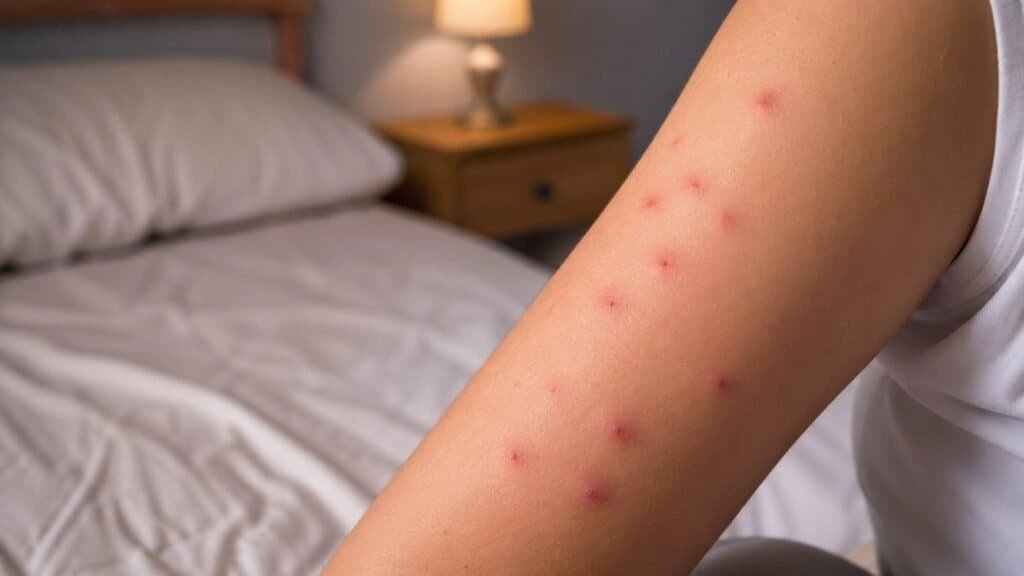
Top Hidden Bugs That Cause Tiny Bites on Skin at Night
Several nearly invisible pests are known for causing tiny bites on skin at night. Each behaves differently, which matters when it comes to getting rid of them.
Bed Bugs (Most Common Cause)
Bed bugs are the #1 reason people wake up with unexplained bites.
- Feed exclusively on human blood
- Bite in lines or clusters (“breakfast, lunch, dinner” pattern)
- Hide in mattress seams, bed frames, and headboards
- Come out only at night
Clue: You may notice small blood stains or dark specks on your sheets.
Fleas (Especially if You Have Pets)
Fleas don’t just stay on animals—they can bite humans too.
- Bite mostly on ankles and lower legs
- Jump quickly and are hard to spot
- Thrive in carpets, pet bedding, and upholstery
Clue: Pets scratching more than usual is a strong indicator.
Mites (Scabies, Bird Mites, Dust Mite Reactions)
Mites are tiny and often invisible to the naked eye.
- Scabies mites burrow into skin (intense itching, especially at night)
- Bird mites can enter homes from nests in vents or roofs
- Dust mites don’t bite, but can trigger skin reactions that feel like bites
Clue: Persistent itching without visible bugs.
Mosquitoes (Indoor Biters Do Exist)
Some mosquitoes stay indoors and feed at night.
- Bite exposed areas like arms and face
- Leave isolated, puffy bumps
- More common in warm, humid environments
Clue: Buzzing sounds or bites appearing randomly, not in patterns.
No-See-Ums (Biting Midges)
These are extremely small flying insects—often missed entirely.
- Cause tiny, very itchy red bumps
- Active during evening and night
- Can slip through standard window screens
Clue: You feel bites but never see the insect.
Quick Insight:
If bites are clustered, think bed bugs.
If bites are around ankles, think fleas.
If bites are random and isolated, mosquitoes or midges are more likely.
Tiny Bites on Skin at Night: How to Identify What Bit You
Identifying the culprit is the most important step. Treating the wrong pest wastes time—and lets the problem grow.
Look at the Bite Pattern
Different bugs leave different “signatures” on your skin:
- Lines or zigzag clusters → Bed bugs
- Small grouped bites on legs/ankles → Fleas
- Random single bites → Mosquitoes
- Widespread irritation or rash → Mites or allergic reaction
Check Common Bite Locations
Where the bites appear can tell you a lot:
- Arms, shoulders, neck → Bed bugs
- Ankles, feet → Fleas
- Exposed skin (face, hands) → Mosquitoes
- Under clothing or skin folds → Mites
Pay Attention to Timing
- Immediate itching → Mosquitoes or fleas
- Delayed reaction (hours later) → Bed bugs
- Severe itching at night → Scabies mites
Quick Comparison Table
| Feature | Bed Bugs | Fleas | Mosquitoes | Mites |
| Pattern | Lines/clusters | Small clusters | Random | Rash-like |
| Location | Upper body | Ankles/legs | Exposed skin | Anywhere |
| Visibility | Hard to see | Sometimes visible | Visible | Invisible |
| Itch Intensity | Moderate–high | High | Moderate | Very high |
What most people get wrong:
They assume all bites are mosquito bites. In reality, repeated nighttime bites almost always point to something living in your sleeping environment.
Bed Bugs vs Fleas vs Mites: Key Differences You Must Know
Confusing one pest for another is one of the biggest reasons infestations get worse. Each bug requires a different approach, so getting this right saves time, money, and frustration.
Side-by-Side Comparison
| Feature | Bed Bugs | Fleas | Mites |
| Size | Apple seed-sized (visible) | Tiny, fast, jumping | Microscopic |
| Bite Pattern | Lines or clusters | Small grouped bites | Rash-like or scattered |
| Active Time | Night | Day & night | Often worse at night |
| Where They Hide | Mattress, bed frame, furniture | Carpets, pet bedding, upholstery | Skin, fabrics, dust, or bird nests |
| Main Trigger | Travel, used furniture | Pets | Infested materials or close contact |
When to Suspect Bed Bugs
- You wake up with new bites every morning
- Bites appear in straight lines or tight clusters
- You notice tiny black spots or blood stains on sheets
Bed bugs stay close to where you sleep, which is why bites are often on your upper body.
When Fleas Are More Likely
- You have pets (dogs or cats)
- Bites are mostly on ankles and lower legs
- You notice random itching during the day too
Fleas don’t stay in beds—they spread through floors and fabrics.
When Mites Might Be the Problem
- Intense itching that gets worse at night
- No visible insects at all
- Skin looks more like a rash than distinct bites
Some mites, like scabies, require medical treatment—not just home cleaning.
Quick reality check:
If you’re dealing with tiny bites on skin at night that keep coming back, bed bugs are statistically the most likely cause. Still, confirming the signs before treating is critical.
Warning Signs You Have an Infestation (Not Just Random Bites)
Occasional bites can happen. Repeated bites with patterns usually mean something is living in your space.
Here’s how to tell when it’s more serious.
Physical Signs Around Your Bed
- Small blood spots on sheets or pillowcases
- Dark specks (bug droppings) on mattress seams
- Shed skins or tiny eggs (harder to see but possible)
Changes in Your Body
- Bites appear every night or every few nights
- Itching becomes more intense over time
- New areas of your body start getting bitten
Environmental Clues You Shouldn’t Ignore
- A faint musty or sweet odor (common with bed bugs)
- Pets scratching or biting themselves more often
- Increased activity after travel or bringing in used furniture
Simple Self-Check You Can Do Tonight
- Pull back your sheets and inspect mattress seams
- Check corners of your bed frame and headboard
- Look along baseboards near your bed
Important insight:
Infestations don’t stay small for long. What starts as a few tiny bites on skin at night can quickly turn into a full-blown problem if ignored.
Do This Immediately If You Notice Tiny Bites on Skin at Night
Waiting makes things worse. Acting quickly can stop the problem before it spreads.
Step 1: Wash and Heat-Treat Everything
- Wash bedding, pillowcases, and sleepwear in hot water (at least 130°F / 54°C)
- Dry on high heat for at least 30 minutes
- Heat is one of the most effective ways to kill hidden bugs
Step 2: Vacuum Strategically (Not Just Quickly)
Focus on:
- Mattress seams and edges
- Bed frame joints
- Carpet edges and baseboards
Empty the vacuum outside immediately to avoid re-infestation.
Step 3: Isolate Your Sleeping Area
- Move your bed slightly away from walls
- Avoid letting blankets touch the floor
- Reduce clutter around your bed
This limits hiding spots and makes bugs easier to detect.
Step 4: Inspect Before You Buy Sprays
Jumping straight to chemicals can backfire.
- Wrong treatment = wasted effort
- Some bugs (like mites) need completely different solutions
- Overuse of sprays can spread pests instead of killing them
Step 5: Protect Your Skin Right Away
- Use anti-itch creams or antihistamines
- Keep bites clean to prevent infection
- Avoid scratching (this can worsen irritation and lead to scarring)
Fast-action summary checklist:
- Wash and heat-dry fabrics
- Vacuum thoroughly and dispose safely
- Inspect your sleeping area carefully
- Avoid guessing—identify before treating
Taking these steps within the first 24–48 hours can dramatically reduce how bad the situation gets.
How to Get Rid of Hidden Bugs Fast (Step-by-Step Action Plan)
Once you’ve narrowed down the likely cause of those tiny bites on skin at night, it’s time to eliminate the source—not just the symptoms. This step-by-step plan works for most common pests and can be adjusted depending on what you’re dealing with.
Step 1: Confirm the Source (Don’t Skip This)
Guessing leads to wasted effort.
- Check mattress seams, furniture joints, carpets, and pet areas
- Use sticky traps or interceptor cups under bed legs
- Look for patterns (bed area vs floor vs pets)
Pro tip: Take photos of bites over a few days. Patterns often become clearer.
Step 2: Deep Clean and Declutter
Hidden bugs thrive in cluttered, undisturbed spaces.
- Remove items from under and around your bed
- Wash all washable fabrics (bedding, curtains, clothes nearby)
- Vacuum thoroughly and repeatedly over several days
Less clutter = fewer hiding places = faster results.
Step 3: Use Targeted Treatments (Not One-Size-Fits-All)
Different pests require different tools:
- Bed bugs: Mattress encasements, bed bug sprays, diatomaceous earth
- Fleas: Carpet treatments, flea sprays, pet-safe insecticides
- Mites: Specialized creams (for scabies) or environmental cleaning
Avoid using random products. Match the treatment to the pest.
Step 4: Treat Pets and Fabrics (If Applicable)
If fleas or mites are involved, skipping this step will cause reinfestation.
- Bathe pets with vet-approved treatments
- Wash pet bedding frequently
- Vacuum areas where pets rest
Step 5: Monitor and Repeat
One treatment is rarely enough.
- Recheck bite activity every 2–3 days
- Reapply treatments as directed
- Continue cleaning routines for at least 2 weeks
Key insight:
Consistency beats intensity. A steady, repeated approach works far better than a one-time deep clean.
Best Treatments for Itchy Night Bites (Fast Relief Guide)
Stopping the bugs is one part of the problem. The other is dealing with the itching so you can actually sleep.
Over-the-Counter Options That Work Fast
- Hydrocortisone cream → reduces inflammation and itching
- Antihistamines (like diphenhydramine) → helpful for nighttime relief
- Calamine lotion → soothes irritated skin
These are widely available and effective for most bite reactions.
Natural Remedies That Actually Help
- Aloe vera gel → cooling and anti-inflammatory
- Baking soda paste → reduces itch when applied briefly
- Oatmeal baths → great for widespread irritation
Natural doesn’t mean weak—these can be surprisingly effective for mild cases.
When It Becomes a Bigger Issue
Seek medical attention if you notice:
- Severe swelling or pain
- Signs of infection (pus, warmth, spreading redness)
- Allergic reactions (difficulty breathing, hives)
How Long Do Bites Last?
- Mosquito/flea bites → a few days
- Bed bug bites → up to 1–2 weeks
- Mite-related irritation → longer if untreated
Important reminder:
Scratching delays healing and increases the risk of infection. Keeping nails short and using anti-itch treatments makes a big difference.
Common Mistakes That Make Night Bites Worse
Many people unintentionally make the situation worse—often because they act too quickly without a clear plan.
Using the Wrong Treatment
Spraying for bed bugs when you actually have fleas (or mites) won’t solve anything.
- Leads to frustration
- Allows infestation to grow
- Wastes money on ineffective products
Only Treating the Bed (Not the Whole Area)
Bugs don’t stay in one place.
- Fleas live in carpets and furniture
- Bed bugs can spread to nearby cracks and walls
- Mites may exist in fabrics and dust
You must treat the entire environment.
Stopping Too Early
Seeing fewer bites doesn’t mean the problem is gone.
- Eggs may still be present
- Bugs can re-emerge within days
- Incomplete treatment leads to repeat infestations
Ignoring Pets or Secondary Sources
Pets, vents, and even nearby bird nests can reintroduce pests.
- Treat pets consistently
- Check attic vents or rooflines if mites are suspected
- Be cautious with secondhand furniture
Overusing Chemicals
More is not always better.
- Can push bugs deeper into hiding
- May cause health issues indoors
- Doesn’t fix the root problem
What most people get wrong:
They focus on killing visible bugs instead of eliminating the conditions that allow them to survive.
How to Prevent Tiny Bites on Skin at Night (Long-Term Protection)
Once you’ve dealt with the immediate issue, prevention becomes your best defense. Tiny bites on skin at night often return when small habits are ignored.
Upgrade Your Bed Protection
Your bed is the primary target for many nighttime pests.
- Use zippered mattress and pillow encasements
- Choose light-colored bedding (easier to spot stains or bugs)
- Wash sheets weekly in hot water
Encasements alone can dramatically reduce the risk of bed bug infestations.
Build a Simple Cleaning Routine That Works
Consistency matters more than intensity.
- Vacuum floors, rugs, and furniture at least once a week
- Focus on edges, seams, and corners
- Declutter regularly to remove hiding spots
A clean environment makes it harder for pests to survive and multiply.
Seal and Block Entry Points
Tiny gaps = easy access.
- Seal cracks along baseboards and walls
- Install door sweeps and repair window screens
- Check vents and utility openings
This step is especially important in older homes or mobile/tiny houses.
Travel Smart (Most People Skip This)
Many infestations start outside your home.
- Inspect hotel beds and luggage areas
- Keep luggage off the floor
- Wash clothes immediately after returning home
Key insight:
One careless trip can introduce bugs that lead to weeks of problems.
Use Preventive Tools Strategically
- Bed bug interceptors under bed legs
- Natural deterrents like essential oil sprays (limited but helpful)
- Dehumidifiers in humid climates
Prevention tools work best when combined—not used alone.
Are Tiny Night Bites Dangerous? When to Worry
Most tiny bites on skin at night are irritating but not dangerous. Still, there are situations where you should take them seriously.
Normal Reactions (Usually Harmless)
- Mild to moderate itching
- Small red bumps
- Symptoms fade within a few days
These are typical for bed bugs, fleas, and mosquitoes.
When It’s More Than Just a Bite
Watch for these warning signs:
- Severe swelling or intense pain
- Bites that spread rapidly or worsen
- Signs of infection (warmth, pus, increasing redness)
- Fever or unusual fatigue
These may require medical attention.
Allergic Reactions Can Happen
Some people react more strongly than others.
- Large welts or hives
- Persistent itching that disrupts sleep
- Rare cases of breathing difficulty
If symptoms escalate, don’t wait—seek medical help.
Hidden Risk: Secondary Infection
Scratching opens the skin and introduces bacteria.
- Keep bites clean
- Use anti-itch treatments early
- Cover bites if needed to prevent irritation
Bottom line:
The bites themselves are rarely dangerous—but how you handle them can make a big difference.
Tiny Bites on Skin at Night in Different Environments
Your environment plays a major role in what’s biting you—and how often it happens.
Homes vs Apartments vs Hotels
- Homes: Infestations often start slowly and go unnoticed
- Apartments: Bugs can spread between units through walls and vents
- Hotels: High turnover increases the risk of exposure
Frequent travelers are at higher risk of bringing pests home.
Urban vs Rural Settings
- Urban areas: Bed bugs and apartment انتقال issues are more common
- Rural areas: Fleas, mites, and outdoor insects are more frequent
Your location influences which pest is most likely responsible.
Seasonal Patterns You Should Know
- Summer: Mosquitoes, fleas, and midges peak
- Fall/Winter: Indoor pests like bed bugs become more noticeable
- Rainy seasons: Increased humidity supports mites and insects
Understanding timing helps you stay one step ahead.
Travel and Lifestyle Factors
- Moving between locations (especially in tiny homes or RVs)
- Bringing in secondhand furniture
- Hosting guests frequently
All of these increase exposure risk.
Smart takeaway:
Tiny bites on skin at night aren’t random. They’re often a reflection of your environment, habits, and daily routines. Adjust those, and you dramatically reduce the chances of getting bitten again.
Tiny House Living: Why Small Spaces Can Increase Night Bites
Living in a compact space has plenty of benefits—lower costs, easier maintenance, and a simpler lifestyle. At the same time, tiny homes can make tiny bites on skin at night more noticeable and harder to ignore.
Why Bites Spread Faster in Small Spaces
- Everything is closer together—bed, couch, storage, and walls
- Bugs have fewer places to hide, but easier access to you
- Infestations can move quickly from one area to another
A single overlooked spot—like under a mattress or inside a wall seam—can affect the entire space.
Common Entry Points in Tiny Homes
- Gaps around windows and doors
- Utility hookups and ventilation openings
- Secondhand furniture or multi-use items
- Travel (especially if you move your home or stay in RV parks)
Humidity and Ventilation Matter More Than You Think
Small spaces trap heat and moisture more easily, which creates a comfortable environment for pests.
- Poor airflow can encourage mites and mold-related skin irritation
- Warm interiors make nighttime activity more likely
Practical Prevention Tips for Tiny Living
- Use zippered mattress encasements to block bed bugs
- Keep storage minimal and organized
- Vacuum frequently—even in tight corners
- Inspect your space after every trip or guest stay
Smart takeaway:
In tiny homes, prevention isn’t optional—it’s part of everyday living. A few small habits can prevent a big infestation.
FAQ: Tiny Bites on Skin at Night
What bugs bite only at night and are invisible?
Bed bugs and mites are the most common culprits. They hide during the day and come out at night, which is why you rarely see them.
Why do I wake up with bites but see no bugs?
Many biting insects are extremely small and hide in cracks, fabrics, or mattresses. You’re being bitten while asleep, and they disappear before morning.
Can dust mites bite humans?
Dust mites don’t bite, but they can trigger allergic reactions that look and feel like bites, including itching and redness.
How do I tell if it’s bed bugs or allergies?
Bed bug bites usually appear in clusters or lines, while allergies tend to cause more widespread irritation without a clear pattern.
Do bed bugs stay in your mattress only?
No. They can also live in bed frames, furniture, wall cracks, and even behind baseboards.
How long does it take to get rid of biting bugs?
It depends on the pest. Minor issues can be resolved in days, while infestations (like bed bugs) may take several weeks of consistent treatment.
For deeper guidance on identifying and managing household pests, you can also check the Environmental Protection Agency’s resource here: https://www.epa.gov/bedbugs
Take Control Tonight—Stop the Bites Before They Get Worse
Tiny bites on skin at night rarely fix themselves. Ignoring them gives hidden pests time to spread, multiply, and become much harder to eliminate.
Start with the basics tonight: inspect your sleeping area, wash your bedding on high heat, and look for patterns in your bites. Small actions taken early can prevent a much bigger problem later—especially in compact living spaces like tiny homes.
If the bites keep coming back, treat it like a real infestation and act accordingly. The sooner you identify the source, the faster you can get back to sleeping comfortably—without waking up covered in mystery bites.
