
Seeing tiny green bugs in house at night can feel unsettling—especially when they seem to appear out of nowhere. One minute your space is clean and calm, the next you’re spotting small green insects crawling near lights, windows, or even your indoor plants.
This guide breaks down exactly what these bugs are, why they show up at night, and how to get rid of them quickly. You’ll also learn how to prevent them long-term—especially important if you live in a small home or tiny house, where even minor pest issues can feel amplified.
In This Article
Tiny Green Bugs in House at Night: Quick Answer (What They Are & Why They Appear)
If you want the short version, here it is:
Tiny green bugs in your house at night are usually plant-related insects attracted by light and warmth. The most common types include:
- Aphids
- Leafhoppers
- Green stink bugs (juveniles)
- Lacewing larvae
Why They Appear at Night
- Artificial lights attract them, especially near windows and doors
- Indoor plants provide food and shelter
- Cooler nighttime temperatures drive them indoors
- Open windows or tiny gaps give them easy access
Are They Dangerous?
Most of these bugs are harmless to humans. They don’t bite or spread disease.
However, they can damage indoor plants and become a recurring nuisance if ignored.
What Are These Tiny Green Bugs? (Identification Guide with Key Differences)
Correct identification makes everything easier. Different bugs require slightly different approaches, especially if plants are involved.
Common Tiny Green Bugs Found Indoors
Aphids
- Size: Very small (1–3 mm)
- Appearance: Soft-bodied, pear-shaped
- Where found: Clustering on plant stems and leaves
- Clue: Leaves may feel sticky due to “honeydew” residue
Leafhoppers
- Size: Slightly larger than aphids
- Appearance: Slender, wedge-shaped
- Behavior: Jump or fly when disturbed
- Where found: Near windows or plants
Green Stink Bug Nymphs
- Size: Small, rounder bodies
- Appearance: Bright green, shield-like shape as they mature
- Behavior: Slow-moving
- Clue: May release odor if crushed
Lacewing Larvae
- Size: Tiny but elongated
- Appearance: Alligator-like shape
- Behavior: Predatory (they actually eat other pests like aphids)
- Where found: Near infested plants
Quick Comparison Table
| Bug Type | Found Near Plants | Attracted to Light | Harm Level |
| Aphids | Yes | Sometimes | Plant damage |
| Leafhoppers | Yes | Yes | Mild nuisance |
| Stink Bug Nymphs | Occasionally | Yes | Low |
| Lacewing Larvae | Yes | Rarely | Beneficial |
Top Causes: Why You’re Seeing Tiny Green Bugs in Your House at Night
Understanding the cause is the fastest way to stop the problem for good.
Indoor Plants Are the #1 Trigger
Indoor greenery is the most common source. Tiny green bugs often hitchhike in on plants or develop over time.
- Overwatered soil creates ideal breeding conditions
- Leaves provide a steady food source
- Lack of natural predators indoors allows populations to grow
Lights Are Drawing Them Inside
Nighttime lighting acts like a magnet.
- Bugs are naturally attracted to bright indoor lights
- Windows act as entry points when lights are visible from outside
- Porch lights can also increase indoor bug activity
Important: Switching to warmer or dimmer lighting can reduce attraction.
Easy Entry Points You Might Be Overlooking
Even clean homes have small access points:
- Gaps around windows and doors
- Cracks in walls or window frames
- Torn or missing screens
Tiny bugs don’t need much space—even a hairline gap is enough.
Seasonal Changes Make It Worse
Expect more activity during:
- Spring and summer (peak breeding seasons)
- Early fall when bugs start seeking shelter
Homes near gardens, trees, or landscaping see higher numbers.
Nearby Vegetation Plays a Bigger Role Than You Think
Outdoor plants act as a staging area.
- Bugs migrate from shrubs or grass toward indoor light
- Homes with balconies, patios, or window plants are especially vulnerable
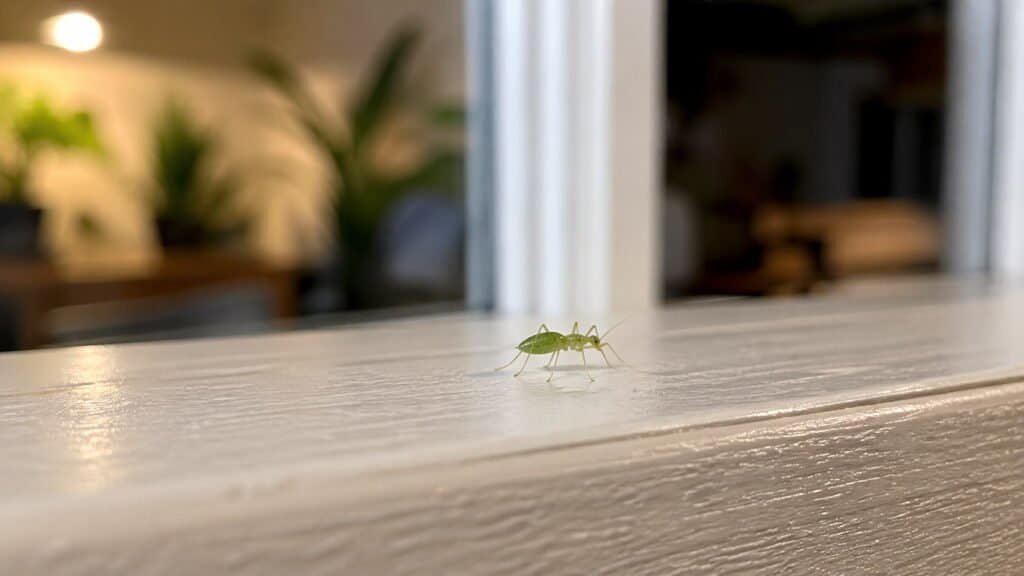
Do This Immediately: Fast Ways to Get Rid of Tiny Green Bugs Tonight
When tiny green bugs in your house at night start showing up, quick action makes a big difference. These simple steps can reduce the problem within hours.
Turn Off or Adjust Lights Near Entry Points
Artificial lighting is a major attractor.
- Switch off unnecessary lights near windows and doors
- Use warm or yellow-toned bulbs instead of bright white LEDs
- Close curtains or blinds at night to block light visibility
Quick win: Bugs can’t enter if they’re not drawn to your home in the first place.
Remove Visible Bugs Safely
Focus on immediate cleanup:
- Use a vacuum with a hose attachment for quick removal
- Wipe surfaces with a damp cloth or mild soap solution
- Avoid crushing stink bugs—they can release odors
Isolate or Inspect Indoor Plants
Plants are often the source.
- Move affected plants away from living areas
- Check the underside of leaves for clusters
- Rinse leaves gently with water
Important: Even one infested plant can spread bugs throughout your home.
Use a Simple DIY Spray
A fast, effective option:
- Mix water with a few drops of dish soap
- Lightly spray on bugs and plant surfaces
- Repeat once daily if needed
This works especially well on aphids and soft-bodied insects.
Block Entry Points (Temporary Fix)
Stop more bugs from coming in tonight:
- Close windows fully or install temporary mesh
- Seal gaps with tape or weather stripping
- Place a towel along door gaps if needed
Step-by-Step: How to Eliminate Tiny Green Bugs from Your Home
For long-term control, follow a structured approach. This ensures you’re not just treating symptoms—but removing the root cause.
Step 1: Identify the Source
Start by pinpointing where the bugs originate.
- Check all indoor plants first
- Inspect window sills and light fixtures
- Look for clusters or repeated activity zones
Step 2: Clean and Remove Infestations
Once identified:
- Vacuum bugs daily for a few days
- Wipe down surfaces with mild cleaner
- Dispose of vacuum contents immediately
Consistency matters more than intensity here.
Step 3: Treat Affected Plants Properly
If plants are involved:
- Rinse leaves thoroughly (top and underside)
- Apply neem oil or insecticidal soap
- Trim heavily infested areas
Pro tip: Quarantine plants for at least 5–7 days to prevent spread.
Step 4: Seal Entry Points Permanently
Prevent re-entry with simple fixes:
- Install or repair window screens
- Use caulk for cracks and gaps
- Add door sweeps for tighter seals
Even small improvements dramatically reduce bug entry.
Step 5: Monitor and Maintain
Keep the problem from returning:
- Inspect plants weekly
- Watch for bugs near lights at night
- Act early if you see even a few
Key insight: Tiny green bugs multiply quickly—early action saves time later.
Best Natural & Chemical Solutions (What Actually Works)
Not all treatments are equal. Choosing the right method depends on the severity of the problem and your living situation.
Natural Solutions (Safe & Popular)
Great for small homes, apartments, and tiny houses:
- Neem oil – disrupts insect life cycles
- Insecticidal soap – effective on soft-bodied bugs
- Vinegar spray (diluted) – helps deter bugs from surfaces
- Essential oils (peppermint, eucalyptus) – mild repellent effect
Best for: Ongoing prevention and light infestations
Bonus: Safer for pets and indoor use
Chemical Solutions (Stronger but Targeted)
Use when infestations get out of control:
- Store-bought insect sprays for indoor pests
- Residual insecticides for entry points
- Systemic plant treatments (for severe plant infestations)
Best for: Persistent or large infestations
Caution: Always follow label instructions carefully
Natural vs Chemical: Quick Comparison
| Feature | Natural Solutions | Chemical Solutions |
| Safety | High | Moderate |
| Strength | Mild to moderate | Strong |
| Best Use Case | Prevention, small issues | Severe infestations |
| Tiny Home Friendly | Yes | Use cautiously |
What Most People Get Wrong
- Using one method only once and expecting results
- Ignoring plant treatment while spraying the house
- Switching products too quickly without consistency
Reality check:
Consistency beats intensity. Even natural solutions work well when applied regularly.
Warning Signs You Might Have a Bigger Infestation
Spotting a few tiny green bugs in your house at night is one thing. Seeing them repeatedly—or in larger numbers—signals a deeper issue.
Sticky Residue on Surfaces or Plants
Aphids leave behind a sugary substance called honeydew.
- Leaves feel tacky or shiny
- Surfaces near plants collect residue
- Ants may appear (they’re attracted to honeydew)
Red flag: Sticky buildup usually means an active, growing population.
Clusters Around Windows, Lights, or Ceilings
Random sightings are manageable. Clusters are not.
- Groups forming near light fixtures
- Bugs gathering along window edges
- Repeated sightings in the same area nightly
This often indicates an established indoor or nearby outdoor source.
Recurring Nighttime Activity
If bugs keep showing up every evening:
- They’re likely entering from the same point
- Lighting is consistently attracting them
- The source hasn’t been eliminated
Key insight: Recurrence means your current approach is only treating symptoms.
Visible Damage to Indoor Plants
Plants often reveal the problem before you do.
- Yellowing or curling leaves
- Stunted growth
- Small holes or discoloration
Even mild plant damage can escalate quickly if ignored.
Quick checklist: Do you have a bigger problem?
- ✔ Bugs appear every night
- ✔ You see clusters, not just individuals
- ✔ Plants show signs of stress
- ✔ Sticky residue is present
If you checked two or more, it’s time for a more aggressive and consistent approach.
Common Mistakes That Make the Problem Worse
Many homeowners unintentionally make infestations harder to control. Avoid these, and you’ll solve the issue much faster.
Ignoring Indoor Plants as the Source
Plants are the #1 hiding spot.
- Bugs often live under leaves, not on visible surfaces
- Treating the room without treating plants won’t work
Fix: Always inspect and treat plants first.
Leaving Lights On Near Open Windows
Lighting attracts bugs directly into your home.
- Bright indoor lights act like a beacon
- Open windows provide easy access
Fix: Reduce nighttime lighting near entry points or close windows.
Overwatering Plants
Moist environments encourage pests.
- Damp soil supports breeding
- Weak plants become more vulnerable
Fix: Water only when needed and ensure proper drainage.
Using Ineffective DIY Remedies Repeatedly
Not all home remedies work equally well.
- Spraying random mixtures without consistency
- Switching methods too quickly
Fix: Choose one proven method (like insecticidal soap) and apply it consistently.
Skipping Preventive Steps After Cleanup
Getting rid of bugs once isn’t enough.
- Entry points remain open
- Light attraction continues
- Plants go unchecked
Reality: Without prevention, the bugs will come back.
How to Prevent Tiny Green Bugs in Your House at Night (Long-Term Fixes)
Once you’ve eliminated the bugs, prevention becomes your best strategy—especially in smaller homes where pests are more noticeable.
Seal and Protect Entry Points
Start with your home’s defenses:
- Install tight-fitting window screens
- Use caulk to seal cracks and gaps
- Add weather stripping around doors
Even minor sealing improvements can reduce bug entry dramatically.
Manage Indoor and Outdoor Lighting
Light control is one of the most overlooked fixes.
- Use warm or yellow bulbs outdoors
- Turn off unnecessary lights at night
- Close blinds to block indoor light visibility
Pro tip: Position lights away from doors and windows when possible.
Build a Simple Plant Care Routine
Healthy plants are less likely to attract pests.
- Inspect leaves weekly (especially undersides)
- Clean leaves with a damp cloth
- Isolate new plants before bringing them indoors
Adjust Your Surroundings
Your outdoor environment matters too:
- Trim plants near windows and doors
- Avoid placing plants directly against your home
- Keep outdoor areas clean and dry
Quick Prevention Checklist
- ✔ Seal gaps and install screens
- ✔ Reduce nighttime lighting exposure
- ✔ Maintain healthy indoor plants
- ✔ Monitor regularly for early signs
Related Issues in Small Homes & Tiny Houses
Living in a compact space changes how pest problems feel—and how quickly they escalate. Even a few tiny green bugs in your house at night can seem overwhelming when every square foot matters.
Why Small Spaces Make Bugs More Noticeable
- Closer proximity: You’re never far from the source
- Fewer barriers: Bugs move easily between areas
- Limited storage: Harder to isolate affected items or plants
A minor issue in a large home can feel like a full infestation in a tiny house.
Common Overlapping Pest Problems
Tiny green bugs often appear alongside other small-space issues:
- Fungus gnats from overwatered plants
- Ants attracted to sticky residues
- Small flies drawn to light and moisture
If you’re dealing with multiple pests, it’s worth reviewing broader prevention strategies.
For example, you might also find this helpful: how to deal with tiny spiders on ceilings or general pest-proofing methods for compact homes.
Smart Internal Linking Opportunity
If your blog covers small living, this is a natural place to guide readers deeper:
- Pest control strategies for tiny homes
- Minimalist cleaning routines that reduce infestations
- Indoor plant care in small spaces
How Tiny Green Bugs Affect Tiny Home Living
Tiny homes are designed for efficiency, but that same efficiency can make pest control trickier.
Faster Infestations in Limited Space
- Bugs spread quickly from one plant or surface to another
- A single entry point can affect the entire home
Impact on Comfort and Air Quality
Even harmless bugs can disrupt daily life:
- Crawling insects near sleeping or cooking areas
- Increased stress from repeated sightings
- Potential plant decay affecting indoor air quality
Storage and Treatment Challenges
- Limited space for isolating plants
- Fewer options for chemical treatments
- Greater need for non-toxic, space-safe solutions
Practical Tip for Tiny Home Owners
Focus on multi-functional prevention:
- Use plants that naturally repel pests
- Keep lighting minimal and strategic
- Combine cleaning and inspection into one weekly routine
Tiny Green Bugs vs Other Nighttime Bugs (Quick Comparison)
Not all bugs you see at night are the same. Misidentifying them can lead to ineffective solutions.
Quick Identification Guide
| Bug Type | Color | Behavior at Night | Main Cause |
| Tiny Green Bugs | Green | Attracted to light | Plants + entry points |
| Gnats | Black/gray | Hover near lights | Moist soil |
| Ants | Dark brown | Trail movement | Food residue |
| Mites | Nearly invisible | Hard to see | Humidity, fabrics |
How to Tell Them Apart Quickly
- Green + slow-moving: Likely plant-related insects
- Flying in circles: Probably gnats
- Moving in lines: Ants
- Barely visible but irritating: Mites
FAQ: Tiny Green Bugs in House at Night
Why do tiny green bugs come out at night?
They’re attracted to artificial light and cooler nighttime conditions, which draw them indoors.
Are tiny green bugs harmful to humans?
Most are harmless and don’t bite, but they can damage plants and become a nuisance.
How do I get rid of green bugs on indoor plants?
Use insecticidal soap or neem oil, rinse leaves regularly, and isolate affected plants.
Can these bugs infest beds or furniture?
No, they typically stay near plants, windows, and light sources—not bedding or upholstery.
Why do they keep coming back every night?
Recurring entry points, consistent lighting, or untreated plants are usually the cause.
Do LED lights attract green bugs?
Yes, especially cool white LEDs. Warmer tones attract fewer insects.
Expert Tips for Keeping Your Home Bug-Free Year-Round
Long-term success comes from small, consistent habits—not one-time fixes.
Weekly Habits That Work
- Inspect plants while watering
- Wipe down window sills and light areas
- Check for new gaps or cracks
Seasonal Adjustments
- Increase inspections during spring and summer
- Reduce outdoor lighting during peak bug seasons
- Prepare windows and screens before warmer months
When to Call a Professional
- Infestation keeps returning despite treatment
- Bugs spread beyond plants into multiple areas
- You’re unsure of the exact species
For additional guidance on identifying and managing household pests, a trusted resource like the EPA provides practical advice:
https://www.epa.gov/safepestcontrol
Tiny green bugs don’t have to take over your nights. With the right mix of quick action, consistent treatment, and smart prevention, you can keep your home—no matter the size—clean, calm, and bug-free.
If you’re building a more efficient living space, this is a great time to explore simple pest-proofing upgrades and plant care routines that fit your lifestyle.
