
Wheelchair accessible tiny house plans are redefining what small-space living can look like—practical, independent, and thoughtfully designed for real mobility needs. Whether you’re planning your own build or researching options for a loved one, this guide breaks down exactly how to design a tiny home that’s both compact and fully accessible.
You’ll learn what features truly matter, how to avoid common design mistakes, and how to make the most of limited square footage without sacrificing comfort or safety.
In This Article
Why Wheelchair Accessible Tiny House Plans Are in High Demand
The demand for wheelchair accessible tiny house plans has grown rapidly over the past few years—and it’s not just a niche trend.
Aging homeowners, people with disabilities, and even caregivers are turning to tiny homes as a flexible, affordable, and customizable housing solution. Traditional homes can be expensive to retrofit, while tiny houses offer the chance to design accessibility from the ground up.
The Real Reasons Behind the Shift
- Aging in place is a priority
Many people want to stay independent without moving into assisted living facilities. - Rising housing costs
Tiny homes offer a more affordable alternative, especially when accessibility features are built in from the start. - Custom design freedom
Unlike standard homes, tiny houses can be tailored to specific mobility needs. - Minimalist lifestyle appeal
Less space means less maintenance, which is especially helpful for those with limited mobility.
Tiny Doesn’t Mean Limiting
A common misconception is that tiny homes can’t accommodate wheelchairs comfortably. In reality, well-designed accessible tiny houses often feel more efficient and easier to navigate than larger homes filled with obstacles.
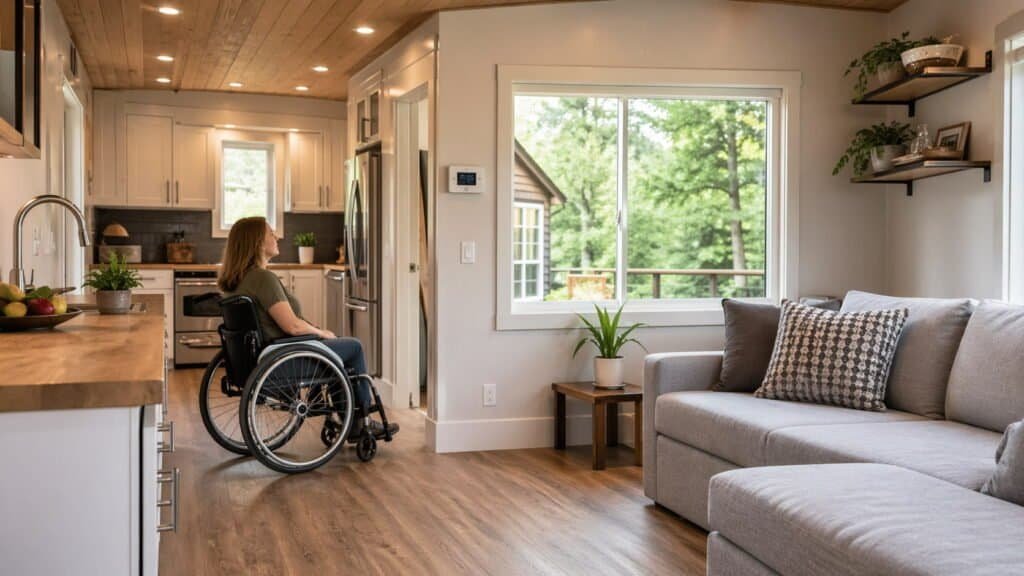
What Makes a Tiny House Truly Wheelchair Accessible?
Not every “accessible” tiny home actually works in real life. True accessibility goes beyond wider doors—it’s about creating a space that supports daily independence, safety, and ease of movement.
Core Accessibility Principles
A well-designed wheelchair accessible tiny house plan focuses on:
- Mobility: Smooth, obstacle-free movement throughout the home
- Reach: Easy access to essential items without strain
- Safety: Reduced fall risks and proper support features
- Independence: Minimal reliance on assistance for daily tasks
ADA-Inspired vs Fully ADA-Compliant
Most tiny homes are ADA-inspired, not fully ADA-compliant. Full compliance can be difficult due to strict size and layout requirements.
However, you can still incorporate critical ADA guidelines, such as:
- Minimum 32-inch door width
- Turning radius of 60 inches for wheelchairs
- Proper sink and countertop clearance
For official ADA standards, refer to:
👉 https://www.ada.gov/resources/2010-ada-standards-for-accessible-design/
Space Planning Matters More Than Square Footage
Even in a 200–400 sq ft tiny home, smart planning can make a huge difference.
Common mistake: Trying to fit too much into a small layout
Better approach: Prioritize open space and essential functions
Accessibility Pitfalls to Avoid
- Narrow hallways that limit turning
- Loft-only sleeping areas (often inaccessible)
- High storage cabinets
- Tight bathroom layouts without roll-in access
Wheelchair Accessible Tiny House Plans: Must-Have Design Features
The best wheelchair accessible tiny house plans combine thoughtful layout with practical features that make daily life easier—not harder.
Zero-Step Entry and Smart Ramp Design
Entry is the first barrier to eliminate.
- No stairs or thresholds
- Gentle slope ramps (ideally 1:12 ratio)
- Non-slip surfaces for safety
Pro tip: Covered ramps protect against rain and improve long-term usability.
Extra-Wide Doorways and Hallways
Standard tiny homes often cut space too tightly. Accessible designs do the opposite.
- Doorways: 32–36 inches wide
- Hallways: Ideally 36 inches or more
- Pocket or sliding doors to save space
Open Floor Layout for Easy Movement
Open layouts are essential—not optional.
- Clear pathways without furniture obstruction
- Multi-functional spaces instead of divided rooms
- Minimal corners or tight turns
Think flow, not rooms.
Lowered Countertops and Adjustable Surfaces
Kitchen usability is often overlooked—but it’s critical.
- Counter height: 28–34 inches
- Open space underneath for wheelchair access
- Pull-out work surfaces for flexibility
Accessible Bathroom Essentials
Bathrooms are the most complex area to design properly.
Must-have features include:
- Roll-in shower (no curb)
- Grab bars near toilet and shower
- Wall-mounted or comfort-height toilet
- Slip-resistant flooring
Important: Plan for at least a 5-foot turning radius inside the bathroom whenever possible.
Smart Storage Within Reach
Storage should never require standing or stretching.
- Pull-down shelves
- Drawer-based storage instead of cabinets
- Open shelving at accessible heights
Avoid overhead cabinets unless they’re motorized or adjustable.
Layout Ideas That Actually Work in Small Spaces
Designing a layout for wheelchair accessible tiny house plans is where theory meets real life. A beautiful design means nothing if you can’t move comfortably through it every day.
Open Studio vs Segmented Layouts
Open layouts consistently perform better for accessibility.
- Open studio layouts
- Fewer barriers and smoother navigation
- Easier turning and maneuvering
- Flexible furniture placement
- Segmented layouts
- Can feel cramped quickly
- Limit turning radius
- Often create awkward bottlenecks
Best approach: Keep essential zones (kitchen, sleeping, living) visually defined, but physically open.
Single-Level Living vs Loft Designs
Lofts may look great in photos, but they rarely work for wheelchair users.
- Loft challenges
- Requires ladders or stairs
- Unsafe for limited mobility
- Difficult for long-term use
- Single-level benefits
- Full accessibility across all areas
- Easier daily routines
- Safer for aging in place
Smart alternative: Use a main-floor bed or convertible sleeping space instead of a loft.
U-Shaped vs Linear Layouts
Layout shape directly impacts usability.
- Linear layouts (recommended)
- Straight pathways
- Fewer tight turns
- Easier navigation from one end to another
- U-shaped layouts
- Can feel efficient but often restrict turning space
- Risk of tight corners
Pro tip: Always test your layout with a 60-inch turning circle before finalizing.
Realistic Square Footage Expectations
Trying to go ultra-small can backfire.
- Minimum comfortable range: 250–400 sq ft
- Under 200 sq ft often feels too restrictive for full accessibility
- Extra space = better mobility and less daily frustration
Step-by-Step: How to Choose the Right Wheelchair Accessible Tiny House Plan
Choosing the right plan isn’t just about size or style—it’s about how well the home supports your daily routine.
Assess Current and Future Mobility Needs
Start with an honest evaluation.
- Will mobility needs change over time?
- Do you use a manual or powered wheelchair?
- Do you need caregiver assistance space?
Think long-term, not just current comfort.
Define Must-Haves vs Nice-to-Haves
Clarity prevents costly mistakes later.
Must-haves might include:
- Roll-in shower
- Wide doorways
- Single-level living
Nice-to-haves might include:
- Smart home automation
- Extra storage features
- Outdoor accessibility additions
Choose Between Custom vs Pre-Designed Plans
This decision shapes everything.
- Pre-designed plans: faster and cheaper
- Custom plans: tailored for exact needs
If your accessibility requirements are specific, custom design is usually the safer route.
Consider Mobility of the Home (THOW vs Foundation)
- THOW (Tiny House on Wheels)
- Flexible location options
- May have tighter space constraints
- Foundation-based tiny homes
- Easier to fully customize
- More stable and often more spacious
Important: Wheels can limit layout flexibility due to trailer width restrictions.
Work With Accessibility-Focused Designers
Not all designers understand real accessibility needs.
Look for professionals who:
- Have experience with wheelchair-friendly layouts
- Understand turning radius and clearance
- Can adapt designs based on feedback
This step alone can prevent expensive redesigns later.
Custom vs Pre-Made Wheelchair Accessible Tiny House Plans
Choosing between custom and pre-made wheelchair accessible tiny house plans is one of the biggest decisions you’ll make.
Pre-Made Plans: Fast and Budget-Friendly
Pros:
- Lower upfront cost
- Faster to start building
- Easier to compare options
Cons:
- Limited flexibility
- May not fully meet your needs
- Often only “partially accessible”
Reality check: Many pre-made plans claim accessibility but miss critical details like turning space or proper bathroom layout.
Custom Plans: Designed Around You
Pros:
- Fully tailored to your mobility needs
- Better long-term usability
- Optimized for comfort and independence
Cons:
- Higher design costs
- Longer planning phase
When Custom Is Worth It
Custom wheelchair accessible tiny house plans are usually the better choice if:
- You rely on a wheelchair full-time
- You need caregiver-friendly space
- You want a long-term or permanent home
Red Flags to Watch Out For
Whether custom or pre-made, avoid plans that:
- Include loft-only sleeping areas
- Ignore turning radius requirements
- Have tight or enclosed bathrooms
- Focus more on aesthetics than usability
Bottom line: Accessibility isn’t something you should “adjust to later”—it needs to be built into the design from day one.
Cost Breakdown: Building an Accessible Tiny House
One of the biggest questions around wheelchair accessible tiny house plans is cost. While tiny homes are generally more affordable than traditional housing, accessibility features do add to the budget—but they’re often worth every dollar in terms of comfort and independence.
What Drives the Cost?
Several factors influence the final price:
- Size of the home (larger = easier accessibility, but higher cost)
- Custom vs pre-designed plans
- Type of foundation (wheels vs permanent)
- Level of accessibility features included
Typical Price Ranges
Here’s a realistic breakdown based on current tiny house builds:
| Category | Estimated Cost |
| Basic tiny house (non-accessible) | $30,000 – $60,000 |
| Accessible tiny house (standard upgrades) | $50,000 – $90,000 |
| Fully customized accessible build | $80,000 – $150,000+ |
Important: Costs can vary widely depending on materials, labor, and location.
Accessibility Feature Costs (What to Expect)
| Feature | Estimated Cost |
| Ramp installation | $1,000 – $5,000 |
| Wider framing (doors/halls) | $500 – $3,000 |
| Roll-in shower | $2,000 – $8,000 |
| Lowered countertops | $500 – $2,500 |
| Smart home automation | $1,000 – $10,000+ |
Ways to Save Without Compromising Accessibility
- Prioritize essentials first (bathroom, entry, layout)
- Choose simple finishes over luxury materials
- Use multi-functional furniture to reduce build complexity
- Consider DIY elements if you have experience
Smart mindset: Spend on function first, upgrade aesthetics later.
Smart Technology That Enhances Accessibility
Modern tech can turn a good design into a truly independent living space. In small homes, even minor automation can make a big difference.
Voice-Controlled Systems
Hands-free control is a game changer.
- Lighting and fans
- Thermostats
- TVs and entertainment systems
Devices like smart assistants allow you to control your home without moving across the room.
Automated Doors and Locks
Opening doors can be a daily challenge without the right setup.
- Remote-controlled door systems
- Smart locks with keypad or app access
- Motion-activated entry options
Benefit: Increased independence and security.
Adjustable-Height Features
Flexibility matters in shared or evolving living situations.
- Motorized countertops
- Adjustable sinks
- Height-adaptable desks or tables
These features allow the home to adapt to different needs over time.
Emergency and Safety Systems
Safety should never be overlooked.
- Emergency call buttons
- Fall detection systems
- Smart smoke and carbon monoxide detectors
Peace of mind is just as important as physical accessibility.
Legal & Zoning Considerations for Accessible Tiny Homes
Even the best wheelchair accessible tiny house plans can run into problems if local laws aren’t considered early. Regulations vary widely, so this step is critical.
Where Can You Place an Accessible Tiny House?
Options typically include:
- Private land (subject to zoning rules)
- Tiny house communities
- RV parks (for homes on wheels)
- Accessory dwelling units (ADUs) on existing properties
Reality check: Not all areas allow full-time tiny house living.
Tiny House on Wheels vs Permanent Foundation
The classification of your home affects everything legally.
- Tiny House on Wheels (THOW)
- Often classified as an RV
- Easier to move, but may limit permanent living options
- Foundation-based tiny homes
- Treated more like traditional houses
- Must meet local building codes
Accessibility Regulations (What to Know)
Accessibility laws differ depending on use:
- Private homes are not always required to meet strict ADA standards
- Public or rental units may need full compliance
- Local building codes may still enforce safety and accessibility guidelines
To understand federal accessibility standards, visit:
👉 https://www.ada.gov/resources/2010-ada-standards-for-accessible-design/
Permits and Inspections
Expect to deal with:
- Building permits
- Electrical and plumbing inspections
- Zoning approvals
Skipping permits might seem easier, but it can create serious issues later—especially if you plan to sell or relocate.
Pro Tip: Research Before You Build
Before committing to any wheelchair accessible tiny house plan:
- Contact your local zoning office
- Ask about minimum size requirements
- Confirm whether tiny homes are allowed
A great design only works if it’s legal where you want to live.
Real-Life Design Tips from Accessible Tiny House Owners
Nothing beats learning from people who actually live in wheelchair accessible tiny house plans every day. Their experiences reveal what works—and what you might overlook during planning.
What Works Well in Daily Living
- Open, uncluttered layouts make movement effortless
- Roll-in showers with handheld heads offer flexibility and comfort
- Drawer-based kitchens are far more usable than traditional cabinets
- Pocket doors eliminate awkward door swings
Many owners say their accessible tiny homes feel more efficient than larger houses because everything is within reach.
Features Owners Wish They Added Sooner
Even well-planned homes can miss a few details.
- More turning space near the bed
- Better lighting in key areas (especially kitchen and bathroom)
- Additional power outlets at accessible heights
- Covered outdoor access (rain can make ramps unsafe)
Insight: Small upgrades can make a huge difference in daily comfort.
Lessons Learned from Tight-Space Living
- Less furniture = better mobility
- Multi-functional spaces reduce clutter
- Storage should be planned early—not added later
A common realization is that over-designing the space often creates more problems than it solves.
Balancing Style with Function
Accessible doesn’t have to mean clinical.
- Use warm materials like wood for a cozy feel
- Choose modern fixtures that double as support features
- Keep color contrasts for visibility without sacrificing aesthetics
Best mindset: Design for independence first—style will follow naturally.
Common Mistakes to Avoid in Wheelchair Accessible Tiny House Plans
Even experienced builders can get accessibility wrong in small spaces. Avoiding these mistakes can save you time, money, and daily frustration.
Underestimating Turning Space
This is one of the most frequent issues.
- Tight corners limit mobility
- Furniture can quickly block pathways
- Bathrooms often end up too cramped
Rule of thumb: Always design around a minimum 60-inch turning radius.
Installing Inaccessible Storage
Tall cabinets may look sleek, but they’re often unusable.
- Overhead storage becomes wasted space
- Deep cabinets are hard to reach
- Poor placement leads to daily inconvenience
Better solution: Use pull-out drawers and mid-height shelving.
Choosing Style Over Usability
Minimalist aesthetics can sometimes backfire.
- Floating vanities without support can be unsafe
- Ultra-compact layouts sacrifice comfort
- Trendy features may not be practical long-term
Reminder: If it doesn’t work daily, it doesn’t belong in your design.
Ignoring Future Mobility Changes
Needs can evolve over time.
- Temporary injuries
- Aging-related mobility decline
- Changes in equipment (manual to powered wheelchair)
Designing only for current needs can lead to expensive modifications later.
Best Use Cases: Who Benefits Most from These Designs?
Wheelchair accessible tiny house plans aren’t just for one group—they serve a wide range of people looking for smarter, more flexible living solutions.
Seniors Aging in Place
Tiny homes offer:
- Lower maintenance
- Easier navigation
- Reduced living costs
Accessibility features allow seniors to stay independent longer without relocating.
Individuals with Disabilities
For many, accessible tiny homes provide:
- Full control over their environment
- Personalized layouts that traditional homes can’t offer
- Greater independence in daily routines
Caregivers and Multi-Generational Living
Accessible tiny houses can be used as:
- Backyard accessory dwelling units (ADUs)
- Independent living spaces for family members
- Close-proximity housing with privacy
Benefit: Balance between independence and support.
Temporary vs Permanent Housing Solutions
These homes work well for both:
- Temporary use
- Recovery after injury
- Transitional housing
- Permanent living
- Long-term downsizing
- Simplified, accessible lifestyle
FAQs About Wheelchair Accessible Tiny House Plans
Can a tiny house be fully ADA compliant?
Full ADA compliance is difficult in very small footprints, but many wheelchair accessible tiny house plans successfully follow ADA-inspired guidelines like wider doorways, proper turning space, and accessible bathrooms.
What is the minimum size for a wheelchair accessible tiny house?
Most functional designs start around 250–400 sq ft. Anything smaller can feel restrictive unless the layout is extremely well optimized.
Are lofts ever accessible in tiny houses?
In most cases, no. Lofts require stairs or ladders, which aren’t practical for wheelchair users. Single-level layouts are the best option.
Can I retrofit an existing tiny house for accessibility?
Yes, but it can be challenging and costly. Structural limitations, narrow framing, and tight layouts often make retrofits less effective than starting with an accessible design.
Do wheelchair accessible features increase resale value?
They can. Accessible homes appeal to a wider audience, especially as demand grows for aging-in-place housing and inclusive design.
Designing Freedom Into Small Spaces
Wheelchair accessible tiny house plans prove that small living doesn’t have to mean compromise. With the right layout, smart features, and thoughtful planning, a tiny home can deliver comfort, independence, and long-term usability in a compact footprint.
The key is to focus on what truly matters—movement, safety, and daily ease—instead of trying to force traditional layouts into a smaller space. Every inch should serve a purpose.
If you’re planning your own build, take the time to evaluate your needs, explore design options, and check local regulations before getting started. A well-designed accessible tiny house isn’t just a home—it’s a lifestyle upgrade.
Ready to take the next step? Start exploring wheelchair accessible tiny house plans that match your needs, or connect with a designer who understands accessibility from day one.
