
Tiny invaders showing up on your counters or walls? Very small black ants in house spaces are one of the most common (and frustrating) pest problems, especially in kitchens and compact homes.
This guide breaks down exactly why they appear, how to identify them correctly, and what actually works to stop them—not just temporarily, but for good. If you live in a small home or tiny house, you’ll also learn why infestations spread faster and how to stay ahead of them.
In This Article
Why Are Very Small Black Ants in Your House?
Very small black ants in house environments are usually searching for food, water, or shelter. Even a few crumbs, a sticky spill, or a tiny leak can attract an entire colony.
The most common reasons include:
- Food residue (especially sugar and grease)
- Moisture from sinks, pipes, or bathrooms
- Easy entry points like cracks and gaps
- Seasonal changes (spring and summer activity spikes)
What to do immediately:
- Wipe surfaces with vinegar or soapy water
- Store food in airtight containers
- Seal visible cracks and gaps
- Avoid spraying ants directly (this can make things worse)
Quick action reduces the trail—but eliminating the colony is the real goal.
What Are These Very Small Black Ants in Your House? (Identification Guide)
Not all ants are the same. Correct identification helps you choose the right solution instead of wasting time on ineffective fixes.
Common Types of Very Small Black Ants in House Settings
Little Black Ants
- Size: ~1.5–2 mm
- Color: Jet black
- Behavior: Form visible trails, attracted to sweets
- Nest: Outdoors (soil, under rocks), sometimes inside walls
Odorous House Ants
- Size: ~2–3 mm
- Color: Brownish-black
- Behavior: Strong attraction to sugary foods
- Unique trait: Smell like rotten coconut when crushed
- Nest: Inside walls, under floors, near moisture
Pavement Ants
- Size: ~2.5–3 mm
- Color: Dark brown to black
- Behavior: Often enter homes from cracks in foundations
- Nest: Under concrete slabs, driveways, or patios
How to Identify Them Quickly (Without Guessing)
Look for these clues:
- Trail patterns: Straight lines usually indicate food scouting
- Location: Kitchen = sugar ants; bathroom = moisture-seeking ants
- Smell test: Odorous ants give off a distinct scent when crushed
- Time of activity: Some species are more active at night
Top Causes of Very Small Black Ants in House (Why They Keep Coming Back)
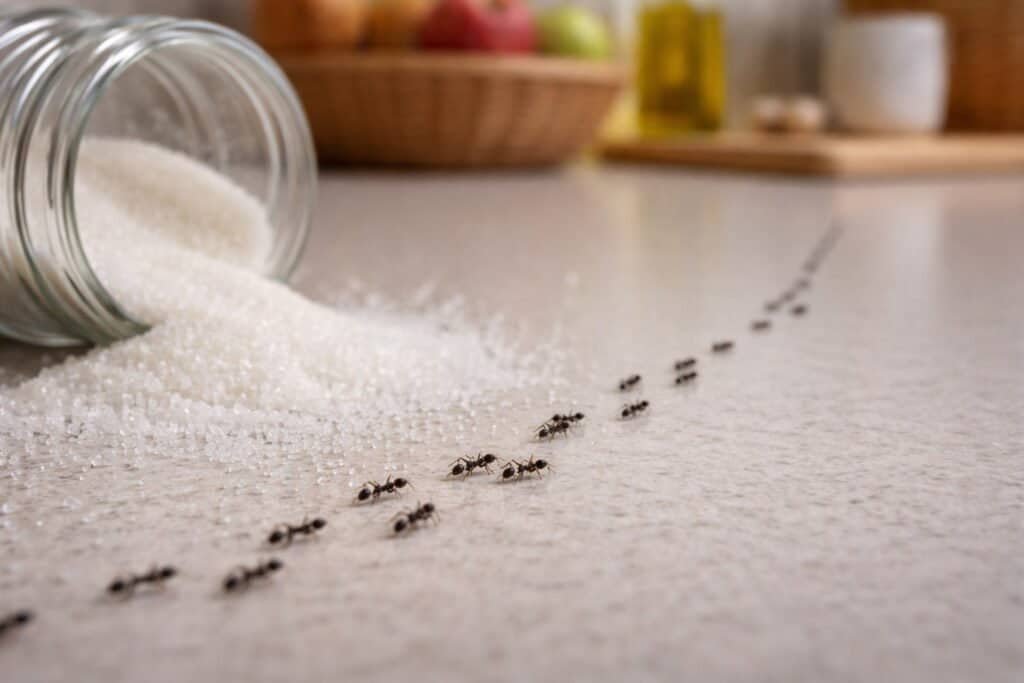
Ants don’t show up randomly. If you’re seeing them repeatedly, something in your home is attracting them.
Food Sources They Can’t Resist
Even tiny amounts are enough:
- Sugar spills, syrup, or honey residue
- Crumbs under appliances
- Pet food left out
- Trash bins without tight lids
Important: Ants leave scent trails, so once they find food, they keep coming back—and bring more.
Moisture Problems Most People Miss
Water is just as attractive as food:
- Leaky pipes under sinks
- Damp sponges or dishcloths
- Bathroom condensation
- Hidden wall moisture
Small homes amplify this issue because moisture builds up faster in tight spaces.
Easy Entry Points You Might Overlook
Ants don’t need much space:
- Hairline cracks in walls or floors
- Gaps around windows and doors
- Utility line openings
- Foundation seams
Reality check: If air can pass through, ants can too.
Seasonal Surges (Why It Feels Sudden)
- Spring: Colonies expand and search for food
- Summer: Peak activity indoors
- Rainy periods: Ants move inside to escape flooding
This explains why very small black ants in house problems often seem to appear overnight.
Outdoor Colonies Moving Indoors
Many infestations start outside:
- Nests near your foundation
- Ants traveling from yard to kitchen
- Landscaping that touches your home
Warning Signs You Have an Active Ant Infestation
Seeing a few ants might not seem like a big deal—until it turns into a steady stream. Very small black ants in house environments rarely travel alone, so early signs matter.
Clear Indicators You’re Dealing With More Than a Few Ants
- Visible trails along walls, countertops, or floors
- Sudden spikes in activity, especially in the kitchen
- Ants reappearing within hours after cleaning
- Clusters around sinks, trash bins, or pet food
Hidden Clues Most People Miss
- Fine dirt or debris piles near baseboards (possible nesting)
- Faint lines or “paths” where ants consistently travel
- Activity behind appliances (fridge, dishwasher, stove)
Day vs Night Behavior
- Some species are more active at night, especially in quiet homes
- Turning on the lights late at night may reveal much larger numbers than during the day
Multiple Colonies: A Bigger Problem
- Ants appearing in different rooms at once
- Trails moving in different directions
- Different sizes of ants spotted
Important insight:
Multiple colonies mean standard surface cleaning won’t solve the issue—you need a deeper approach.
Do This Immediately: First Steps to Stop Very Small Black Ants
When you first notice very small black ants in house areas, quick action can slow the invasion before it spreads.
Your Immediate Action Checklist
- Wipe all surfaces with vinegar + water (1:1 mix)
- Remove all visible food sources
- Take out trash and clean the bin area
- Store pantry items in airtight containers
- Dry sinks and damp areas before bedtime
Quick Fixes That Help Right Away
- Disrupt scent trails: Vinegar or lemon juice breaks the chemical path ants follow
- Block entry points: Use temporary sealants (tape, caulk, even petroleum jelly in a pinch)
- Limit access overnight: Most infestations grow worse while you sleep
What NOT to Do (Critical Mistakes)
- Avoid spraying random insect killers on trails
→ This kills visible ants but scatters the colony, making the problem worse - Don’t ignore a small number of ants
→ That’s usually just the scouting team - Don’t leave even tiny crumbs overnight
Step-by-Step: How to Get Rid of Very Small Black Ants in House Permanently
Short-term fixes help, but permanent removal requires eliminating the colony—not just the ants you see.
Step 1: Locate Entry Points
Follow the ant trail:
- Check along baseboards, windows, and door frames
- Look behind appliances and under sinks
- Inspect exterior walls where ants may enter
Tip: Ants almost always travel the same path—use that to your advantage.
Step 2: Identify Nesting Areas
Possible nesting spots include:
- Inside walls or insulation
- Under flooring
- Near moisture-heavy areas
- Outside near the foundation
If you can’t find the nest indoors, assume it’s outside and feeding inside.
Step 3: Use Ant Baits (Not Just Sprays)
This is where most people go wrong.
- Use slow-acting ant baits or gel bait stations
- Place them directly along ant trails
- Let ants carry the bait back to the colony
Why it works:
Baits target the queen and the entire colony—sprays do not.
Step 4: Eliminate the Colony at the Source
- Keep bait stations active for several days
- Avoid disturbing the ants while they’re feeding
- Replace bait if activity continues
Expect a temporary increase in ants—this is normal and means the bait is working.
Step 5: Monitor and Repeat
- Check activity daily
- Reapply bait if needed
- Seal entry points after activity drops
How Long Does It Take?
- Light infestations: 2–5 days
- Moderate infestations: 1–2 weeks
- Severe cases: 2+ weeks or professional help
Realistic expectation:
If you only kill what you see, ants will come back. If you eliminate the colony, they’re gone.
Best Solutions That Actually Work (Natural vs Chemical vs Professional)
Plenty of remedies claim to fix very small black ants in house problems—but only a few actually eliminate the colony. Choosing the right method depends on how severe your infestation is.
Natural Remedies (Best for Light Problems)
These are safe, affordable, and easy to try first:
- Vinegar spray (destroys scent trails)
- Lemon juice (repels ants naturally)
- Baking soda + sugar mix (DIY bait)
- Essential oils like peppermint or tea tree
Pros:
- Non-toxic, family- and pet-friendly
- Low cost
Cons:
- Temporary results
- Rarely kills the entire colony
Store-Bought Ant Baits & Gels (Most Effective DIY Option)
- Gel baits placed along trails
- Pre-filled bait stations
- Liquid sugar-based ant traps
Pros:
- Targets the colony (including the queen)
- Works within days if used correctly
Cons:
- Requires patience (not instant)
- Needs proper placement for best results
Professional Pest Control (Best for Recurring or Severe Infestations)
- Full inspection of home and exterior
- Targeted treatment of nests
- Long-term prevention strategies
Pros:
- Fast, thorough results
- Ideal for hidden or multiple colonies
Cons:
- Higher upfront cost
- Requires scheduling and follow-ups
Quick Comparison: Which Option Should You Choose?
| Solution Type | Effectiveness | Speed | Cost | Best For |
| Natural Remedies | Low–Medium | Fast | Very Low | Minor or early infestations |
| Ant Baits & Gels | High | Medium | Low–Medium | Most household infestations |
| Professional Help | Very High | Fast | High | Severe or recurring problems |
Bottom line:
Ant baits are the sweet spot for most homeowners—effective, affordable, and proven to eliminate colonies when used properly.
Common Mistakes That Make Ant Problems Worse
Many infestations drag on for weeks because of simple, avoidable mistakes. Fix these, and you’ll speed up results dramatically.
Killing Only the Ants You See
- Sprays and wipes remove visible ants
- The colony remains untouched
Result: Ants return within hours or days.
Using Repellent Sprays the Wrong Way
- Strong sprays scatter ants instead of eliminating them
- Colonies split and relocate deeper into walls
Result: The problem spreads, often to multiple rooms.
Leaving Hidden Food Sources
- Crumbs under appliances
- Sticky cabinet shelves
- Pet food bowls left out overnight
Reality: Ants don’t need much—tiny residues are enough.
Ignoring Moisture Issues
- Small leaks or damp areas attract ants continuously
- Bathrooms and kitchens become long-term hotspots
Breaking Trails Too Early
- Cleaning trails before placing bait removes the path ants use to carry poison back
Better approach:
Let ants feed on bait first—then clean afterward.
Sealing Entry Points Too Soon
- Blocking access before eliminating the colony traps ants inside
Correct order:
Eliminate → monitor → seal
How to Prevent Very Small Black Ants in House (Long-Term Protection Checklist)
Once you’ve eliminated the infestation, prevention becomes your best defense—especially in small homes where problems escalate quickly.
Daily Habits That Make a Big Difference
- Wipe down kitchen counters after every meal
- Sweep or vacuum high-traffic areas
- Rinse dishes instead of leaving them overnight
- Store food in airtight containers
Weekly Prevention Routine
- Deep clean under appliances
- Empty and sanitize trash bins
- Check pantry shelves for spills
- Inspect pet feeding areas
Home Maintenance That Stops Ants at the Source
- Seal cracks in walls, floors, and foundations
- Install weather stripping around doors and windows
- Fix leaks under sinks and behind appliances
- Use caulk around pipes and utility openings
Outdoor Prevention Strategies
- Keep plants and branches away from your home
- Remove standing water near the foundation
- Avoid storing firewood directly against walls
- Check for ant nests near entry points
Quick Prevention Checklist
- ✔ No exposed food
- ✔ No standing moisture
- ✔ No open entry points
- ✔ Regular cleaning routine
Pro tip:
Consistency beats intensity. Small daily habits prevent big infestations.
Related Issues in Small Homes & Tiny Houses (Why Ants Are More Common Than You Think)
Small spaces come with big advantages—but pest control isn’t always one of them. Very small black ants in house settings tend to spread faster in compact homes, especially in tiny houses and studio layouts.
Why Small Spaces Attract Ants Faster
- Limited storage → More exposed food and pantry items
- Tighter layouts → Ants reach multiple areas quickly
- Shared surfaces → Kitchen, dining, and living areas overlap
- Hidden crumbs → Hard-to-reach spots under compact furniture
Even a minor spill can affect the entire space within hours.
Where Problems Start in Tiny Homes
- Multifunctional countertops
- Under mini-fridges or compact appliances
- Sink areas with limited ventilation
- Storage corners with dry goods
A small oversight in one zone often becomes a whole-home issue.
Smart Fix: Optimize Your Setup
If you’re dealing with recurring ants, upgrading your setup makes a huge difference.
Before you go deeper into prevention, it helps to improve how you store food and organize your space.
Consider tightening your kitchen system with better storage—this naturally reduces ant access points.
How Ant Infestations Affect Tiny Homes, Seniors, and Small Living Spaces
Ant infestations aren’t just annoying—they can disrupt daily life, especially in smaller or more sensitive living environments.
In Tiny Homes and Small Apartments
- Infestations spread faster due to limited space
- One infestation often affects the entire home
- Fewer barriers between food and living areas
For Seniors or Limited Mobility Households
- Frequent cleaning may be more difficult
- Hard-to-reach areas (under appliances, behind cabinets) become hotspots
- Increased need for low-toxic, safe solutions
Health & Hygiene Concerns
- Ants contaminate food surfaces
- They can carry bacteria from outside
- Open food exposure increases risk
Key insight:
In smaller living environments, prevention isn’t optional—it’s essential.
When to Call a Professional (And What It Costs)
DIY methods work in many cases, but sometimes the problem goes deeper than it looks.
Signs You Need Professional Help
- Ants keep returning after 1–2 weeks of treatment
- Multiple trails appear in different rooms
- You suspect nests inside walls or flooring
- Infestation worsens despite using bait
What Professionals Do Differently
- Identify exact species and behavior patterns
- Locate hidden nests (indoors and outdoors)
- Use targeted treatments that reach the colony
- Apply long-term prevention barriers
Typical Cost in the U.S.
- One-time treatment: $150 – $400
- Ongoing service plans: $40 – $70/month
Prices vary depending on home size and infestation severity.
Bottom line:
If the infestation keeps coming back, you’re likely missing the source—and that’s where professionals step in.
FAQ: Very Small Black Ants in House
Why do I suddenly have very small black ants in my house?
Ants typically appear when they find food, water, or shelter. Seasonal changes or nearby nests can trigger sudden indoor activity.
Are very small black ants dangerous?
Most species are not harmful, but they can contaminate food and surfaces, which makes them a hygiene concern.
What smell do ants hate the most?
Ants dislike strong scents like vinegar, lemon, peppermint oil, and tea tree oil because they disrupt their scent trails.
How long does it take to get rid of ants completely?
With proper baiting, most infestations clear within a few days to two weeks, depending on colony size.
Do ants go away on their own?
No. If a food or water source exists, ants will continue returning and may expand their colony.
What is the fastest way to kill small black ants?
Sprays kill ants instantly, but bait is the fastest way to eliminate the entire colony effectively.
Why are ants mostly in my kitchen or bathroom?
These areas provide the two things ants need most: food and moisture.
Expert Tips to Keep Your Home Ant-Free Year-Round
Want to stay ahead of the problem? These expert-backed strategies go beyond basic cleaning.
Think Like an Ant
- Ants follow scent trails and routine paths
- Disrupt the pattern, and you disrupt the colony
Upgrade Storage (Especially in Small Homes)
- Use airtight containers for all dry goods
- Avoid open packaging in cabinets
- Keep countertops as clear as possible
Use Bait Strategically
- Place bait near trails, not random locations
- Avoid mixing bait with strong cleaners nearby
- Let ants feed uninterrupted
Seasonal Prevention Plan
- Spring: Inspect and seal entry points
- Summer: Monitor food and moisture closely
- Fall: Check for indoor nesting
- Winter: Maintain cleanliness (ants can still survive indoors)
Monitor Before It Becomes a Problem
- Watch for single ants (early warning sign)
- Check hidden areas weekly
- Act immediately before trails form
For additional prevention guidance, you can refer to expert recommendations from the Environmental Protection Agency on safe pest control practices and minimizing indoor contaminants.
Take Control Before Ants Take Over
Very small black ants in house spaces don’t go away by chance—they go away when you remove what’s attracting them and eliminate the colony at its source.
Start with quick cleanup, move to targeted baiting, and lock in prevention habits that fit your space—especially if you live in a small home or tiny house.
The sooner you act, the easier this problem is to solve.
