
Retirement often comes with a desire for simplicity, lower costs, and a home that truly fits your lifestyle. That’s exactly why tiny homes have become so appealing for people over 60. Yet one major hurdle stands in the way—tiny home zoning laws and legal guidelines for seniors.
Rules around where you can park, build, or live in a tiny home aren’t always straightforward. Some areas welcome them, while others restrict them heavily. Understanding these regulations early can save you from costly mistakes, legal issues, or even being forced to relocate.
This guide breaks down everything seniors need to know—from zoning basics and classifications to placement rules and legal strategies—so you can move forward with clarity and confidence.
In This Article
Tiny Home Zoning Laws and Legal Guidelines for Seniors
Tiny home living offers clear advantages for seniors:
- Lower living expenses
- Easier maintenance
- Opportunity to downsize and declutter
- Flexibility in location and lifestyle
Still, zoning laws determine whether your tiny home dream is even possible.
Local governments regulate land use to control:
- Property types
- Building sizes
- Occupancy rules
- Utility access
Seniors, especially those on fixed incomes, face higher risks when these rules aren’t understood. A poor decision could lead to:
- Fines
- Eviction notices
- Inability to connect utilities
- Difficulty selling or insuring the home
Legal clarity isn’t optional—it’s the foundation of a successful tiny home lifestyle.
Understanding Tiny Home Zoning Laws and Legal Guidelines for Seniors
Zoning laws define how land can be used within a specific area. They separate residential, commercial, agricultural, and mixed-use zones.
When it comes to tiny home zoning laws and legal guidelines for seniors, the complexity comes from one issue:
Tiny homes don’t always fit neatly into existing housing categories.
What Zoning Laws Typically Regulate
| Regulation Type | What It Controls |
| Land Use | Where homes can be placed |
| Density | Number of homes per lot |
| Minimum Size | Required square footage |
| Building Type | Permanent vs movable structures |
| Utilities | Water, sewage, electricity connections |
Why Tiny Homes Fall Into a Legal Gray Area
Traditional housing laws were built around standard homes—not compact living spaces. Because of this:
- Tiny homes may be too small to meet minimum size requirements
- Homes on wheels may be treated as RVs, not permanent residences
- Local codes may not mention tiny homes at all
That uncertainty creates confusion, especially for seniors planning long-term living arrangements.
Key Authorities You Need to Know
Understanding who controls what helps simplify the process:
- City or municipal government → zoning approvals
- County offices → land use and permits in rural areas
- State agencies → building codes and broader regulations
Speaking directly with local zoning offices is one of the smartest first steps.
How Tiny Homes Are Classified Under Zoning Laws
Classification is one of the most important factors in tiny home zoning laws and legal guidelines for seniors. It determines whether your home is legal—and where you can place it.
Main Types of Tiny Home Classifications
Tiny Homes on Wheels (THOWs)
- Built on trailers
- Often classified as Recreational Vehicles (RVs)
- Usually restricted to RV parks or temporary stays
Foundation-Based Tiny Homes
- Built on permanent foundations
- More likely to meet residential building codes
- Easier to legalize for full-time living
Accessory Dwelling Units (ADUs)
- Secondary homes on an existing property
- Common in urban and suburban areas
- Often the most senior-friendly legal option
Why Classification Matters
Each classification comes with different legal outcomes:
| Type | Legal Status for Full-Time Living | Common Restrictions |
| Tiny Home on Wheels | Limited | Zoning, parking duration |
| Foundation Tiny Home | More widely accepted | Building codes, size minimums |
| ADU | Highly accepted in many areas | Lot size, owner occupancy rules |
A senior choosing a THOW may enjoy flexibility but face legal uncertainty. Meanwhile, a foundation-based tiny home offers stability but requires stricter compliance.
Real-World Example
A retired couple in a suburban area attempted to live full-time in a tiny home on wheels parked in their backyard. Local zoning classified it as an RV, allowing only temporary occupancy (30–90 days).
They solved the issue by:
- Converting the structure into an ADU on a foundation
- Applying for proper permits
- Connecting to approved utilities
Result: Fully legal, long-term housing with no restrictions.
Minimum Size Requirements and Their Impact on Seniors
Minimum size rules are one of the biggest obstacles in tiny home zoning laws and legal guidelines for seniors. Many municipalities require homes to meet a specific square footage to qualify as a legal residence.
Typical Minimum Size Standards
Most areas enforce minimums like:
| Housing Type | Common Minimum Size Requirement |
| Single-family home | 800–1,200 sq ft |
| Small residential units | 400–800 sq ft |
| Tiny homes | 100–400 sq ft (often below legal limits) |
This mismatch means many tiny homes don’t meet legal thresholds, even if they are safe and functional.
Why These Rules Exist
Local governments set minimum sizes to:
- Maintain neighborhood property values
- Ensure livable conditions
- Standardize housing development
Still, these rules don’t always reflect modern needs—especially for seniors who prefer efficient, low-maintenance living.
How Seniors Can Navigate Size Restrictions
Several practical strategies can help:
- Choose ADU-friendly areas where smaller units are permitted
- Build slightly larger tiny homes (400+ sq ft) to meet codes
- Apply for a zoning variance to request an exception
- Look for areas with updated “tiny home-friendly” policies
Case Insight
A 68-year-old retiree downsizing in a suburban area faced a 600 sq ft minimum rule. Instead of abandoning the plan, they:
- Expanded the design to 420 sq ft
- Registered it as an ADU
- Met local requirements with minor adjustments
Outcome: Legal approval with minimal compromise on lifestyle.
What Seniors Should Remember
- Smaller isn’t always legally better
- Slight design changes can unlock full legality
- Flexibility in location often matters more than home size
Where Seniors Can Legally Place Tiny Homes
Placement rules are at the core of tiny home zoning laws and legal guidelines for seniors. Even a fully compliant tiny home can become illegal if placed in the wrong zone.
Common Zoning Areas and Their Rules
| Zone Type | Tiny Home Compatibility |
| Residential | Allowed with restrictions (ADUs) |
| Agricultural | More flexible in many regions |
| Urban | Strict regulations |
| Rural | Greater freedom, fewer restrictions |
Legal Placement Options for Seniors
Backyard (ADU Placement)
One of the most popular options:
- Allows seniors to live near family
- Often permitted under ADU laws
- Requires utility connections and permits
Tiny Home Communities
Purpose-built communities designed for:
- Tiny homes on foundations or wheels
- Shared amenities
- Simplified legal compliance
RV Parks
Suitable for tiny homes on wheels:
- Legal for temporary or seasonal living
- Limited long-term residency in many areas
Urban vs Rural Placement
- Urban areas → stricter zoning, higher barriers
- Rural areas → fewer restrictions, more flexibility
Seniors seeking fewer complications often choose rural or semi-rural locations where zoning is more accommodating.
Important Placement Considerations
Before choosing a location, check:
- Local zoning maps
- HOA (Homeowners Association) rules
- Utility access availability
- Road access and emergency services
Tiny Home Zoning Laws and Legal Guidelines for Seniors Living Full-Time
Living full-time in a tiny home involves more than just ownership—it requires compliance with occupancy laws. These rules are a critical part of tiny home zoning laws and legal guidelines for seniors.
Full-Time Living vs Temporary Residency
| Living Type | Legal Status |
| Full-time living | Allowed in specific zones only |
| Seasonal living | More widely accepted |
| RV/THOW living | Often restricted or time-limited |
Common Restrictions Seniors Face
- Limits on how long you can live in a tiny home on wheels
- Requirements for permanent foundations
- Restrictions on backyard living without ADU permits
- Utility connection requirements for full-time occupancy
Why Full-Time Living Is Regulated
Authorities enforce these rules to:
- Ensure safety standards
- Maintain consistent housing classifications
- Prevent informal or unregulated housing setups
Risks of Ignoring the Rules
Non-compliance can lead to:
- Legal notices or fines
- Forced relocation
- Disconnection of utilities
- Difficulty obtaining insurance
For seniors, these risks can be especially disruptive and costly.
Legal Pathways to Full-Time Tiny Living
Seniors can legally live full-time in tiny homes by:
- Building a foundation-based tiny home
- Registering as an ADU
- Moving into a tiny home-friendly community
- Choosing areas with progressive zoning laws
Building Codes and Safety Regulations for Senior-Friendly Tiny Homes
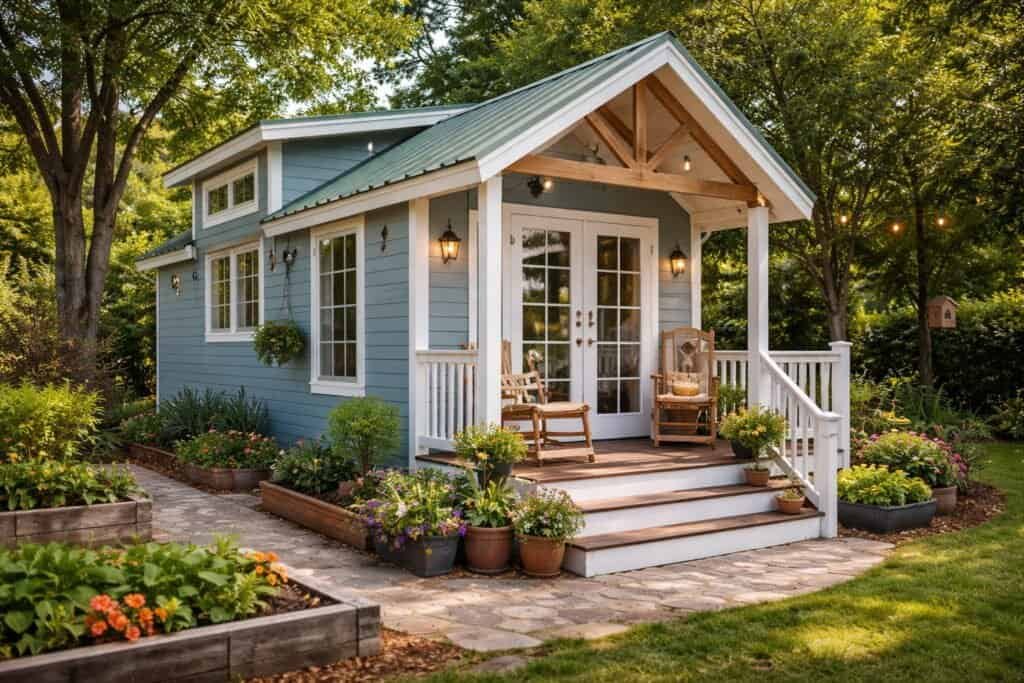
Meeting building codes is essential in tiny home zoning laws and legal guidelines for seniors. Even if zoning allows your home, failure to comply with safety standards can make it unlivable—or illegal.
What Building Codes Cover
Building codes are designed to ensure safety, durability, and livability. For tiny homes, they typically regulate:
- Structural integrity (walls, roof, foundation)
- Ceiling height and ventilation
- Electrical systems and wiring
- Plumbing and sanitation
- Fire safety measures
Special Considerations for Seniors
A tiny home that meets basic codes may still not be ideal for aging residents. Smart design choices can significantly improve safety and comfort.
Essential senior-friendly upgrades:
- No-step entryways for easier access
- Wider doorways (at least 32–36 inches)
- Walk-in showers with grab bars
- Non-slip flooring materials
- Lever-style door handles and faucets
- Lower countertop heights
Code Compliance vs Practical Living
| Feature | Code Requirement | Senior-Friendly Upgrade |
| Stairs/Lofts | Allowed in many tiny homes | Replace with single-level design |
| Bathroom | Basic plumbing required | Add grab bars and walk-in shower |
| Lighting | Minimum illumination | Bright, layered lighting setup |
| Entrances | Standard access | Ramps or zero-step entry |
Inspection and Certification Process
Before occupancy, most jurisdictions require:
- Building inspections at different stages
- Final approval certificate (Certificate of Occupancy)
- Compliance with local and state building codes
Skipping inspections can result in:
- Fines
- Denial of legal occupancy
- Problems with insurance or resale
Case Study
A 72-year-old homeowner built a compact 350 sq ft tiny home. Initially designed with a loft bedroom, it passed structural codes but failed accessibility needs.
After redesign:
- Loft replaced with ground-level sleeping area
- Bathroom upgraded for mobility support
Outcome: Safer living space that meets both legal and practical needs.
Permits, Approvals, and Legal Paperwork
Permits are a non-negotiable part of tiny home zoning laws and legal guidelines for seniors. Without proper approvals, even a perfectly built tiny home can be deemed illegal.
Common Permits Required
Depending on location and home type, seniors may need:
- Zoning permit (confirms land use compliance)
- Building permit (required for construction)
- Electrical and plumbing permits
- ADU permit (if building in a backyard)
Step-by-Step Approval Process
Understanding the process helps avoid delays:
- Verify zoning regulations for your property
- Submit design plans and specifications
- Apply for required permits
- Schedule inspections during construction
- Receive final approval and occupancy certificate
Typical Timeline and Costs
| Stage | Timeframe | Estimated Cost Range |
| Zoning verification | 1–2 weeks | Low or free |
| Permit approval | 2–8 weeks | $500 – $3,000+ |
| Inspections | Ongoing | Included or additional fees |
| Final certification | 1–2 weeks | Varies |
Costs vary widely depending on location and complexity.
Variances and Special Permissions
When your plan doesn’t meet zoning rules, a variance may allow exceptions.
Examples:
- Building below minimum size requirements
- Placing a tiny home in a restricted zone
Approval isn’t guaranteed, but strong justification (such as senior housing needs) can improve your chances.
Common Mistakes to Avoid
- Starting construction before approval
- Assuming rural land has no restrictions
- Ignoring permit requirements for utilities
- Failing to keep documentation
Proper paperwork protects your investment and ensures long-term security.
Utility, Sanitation, and Infrastructure Regulations
Utilities are often overlooked, yet they play a major role in tiny home zoning laws and legal guidelines for seniors. A home without approved utility connections may not qualify as a legal residence.
Core Utility Requirements
Most jurisdictions require:
- Potable water supply
- Approved sewage or septic system
- Electrical connection to grid or certified alternative
- Waste disposal compliance
Off-Grid Living: Legal or Not?
Off-grid setups are popular, but legality depends on local laws.
| Utility Type | Off-Grid Option | Legal Considerations |
| Water | Rainwater collection | May require permits |
| Electricity | Solar panels | Often allowed with proper setup |
| Sewage | Composting toilets | Restricted in many areas |
| Waste | Greywater systems | Must meet environmental codes |
Some areas fully support off-grid living, while others require grid connections for permanent residency.
Sanitation and Health Regulations
Authorities enforce strict sanitation standards to protect public health:
- Approved septic systems or sewer hookups
- Proper waste disposal methods
- Clean water access
Failure to comply can result in:
- Denial of occupancy
- Health violations
- Legal penalties
Infrastructure Challenges for Seniors
Utility access can be more difficult in:
- Remote rural areas
- Undeveloped land
- Non-designated tiny home zones
Seniors should prioritize locations with:
- Existing utility connections
- Easy maintenance access
- Reliable service providers
State-by-State Variations in Tiny Home Zoning Laws
No two locations treat tiny homes the same. That’s why understanding regional differences is essential when navigating tiny home zoning laws and legal guidelines for seniors.
Why Laws Vary So Much
Zoning is primarily controlled at the local level, meaning:
- Cities and counties set their own rules
- State guidelines may exist but aren’t always enforced uniformly
- Neighboring towns can have completely different regulations
Tiny-Home-Friendly vs Restrictive Areas
| Category | Characteristics |
| Tiny-Home-Friendly | Allows ADUs, flexible size limits, supportive codes |
| Moderately Restrictive | Permits with conditions and approvals |
| Highly Restrictive | Strict minimum sizes, bans on THOWs |
Examples of Friendly Policies
Some regions have adapted to modern housing needs by:
- Legalizing ADUs statewide
- Reducing minimum square footage requirements
- Allowing tiny homes in designated communities
These areas are often ideal for seniors seeking long-term legal stability.
Why Local Research Matters
Even within a “tiny-home-friendly” state:
- One city may allow backyard ADUs
- Another may prohibit them entirely
Checking city or county ordinances is more important than relying on state-level assumptions.
Common Legal Challenges Seniors Face with Tiny Homes
Despite growing popularity, many seniors encounter roadblocks when dealing with tiny home zoning laws and legal guidelines for seniors.
Most Frequent Challenges
- Zoning restrictions blocking placement
- Confusion over classification (RV vs home)
- HOA rules prohibiting non-traditional housing
- Difficulty obtaining insurance coverage
- Financing limitations for non-standard homes
Hidden Challenges
Some issues aren’t obvious at first:
- Utility hookup restrictions
- Parking limitations for THOWs
- Local opposition to tiny home developments
Legal Strategies for Seniors to Live in Tiny Homes
Seniors can successfully navigate tiny home zoning laws and legal guidelines with the right approach. Smart planning turns obstacles into manageable steps.
Proven Strategies
- Choose ADU-friendly cities
- Opt for foundation-based tiny homes
- Work directly with zoning officials
- Hire professionals familiar with local regulations
- Join established tiny home communities
Comparing Legal Pathways
| Strategy | Difficulty Level | Long-Term Stability |
| ADU in backyard | Medium | High |
| Tiny home on wheels (RV) | Low | Low |
| Foundation tiny home | High | High |
| Tiny home community | Medium | Medium–High |
Practical Advice
- Prioritize legality over convenience
- Plan for long-term living, not short-term workarounds
- Document every approval and permit
Tiny Home Zoning Laws and Legal Guidelines for Seniors Planning Retirement
Long-term planning is where tiny home zoning laws and legal guidelines for seniors become most important. Retirement housing must be stable, predictable, and legally secure.
Key Factors for Retirement Planning
- Permanent legality (avoid temporary loopholes)
- Access to healthcare and services
- Ease of maintenance and accessibility
- Property ownership clarity
Legal Considerations for Aging in Place
- Ensure the home meets accessibility standards
- Confirm zoning allows long-term occupancy
- Verify utility reliability and service continuity
Estate Planning and Ownership
Tiny homes can complicate inheritance if not structured properly:
- Land ownership vs home ownership must be clear
- ADUs may have restrictions on transfer or resale
- RV-classified homes may not qualify as real estate
Choosing the Right Location
The best areas for seniors typically offer:
- Flexible zoning laws
- Established tiny home policies
- Access to essential services
- Stable legal frameworks
FAQs About Tiny Home Zoning Laws and Legal Guidelines for Seniors
Are tiny homes legal for seniors to live in full-time?
It depends on zoning laws, classification, and local regulations. Foundation-based homes and ADUs are usually the most reliable options.
Can seniors put a tiny home in their backyard?
Yes, in many areas under ADU regulations, but permits and utility connections are typically required.
Do tiny homes require permits?
Almost always. Building, zoning, and utility permits are commonly required before legal occupancy.
What is the safest legal option for seniors?
Foundation-based tiny homes or legally approved ADUs offer the highest level of stability and compliance.
Are tiny homes on wheels allowed for permanent living?
In most areas, they are restricted to temporary or seasonal use unless located in designated communities.
Navigating tiny home zoning laws and legal guidelines for seniors may seem complex, but the right knowledge makes all the difference. Taking time to research, verify, and plan ensures your tiny home lifestyle is not only affordable—but also secure and sustainable.
If you’re considering downsizing into a tiny home, start by checking your local zoning office or explore trusted resources like the American Planning Association (https://www.planning.org/) to understand regulations in your area.
Ready to take the next step? Explore your local zoning rules today and turn your tiny home vision into a legally sound reality.
