
Safety becomes the top priority the moment someone over 60 considers downsizing. Tiny homes can be comfortable, affordable, and easier to maintain, yet without the right safety features in tiny homes for seniors, small spaces can quickly become risky instead of practical.
This guide explains exactly what seniors need to stay safe in a compact home. You’ll discover the most important fall-prevention upgrades, the safest layout ideas, and the smart design features that make a tiny home safer than a traditional house. Everything here focuses only on essential safety features in tiny homes for seniors, so you can build or improve a home with confidence.
In This Article
Essential Safety Features in Tiny Homes for Seniors
Tiny homes work differently than traditional houses. Less space means every inch matters. The right design makes life easier, while poor design can create daily hazards.
Older adults face three major risks in small homes:
- Reduced balance and mobility
- Limited reaction time in emergencies
- Higher risk of falls in tight spaces
According to safety experts, falls are the leading cause of injury among adults over 65, which means safety planning is not optional—it is essential.
What makes safety in tiny homes different?
A traditional home spreads risk across larger rooms. Tiny homes concentrate movement into small walkways, compact bathrooms, and narrow entryways. That is why essential safety features in tiny homes for seniors must be built into the design itself, not added later.
Below is a simple comparison to understand the difference.
| Safety Factor | Traditional Home | Tiny Home for Seniors |
| Walking space | Wide hallways | Compact paths that need smart layout |
| Bathroom safety | Easier to modify | Needs pre-planned accessibility |
| Lighting needs | Standard lighting works | Requires layered lighting to prevent shadows |
| Emergency exits | Multiple rooms | Must be clearly designed from the start |
The goal is not just safety, but independent living without daily risks.
Safety Challenges in Tiny Homes for Seniors
Many seniors love the idea of a smaller home because it reduces maintenance and costs. Safety issues only appear when design is not planned carefully.
The most common safety risks in tiny homes
- Tight walking areas that increase fall risk
- Steep ladders used for loft bedrooms
- Storage placed too high or too low
- Bathrooms that are too compact for safe movement
- Poor lighting that creates shadows at night
Each of these problems can be solved, but only if the design focuses on safety first.
Why small spaces increase risk
Small homes force frequent movement in limited areas. That means:
- Turning around in tight spaces becomes harder
- Furniture placement becomes critical
- Every step matters more
A simple example shows the difference.
| Movement Activity | Risk in Large Home | Risk in Tiny Home |
| Getting out of bed | Low | Medium if space is tight |
| Walking to bathroom at night | Medium | High without motion lighting |
| Reaching storage shelves | Low | High if storage is too high |
Safety planning should always start with daily routine, not just design aesthetics.
Fall Prevention: The Most Critical Safety Feature in Tiny Homes for Seniors
Fall prevention is the single most important safety improvement in any senior-friendly tiny home. One fall can completely change independence, which is why experts recommend focusing on prevention first.
Essential fall-prevention safety features
The following upgrades provide the biggest safety improvement with the least cost:
- Non-slip flooring throughout the entire home
- Smooth transitions between rooms (no floor height changes)
- Wide walking paths without furniture obstacles
- Secure hand support in key areas
- Stable seating near entryways
Best flooring choices for senior safety
Not every flooring material is safe in a tiny home. Some look beautiful but become dangerous with age.
| Flooring Type | Safety Level | Why It Works (or Doesn’t) |
| Vinyl plank flooring | Very safe | Non-slip and soft underfoot |
| Cork flooring | Safe | Gentle on joints and reduces impact |
| Tile flooring | Risky | Slippery when wet |
| Polished wood | Medium risk | Can become slippery with age |
| Rubber flooring | Extremely safe | Excellent grip and shock absorption |
Choosing the right flooring alone can reduce fall risk dramatically.
Real example: Small design change, big safety improvement
A 67-year-old homeowner who downsized replaced tile flooring with textured vinyl and removed two small floor level changes between rooms. That simple upgrade:
- Made walking easier
- Reduced nighttime fall risk
- Removed the need for walking support indoors
Sometimes the safest upgrade is also the simplest one.
Bathroom Safety Features in Tiny Homes for Seniors
Bathrooms are where most household injuries happen—especially in compact spaces. A poorly designed tiny home bathroom can feel cramped and dangerous, while a well-designed one becomes one of the most important essential safety features in tiny homes for seniors.
Key bathroom safety upgrades that matter
Focus on features that reduce slipping, improve stability, and allow easy movement:
- Walk-in showers instead of tubs
- Wall-mounted grab bars near the toilet and shower
- Non-slip flooring and textured tiles
- Handheld showerheads for seated use
- Raised or comfort-height toilets
Walk-in shower vs traditional bathroom setup
Tiny homes benefit greatly from eliminating barriers. A walk-in shower creates a safer, more open environment.
| Feature | Walk-In Shower | Traditional Tub |
| Entry safety | No step required | High step increases fall risk |
| Space usage | Efficient and open | Bulky and restrictive |
| Accessibility | Ideal for seniors | Difficult for limited mobility |
| Maintenance | Easy to clean | Harder to maintain |
A curbless shower design removes one of the most common trip hazards.
Smart placement of safety elements
Positioning matters just as much as the features themselves:
- Install grab bars at natural hand height, not too high or low
- Keep frequently used items within arm’s reach
- Avoid placing storage above shoulder height
- Ensure enough turning space (at least 30–36 inches clearance if possible)
Temperature and burn prevention
Hot water burns happen quickly, especially for aging skin. Simple upgrades can eliminate this risk:
- Anti-scald valves to regulate water temperature
- Clearly marked faucet controls
- Consistent water pressure systems
A safe bathroom is not about adding more features—it’s about placing the right features in the right place.
Kitchen Safety Design for Senior-Friendly Tiny Living
Kitchens in tiny homes often prioritize style over function. That approach can lead to daily strain and potential hazards. A safer kitchen design supports comfort, accessibility, and ease of use.
Essential kitchen safety features in tiny homes for seniors
- Lower countertop heights for reduced strain
- Pull-out shelves instead of deep cabinets
- Soft-close drawers to prevent hand injuries
- Easy-to-reach storage (between waist and shoulder height)
- Slip-resistant flooring near sink and cooking areas
Safe appliance placement
Appliance positioning plays a big role in reducing risk:
- Install microwaves at counter height instead of overhead
- Choose front-control stoves to avoid reaching over heat
- Place refrigerators within easy reach of prep areas
- Use induction cooktops to reduce burn risk
Comparing traditional vs senior-friendly kitchen setup
| Feature | Standard Kitchen | Senior-Friendly Tiny Kitchen |
| Cabinet access | Deep and high | Pull-out, easy access |
| Stove type | Gas or electric | Induction preferred |
| Counter height | Fixed (often high) | Adjustable or lower |
| Storage design | Space-maximizing | Safety-first design |
Fire safety in compact kitchens
Small spaces increase fire risk due to proximity of appliances.
Reduce risk with:
- Fire-resistant backsplash materials
- Automatic shut-off appliances
- Easy access to fire extinguishers
- Clear space around cooking areas
Lighting Improvements for Visibility and Safety
Lighting is often underestimated, yet it is one of the most powerful essential safety features in tiny homes for seniors. Poor lighting creates shadows, reduces depth perception, and increases the likelihood of falls.
Why lighting matters more in tiny homes
Compact spaces create more shadow zones due to:
- Closely placed furniture
- Limited natural light sources
- Narrow walkways
Proper lighting ensures every corner is visible, especially at night.
The three layers of safe lighting
A well-lit tiny home uses a combination of lighting types:
- Ambient lighting – overall room brightness
- Task lighting – focused light for cooking, reading, grooming
- Accent lighting – eliminates dark corners and adds clarity
Must-have lighting upgrades for seniors
- Motion-sensor lights for hallways and bathrooms
- Under-cabinet lighting in kitchens
- Bedside lighting within arm’s reach
- Stair or step lighting (if any elevation exists)
- Outdoor entry lighting for visibility at night
Motion lighting: a simple but powerful upgrade
Nighttime trips to the bathroom are one of the highest-risk moments. Motion-sensor lighting:
- Turns on automatically
- Eliminates the need to search for switches
- Reduces disorientation in the dark
Lighting comparison: standard vs senior-safe
| Lighting Feature | Standard Setup | Senior-Safe Setup |
| Night lighting | None | Motion-activated |
| Kitchen lighting | Ceiling only | Layered + under-cabinet |
| Bathroom lighting | Basic overhead | Bright, shadow-free |
| Entry lighting | Optional | Always illuminated |
Reducing glare and improving comfort
Bright light alone is not enough. Poor lighting can strain the eyes.
Improve visibility by:
- Using warm, diffused LED lights
- Avoiding harsh overhead glare
- Positioning lights to reduce shadows on walking paths
Good lighting does not just help you see—it helps you move safely and confidently.
Mobility-Friendly Layouts in Tiny Homes for Seniors
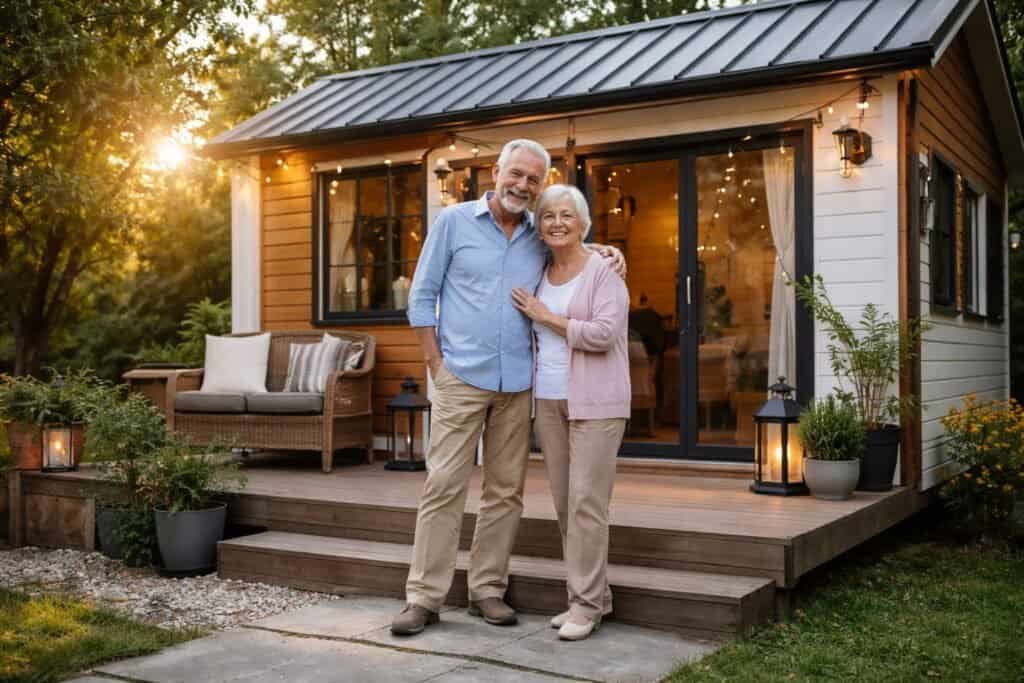
Layout determines how safely someone can move through a home every single day. Even the best features fail if the space itself feels restrictive. That’s why mobility-friendly layouts are a core part of essential safety features in tiny homes for seniors.
What makes a layout safe for seniors?
A safe layout removes friction from daily movement. Walking, turning, sitting, and reaching should feel natural—not forced.
Key layout principles include:
- Clear walking paths without obstacles
- Open floor plans that reduce tight turns
- Ground-level living without stairs or ladders
- Logical placement of frequently used areas (bedroom, bathroom, kitchen close together)
One-level living vs loft design
Lofts are popular in tiny homes, but they introduce serious safety risks.
| Feature | One-Level Layout | Loft-Based Layout |
| Accessibility | Excellent | Poor |
| Fall risk | Low | High (ladder/stairs) |
| Nighttime safety | Safe | Risky |
| Long-term usability | Future-proof | Limited |
Choosing a ground-floor sleeping area is one of the smartest safety decisions a senior can make.
Ideal spacing guidelines for safe movement
Even in small homes, spacing matters:
- Minimum 30–36 inches for walkways
- Enough room to turn without bumping into furniture
- Easy access between bed and bathroom
- No sharp corners in high-traffic areas
Smart space optimization without compromising safety
Saving space should never reduce safety. Instead of squeezing in more furniture:
- Use multi-functional furniture (e.g., storage benches)
- Install wall-mounted storage to free floor space
- Keep the center of the home open
Case insight: Layout vs safety
A compact home redesigned with a slightly wider walkway and repositioned furniture reduced daily movement strain. The owner reported feeling more confident walking without assistance, even in a smaller space.
Layout is not just design—it’s daily safety in motion.
Essential Safety Features in Tiny Homes for Seniors: Accessibility Upgrades
Accessibility turns a standard tiny home into a long-term living solution. Without it, even simple tasks can become difficult over time.
These upgrades are not only for those with mobility issues—they are preventive safety features that support aging in place.
Must-have accessibility features
- Wider doorways (at least 32 inches if possible)
- Lever-style door handles instead of knobs
- Step-free entryways or low-threshold doors
- Easy-to-reach light switches and controls
- Open space under sinks or counters for seated use
Wheelchair-friendly design considerations
Not all tiny homes are fully wheelchair accessible, but many can be adapted with smart planning:
- Turning radius of at least 5 feet (where space allows)
- Sliding doors instead of swing doors
- Lowered countertops and sinks
- Barrier-free bathroom entry
Accessibility vs standard design
| Feature | Standard Tiny Home | Accessible Tiny Home |
| Door handles | Round knobs | Lever handles |
| Entry access | Steps required | Step-free or ramp |
| Interior movement | Tight turns | Open pathways |
| Control access | Mixed heights | Within easy reach |
Small upgrades that make a big difference
Some of the most effective improvements are simple:
- Installing D-shaped handles on cabinets
- Lowering closet rods
- Using pull-down shelving systems
- Placing electrical outlets higher for easier access
Future-proofing the home
Designing for current needs is not enough. A safer approach considers future mobility changes:
- Leave room for assistive devices
- Avoid permanent narrow layouts
- Choose adaptable furniture and fixtures
Accessibility is not about limitation—it’s about maintaining independence longer.
Fire Safety and Emergency Preparedness
Fire safety becomes even more critical in compact homes where everything is closer together. A small fire can spread faster, which makes emergency planning a key part of essential safety features in tiny homes for seniors.
Essential fire safety features
- Smoke detectors in sleeping and living areas
- Carbon monoxide alarms near appliances
- Fire extinguishers within easy reach
- Clearly planned escape routes
Fire risks unique to tiny homes
- Appliances placed close together
- Limited escape paths
- Increased heat concentration in small spaces
- Use of propane or compact heating systems
Emergency preparedness checklist
- Install alarms with loud, clear signals
- Keep a fire extinguisher near the kitchen and entry
- Ensure doors and windows open easily
- Practice an exit plan regularly
Fire-resistant materials that improve safety
Building materials can slow down fire spread and provide extra time to react:
- Fire-rated wall panels
- Metal or treated wood surfaces
- Heat-resistant insulation
- Non-flammable roofing materials
Escape planning in a small home
Escape routes must be simple and quick:
- At least one clear exit door
- Windows that can be opened easily from inside
- No furniture blocking pathways
- Nighttime lighting to guide exits
Quick comparison: Prepared vs unprepared home
| Safety Element | Unprepared Tiny Home | Prepared Tiny Home |
| Smoke detection | Limited or absent | Fully installed |
| Escape routes | Cluttered | Clear and accessible |
| Fire response | Delayed | Immediate action possible |
| Risk level | High | Significantly reduced |
Real-life insight
Many tiny home owners underestimate how fast smoke spreads in a compact space. Installing alarms and planning exits early can make the difference between quick evacuation and serious danger.
Preparedness is not about expecting danger—it’s about being ready if it happens.
Climate Control and Air Quality Safety in Tiny Homes for Seniors
Air quality and temperature control are often overlooked, yet they directly affect comfort, breathing, and overall health. In small spaces, poor ventilation or unsafe heating systems can quickly become dangerous. That’s why climate management is a key part of essential safety features in tiny homes for seniors.
Why climate safety matters more in tiny homes
Compact spaces trap heat, moisture, and pollutants faster than larger homes. Even minor issues can escalate quickly:
- Heat builds up faster in summer
- Cold spreads quickly in winter
- Poor airflow increases respiratory risks
- Gas appliances can create carbon monoxide hazards
Safe heating and cooling options
Choosing the right system improves both safety and efficiency:
- Mini-split HVAC systems for consistent temperature control
- Electric heaters with auto shut-off features
- Ceiling or wall-mounted fans for airflow
- Insulated walls and windows to stabilize indoor temperature
Ventilation and air quality essentials
Clean air supports long-term health, especially for seniors.
Important upgrades include:
- Exhaust fans in kitchen and bathroom
- Cross-ventilation through windows
- Air purifiers with HEPA filters
- Dehumidifiers in humid environments
Carbon monoxide prevention
Gas-powered appliances can be dangerous without proper monitoring.
Safety steps:
- Install carbon monoxide detectors
- Regularly maintain heating systems
- Avoid using indoor gas heaters without ventilation
Climate safety comparison
| Feature | Poor Setup | Safe Setup |
| Air circulation | Stagnant | Continuous airflow |
| Heating system | Basic or unsafe | Controlled with auto shut-off |
| Ventilation | Minimal | Active exhaust + fresh air |
| Air quality | Polluted | Filtered and clean |
Clean air and stable temperature are not luxuries—they are essential for safe daily living.
Smart Home Technology for Senior Safety
Technology has made it easier than ever to improve safety without adding complexity. Smart features can support independence while providing peace of mind.
Essential smart safety features in tiny homes for seniors
- Medical alert systems for emergencies
- Smart smoke and carbon monoxide detectors
- Voice-controlled assistants for hands-free operation
- Smart locks for secure and easy entry
- Remote monitoring systems for caregivers
How smart tech improves safety
Instead of reacting to problems, smart systems help prevent them:
- Alerts notify users instantly during emergencies
- Voice commands reduce the need to move unnecessarily
- Remote access allows family members to check in
Simple vs advanced smart home setup
| Feature | Basic Setup | Smart Setup |
| Lighting | Manual switches | Voice or motion-controlled |
| Security | Traditional locks | Smart locks + alerts |
| Emergency response | Manual call | Automatic alert systems |
| Monitoring | None | Remote access for caregivers |
Best approach to using technology
Keep it simple and reliable:
- Choose easy-to-use devices
- Avoid overly complex systems
- Focus on features that solve real problems
Real-world benefit
Seniors using voice-controlled systems report fewer falls because they no longer need to move around unnecessarily for basic tasks like turning on lights.
Technology should simplify life, not complicate it.
Outdoor Safety Features Around Tiny Homes
Safety doesn’t stop at the front door. Outdoor areas can be just as risky, especially during bad weather or low visibility conditions.
Key outdoor safety features
- Non-slip entry steps or ramps
- Sturdy handrails on all entry points
- Well-lit pathways and entrances
- Even, stable walking surfaces
Weather-related safety considerations
Outdoor safety must adapt to environmental conditions:
- Rain: install anti-slip coatings and drainage
- Heat: provide shaded entry areas
- Wind: secure structures and outdoor fixtures
- Cold climates: use salt-resistant, slip-proof materials
Entryway safety checklist
- Clear, obstacle-free entrance
- Proper drainage to prevent water buildup
- Covered entry to reduce slipping during rain
- Easy-to-open doors with stable handles
Outdoor safety comparison
| Feature | Unsafe Setup | Safe Setup |
| Entry steps | Slippery, narrow | Wide, non-slip with rails |
| Lighting | Dim or absent | Bright, automatic lighting |
| Pathways | Uneven | Smooth and stable |
| Weather protection | None | Covered entry |
Safe outdoor access ensures confidence when entering or leaving the home at any time.
Common Safety Mistakes to Avoid in Tiny Homes for Seniors
Even well-designed homes can become unsafe if key details are ignored. Avoiding common mistakes is just as important as adding safety features.
Most frequent safety mistakes
- Choosing style over functionality
- Installing loft bedrooms with ladders
- Overcrowding with furniture
- Ignoring lighting in key areas
- Skipping future accessibility planning
Why these mistakes matter
Small design flaws have a bigger impact in tiny homes. A narrow walkway or poorly placed cabinet can affect daily movement and increase risk.
Quick correction guide
| Mistake | Safer Alternative |
| Loft sleeping area | Ground-level bedroom |
| High cabinets | Pull-down or mid-level storage |
| Poor lighting | Layered lighting system |
| Tight layout | Open, clear pathways |
Avoiding mistakes early saves money and prevents long-term safety issues.
Cost of Adding Essential Safety Features in Tiny Homes for Seniors
Safety upgrades don’t have to be expensive. Many of the most effective improvements are affordable and provide long-term value.
Typical cost breakdown
| Upgrade Type | Estimated Cost Range |
| Non-slip flooring | $2 – $7 per sq ft |
| Grab bars installation | $50 – $200 each |
| Motion sensor lighting | $20 – $100 per unit |
| Smart safety devices | $50 – $300 per device |
| Accessibility modifications | $500 – $5,000+ |
Budget-friendly safety upgrades
- Install motion lights in key areas
- Use anti-slip mats and flooring
- Reorganize layout for better movement
- Add basic grab bars and handrails
High-impact investments
- Walk-in shower installation
- Full lighting redesign
- Smart home safety integration
- Accessibility remodeling
Long-term value of safety
Investing in safety reduces:
- Medical expenses from injuries
- Need for assisted living
- Daily stress and limitations
Safety upgrades are not expenses—they are investments in independence.
FAQs About Essential Safety Features in Tiny Homes for Seniors
What are the most important essential safety features in tiny homes for seniors?
Fall prevention, bathroom safety upgrades, proper lighting, and accessible layouts are the most critical features.
Are tiny homes safe for seniors with mobility issues?
Yes, when designed with accessibility in mind, including wider pathways, step-free entry, and supportive features.
Can a tiny home be wheelchair accessible?
Yes, with proper planning such as wider doorways, open layouts, and accessible bathrooms, although space limitations must be considered.
How much does it cost to make a tiny home safe for seniors?
Costs can range from a few hundred dollars for basic upgrades to several thousand for full accessibility modifications.
Is a loft safe for seniors in a tiny home?
Lofts are generally not recommended due to the high risk of falls from ladders or steep stairs.
Creating a safe tiny home is not about adding more features—it’s about making smarter choices from the start. Every upgrade you make brings more confidence, independence, and comfort to daily life.
If you’re planning your own space, take the next step by exploring trusted safety recommendations from the Centers for Disease Control and Prevention to ensure your home meets proven safety standards.
Ready to build or upgrade your space? Start by applying just one or two of these essential safety features in tiny homes for seniors, and you’ll already be moving toward a safer, more independent lifestyle.
