
Finding where you can park a tiny house in Canada is one of the biggest challenges aspiring tiny homeowners face—and it’s often more complicated than building the home itself. Zoning rules, local bylaws, and land use restrictions vary widely across the country, making it essential to understand your options before you commit.
This guide breaks down exactly where you can park a tiny house in Canada, what’s legally possible, and how to avoid costly mistakes. Whether you’re planning a full-time tiny lifestyle or just exploring your options, you’ll walk away with practical, real-world insights you can actually use.
In This Article
Why Parking a Tiny House in Canada Isn’t as Simple as It Sounds
At first glance, it might seem like you can just park your tiny house anywhere—especially if it’s on wheels. The reality is very different.
Tiny Houses on Wheels vs. Foundations
The first thing that affects where you can park is how your tiny home is classified:
- Tiny houses on wheels (THOWs) are often treated like RVs
- Foundation-based tiny homes must meet local building codes
This distinction matters because most municipalities in Canada don’t officially recognize THOWs as permanent residences.
Zoning and Bylaws: The Real Gatekeepers
Every city or township has its own zoning rules that dictate:
- Minimum home sizes
- Land use (residential, agricultural, rural)
- Whether alternative dwellings are allowed
Many areas still have minimum square footage requirements, which automatically disqualify tiny homes on foundations.
For accurate zoning details, you can refer to official resources like the Canadian Mortgage and Housing Corporation (CMHC):
https://www.cmhc-schl.gc.ca/
The Legal Gray Area
One of the biggest frustrations in the tiny house movement is the gray area:
- Some places don’t explicitly allow tiny houses—but don’t ban them either
- Enforcement varies depending on neighbors, complaints, and local officials
Key takeaway: Just because you can park your tiny house somewhere doesn’t mean you can legally live in it full-time.
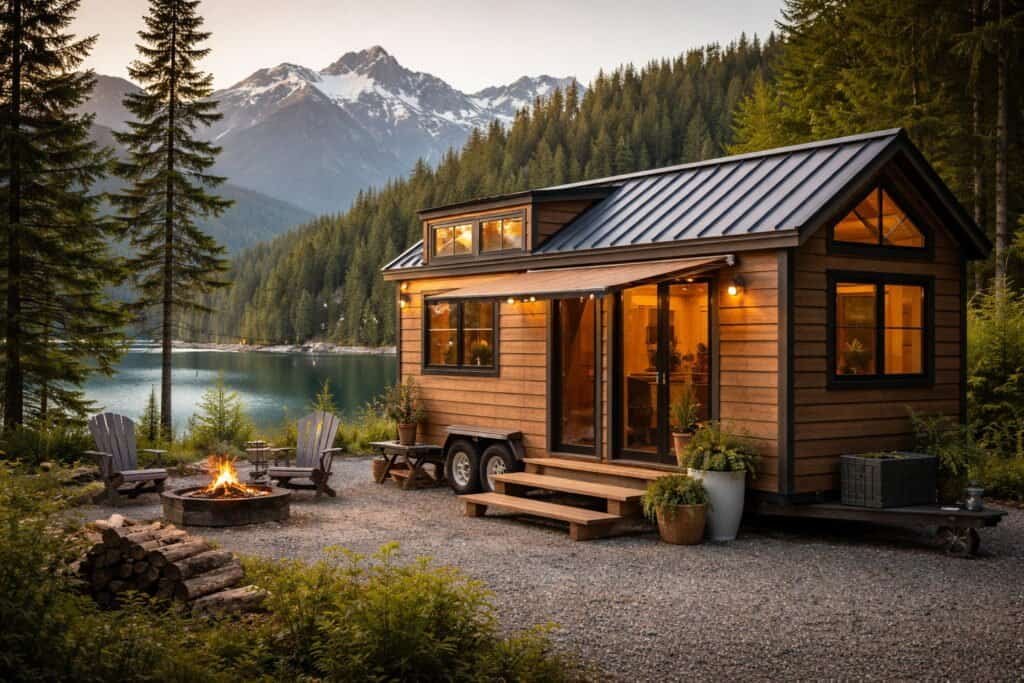
Where You Can Park a Tiny House in Canada (Quick Overview by Option)
There isn’t a one-size-fits-all answer. Instead, your options depend on your lifestyle, budget, and how flexible you are.
Here are the most common places people successfully park tiny houses in Canada:
Private Land (Owned or Rented)
- One of the most flexible options
- Works best in rural or agricultural zones
- Often requires septic, water, and power solutions
Tiny House Communities
- Designed specifically for tiny homes
- Usually the most legally secure option
- Comes with shared amenities and community rules
RV Parks and Campgrounds
- Ideal for tiny houses on wheels
- Typically allow short-term or seasonal stays
- Limited for permanent living
Backyard Secondary Dwellings (ADUs)
- Growing trend in urban areas
- Requires permits and must follow strict regulations
- Works well for family setups
Off-Grid Rural Land
- Offers freedom and privacy
- Fewer restrictions—but still not rule-free
- Requires full self-sufficiency
Important: Each option comes with trade-offs between legality, cost, comfort, and long-term stability.
Parking a Tiny House on Private Land: What Actually Works
Parking your tiny house on private land sounds like the simplest solution—but it’s where many people run into unexpected issues.
When It’s Legal vs. When It’s Just Tolerated
In some rural areas, you may be able to park your tiny house without immediate problems. However:
- Legal use depends on local zoning bylaws
- Some municipalities allow temporary structures but not permanent residence
- Others may ignore it unless complaints arise
Don’t rely on “no one will notice” as a strategy. It can lead to eviction or fines.
Zoning Types That Work Best
If you’re serious about parking on private land, look for:
- Agricultural zoning – often more flexible
- Rural residential zoning – may allow alternative dwellings
- Large lot properties – fewer density restrictions
Urban residential zones are usually the most restrictive.
Utility Requirements You Can’t Ignore
Even if zoning allows it, you’ll still need:
- Septic or approved waste system
- Potable water supply
- Electrical hookup or off-grid system
Many municipalities require proof of these before allowing occupancy.
Tips for Renting Land from a Private Owner
Finding someone willing to host your tiny house can be a great solution. To make it work:
- Be upfront about your setup (size, utilities, mobility)
- Offer to cover utility upgrades if needed
- Get a written agreement to avoid future disputes
Pro tip: Landowners are more open to tiny houses that look polished and well-built—design matters more than you think.
Tiny House Communities in Canada: The Easiest Legal Path?
If you want a smoother, more predictable experience, tiny house communities are often the least stressful way to park a tiny house in Canada.
Why Communities Make Life Easier
These developments are designed specifically for tiny homes, which means:
- Zoning is already approved
- Infrastructure is in place (water, septic, الكهرباء)
- You won’t have to “justify” your lifestyle to local authorities
Instead of fighting bylaws, you’re moving into a space where tiny living is expected.
What to Expect in a Tiny House Community
Most communities offer a mix of private and shared features:
- Individual lots or pads for your home
- Shared amenities (laundry, gardens, workshops)
- Hookups for water, sewage, and electricity
- Community guidelines (noise, aesthetics, maintenance)
Monthly costs can range from $400 to $1,200+, depending on location and services.
Pros and Cons Compared to Independent Living
Pros:
- Legal peace of mind
- Built-in social network
- Easier access to utilities
Cons:
- Less privacy and autonomy
- Ongoing monthly fees
- Rules you’ll need to follow
Where to Find Tiny House Communities
While still limited, communities are growing across:
- British Columbia
- Ontario
- Quebec
- Parts of Atlantic Canada
Insight from experience: Spots fill up quickly, and many communities have waiting lists—planning ahead is essential.
Can You Park a Tiny House in an RV Park or Campground?
For many tiny house owners—especially those with homes on wheels—RV parks are the most accessible starting point.
Why Tiny Houses on Wheels Fit In (Sometimes)
Because THOWs resemble RVs, many parks will allow them if they meet certain criteria:
- Roadworthy and towable
- Proper hookups (sewer, water, power)
- Clean, well-maintained appearance
Some parks even prefer tiny homes because they look more “residential” than traditional RVs.
The Catch: It’s Rarely a Long-Term Solution
Most RV parks in Canada are not designed for full-time living year-round.
Here’s what you’ll typically encounter:
- Seasonal operation (spring to fall only)
- Stay limits (e.g., 30 days, 6 months)
- Restrictions on permanent residency
Important: Even if a park allows long stays, local laws may still prohibit using it as your primary residence.
Costs and What You Get
| Type of Stay | Estimated Cost (CAD) | What’s Included |
| Nightly | $40 – $100 | Basic hookups |
| Monthly | $600 – $1,500 | Utilities + amenities |
| Seasonal | $2,000 – $5,000 | Extended stay (not year-round) |
Prices vary widely based on province and park quality.
How to Find RV Parks That Accept Tiny Houses
Not all parks are open to tiny homes, so you’ll need to:
- Call ahead and explain your setup
- Share photos if requested
- Ask about length-of-stay rules
Pro tip: Parks in rural or tourist-heavy areas tend to be more flexible than those near major cities.
Backyard Tiny Homes (ADUs): A Growing Opportunity
One of the most promising answers to where you can park a tiny house in Canada is right in someone’s backyard.
What Are ADUs and Why They Matter
Accessory Dwelling Units (ADUs) are secondary homes built on existing residential properties. Many cities are starting to allow them as part of housing affordability solutions.
This opens the door to:
- Parking a tiny home behind a main house
- Living near family while maintaining independence
- Generating rental income for property owners
Cities Leading the Way
Urban areas are slowly becoming more tiny-friendly, especially:
- Vancouver
- Toronto
- Ottawa
- Edmonton
Each city has its own rules, but the general trend is toward more flexibility for small dwellings.
Key Rules You Need to Follow
ADUs aren’t a free-for-all. Expect regulations like:
- Maximum size limits
- Height restrictions
- Setbacks from property lines
- Utility connection requirements
Some cities allow movable tiny homes, while others require permanent foundations.
Parking Your Tiny House in a Backyard: What to Watch For
- The property must be properly zoned for a secondary dwelling
- Permits are almost always required
- Utility connections can add significant cost
Important: Just parking a tiny house in a backyard without approval can lead to fines or forced removal.
Why This Option Is Gaining Popularity
- More stable than RV parks
- More affordable than buying land
- Works well for long-term living
Real-world insight: Many successful tiny homeowners in Canada live in backyard setups—but only after carefully navigating permits and local rules.
Off-Grid Living: Parking a Tiny House in Rural Canada
If you’re chasing freedom and fewer restrictions, off-grid living in rural Canada can feel like the ultimate solution. In many cases, it’s also one of the most realistic ways to park a tiny house long-term—if you’re prepared for the trade-offs.
Why Rural Land Offers More Flexibility
Remote areas typically have:
- Fewer zoning enforcement issues
- Larger lots with less oversight
- More openness to alternative lifestyles
This makes it easier to park a tiny house—especially one on wheels.
However, “fewer rules” doesn’t mean “no rules.” You’re still subject to local bylaws, environmental regulations, and building codes.
Crown Land vs. Private Rural Land
It’s important to understand the difference:
- Crown land (public land):
- Generally not legal for permanent residence
- Temporary stays may be allowed in some provinces
- Privately owned rural land:
- Offers far more control and stability
- Still requires compliance with local zoning and health regulations
Bottom line: Buying or renting private rural land is the only viable long-term off-grid solution.
Essential Off-Grid Systems You’ll Need
Living off-grid in a tiny house means becoming self-sufficient:
- Solar power or alternative energy systems
- Water supply (well, rainwater collection, or hauled water)
- Waste management (composting toilet or septic system)
- Heating for harsh winters (wood stove, propane, etc.)
Winter tip: Canadian winters demand serious insulation and reliable heating—cutting corners here isn’t an option.
Challenges You Should Expect
- Limited road access, especially in winter
- Isolation and distance from services
- Higher upfront setup costs
- Internet and connectivity limitations
Still, for many tiny house owners, the trade-off is worth it for the independence and lower long-term costs.
Zoning Laws You Must Understand Before Parking a Tiny House in Canada
Zoning laws are the single biggest factor determining where you can park a tiny house in Canada. Ignoring them is the fastest way to run into legal trouble.
Municipal vs. Provincial Rules
Canada’s housing regulations work on two levels:
- Provincial building codes set construction standards
- Municipal bylaws control land use and zoning
Even if your tiny house is built to code, it can still be rejected based on local zoning.
Why Tiny Houses Often Don’t Fit the System
Many municipalities require:
- Minimum dwelling sizes (often 500–1,000+ sq ft)
- Permanent foundations
- Connection to municipal utilities
This puts tiny homes—especially THOWs—into a gray area where they don’t clearly qualify as legal residences.
Common Zoning Barriers
- Restrictions on living in RVs full-time
- Limits on secondary dwellings
- Agricultural land use restrictions
- Density rules (how many homes per lot)
Important: Even rural areas can have strict health and safety regulations, especially for sewage and water.
How to Research Zoning the Right Way
Before you commit to land or a parking spot:
- Contact the local municipal office directly
- Ask about tiny houses, RV living, and secondary dwellings
- Request written confirmation when possible
You can also explore official guidelines through government resources like CMHC:
https://www.cmhc-schl.gc.ca/
Pro tip: Always ask the same question in multiple ways—some officials interpret “tiny house” differently than “RV” or “accessory dwelling.”
Provinces That Are More Tiny-House-Friendly (and Why)
Not all provinces treat tiny houses the same. While no place in Canada is completely “tiny-house-friendly,” some regions are clearly more adaptable than others.
British Columbia: Leading the Movement
- Progressive approach to housing affordability
- More acceptance of ADUs and laneway homes
- Active tiny house communities
Best for: Backyard setups and community living
Ontario: Slowly Opening Up
- Legalization of secondary units in many municipalities
- Growing awareness of tiny housing solutions
- Still heavily regulated in urban areas
Best for: ADUs and rural properties
Quebec & Atlantic Canada: Flexibility in Rural Areas
- More relaxed enforcement outside major cities
- Lower land costs
- Greater acceptance of off-grid living
Best for: Private land and independent setups
What “Tiny-House-Friendly” Really Means
It doesn’t necessarily mean:
- You can park anywhere freely
- Tiny houses are fully legalized
It usually means:
- More flexible zoning interpretations
- Easier permitting for small dwellings
- Less resistance from local authorities
Key insight: Your exact municipality matters more than your province—always zoom in to the local level before making decisions.
Costs of Parking a Tiny House in Canada
Understanding the real cost of parking is just as important as finding a location. Expenses vary widely depending on whether you choose private land, a community, or an RV park.
Land Purchase vs. Land Rental
- Buying land:
- Rural land: $20,000 – $150,000+ depending on province
- Higher upfront cost, but long-term stability
- Renting land:
- Private land: $300 – $800/month
- More flexible, but less secure
Monthly Costs by Parking Option
| Option | Monthly Cost (CAD) | Notes |
| Tiny house community | $400 – $1,200+ | Utilities often included |
| RV park | $600 – $1,500 | Usually not year-round |
| Private land (rented) | $300 – $800 | May exclude utilities |
| Backyard (ADU setup) | $0 – $1,000 | Depends on agreement with owner |
| Off-grid land | $0 – $300 | Low monthly cost, high upfront investment |
Utility & Setup Costs
Even after securing land, setup costs can add up quickly:
- Septic system: $10,000 – $30,000
- Well installation: $5,000 – $15,000
- Solar system: $5,000 – $20,000
- Electrical hookup: $1,000 – $10,000
Hidden costs to plan for:
- Permits and inspections
- Insurance (tiny home + liability)
- Transportation of your tiny house
- Winterization upgrades
Reality check: Cheap land doesn’t always mean cheap living—utilities often cost more than the land itself.
Common Mistakes People Make When Trying to Park a Tiny House
Many first-time tiny house owners underestimate how complex parking can be. Avoiding these mistakes can save you thousands of dollars—and a lot of stress.
Assuming Rural Land Has No Rules
Rural doesn’t mean unrestricted. Health regulations, septic rules, and zoning still apply.
Ignoring Water and Waste Requirements
You can’t legally live on most land without:
- Approved sewage disposal
- Safe drinking water
Skipping this step is one of the fastest ways to get shut down.
Parking Illegally and Hoping for the Best
Some people try to “fly under the radar.” It might work temporarily—but:
- Complaints from neighbors can trigger inspections
- You may be forced to move with little notice
Better approach: Find a semi-legal or fully legal setup from the start.
Not Preparing for Canadian Winters
Tiny houses require serious winter planning:
- Insulation (walls, floors, pipes)
- Reliable heating system
- Snow access and road maintenance
Underestimating winter is one of the most common and costly mistakes.
How to Find Legal Places to Park Your Tiny House in Canada (Step-by-Step)
Finding a legal spot takes effort—but following a structured approach makes it much easier.
Step 1: Choose the Right Province and Region
Focus on areas known for:
- Flexible zoning
- Rural availability
- Tiny house communities
Step 2: Contact Local Municipal Offices
Ask specific questions about:
- Tiny houses on wheels
- Secondary dwellings (ADUs)
- RV living rules
Tip: Be clear and honest about your intentions—it builds trust and gets better answers.
Step 3: Explore Tiny House Networks and Listings
Look for:
- Online tiny house directories
- Facebook groups and forums
- Community websites
These are often the best places to find real, available parking spots.
Step 4: Connect with Landowners
- Reach out to rural property owners
- Offer rent or shared utility costs
- Explain your setup clearly
Personal connections often unlock opportunities you won’t find online.
Step 5: Verify Utilities and Long-Term Viability
Before committing:
- Confirm water, waste, and power solutions
- Check year-round accessibility
- Review local enforcement attitudes
Final check: If you can’t legally stay long-term, treat it as a temporary solution only.
Designing Your Tiny House for Easier Parking
Your tiny house design can directly impact where you can park a tiny house in Canada. Smart design choices open more doors.
Build to RV Standards When Possible
Tiny houses that resemble RVs:
- Are more likely to be accepted in RV parks
- Face fewer regulatory challenges
Features that help:
- Standard trailer dimensions
- Road-legal weight and height
- Hookups compatible with RV systems
Keep Size and Mobility in Mind
- Smaller homes are easier to place legally
- Lighter builds expand transport options
- Mobility gives you backup if regulations change
Add Off-Grid Capabilities
Even partial off-grid features increase flexibility:
- Solar panels
- Composting toilet
- Water storage systems
This allows you to park in locations without full hookups.
Why Design Matters More Than You Think
A well-designed tiny house isn’t just about comfort—it’s about legality and opportunity.
Homes that look polished and functional are far more likely to be accepted by communities, landowners, and officials.
FAQs About Where You Can Park a Tiny House in Canada
Can you live in a tiny house year-round in Canada?
Yes, but only if it’s legally permitted in your chosen location and properly equipped for winter conditions.
Is it legal to park a tiny house in your backyard?
Sometimes. It depends on whether your municipality allows accessory dwelling units (ADUs) and if you meet permit requirements.
Do you need a permit for a tiny house on wheels?
Often yes, especially if you plan to live in it full-time rather than use it as a temporary structure.
Can you park a tiny house on farmland?
In some cases, but agricultural zoning may restrict residential use—always verify with local authorities.
What’s the easiest province to live tiny legally?
There’s no single answer, but British Columbia and parts of Ontario tend to offer more flexibility, especially for ADUs and communities.
Finding the Right Place for Your Tiny House Lifestyle
Parking a tiny house in Canada requires a mix of research, flexibility, and smart planning—but it’s absolutely achievable with the right approach.
Focus on legal clarity first, lifestyle second, and stay open to different options—from communities to rural land to backyard setups. The more prepared you are, the smoother your transition into tiny living will be.
If you’re serious about going tiny, start by researching your ideal location, reaching out to local municipalities, and exploring real parking opportunities today. Your perfect tiny house spot is out there—you just need to know where (and how) to look.
