
Choosing between tiny homes vs assisted living for seniors has become one of the most important lifestyle decisions for people over 60. Rising housing costs, longer life expectancy, and a growing desire for independence are pushing many seniors to rethink traditional retirement options.
Some want freedom, simplicity, and lower expenses. Others prioritize daily support, healthcare access, and a built-in community. Both options offer unique advantages—but they serve very different needs.
This guide breaks down tiny homes vs assisted living for seniors in a practical, easy-to-understand way. Expect real cost comparisons, lifestyle insights, safety considerations, and clear examples to help you or your loved ones make the right choice.
In This Article
🏡 Tiny Homes for Seniors
Tiny homes are compact living spaces typically ranging from 100 to 600 square feet, designed to maximize functionality without sacrificing comfort. Their appeal among seniors continues to grow, especially for those looking to simplify life after retirement.
Why Tiny Homes Appeal to Seniors
Downsizing isn’t just about space—it’s about lifestyle. Many seniors choose tiny homes for the sense of control and freedom they provide.
Key reasons seniors choose tiny homes:
- Lower housing and maintenance costs
- Reduced utility bills
- Easier cleaning and upkeep
- Ability to age in place
- Flexibility to relocate
A well-designed tiny home can support long-term living with smart modifications.
Types of Tiny Homes for Seniors
Not all tiny homes are the same. The structure you choose can impact comfort, legality, and long-term usability.
| Type | Description | Best For |
| Tiny homes on wheels | Mobile, RV-style homes | Seniors who want flexibility |
| Foundation-based tiny homes | Permanent structures | Stability and long-term living |
| ADUs (Accessory Dwelling Units) | Backyard homes | Living near family |
Aging-in-Place Advantages
Tiny homes can be customized to support aging safely and comfortably. Features often include:
- Step-free entryways
- Wide doorways for mobility aids
- Walk-in showers with grab bars
- Non-slip flooring
- Lower countertops and cabinets
“A thoughtfully designed tiny home can feel safer and more manageable than a large, traditional house,” especially for seniors living independently.
🏥 Assisted Living for Seniors
Assisted living facilities are residential communities designed to provide daily support, healthcare access, and social engagement. They bridge the gap between independent living and full-time nursing care.
What Assisted Living Includes
Residents in assisted living communities receive varying levels of support depending on their needs.
Typical services include:
- Help with daily activities (bathing, dressing, medication)
- Meal preparation and dining services
- Housekeeping and laundry
- 24/7 staff availability
- Scheduled social activities
Who Benefits Most from Assisted Living
Assisted living works best for seniors who need consistent support but not intensive medical care.
Ideal candidates often:
- Have mobility limitations
- Require medication management
- Prefer structured routines
- Seek daily social interaction
Assisted Living vs Nursing Homes
Understanding the difference is critical when comparing tiny homes vs assisted living for seniors.
| Feature | Assisted Living | Nursing Home |
| Independence | Moderate to high | Low |
| Medical care | Basic support | Advanced medical care |
| Living style | Apartment-like | Clinical setting |
| Cost | Lower than nursing homes | Highest care cost |
Assisted living focuses more on quality of life and convenience, while nursing homes prioritize medical supervision.
💰 Tiny Homes vs Assisted Living for Seniors: Cost Comparison Breakdown
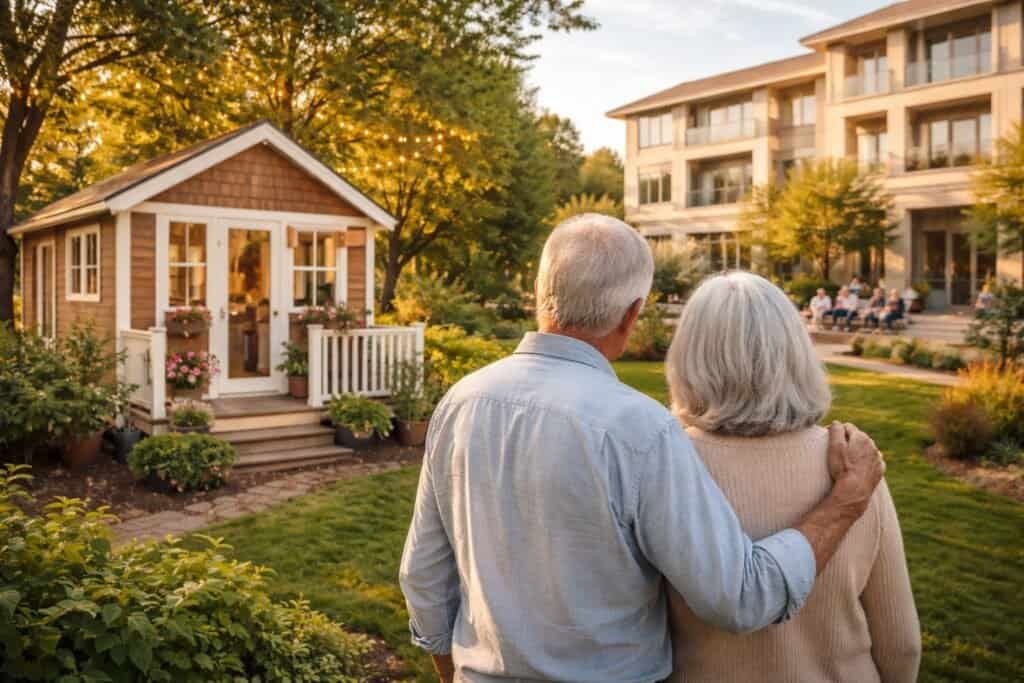
Cost often becomes the deciding factor when comparing tiny homes vs assisted living for seniors. The difference between owning a tiny home and paying monthly assisted living fees can be substantial over time.
Upfront vs Ongoing Costs
Tiny homes usually require a higher upfront investment, while assisted living operates on a monthly payment model.
Cost Comparison Table
| Expense Category | Tiny Homes | Assisted Living |
| Initial cost | $30,000 – $100,000+ | $0–$5,000 (move-in fees) |
| Monthly housing cost | $300 – $1,000 | $3,000 – $6,000 |
| Utilities | Low | Included |
| Maintenance | Minimal | Included |
| Healthcare services | Extra | Included |
Long-Term Financial Impact
Over a 5–10 year period, tiny homes often cost significantly less.
Example:
- Tiny home total (5 years): ~$50,000–$120,000
- Assisted living total (5 years): ~$180,000–$360,000
That gap can reshape retirement savings entirely.
Hidden Costs to Watch
Every option comes with expenses that aren’t obvious at first glance.
Tiny home hidden costs:
- Land purchase or rental
- Zoning and permits
- Insurance
- Utility hookups
Assisted living hidden costs:
- Extra care services
- Medication management fees
- Price increases over time
“Monthly fees in assisted living can rise annually, which surprises many families.”
🌿 Lifestyle Differences: Independence vs Support
Lifestyle sits at the heart of the decision between tiny homes vs assisted living for seniors. One offers freedom and control, the other delivers structure and peace of mind.
Independence in Tiny Homes
Tiny homes give seniors the ability to shape their daily lives without restrictions. There’s no fixed schedule, no shared routines, and no institutional feel.
What independence looks like in a tiny home:
- Wake up and sleep on your own schedule
- Cook meals based on personal preferences
- Maintain privacy and quiet surroundings
- Manage your own routines and hobbies
This level of autonomy is ideal for seniors who are active, self-sufficient, and value personal space.
Structured Living in Assisted Living
Assisted living communities operate on a system designed to make daily life easier and safer.
Typical daily structure includes:
- Scheduled meals and dining times
- Organized social activities
- Medication reminders
- Routine wellness checks
This structure reduces stress, especially for seniors who find managing daily tasks overwhelming.
Daily Routine Comparison
| Aspect | Tiny Homes | Assisted Living |
| Schedule | Fully flexible | Structured |
| Privacy | High | Moderate |
| Support | Minimal | High |
| Social interaction | Optional | Built-in |
Social Interaction and Emotional Impact
Living alone in a tiny home can feel peaceful—but also isolating if social interaction isn’t maintained.
Assisted living, on the other hand, offers:
- Group activities
- Shared dining
- Community events
“Many seniors in assisted living report improved emotional well-being due to consistent social engagement.”
Still, some individuals prefer solitude and independence over constant interaction. The right choice depends on personality and lifestyle preferences.
🛡️ Health and Safety Considerations
Health and safety concerns often determine whether tiny homes vs assisted living for seniors is a practical choice.
Safety in Tiny Homes
Tiny homes can be safe—but only with proper planning and modifications.
Essential safety upgrades include:
- Non-slip flooring to prevent falls
- Grab bars in bathrooms
- Walk-in showers instead of tubs
- Adequate lighting in all areas
- Emergency alert systems
Even with these features, one key limitation remains: no on-site medical support.
Healthcare Support in Assisted Living
Assisted living facilities are built around safety and accessibility.
Included safety advantages:
- 24/7 staff availability
- Emergency response systems
- Medication management
- Regular health monitoring
This level of support significantly reduces risk, especially for seniors with chronic conditions.
Emergency Response Differences
| Scenario | Tiny Homes | Assisted Living |
| Fall or injury | Self-managed or external help | Immediate assistance |
| Medical emergency | Call emergency services | On-site response + medical coordination |
| Daily health monitoring | None | Included |
Fall Risk and Prevention
Falls are one of the leading risks for seniors.
- Tiny homes reduce walking distance, which can help
- Poor design can increase hazards (stairs, tight spaces)
- Assisted living environments are designed specifically to minimize risk
“A small space can be safer—but only when designed intentionally for aging.”
🏠 Space, Comfort, and Living Environment
The difference in physical space plays a major role in tiny homes vs assisted living for seniors, influencing comfort, mental well-being, and daily convenience.
Living in a Tiny Home
Tiny homes require intentional downsizing. Every item must have a purpose.
Advantages of smaller spaces:
- Easier to clean and maintain
- Lower utility costs
- Less clutter, more simplicity
Challenges include:
- Limited storage
- Restricted space for guests
- Difficulty accommodating caregivers
Living in Assisted Living Facilities
Assisted living spaces are designed for comfort and convenience rather than minimalism.
What residents typically get:
- Private or semi-private apartments
- Furnished living areas
- Shared common spaces
- Dining halls and activity rooms
This setup balances personal space with access to community amenities.
Space Comparison Table
| Feature | Tiny Homes | Assisted Living |
| Size | 100–600 sq ft | 300–1,000+ sq ft |
| Storage | Limited | Moderate |
| Personalization | High | Limited |
| Maintenance | Self-managed | Included |
Emotional Impact of Living Environment
Space affects more than comfort—it shapes how people feel every day.
Tiny homes often bring:
- A sense of control
- Simplicity and calm
- Pride in ownership
Assisted living environments provide:
- Security and reassurance
- Social connection
- Reduced responsibility
“The best living environment is the one that aligns with both emotional needs and physical capabilities.”
🔄 Flexibility and Mobility
Flexibility can shape retirement in powerful ways. When comparing tiny homes vs assisted living for seniors, mobility and adaptability often become deciding factors—especially as needs change over time.
Flexibility in Tiny Home Living
Tiny homes offer a level of freedom that traditional housing—and even assisted living—rarely match.
Key flexibility advantages:
- Ability to relocate (especially with homes on wheels)
- Option to move closer to family when needed
- Freedom to choose environment (rural, suburban, or urban)
- Opportunity to travel while keeping your home
For active seniors, this lifestyle can feel empowering.
However, flexibility has limits. Health changes can quickly reduce mobility, making relocation or independent living more challenging.
Stability in Assisted Living
Assisted living prioritizes consistency over flexibility.
Residents typically:
- Stay in one community long-term
- Follow established schedules
- Receive continuous care without relocating
This stability becomes valuable when health conditions require regular monitoring.
Adaptability Over Time
One of the most important considerations is how each option handles aging progression.
| Factor | Tiny Homes | Assisted Living |
| Relocation ability | High | Low |
| Adaptability to health decline | Limited | Strong |
| Long-term stability | Moderate | High |
“Flexibility is an advantage early in retirement, but stability often becomes essential later.”
👥 Social Life and Community Engagement
Social connection plays a critical role in overall well-being. Isolation can negatively impact both mental and physical health, making this a key factor in tiny homes vs assisted living for seniors.
Social Life in Tiny Homes
Tiny home living can be peaceful—but it requires intentional effort to stay connected.
Potential challenges:
- Living alone may lead to isolation
- Fewer spontaneous interactions
- Limited access to organized activities
Still, many seniors build fulfilling social lives by:
- Joining local community groups
- Participating in hobbies or clubs
- Living in tiny home communities
Built-In Community in Assisted Living
Assisted living is designed to encourage daily interaction.
Common social opportunities include:
- Group meals
- Fitness classes
- Game nights and events
- Shared lounges and common areas
This built-in social structure reduces loneliness and encourages engagement.
Social Experience Comparison
| Aspect | Tiny Homes | Assisted Living |
| Daily interaction | Optional | Frequent |
| Community access | External | Built-in |
| Risk of isolation | Higher | Lower |
“Regular social interaction is one of the strongest predictors of happiness in later life.”
📍 Legal, Zoning, and Practical Considerations
Practical and legal factors often get overlooked—yet they can determine whether a housing choice is even possible. Understanding these details is essential when evaluating tiny homes vs assisted living for seniors.
Tiny Home Zoning and Regulations
Tiny homes face varying legal restrictions depending on location.
Key considerations include:
- Zoning laws that may restrict tiny home placement
- Minimum size requirements in some areas
- Classification as RV vs permanent residence
- Permit and utility hookup requirements
These regulations can create barriers, especially for first-time buyers.
Assisted Living Contracts and Policies
Assisted living facilities operate under regulated agreements.
What to review carefully:
- Monthly fee structures
- Services included vs add-ons
- Rules regarding visitors and personal space
- Policies for transitioning to higher care levels
Contracts can vary widely, making it important to read the fine print.
Insurance and Financial Responsibility
| Factor | Tiny Homes | Assisted Living |
| Insurance | Homeowner’s or RV insurance | Included or bundled |
| Property taxes | Applicable (if on land) | Not applicable |
| Financial control | High | Limited |
Location Limitations
- Tiny homes require approved land and legal placement
- Assisted living depends on facility availability and cost in your area
Both options involve constraints—but in very different ways.
“The best choice isn’t just about preference—it’s about what’s legally and practically feasible.”
⚖️ Pros and Cons of Tiny Homes for Seniors
Tiny homes offer a compelling lifestyle—but they aren’t perfect for everyone. A balanced view helps clarify whether this option truly fits long-term needs.
Benefits of Tiny Homes for Seniors
- Affordability compared to traditional housing and long-term care
- Full control over lifestyle and daily routines
- Lower maintenance and utility costs
- Opportunity to age in place with custom modifications
- Flexibility to relocate or live near family
Drawbacks to Consider
- Limited access to immediate medical care
- Space constraints can feel restrictive over time
- Zoning and legal challenges
- Not ideal for seniors with declining health
“Tiny homes work best when independence is a priority and health needs are minimal.”
🏥 Pros and Cons of Assisted Living for Seniors
Assisted living provides convenience and safety—but often at the cost of independence and long-term affordability.
Benefits of Assisted Living
- 24/7 access to care and support
- Structured environment that reduces daily stress
- Built-in social opportunities
- No responsibility for maintenance or cooking
- Increased safety and monitoring
Drawbacks to Consider
- High monthly costs that add up quickly
- Less privacy and personal freedom
- Limited control over daily routines
- Potential emotional adjustment to communal living
“Assisted living prioritizes safety and support, making it ideal for seniors who need help with daily activities.”
🎯 Who Should Choose Tiny Homes and Assisted Living for Seniors?
Choosing between tiny homes vs assisted living for seniors comes down to health, lifestyle preferences, and financial readiness.
Best Fit for Tiny Homes
Tiny homes are ideal for seniors who:
- Are physically independent and mobile
- Want to reduce living expenses
- Value privacy and autonomy
- Enjoy minimalist living
- Have access to nearby family or support if needed
Best Fit for Assisted Living
Assisted living is better suited for seniors who:
- Need help with daily activities
- Have ongoing medical conditions
- Prefer structured routines
- Want consistent social interaction
- Value convenience over independence
Quick Decision Guide
| Situation | Better Option |
| Active and healthy | Tiny Home |
| Needs daily assistance | Assisted Living |
| Tight retirement budget | Tiny Home |
| Requires medical supervision | Assisted Living |
“The right choice aligns with both current lifestyle and future health expectations.”
🧩 Real-Life Scenarios and Decision Examples
Understanding real situations can make the decision clearer.
Case Study 1: Independent Lifestyle
Maria, 67, recently retired and in good health, chose a tiny home.
- Downsized from a 3-bedroom house
- Built a 400 sq ft home near her daughter
- Reduced monthly expenses by over 60%
Outcome: Maria enjoys independence, lower costs, and proximity to family support when needed.
Case Study 2: Need for Daily Support
James, 74, experienced mobility issues and required help with daily tasks.
- Moved into an assisted living community
- Receives daily assistance and medication management
- Participates in social activities regularly
Outcome: Improved safety, reduced stress, and better overall well-being.
Hybrid Approach
Some seniors combine both options:
- Start in a tiny home while independent
- Transition to assisted living as needs increase
This phased approach balances freedom early on with security later.
❓ FAQs
Are tiny homes suitable for seniors with limited mobility?
Tiny homes can work if designed with accessibility features like step-free entry, wider doorways, and walk-in showers.
Is assisted living always more expensive than tiny homes?
In most cases, yes. Assisted living involves ongoing monthly fees that typically exceed the long-term cost of a tiny home.
Can seniors transition from a tiny home to assisted living later?
Many seniors choose this path, starting with independent living and moving to assisted care when needed.
Do tiny homes provide enough space for caregivers?
Space can be limited, but thoughtful layouts can accommodate part-time caregiver support.
Which option offers better quality of life?
Quality of life depends on personal priorities—independence and privacy favor tiny homes, while safety and support favor assisted living.
🔗 Making the Right Choice for Your Future
Deciding between tiny homes vs assisted living for seniors isn’t just about cost or space—it’s about how you want to live every day. The best choice supports your independence today while preparing for tomorrow’s needs.
Take time to evaluate your health, financial situation, and lifestyle preferences. Talk with family members, explore real communities, and consider both short-term comfort and long-term security.
For additional guidance on senior housing options and care standards, visit the National Institute on Aging for trusted insights: https://www.nia.nih.gov/health/assisted-living-and-nursing-homes
Ready to plan your next step?
Explore more resources on tiny home designs, costs, and senior-friendly layouts to find a solution that truly fits your lifestyle.
