
A growing number of retirees are choosing tiny homes for seniors over 60 as a practical way to simplify life without sacrificing comfort. Large family houses often become expensive, difficult to maintain, and unnecessary once children move out. Smaller, thoughtfully designed homes offer a different path—one centered on independence, safety, and financial peace of mind.
Tiny living isn’t about giving things up. It’s about gaining control over your space, your budget, and your lifestyle. Whether you’re exploring downsizing options, planning retirement, or helping a loved one transition, this guide breaks down everything you need to know—from features and benefits to real-life advantages.
In This Article
Why Tiny Homes for Seniors Over 60 Are Gaining Popularity
Retirement used to mean staying put or moving into assisted living. Today, many older adults are choosing something different—tiny homes designed specifically for aging comfortably.
Rising property taxes, utility costs, and maintenance demands are pushing seniors to rethink traditional housing. At the same time, modern tiny homes are evolving with senior-friendly layouts, accessibility upgrades, and smart technology that make daily living easier.
Several key trends are driving this shift:
- Financial freedom: Lower mortgage or no mortgage at all
- Simplified living: Less clutter, fewer responsibilities
- Aging in place: Homes designed to adapt over time
- Closer family connections: Backyard tiny homes (ADUs) are becoming popular
“Downsizing isn’t about living smaller—it’s about living smarter.”
Many seniors report improved quality of life after moving into a smaller, more efficient space. Less time spent cleaning and maintaining means more time for hobbies, travel, and family.
What Defines Tiny Homes for Seniors Over 60?
Not every small house qualifies as a senior-friendly tiny home. Tiny homes for seniors over 60 are intentionally designed to prioritize safety, accessibility, and ease of use.
Core Features of Senior-Friendly Tiny Homes
- Typically 100 to 400 square feet
- Single-level layouts to eliminate stairs
- Wide doorways for mobility aids
- Open floor plans for easier movement
- Low-maintenance materials and finishes
Tiny Homes vs Small Homes vs Senior Housing
| Feature | Tiny Homes | Small Homes | Traditional Senior Housing |
| Size | 100–400 sq ft | 400–1,000 sq ft | Varies |
| Independence | High | High | Moderate to Low |
| Cost | Low | Moderate | High (monthly fees) |
| Customization | High | Moderate | Limited |
| Accessibility | Fully customizable | Sometimes included | Standardized |
Mobility-Focused vs Standard Tiny Homes
Not all tiny homes are created equal. Seniors should prioritize mobility-focused designs, which include:
- Step-free entrances
- Walk-in showers instead of tubs
- Lever-style door handles
- Adjustable countertops
Homes built without these features may look appealing but can become unsafe or impractical over time.
Benefits of Tiny Homes for Seniors Over 60
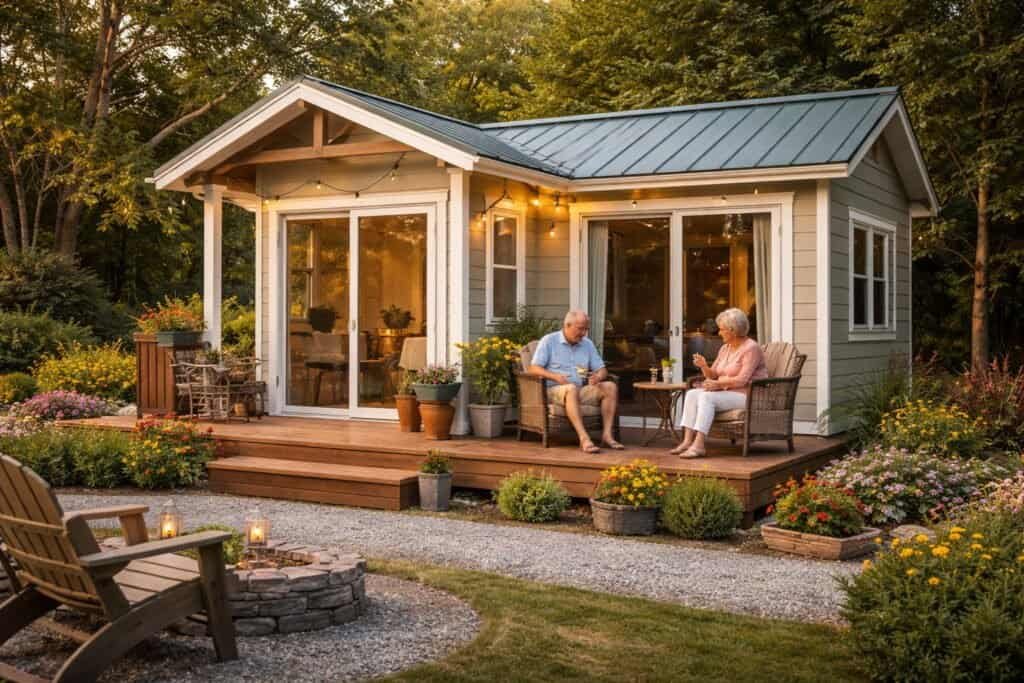
Choosing a tiny home later in life brings a combination of financial, physical, and emotional benefits. Many retirees find that downsizing leads to a more fulfilling and less stressful lifestyle.
Financial Advantages
- Lower upfront cost compared to traditional homes
- Reduced property taxes and utility bills
- Minimal maintenance expenses
- Opportunity to free up equity from a larger home
Lifestyle Benefits
- Easier cleaning and upkeep
- Less clutter and more intentional living
- Greater flexibility to relocate if needed
- More time for hobbies, travel, or family
Health and Safety Benefits
- Fewer fall risks with single-level design
- Easier navigation for reduced mobility
- Improved accessibility with age-friendly features
- Lower stress levels from simplified living
Environmental Impact
Tiny homes also support sustainable living:
- Use significantly less energy
- Require fewer building materials
- Encourage mindful consumption
Quick Comparison: Traditional Home vs Tiny Home for Seniors
| Category | Traditional Home | Tiny Home |
| Monthly Costs | High | Low |
| Maintenance | Time-consuming | Minimal |
| Safety | Often outdated | Designed for aging |
| Space Usage | Often wasted | Fully optimized |
| Stress Level | Higher | Lower |
Key Safety Features in Tiny Homes for Seniors Over 60
Safety is the foundation of any successful tiny home design for older adults. A well-built space doesn’t just look good—it actively reduces risk, supports mobility, and adapts to changing needs over time.
Must-Have Safety Features
- Step-free entryways: Eliminates tripping hazards at entrances
- Non-slip flooring: Vinyl, cork, or textured tile reduce fall risks
- Wide doorways (at least 32–36 inches): Essential for walkers or wheelchairs
- Walk-in showers: No tubs, no barriers, easy access
- Grab bars and handrails: Installed in bathrooms and near beds
- Lever-style handles: Easier to use than knobs for aging hands
Smart Home Safety Upgrades
Technology is becoming a powerful ally in senior living. Modern tiny homes for seniors over 60 often include:
- Motion-sensor lighting for nighttime navigation
- Voice-controlled assistants for hands-free operation
- Emergency alert systems and fall detection devices
- Smart thermostats for consistent indoor comfort
“The safest home is one that anticipates your needs before they become problems.”
Lighting and Visibility Considerations
Poor lighting is one of the leading causes of accidents. A smart design includes:
- Layered lighting (ambient, task, and accent)
- Bright kitchen and bathroom illumination
- Night lights along hallways and pathways
- Large windows for natural daylight
Bathroom Safety Checklist
| Feature | Why It Matters |
| Walk-in shower | Prevents stepping over high edges |
| Grab bars | Provides balance support |
| Anti-scald valves | Prevents burns |
| Raised toilet | Easier sitting and standing |
Future-Proofing the Space
A good tiny home isn’t just safe today—it stays safe tomorrow. Consider:
- Reinforced walls for future grab bar installation
- Space for potential wheelchair turning radius
- Adjustable-height counters
- Easy-to-reach storage (no overhead strain)
Homes designed this way allow seniors to age in place comfortably without constant renovations.
Best Layouts for Tiny Homes for Seniors Over 60
Layout matters more than size. Even a 250 sq ft home can feel spacious and functional when designed with intention. The goal is simple: maximize comfort while minimizing movement and obstacles.
Open-Concept Living
Walls can make small spaces feel cramped and restrictive. Open layouts create:
- Better airflow and lighting
- Easier navigation between areas
- A more spacious and inviting feel
One-Bedroom vs Studio Layouts
| Layout Type | Best For | Key Advantage |
| Studio | Solo seniors | Simplicity and efficiency |
| One-bedroom | Couples or privacy | Separate sleeping space |
Studios reduce movement and keep everything within reach, while one-bedroom layouts provide privacy and better sleep quality.
Bathroom Placement Matters
Bathrooms should be:
- Easily accessible from the bedroom
- Located on the same level (no steps or lofts)
- Spacious enough for mobility aids
A poorly placed bathroom can turn daily routines into unnecessary challenges.
Kitchen Design for Accessibility
The kitchen should be safe, practical, and easy to use:
- Lower countertops for comfortable use
- Pull-out shelves instead of deep cabinets
- Side-opening ovens for safer access
- Induction cooktops to reduce fire risk
Smart Storage Without Clutter
Storage should support organization without creating hazards:
- Built-in cabinets at waist height
- Under-bed storage drawers
- Wall-mounted shelves (securely installed)
- Multi-functional furniture (e.g., storage benches)
Ideal Layout Example (Simple Concept)
- Entry leads directly into open living space
- Kitchen along one wall for efficiency
- Bathroom adjacent to bedroom
- No stairs, lofts, or split levels
Efficient layouts reduce physical strain and make everyday living smoother.
Tiny Homes vs Traditional Homes for Seniors Over 60
Deciding between a traditional home and a tiny home often comes down to lifestyle priorities, finances, and long-term comfort.
Cost Comparison
| Expense Category | Traditional Home | Tiny Home |
| Purchase Price | High | Low to Moderate |
| Utilities | Expensive | Significantly lower |
| Maintenance | Ongoing and costly | Minimal |
| Property Taxes | Higher | Lower |
Many seniors find that switching to a tiny home can cut monthly expenses by 40% to 70%, freeing up funds for healthcare, travel, or hobbies.
Lifestyle Differences
Traditional homes often come with:
- Unused rooms
- High cleaning demands
- Ongoing repairs
Tiny homes focus on:
- Purposeful living
- Efficient space usage
- Reduced physical workload
Mobility and Aging-in-Place
Large homes can become difficult to navigate over time, especially with stairs or long distances between rooms. In contrast, tiny homes for seniors over 60 are designed to keep everything within easy reach.
Emotional Side of Downsizing
Letting go of a long-time family home isn’t easy. It often comes with:
- Emotional attachment
- Fear of losing space or memories
However, many seniors report:
- Relief from reduced responsibilities
- Greater sense of control
- Improved mental clarity from decluttering
“A smaller home often creates a bigger life.”
When a Tiny Home Makes the Most Sense
- Fixed or limited retirement income
- Desire for low-maintenance living
- Need for a safer, more accessible environment
- Interest in downsizing without sacrificing independence
Cost Breakdown of Tiny Homes for Seniors Over 60
Understanding the true cost of tiny homes for seniors over 60 helps avoid surprises and allows for smarter financial planning. While tiny homes are significantly more affordable than traditional housing, total expenses depend on design, location, and customization.
Average Cost to Build or Buy
Tiny home prices vary widely based on materials, features, and whether it’s custom-built or pre-fabricated.
| Type of Tiny Home | Average Cost Range |
| DIY build | $20,000 – $50,000 |
| Prefab tiny home | $50,000 – $100,000 |
| Custom-built tiny home | $100,000 – $180,000+ |
High-end models with luxury finishes and advanced accessibility features can exceed these ranges, especially when designed specifically for aging in place.
Land and Placement Costs
A tiny home still needs a place to sit. Costs vary depending on location and setup:
- Backyard (ADU): Often the most affordable option if zoning allows
- Tiny home communities: Monthly lot rent may apply
- Rural land purchase: Lower cost but may require utility setup
- Urban placement: Higher land costs and stricter regulations
Utility and Monthly Expenses
One of the biggest advantages of tiny living is reduced monthly spending.
| Expense | Traditional Home | Tiny Home |
| Electricity | High | Low |
| Water | Moderate | Low |
| Maintenance | Expensive | Minimal |
| Insurance | Higher | Lower |
Typical monthly costs for a tiny home can range from $100 to $500, depending on usage and location.
Financing Options for Seniors
Tiny homes aren’t always eligible for traditional mortgages, but several alternatives exist:
- Personal loans
- RV loans (for mobile tiny homes)
- Retirement savings or downsizing proceeds
- Home equity from selling a larger property
Hidden Costs to Consider
Smart planning means accounting for additional expenses:
- Permits and zoning fees
- Utility hookups (water, sewage, electricity)
- Transportation (for movable homes)
- Accessibility upgrades
Clear budgeting ensures the transition remains financially stress-free rather than overwhelming.
Where to Place Tiny Homes for Seniors Over 60
Location plays a crucial role in how practical and enjoyable tiny living becomes. The right placement can improve accessibility, social connection, and long-term comfort.
Backyard ADUs (Accessory Dwelling Units)
One of the most popular choices for seniors is placing a tiny home in a family member’s backyard.
Benefits include:
- Close proximity to family support
- Increased privacy compared to shared housing
- Lower costs than standalone property
This setup works especially well for multigenerational living, where independence and connection coexist.
Tiny Home Communities
Specialized communities are emerging to support tiny living.
Key advantages:
- Built-in social environment
- Shared amenities (gardens, walking paths)
- Maintenance support in some cases
These communities can reduce isolation and create a sense of belonging.
Rural vs Urban Placement
| Factor | Rural Areas | Urban Areas |
| Cost | Lower | Higher |
| Space | More available | Limited |
| Access to services | Limited | Excellent |
| Peace & quiet | High | Moderate |
Rural living offers tranquility and affordability, while urban settings provide better access to healthcare, shopping, and transportation.
Zoning Laws and Legal Considerations
Regulations vary widely depending on location. Important factors include:
- Minimum dwelling size requirements
- ADU permissions
- Utility connection rules
- Parking and foundation requirements
Checking local regulations before building or buying is essential to avoid costly setbacks. A helpful starting point is the American Planning Association, which offers guidance on housing and zoning policies: https://www.planning.org
Choosing the Right Location
The best location balances:
- Access to healthcare services
- Proximity to family or community
- Safety and neighborhood quality
- Long-term livability
The right placement turns a tiny home into a truly supportive living environment.
Downsizing Tips for Seniors Moving Into Tiny Homes
Downsizing is often the most challenging part of transitioning into a tiny home. Letting go of possessions tied to memories can feel overwhelming, but with the right approach, it becomes liberating rather than stressful.
Start with a Clear Plan
Jumping into decluttering without a strategy leads to frustration. Instead:
- Set realistic goals and timelines
- Tackle one room at a time
- Focus on function, not just sentiment
What to Keep vs Let Go
A simple method is to categorize items:
Keep:
- Daily essentials
- Items with strong practical value
- Meaningful personal belongings
Let go:
- Duplicates
- Rarely used items
- Large, bulky furniture
The “One-Year Rule”
If something hasn’t been used in the past year, it’s likely unnecessary. This rule helps make decisions easier and faster.
Emotional Transition Strategies
Downsizing isn’t just physical—it’s emotional.
- Take photos of sentimental items before letting them go
- Pass heirlooms to family members
- Focus on what you’re gaining, not losing
“You’re not losing memories—you’re making space for new experiences.”
Smart Storage Solutions
Tiny homes require intentional organization:
- Use vertical space (walls and shelves)
- Invest in multi-purpose furniture
- Choose hidden storage (under beds, benches)
- Keep frequently used items easily accessible
Quick Downsizing Checklist
- Declutter room by room
- Measure furniture before moving
- Digitize documents and photos
- Plan storage before relocating
Real-Life Downsizing Scenario
A single retiree moving into a 280 sq ft tiny home reduced belongings by nearly 70%. After the transition, daily cleaning took less than 20 minutes, and living expenses dropped dramatically—proving that less truly can be more.
Design Ideas to Maximize Comfort in Tiny Homes for Seniors Over 60
Designing tiny homes for seniors over 60 goes far beyond aesthetics. Comfort, accessibility, and ease of daily living should guide every decision. A well-designed tiny home can feel spacious, calming, and highly functional—even within a limited footprint.
Smart Design Principles That Make a Big Difference
Natural light and airflow
Large windows, skylights, and glass doors create a sense of openness while improving mood and health. Proper ventilation also reduces humidity and improves indoor air quality—especially important for older adults.
Comfort-first furniture
Standard tiny home furniture often prioritizes space-saving over comfort. Seniors benefit more from:
- Supportive chairs with armrests
- Adjustable beds or lower bed frames
- Sofas with firm cushioning for easy standing
Multi-functional spaces without complexity
Flexibility matters, but simplicity is key. Instead of complicated foldable systems:
- Use ottomans with storage
- Choose tables with adjustable heights
- Install built-in benches with hidden compartments
Accessible kitchen layouts
Cooking should remain enjoyable, not frustrating. Consider:
- Lower countertops for seated use
- Pull-out shelves instead of deep cabinets
- Lever-style faucet handles
- Side-opening ovens for safer access
Interior Design That Supports Aging in Place
| Design Element | Why It Matters for Seniors | Best Practice |
| Lighting | Reduces fall risk, improves visibility | Layered lighting + motion sensors |
| Flooring | Prevents slips and joint strain | Non-slip vinyl or cork flooring |
| Color Contrast | Helps with depth perception | Contrast walls, floors, and furniture |
| Storage | Minimizes bending and reaching | Waist-height storage solutions |
Thoughtful design doesn’t just look good—it actively supports independence and safety every day.
Common Challenges of Tiny Homes for Seniors Over 60 (And How to Solve Them)
While tiny homes for seniors over 60 offer many benefits, they also come with practical challenges. The good news is that most of these issues can be solved with smart planning and realistic expectations.
Limited Space
Adjusting to a smaller living area can feel restrictive at first.
Solutions:
- Prioritize essentials and remove duplicates
- Use vertical storage (wall shelves, hooks)
- Keep open floor areas to reduce visual clutter
“Downsizing isn’t about losing space—it’s about gaining clarity on what truly matters.”
Storage Constraints
Storage is often the biggest concern when transitioning to a tiny home.
Solutions:
- Built-in cabinets under beds and seating
- Overhead storage with easy-access lifts
- Decluttering before moving, not after
Adapting to Smaller Living Areas
The psychological shift can be just as challenging as the physical one.
Solutions:
- Maintain familiar routines and décor
- Use warm colors and personal items to create comfort
- Spend more time outdoors or in shared community spaces
Accessibility Over Time
A design that works today may not work 10 years later.
Solutions:
- Install grab bars early, even if not immediately needed
- Choose step-free entrances
- Plan for wheelchair accessibility, even if it seems unnecessary now
Privacy Concerns
Tiny homes can feel too compact, especially for couples.
Solutions:
- Use sliding doors or room dividers
- Create defined zones for sleeping, relaxing, and dining
- Position furniture strategically to separate spaces
Who Should Consider Tiny Homes for Seniors Over 60?
Not every senior will thrive in a tiny home—but for the right person, it can be life-changing. Understanding who benefits most helps set realistic expectations.
Ideal Candidates for Tiny Homes for Seniors Over 60
Retirees seeking simplicity
Those tired of maintaining large homes often find relief in a smaller, more manageable space.
Seniors living on a fixed income
Tiny homes significantly reduce:
- Utility bills
- Property taxes
- Maintenance costs
Independent older adults
Tiny homes work best for seniors who can manage daily tasks without constant assistance.
Minimalists or lifestyle-focused individuals
Those who value experiences over possessions adapt more easily to compact living.
Multigenerational families
Tiny homes placed in a backyard (ADU) allow seniors to stay close to family while maintaining independence.
Who Might Struggle with Tiny Homes?
- Seniors with advanced mobility issues (without proper modifications)
- Individuals who need full-time medical care
- Those emotionally attached to large homes and belongings
Case Study: Downsizing for Freedom
A retired couple in their mid-60s moved from a 2,500 sq ft house into a 400 sq ft tiny home. Within a year:
- Monthly expenses dropped by over 50%
- Cleaning time reduced from 4 hours to under 1 hour weekly
- They reported less stress and more time for hobbies
Their biggest takeaway?
“We didn’t lose space—we gained our time back.”
Real-Life Scenarios: Living in Tiny Homes for Seniors Over 60
Real stories bring clarity to what tiny homes for seniors over 60 actually look like in everyday life. These scenarios highlight how different lifestyles can adapt to small-space living without sacrificing comfort or independence.
Solo Senior Living with Full Independence
Maria, 68, downsized after retirement into a 320 sq ft tiny home. She prioritized:
- A single-level layout with no stairs
- A walk-in shower with seating
- A small porch for relaxation
Her daily routine became simpler, with less time spent cleaning and more time gardening and socializing.
“I finally feel like my home fits my life—not the other way around.”
Couple Downsizing for Financial Freedom
John and Elaine, both in their early 70s, sold their large suburban home and moved into a 450 sq ft tiny house.
Results after 12 months:
- Housing expenses reduced by over 60%
- No mortgage payments
- Lower utility bills and maintenance costs
They now travel more often and spend less time worrying about home upkeep.
Backyard Tiny Home for Family Proximity
A growing trend involves placing tiny homes for seniors over 60 in a family member’s backyard.
Benefits include:
- Close support system without losing independence
- Reduced loneliness and isolation
- Shared resources (meals, transportation, care)
This setup works especially well in multigenerational households.
Aging in Place Success Story
David, 72, designed his tiny home with future needs in mind:
- Wider doorways for wheelchair access
- Reinforced bathroom walls for grab bars
- Step-free entrance
Even as his mobility changed, his home remained functional—proving that planning ahead makes all the difference.
FAQs About Tiny Homes for Seniors Over 60
Are tiny homes for seniors over 60 safe?
Yes, when designed properly. Features like non-slip floors, grab bars, and single-level layouts significantly improve safety.
How much do tiny homes for seniors over 60 cost?
Costs typically range from $30,000 to $100,000+, depending on size, customization, and location.
Can seniors finance a tiny home?
Some lenders offer personal loans, RV loans, or specialized tiny home financing, though options vary by region.
Are tiny homes suitable for aging in place long-term?
Absolutely—if designed with accessibility in mind from the beginning, including wider doorways and step-free access.
What size tiny home is best for seniors?
Most seniors find 250–500 sq ft ideal, balancing comfort and manageability.
Can tiny homes be customized for disabilities?
Yes, many builders offer accessibility upgrades such as ramps, wider hallways, and adapted bathrooms.
Where can seniors legally place a tiny home?
Placement depends on local zoning laws. Options may include ADUs, tiny home communities, or rural land.
Final Thoughts on Tiny Homes for Seniors Over 60
Choosing tiny homes for seniors over 60 isn’t just about downsizing—it’s about redefining what comfort, freedom, and independence look like in later life.
A smaller home can:
- Reduce financial pressure
- Simplify daily routines
- Create a safer, more manageable living space
Many seniors discover that letting go of excess space opens the door to a more meaningful and stress-free lifestyle.
Start Your Tiny Home Journey Today
Curious whether a tiny home is right for you or your loved ones?
Start small:
- Explore floor plans that match your needs
- Evaluate your current living costs
- Consider future mobility and accessibility
For deeper guidance on housing options and planning, visit the
National Institute on Aging
which offers trusted resources on aging, housing, and independent living.
Your ideal home doesn’t need to be bigger—just smarter, safer, and designed for the life you truly want.
