
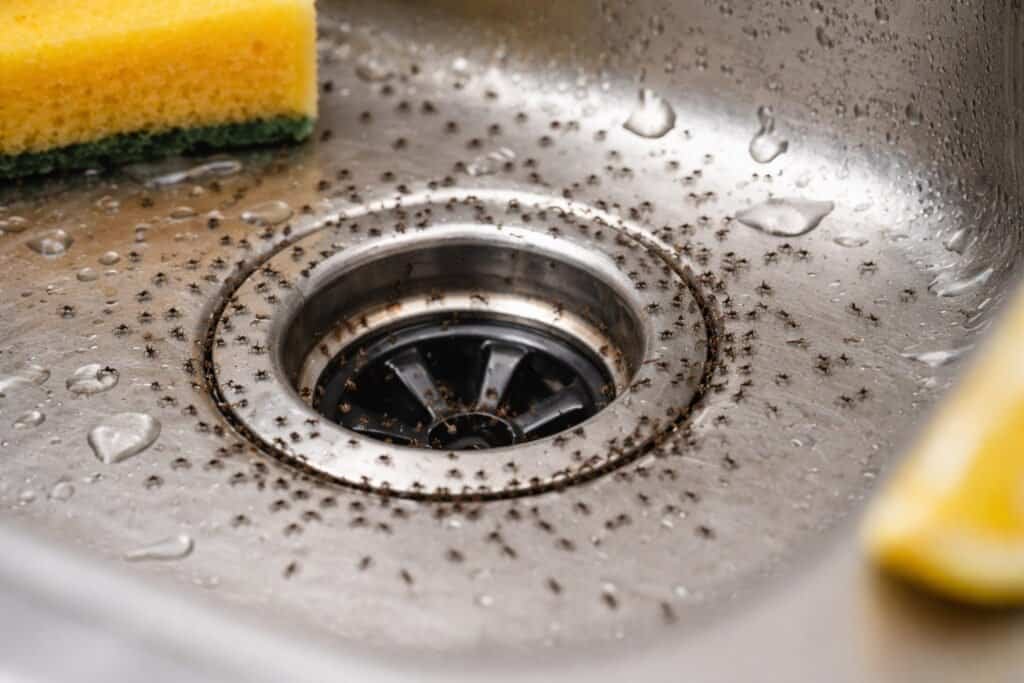
Tiny black ants in kitchen sink usually don’t feel like a big deal at first. You spot one crawling near the drain, maybe rinse it away, and move on. By the next morning, there’s a steady trail moving in and out of the sink like it’s a busy highway.
That shift—from one ant to dozens—isn’t random. It’s a signal.
What you’re seeing is a foraging system in action. One scout ant finds a reliable resource (your sink), leaves a scent trail, and within hours, the colony follows. Kitchen sinks are especially vulnerable because they offer something ants value more than crumbs: consistent moisture and easy access.
Most homeowners assume the ants are just wandering in from outside. In reality, many of them are already living inside your walls, cabinets, or even under the floor—using your sink as a dependable water source.
By the time you notice a trail, the problem is already established. The good news? Once you understand why they chose your sink, you can shut it down quickly and effectively.
In This Article
The Real Reason Tiny Black Ants Keep Showing Up in Your Sink
A spotless sink doesn’t guarantee an ant-free kitchen. Tiny black ants are drawn to things most people don’t even notice.
It’s Not Just Food — It’s the Perfect Micro-Environment
Your sink creates ideal conditions for ants to survive and thrive:
- Constant moisture from faucets, pipes, and condensation
- Warmth from indoor temperatures and nearby appliances
- Shelter around pipe openings and cabinet gaps
Even if you wipe your counters daily, the sink area still provides a reliable water source, which is often more valuable to ants than food.
The Hidden Layer Inside Your Drain
What really attracts ants isn’t always visible.
Inside your drain, there’s often a thin layer of organic buildup called biofilm. It forms from:
- Food residue
- Grease particles
- Soap scum
This creates a subtle but continuous food source. Ants don’t need a visible crumb when they can feed on microscopic residue inside the pipes.
“Clean” Isn’t Always Clean to Ants
Here’s where many people get caught off guard:
- Sweet-smelling dish soap can mimic food scents
- Citrus cleaners can leave behind attractive residues
- Tiny splashes from sugary drinks can linger unnoticed
To ants, your sink might smell like a buffet—even when it looks spotless.
What Most People Overlook About Kitchen Sink Ant Infestations
This is where things get interesting—and where most DIY fixes fall short.
They’re Often Coming From Below, Not Outside
It’s easy to assume ants are entering through windows or doors. In kitchens, that’s often wrong.
Common hidden entry points include:
- Gaps around plumbing pipes
- Openings behind the sink cabinet
- Cracks where the wall meets the floor
These spaces act like direct tunnels from the colony to your sink.
Why You Rarely See Them During the Day
Tiny black ants tend to be more active at night. Lower activity in the home makes it safer for them to forage.
So if you’re only checking your sink during the day, you might miss:
- The main trail
- The direction they’re coming from
- The true scale of the infestation
The Scent Trail Problem Most People Ignore
Ants rely heavily on pheromone trails. Once a path is established:
- Other ants will follow it repeatedly
- Cleaning with water alone won’t remove it
- The trail can persist even after ants are gone
This is why they keep coming back to the exact same spot—even after you’ve cleaned the sink.
Not All Tiny Black Ants Are the Same (And It Changes the Solution)
Before you reach for any spray or bait, it helps to know this: not all tiny black ants behave the same way. Misidentifying them is one of the biggest reasons DIY treatments fail.
The Two Most Common Culprits in Kitchen Sinks
Odorous House Ants
- Size: very small (about 1/16–1/8 inch)
- Color: dark brown to black
- Key trait: emit a rotten coconut-like smell when crushed
- Behavior: highly attracted to moisture and sweet residues
These are the most frequent offenders around sinks. They form large colonies and relocate easily, which makes them harder to eliminate with surface treatments alone.
Little Black Ants
- Size: slightly smaller, uniformly black
- Behavior: prefer both sweets and proteins
- Nesting: often found in woodwork, walls, or masonry
They’re persistent but slightly easier to control if you disrupt their food and water sources early.
Why Identification Matters
Different species respond differently to treatment:
- Some prefer liquid sugar baits, others go for protein
- Some colonies split when threatened (making sprays counterproductive)
- Some nest closer to moisture sources, like your plumbing
Using the wrong approach can actually spread the infestation instead of stopping it.
If you’re unsure which type you’re dealing with, focus on behavior: where they travel, when they appear, and what they’re attracted to. That alone can guide an effective fix.
Why Your Cleaning Routine Might Be Making It Worse
It sounds counterintuitive, but many well-meaning cleaning habits actually invite ants back into your kitchen sink.
The “Smells Clean” Trap
A lot of dish soaps and surface cleaners are scented—often citrus or sweet fragrances. While they smell fresh to you, ants can interpret those scents as food signals.
Common mistakes include:
- Using strongly scented dish soap without rinsing thoroughly
- Leaving behind a thin film of cleaner on sink surfaces
- Relying on wipes that spread residue instead of removing it
Damp Items Left Overnight
Moisture is the real magnet. Leaving these in or near your sink creates a perfect ant hotspot:
- Wet sponges
- Dishcloths
- Scrub brushes sitting in water
Even a few hours of dampness can sustain a steady ant trail.
Rinsing Without Flushing
Rinsing food scraps down the drain feels like cleaning—but without a proper flush, particles stick inside pipes.
Over time, this leads to:
- Organic buildup (biofilm)
- Odors that attract ants
- A hidden feeding zone just below the surface
A quick rinse isn’t enough—you need to fully clear the drain.
The “Clean but Still Attractive” Problem
Here’s the bottom line:
A sink can look spotless and still be highly attractive to ants.
That’s why surface-level cleaning alone rarely solves the issue. You need to target what’s happening under and around the sink—not just what you can see.
A Step-by-Step Fix That Actually Stops Ants at the Source
Getting rid of tiny black ants in your kitchen sink isn’t about killing the ones you see. It’s about eliminating the system that keeps bringing them back.
Step 1: Break the Scent Trail Completely
Start here, or nothing else will stick.
- Mix equal parts white vinegar and water
- Wipe down:
- Sink edges
- Countertops
- Entry paths and walls
Vinegar disrupts pheromone trails, making it harder for ants to navigate back.
Important: Regular soap or water alone won’t fully remove these trails.
Step 2: Clean the Drain Where the Real Problem Lives
Target the hidden food source.
- Pour boiling water down the drain (carefully)
- Follow with an enzymatic cleaner to break down organic buildup
- Repeat for 2–3 days for best results
This removes the biofilm layer that ants feed on.
Step 3: Seal Off Entry Points Around the Sink
Now cut off access.
Check under your sink for:
- Gaps around pipes
- Cracks in cabinet walls
- Open seams near the floor
Seal small openings with caulk or foam. Even tiny gaps can act as highways for ants.
Step 4: Use Bait the Right Way (Most People Get This Wrong)
Sprays kill visible ants—but baits eliminate the colony.
- Place ant bait near trails (not directly on them)
- Let ants carry it back to the nest
- Avoid spraying near bait—it reduces effectiveness
Key insight: You may see more ants at first. That’s a good sign—it means the bait is working.
Quick Fix Checklist
If you want a simple action plan:
- ✔ Wipe all surfaces with vinegar solution
- ✔ Flush and treat the drain for 2–3 days
- ✔ Remove moisture sources overnight
- ✔ Seal gaps under the sink
- ✔ Use bait instead of spray
Handled correctly, most sink infestations can be controlled within a few days—and fully eliminated within a couple of weeks.
When Tiny Black Ants in the Kitchen Sink Mean a Bigger Problem
A few ants near the drain can be handled quickly. A recurring trail that keeps coming back? That’s a different story.
Warning Signs You Shouldn’t Ignore
Certain patterns suggest the colony is established inside your home:
- Ants reappear within 24–48 hours after cleaning
- Trails seem to come from inside cabinets or walls
- Activity increases at night, even when the sink is dry
- You notice ants in multiple areas (sink, bathroom, pantry)
These signs usually point to a nest hidden in:
- Wall voids
- Under flooring
- Behind cabinets or near plumbing lines
Why DIY Fixes Sometimes Stop Working
Surface cleaning and basic baiting can fail when:
- The colony has multiple nesting sites
- Ants split into new colonies when disturbed
- Moisture sources exist in more than one area
In these cases, you’re not dealing with a single trail—you’re dealing with a network.
When to Escalate Your Approach
Consider stepping up your strategy if:
- The infestation lasts longer than 2–3 weeks
- Bait doesn’t reduce activity
- You can’t locate the entry point
At that stage, stronger bait systems or professional treatment may be necessary to fully eliminate the colony.
The Small-Space Problem: Why Tiny Homes Get Hit Harder
Tiny black ants in the kitchen sink are more than just a nuisance in compact living spaces—they spread faster and become harder to control.
Why Small Kitchens Attract More Ant Activity
In tiny homes or small apartments:
- The kitchen, sink, and storage areas are tightly packed together
- Heat and moisture concentrate in a smaller footprint
- Food prep, cleaning, and waste all happen in the same zone
That creates a high-density environment where ants can easily find everything they need.
Faster Spread, Fewer Barriers
In larger homes, ants may stay isolated in one area. In small spaces:
- A sink infestation can reach your pantry within hours
- Trails cross countertops, shelves, and appliances quickly
- There’s less physical distance to slow them down
One overlooked trail can turn into a full-space issue surprisingly fast.
Practical Prevention for Tiny Living
If you live in a tiny home or compact space, prevention needs to be tighter:
- Dry the sink completely before bed
- Store food in sealed containers
- Ventilate the kitchen area to reduce humidity
- Keep under-sink areas clutter-free for easy inspection
If you’re designing or optimizing a small kitchen, it’s worth thinking beyond layout. Moisture control and sealed storage make a big difference.
For deeper ideas, you can explore how smart layouts reduce pest risks in compact living setups in your related tiny home guides.
What to Do Tonight (Even If You Have No Supplies)
Not everyone has ant bait or specialized cleaners on hand. The good news is you can still slow or stop the infestation tonight using basic household items.
Immediate Actions That Make a Difference
Start with what you already have:
- Wipe the sink and surrounding area with vinegar or lemon water
- Pour very hot water down the drain
- Remove all visible moisture:
- Dry the sink basin
- Hang or replace wet cloths and sponges
These steps disrupt both the food source and the scent trail.
Cut Off Their Path Temporarily
If you can identify where ants are entering:
- Use tape, petroleum jelly, or even chalk lines to block paths
- Place barriers along edges and corners where ants travel
These aren’t permanent fixes, but they can slow the flow overnight.
Contain the Situation Before It Spreads
A few quick habits prevent escalation:
- Don’t leave dishes in the sink overnight
- Take out trash before bed
- Wipe down nearby counters and surfaces
The goal isn’t perfection—it’s interruption.
Break their routine for one night, and you’ll reduce the number of ants returning the next day.
Natural vs Chemical Solutions: What Actually Works Long-Term
When dealing with tiny black ants in the kitchen sink, most people fall into one of two camps: natural remedies or chemical treatments. The truth sits somewhere in the middle.
Natural Remedies: Helpful, But Often Limited
Common DIY options include:
- Vinegar sprays
- Baking soda and sugar mixes
- Essential oils (peppermint, tea tree, lemon)
These methods can:
- Disrupt scent trails
- Repel ants temporarily
- Reduce surface activity
However, they rarely solve the core issue.
Big limitation:
Natural solutions don’t usually reach the colony. That means ants may disappear briefly, then return days later.
Chemical Baits: Slower, But Far More Effective
Ant baits work differently—and more strategically.
Instead of killing ants instantly, they:
- Attract worker ants
- Get carried back to the nest
- Gradually eliminate the entire colony
This makes them far more effective for long-term control.
Trade-offs to consider:
| Method | Speed | Effectiveness | Best Use Case |
| Natural remedies | Fast | Low–Moderate | Short-term control, prevention |
| Chemical baits | Slower | High | Eliminating active infestations |
The Smart Approach Most Homeowners Miss
You don’t have to choose just one.
A balanced strategy works best:
- Use natural cleaners for daily maintenance
- Use bait systems when ants are actively present
Key takeaway: Repel + eliminate = lasting results.
A Simple Weekly Routine That Keeps Ants From Coming Back
Once you’ve cleared the infestation, prevention becomes much easier—and far less stressful.
A 5-Minute Weekly Reset
Set aside a few minutes each week to:
- Flush the drain with hot water
- Wipe surfaces with vinegar solution
- Check under the sink for moisture or leaks
These small actions prevent buildup before it attracts ants again.
Daily Habits That Make a Big Difference
Consistency matters more than deep cleaning.
Focus on:
- Drying the sink every night
- Keeping sponges and cloths dry
- Avoiding overnight dishes in the sink
Dry = unattractive to ants. That one shift alone reduces risk dramatically.
The One Area Most People Forget
Under the sink is often ignored—but it’s critical.
Make it a habit to:
- Keep the area uncluttered
- Inspect for tiny leaks or damp spots
- Seal gaps if they reappear
This is where many infestations quietly restart.
The Connection Most People Miss: Sink Ants and Other Household Pests
If you’re dealing with tiny black ants in your kitchen sink, you might not be dealing with just ants.
The Same Conditions Attract Multiple Pests
Moisture + organic buildup creates a perfect environment for:
- Drain flies
- Small larvae or “tiny worms” in drains
- Even mold growth in hidden areas
That means your sink could be signaling a broader issue.
Why Fixing One Problem Often Solves Others
When you:
- Clean the drain thoroughly
- Eliminate moisture buildup
- Maintain airflow
You’re removing the conditions that multiple pests rely on.
If you’ve noticed other issues—like small worms or insects in your drain—it’s worth addressing them together.
You can explore deeper solutions in your related guide on drain pests to prevent recurring problems across your home.
When It’s Time to Call a Professional (and What to Expect)
Sometimes, no matter how thorough you are, ants persist.
Signs You Need Expert Help
- Infestation spreads beyond the kitchen
- Ants return despite consistent bait use
- You suspect nests inside walls or flooring
Professionals have access to treatments that reach deeper into structures.
What Pest Control Services Typically Do
A professional will:
- Identify the ant species
- Locate nesting areas
- Use targeted baiting and barrier treatments
This approach is designed to eliminate the colony at its source—not just reduce visible ants.
Is It Worth the Cost?
For small, isolated issues, DIY usually works.
For persistent infestations, professional treatment can:
- Save time
- Prevent structural damage
- Stop recurring cycles
FAQ: Tiny Black Ants in Kitchen Sink
Why do I only see tiny black ants in my kitchen sink at night?
Ants are more active when your home is quiet and dark. Nighttime offers safer conditions for them to follow scent trails and gather resources.
Will pouring bleach down the drain get rid of ants?
Bleach may kill some ants and reduce odors, but it won’t eliminate the colony. It’s not a reliable long-term solution.
How long does it take to get rid of sink ants completely?
With the right approach (cleaning + baiting), most infestations improve within a few days and fully resolve within 1–2 weeks.
Can tiny black ants live inside my plumbing?
They don’t live in water-filled pipes, but they can nest in wall voids and travel along plumbing lines to reach your sink.
Do natural remedies like vinegar really work?
Vinegar is effective for removing scent trails, but it doesn’t kill the colony. It works best as part of a larger strategy.
A Final Thought Before You Ignore That Next Ant
Tiny black ants in the kitchen sink are easy to dismiss—until they become a daily frustration. The difference between a one-time sighting and a full infestation often comes down to how quickly you act.
Focus on what actually matters:
- Remove moisture
- Break scent trails
- Target the colony, not just the surface
If you stay consistent, you won’t just get rid of the ants—you’ll make your kitchen far less inviting for anything else trying to move in.
For additional guidance on maintaining a cleaner, pest-resistant home environment, you can refer to practical sanitation tips from the Centers for Disease Control and Prevention.
Take a few minutes today to reset your sink area. It’s a small step that can save you from a much bigger problem later.
