
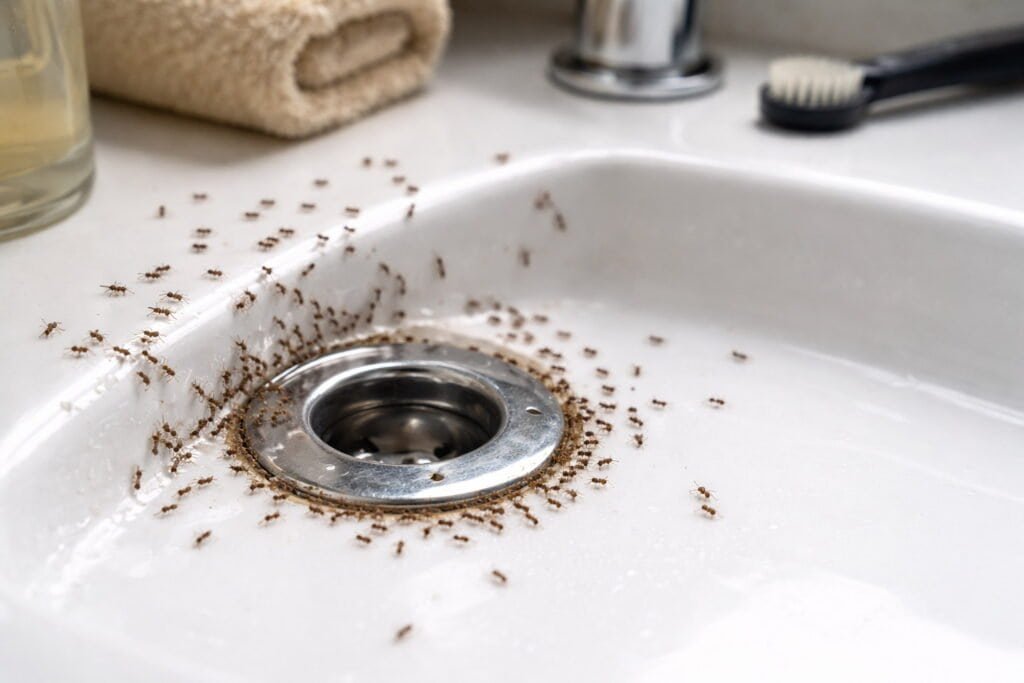
Tiny ants in bathroom sink can feel like they show up out of nowhere—especially in small homes where every space matters. One day your sink is spotless, the next it’s crawling with tiny invaders.
Here’s the good news: this is a common, fixable problem, and you don’t need expensive pest control to get started. In this guide, you’ll learn why tiny ants are attracted to your bathroom sink, how to eliminate them quickly, and how to prevent them from coming back—with practical solutions that work especially well in tiny homes and compact spaces.
In This Article
Tiny Ants in Bathroom Sink: Quick Answer (What’s Happening?)
Seeing tiny ants in your bathroom sink usually means one thing: they’ve found a reliable source of moisture and residue.
Unlike kitchen ants, bathroom ants aren’t always looking for food crumbs. They’re often drawn to:
- Damp surfaces
- Soap residue and toothpaste
- Hidden leaks or condensation
- Warm, enclosed spaces
Quick fix you can do right now:
- Wipe the sink completely dry
- Spray a mix of vinegar + water (1:1) to erase scent trails
- Check under the sink for leaks
- Seal visible cracks around pipes
Important: Killing the ants you see won’t solve the problem. They follow invisible scent trails from a colony, so eliminating the source is key.
What Are These Tiny Ants in Your Bathroom Sink? (Identification Guide)
Not all tiny ants behave the same way. Identifying the type helps you choose the most effective solution.
Common Types of Tiny Bathroom Ants
Sugar Ants (General term)
- Very small, often black or brown
- Attracted to sweet residue (even toothpaste)
- Common in both kitchens and bathrooms
Odorous House Ants
- Dark brown or black
- Give off a rotten coconut smell when crushed
- Strongly attracted to moisture and indoor nesting
Pharaoh Ants
- Light yellow or golden
- Extremely tiny and harder to spot
- Known for building nests inside walls and plumbing areas
How to Identify Them Quickly
| Feature | What to Look For |
| Size | Usually 1–3 mm (very tiny) |
| Color | Black, brown, or light yellow |
| Behavior | Moving in trails toward water |
| Location | Around sink edges, drains, or pipes |
| Smell (if crushed) | Strong odor = likely odorous house ants |
Why this matters:
Some ants (like pharaoh ants) actually split into multiple colonies if disturbed, which makes using the wrong treatment a costly mistake.
Top Causes of Tiny Ants in Bathroom Sink (Why They Keep Appearing)
If tiny ants keep coming back to your bathroom sink, there’s usually a specific trigger you’re missing. Fixing these root causes is what stops the cycle.
Moisture Is the #1 Magnet
Bathrooms are naturally humid, especially in smaller homes.
Common moisture sources:
- Dripping faucets
- Condensation around pipes
- Standing water in the sink or drain
Even a slightly damp surface can attract ants overnight.
Hidden Food Sources You Didn’t Notice
It’s not always obvious, but bathrooms can provide surprising “food”:
- Toothpaste residue
- Soap scum
- Skin cells and organic buildup
- Hair products with sugars or oils
Tiny ants don’t need much—just trace amounts are enough.
Entry Points Around Plumbing
Pipes create the perfect entry route:
- Gaps where pipes enter walls
- Cracks in caulking
- Loose seals under the sink
Once ants find a way in, they’ll mark a trail for the rest of the colony.
Leaks You Can’t See
A slow leak under the sink can turn into an ant hotspot:
- Damp wood or cabinets
- Mold or mildew buildup
- Constant humidity in enclosed spaces
This is especially common in tiny homes, where plumbing is compact and tightly enclosed.
Seasonal Surges (Why It Happens Suddenly)
Ant activity spikes when:
- Weather gets hotter or more humid
- Rain drives ants indoors
- Outdoor food sources become scarce
That’s why tiny ants in your bathroom sink often appear seemingly overnight.
Do This Immediately: How to Get Rid of Tiny Ants in Bathroom Sink (Step-by-Step)
Getting rid of tiny ants in your bathroom sink isn’t about one quick spray—it’s about breaking their trail, removing the attraction, and targeting the colony.
Follow this proven step-by-step approach:
Step 1: Deep Clean and Dry the Sink
Start by removing everything that’s attracting them.
- Scrub the sink with standard cleaner
- Pay attention to edges, drain area, and faucet base
- Wipe completely dry with a clean cloth
Key insight: Moisture alone can keep ants coming back—even if the sink looks clean.
Step 2: Erase Invisible Scent Trails
Ants navigate using pheromone trails you can’t see.
- Mix equal parts vinegar and water
- Spray along:
- Sink edges
- Countertops
- Around pipes and entry points
- Let it air dry (don’t rinse immediately)
This step disrupts their navigation system, making it harder for others to follow.
Step 3: Inspect and Fix Entry Points
Take a few minutes to check where they’re coming from.
Focus on:
- Gaps around plumbing under the sink
- Cracks in caulking or grout
- Wall-floor junctions
Seal small gaps using:
- Silicone caulk
- Expanding foam (for larger openings)
Skipping this step is one of the biggest reasons infestations return.
Step 4: Eliminate the Colony (Not Just the Ants You See)
Killing visible ants doesn’t solve the problem.
Instead:
- Place ant bait stations near trails (not directly in the sink)
- Let ants carry the bait back to the colony
- Avoid spraying over bait areas (it disrupts the process)
This is the turning point—once the colony is affected, activity drops fast.
Step 5: Monitor and Repeat for 3–7 Days
Consistency matters more than intensity.
- Reapply vinegar solution daily
- Keep the sink dry overnight
- Watch for reduced activity
If done correctly, you’ll notice:
- Fewer ants within 24–48 hours
- Trails disappearing within a week
Best Home Remedies for Tiny Ants in Bathroom Sink (Safe & Effective)
If you prefer natural solutions—especially in tiny homes or homes with pets/kids—these remedies can be surprisingly effective when used correctly.
Vinegar + Water Spray
- Mix 1:1 ratio
- Kills scent trails instantly
- Safe, cheap, and easy
Best for: Daily prevention and immediate control
Baking Soda + Sugar Bait
- Mix equal parts baking soda and sugar
- Place in shallow container near ant paths
The sugar attracts ants, while baking soda disrupts their system.
Best for: Targeting the colony naturally
Note: Works slower than commercial bait
Lemon Juice Treatment
- Apply lemon juice along sink edges and entry points
- Strong scent disrupts trails
Bonus: Leaves a fresh smell while deterring ants
Essential Oils (Peppermint, Tea Tree)
- Add 10–15 drops to a spray bottle with water
- Spray around sink and under cabinets
Best for: Repelling ants long-term
Important: Reapply regularly for effectiveness
Quick Comparison of Natural Remedies
| Remedy | Speed | Best Use | Reapplication Needed |
| Vinegar Spray | Fast | Trail removal | Daily |
| Baking Soda Bait | Moderate | Colony control | Every few days |
| Lemon Juice | Moderate | Repellent | Daily |
| Essential Oils | Moderate | Prevention | Frequent |
Takeaway: Natural methods work best when combined—not used alone.
Chemical Solutions vs Natural Remedies: What Works Faster?
When tiny ants in your bathroom sink won’t go away, choosing between natural remedies and chemical solutions becomes critical.
Here’s how they compare in real-world use:
Side-by-Side Comparison
| Factor | Natural Remedies | Chemical Solutions |
| Speed | Slower (2–5 days) | Faster (24–72 hours) |
| Safety | Very safe (pets/kids friendly) | Requires caution |
| Colony Elimination | Limited effectiveness | Highly effective (bait systems) |
| Ease of Use | DIY mixing required | Ready-to-use products |
| Long-Term Results | Needs consistency | More reliable |
When Natural Methods Are Enough
Natural solutions work well if:
- The infestation is small or recent
- You prefer non-toxic options
- You’re maintaining a prevention routine
They’re especially useful in tiny homes, where ventilation is limited and chemical exposure matters more.
When to Switch to Chemical Solutions
Consider stronger options if:
- Ants keep returning after several days
- You suspect a nest inside walls or under the sink
- Trails are growing instead of shrinking
Best-performing option: Ant baits (not sprays)
- Sprays kill instantly but don’t reach the colony
- Baits work slower but eliminate the source
Smart Hybrid Approach (Most Effective)
Experienced homeowners often combine both:
- Use vinegar spray to erase trails
- Place bait stations to eliminate the colony
- Keep the sink dry and sealed
This layered strategy delivers faster and longer-lasting results.
Hidden Nest Warning Signs (You Might Have a Bigger Problem)
If tiny ants in your bathroom sink keep coming back no matter what you try, there’s a good chance the real issue is hidden behind the scenes.
Here are the warning signs that point to a deeper infestation:
Ants Return Within 24–48 Hours
A quick comeback usually means:
- The colony is very close (inside walls or under the sink)
- You’ve only removed surface ants, not the source
Key insight: Fast return = nearby nest.
Trails Leading From Walls or Drains
Watch closely during peak activity (early morning or night):
- Ants emerging from cracks in walls
- Movement around pipe entry points
- Activity near the drain opening
This often indicates a nest inside wall voids or plumbing pathways.
Increased Activity at Night
Many species are more active when it’s quiet and dark.
- More ants appear overnight
- Trails become longer and more organized
This is when colonies send out foragers, so it’s the best time to track their origin.
Persistent Moisture or Soft Cabinet Surfaces
Check under your sink:
- Damp wood or warped cabinet panels
- Musty smells or mildew
- Condensation that never dries
These conditions create an ideal nesting environment—especially in tight, enclosed spaces like tiny homes.
You’re Seeing Ants in Multiple Rooms
If ants show up in:
- Bathroom sink
- Kitchen sink
- Laundry area
…it likely means multiple access points or a larger colony network, not a single isolated issue.
How to Prevent Tiny Ants in Bathroom Sink (Long-Term Fixes Checklist)
Once you eliminate tiny ants in your bathroom sink, prevention becomes your biggest advantage. Small daily habits can completely stop reinfestation.
Daily Prevention Habits
- Wipe the sink completely dry before bedtime
- Rinse away toothpaste and soap residue
- Avoid leaving wet sponges or cloths nearby
Consistency here makes your sink unattractive to ants.
Weekly Deep Cleaning Routine
- Scrub sink edges and drain area
- Use vinegar spray to remove invisible trails
- Clean under sink surfaces and corners
A deeper clean resets your bathroom and removes hidden attractants.
Fix Moisture Issues Immediately
Moisture is the root cause in most cases.
Check for:
- Dripping faucets
- Loose pipe connections
- Slow leaks under cabinets
Even minor leaks can sustain an entire colony.
Seal Entry Points Properly
Close off access routes permanently:
- Apply silicone caulk around pipes
- Seal cracks in walls or tiles
- Repair damaged grout
In small homes, sealing gaps is especially important because ants travel shorter distances to reach everything.
Improve Ventilation in Small Bathrooms
Tiny bathrooms trap humidity quickly.
- Use exhaust fans regularly
- Open windows when possible
- Consider a compact dehumidifier
Lower humidity = less attraction for ants.
Quick Prevention Checklist
- ✔ Keep sink dry overnight
- ✔ Clean residue daily
- ✔ Fix leaks fast
- ✔ Seal all gaps
- ✔ Ventilate the space
Common Mistakes That Make Ant Infestations Worse
Many homeowners accidentally make tiny ants in the bathroom sink harder to eliminate. Avoiding these mistakes can save you time, money, and frustration.
Killing Visible Ants Only
It feels productive—but it’s misleading.
- You eliminate a few ants
- The colony simply sends more
Real solution: Target the nest, not just the workers.
Using Sprays the Wrong Way
Sprays kill on contact but:
- Don’t reach the colony
- Can scatter certain species (like pharaoh ants) into multiple nests
Result: The problem spreads instead of shrinking.
Ignoring Moisture Problems
Cleaning alone won’t fix the issue if water remains.
- Damp sinks
- Leaky pipes
- Humid cabinets
Ants will keep coming back as long as moisture exists.
Mixing Too Many Solutions at Once
Using vinegar, sprays, and bait all together can backfire.
- Strong smells may repel ants from bait
- This prevents them from carrying poison back to the colony
Best approach: Use methods strategically, not all at once.
Not Sealing Entry Points
Even after successful removal:
- Open gaps allow new ants to enter
- The cycle starts again
Prevention without sealing is temporary at best.
What Most People Get Wrong (Quick Recap)
- ❌ Treating symptoms instead of the source
- ❌ Overusing sprays
- ❌ Skipping moisture control
- ❌ Ignoring small cracks and gaps
Fix these, and you’ll solve the problem much faster.
How Tiny Ants in Bathroom Sink Affect Small Spaces & Tiny Homes
In a traditional home, ants in one bathroom might stay isolated. In a tiny home or small living space, it’s a different story.
Faster Spread in Compact Layouts
Limited square footage means:
- Shorter travel distances for ants
- Easier access to multiple water sources
- Faster expansion from bathroom to kitchen
One small infestation can quickly become a whole-home issue.
Moisture Builds Up More Easily
Tiny homes often have:
- Less ventilation
- Tighter plumbing setups
- Multi-use spaces (bathroom + laundry)
This creates consistent humidity, which ants love.
Hard-to-Reach Plumbing Areas
Space-saving designs can work against you:
- Pipes hidden behind compact cabinetry
- Limited access to inspect leaks
- Narrow gaps that are easy for ants to exploit
Regular inspection becomes essential in small spaces.
Practical Solutions for Tiny Living
To stay ahead of the problem:
- Use multi-surface cleaners to simplify routines
- Install moisture absorbers or mini dehumidifiers
- Check plumbing weekly (not just when there’s a problem)
If you’re dealing with pests beyond ants, you might also run into similar issues in other areas. For example, understanding how insects behave indoors can help you spot patterns early—like in this guide on tiny crawling bugs in small homes.
Related Issues in Small Homes: Ants, Gnats, and Drain Bugs
Tiny ants in your bathroom sink aren’t the only pests that thrive in moist environments. Small spaces often attract multiple types at once.
Tiny Ants vs Drain Flies vs Gnats
| Pest Type | Where You’ll See Them | Main Cause |
| Tiny Ants | Sink edges, pipes | Moisture + residue |
| Drain Flies | Around drains | Organic buildup |
| Gnats | Near light or damp areas | Moisture + decaying matter |
Why Bathrooms and Kitchens Are Hotspots
These areas combine:
- Water
- Organic residue
- Warm temperatures
That’s the perfect environment for multiple pests to coexist.
When It’s More Than One Problem
Seeing different pests at the same time usually means:
- Excess moisture throughout the home
- Poor ventilation
- Hidden buildup in drains or pipes
If you’ve noticed more than just ants, it’s worth exploring related issues like tiny black ants in sink or other indoor pest problems to fully address the root cause (internal link opportunity).
When to Call Pest Control (And What It Costs)
DIY methods work in most cases—but not all. Knowing when to call a professional can save you from a long-term infestation.
Signs It’s Time for Help
- Ants return after 1–2 weeks of consistent treatment
- You can’t locate the source
- Ant activity is increasing, not decreasing
- Multiple rooms are affected
What Professionals Actually Do
Pest control experts:
- Identify the exact species
- Locate hidden nests (walls, under floors)
- Apply targeted treatments that reach the colony
They often use specialized bait systems and non-repellent insecticides for better results.
Cost Expectations in the US
Typical pricing:
- One-time treatment: $100–$300
- Ongoing service plans: $30–$70/month
Costs vary depending on severity and home size, but for persistent infestations, it’s often worth it.
FAQ: Tiny Ants in Bathroom Sink
Why are there tiny ants in my bathroom sink overnight?
Ants are most active at night and are drawn to moisture and residue. A slightly damp sink can attract them within hours.
Can ants come up through the drain?
Yes, some ants can travel through plumbing systems, especially if there’s buildup or easy access points.
Do tiny ants in the sink mean a dirty bathroom?
Not necessarily. Even clean sinks can attract ants if there’s moisture or tiny traces of residue.
What smell do ants hate the most?
Ants strongly dislike vinegar, citrus (lemon), and peppermint oil. These can disrupt their scent trails.
How do I permanently get rid of tiny ants in my sink?
Eliminate moisture, remove scent trails, seal entry points, and use bait to destroy the colony.
Are bathroom ants harmful to health?
Most are harmless, but they can carry bacteria from different surfaces, so it’s best to eliminate them quickly.
Pro Tips to Keep Your Bathroom Ant-Free Year-Round
Once you’ve solved the issue, staying ant-free comes down to smart habits and consistency.
Expert-Level Prevention Tips
- Keep a spray bottle of vinegar solution ready for quick use
- Run your bathroom fan for at least 15–20 minutes after showers
- Store toiletries neatly to avoid buildup around the sink
Seasonal Maintenance Matters
Ants behave differently throughout the year:
- Spring/Summer: Increased activity and nesting
- Fall: Searching for indoor shelter
- Winter: Less visible but still present indoors
Adjust your cleaning and inspection routine accordingly.
Low-Effort Routine That Actually Works
If you want something simple and sustainable:
- Wipe sink dry nightly
- Spray vinegar 2–3 times per week
- Inspect under sink once a week
Small habits prevent big infestations.
A Helpful Note on Clean, Healthy Spaces
Maintaining a clean bathroom isn’t just about appearance—it directly impacts pest control and hygiene. The Centers for Disease Control and Prevention emphasizes that reducing moisture and maintaining clean surfaces helps limit the spread of unwanted contaminants and pests. You can explore their hygiene recommendations here: https://www.cdc.gov/hygiene
Take Control of Tiny Ants Before They Take Over
Tiny ants in your bathroom sink might seem minor, but left unchecked, they can spread quickly—especially in small homes.
The real solution isn’t just cleaning. It’s understanding why they’re there, removing what attracts them, and stopping them at the source.
Start with one simple habit tonight: dry your sink completely before bed. Then build from there.
If you want to make your small space easier to maintain and pest-resistant, explore more practical guides on TinyHouseL—your next small upgrade could prevent your next big problem.
