
Small houses for seniors are becoming one of the most practical housing choices for older adults who want to live comfortably, safely, and independently. Instead of maintaining large family homes, many retirees are choosing smaller houses that are easier to navigate, more affordable to maintain, and designed with aging-in-place features.
These homes typically range between 600 and 1,200 square feet, offering efficient layouts, single-story living, and safety-focused designs that reduce fall risks and simplify daily routines. Features such as step-free entrances, wider doorways, accessible bathrooms, and smart home technology make small houses especially well-suited for seniors who want to remain independent for as long as possible.
Downsizing also provides major financial benefits. Smaller homes generally come with lower utility costs, reduced maintenance, and more manageable property taxes, helping retirees stretch fixed incomes while maintaining a comfortable lifestyle.
In this guide, we’ll explore the best small houses for seniors, including popular floor plan ideas, essential aging-in-place features, safety design tips, cost ranges, and common mistakes to avoid when choosing a smaller home for retirement living.
As many retirees are discovering, a well-designed smaller home isn’t about giving up space—it’s about creating a safer, simpler, and more comfortable way to live.
In This Article
Best Small Houses for Seniors (Design Ideas)
Choosing the right home design can make a huge difference in comfort, safety, and long-term independence. The best small houses for seniors focus on single-level layouts, easy navigation, low maintenance, and practical features that support aging in place.
Below are several popular small house designs that work especially well for seniors looking to downsize without sacrificing comfort.
1. Single-Story Ranch Home
A single-story ranch home is one of the most senior-friendly housing styles. With everything on one level, there are no stairs to navigate, making the layout safer and easier for everyday living.
Typical size ranges from 900 to 1,400 square feet, providing enough space for a bedroom, guest room, and open living area.
Key benefits include:
- Step-free layout
- Wide hallways for easier movement
- Open floor plan for better accessibility
- Simple maintenance and cleaning
Because of its practicality, the ranch design remains one of the most recommended small houses for seniors planning to age in place.
2. Small Cottage-Style Home
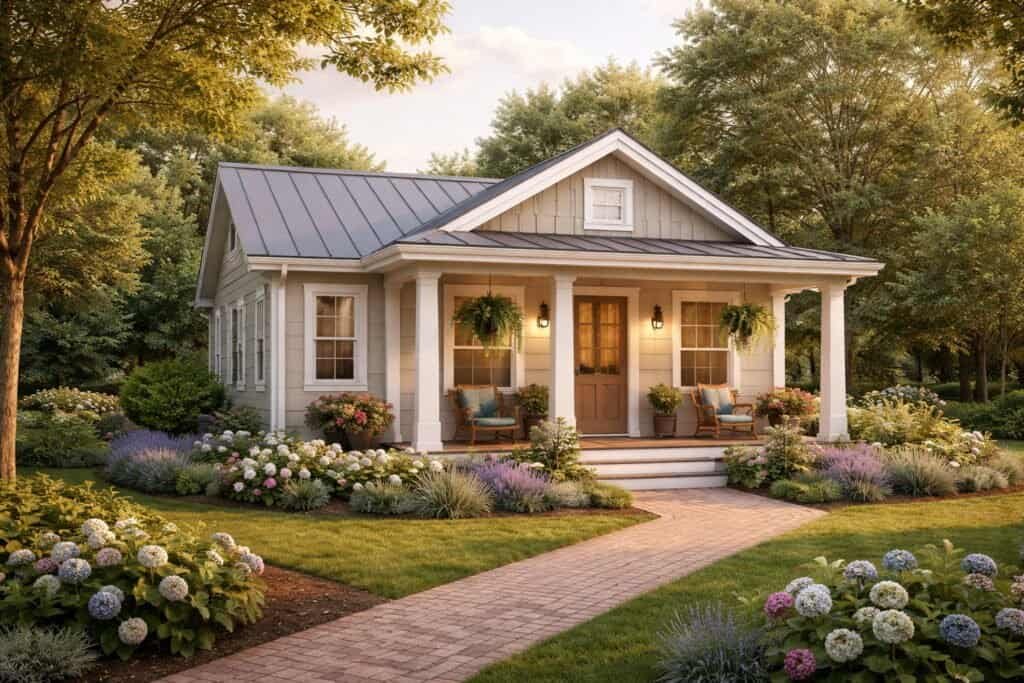
Cottage homes are charming, compact, and highly functional. Many retirees choose this style because it combines cozy design with manageable living space.
These homes typically range from 600 to 1,000 square feet and often feature inviting front porches, natural lighting, and efficient layouts.
Why cottages work well for seniors:
- Comfortable, homey atmosphere
- Lower heating and cooling costs
- Easy outdoor access
- Ideal for quiet retirement communities
Cottage designs are especially popular in senior living neighborhoods and retirement communities.
3. Backyard ADU (Accessory Dwelling Unit)
An ADU is a small independent home built on the same property as a main house. Many families build ADUs so aging parents can live nearby while still maintaining independence.
ADUs typically range from 400 to 800 square feet, making them perfect for minimalistic living.
Advantages include:
- Close proximity to family members
- Lower construction costs than full homes
- Independent living with nearby support
- Efficient use of existing property
For seniors who want to stay close to loved ones, an ADU can be an excellent housing solution.
4. Prefab Modular Senior Homes
Prefab or modular homes are factory-built and assembled on site. They are becoming increasingly popular because they are affordable, fast to build, and customizable.
Small prefab homes designed for seniors often include:
- Accessible bathrooms
- Wide doorways
- Step-free entrances
- Energy-efficient construction
Sizes typically range between 700 and 1,200 square feet, offering enough room for comfortable retirement living while keeping maintenance manageable.
5. Small Bungalow Home
Bungalows are compact homes known for their practical layout and efficient use of space. They are often designed with open living areas and fewer interior walls, which helps improve mobility and accessibility.
Typical features include:
- Ground-level entry
- Open living and kitchen spaces
- Covered porch for relaxation
- Simple floor plan that reduces navigation barriers
Bungalows are an excellent choice for seniors who want a traditional home feel with less space to maintain.
6. Accessible Tiny Home for Seniors
Some retirees prefer a tiny home specifically designed for accessibility. These homes are usually between 300 and 500 square feet and emphasize efficient living.
Senior-friendly tiny homes may include:
- No-step entryways
- Fold-down furniture
- Compact but accessible bathrooms
- Smart storage solutions
While tiny homes require downsizing possessions, they can significantly reduce living expenses and maintenance.
7. Small Retirement Cabin
A retirement cabin offers a peaceful lifestyle and is often located in nature-focused communities or rural areas.
Cabins designed for seniors typically include:
- Open layouts with large windows
- Durable materials requiring little maintenance
- Simple single-floor floor plans
- Outdoor living spaces like decks or patios
This option is ideal for retirees seeking a quiet, relaxed environment away from busy urban areas.
Choosing the Right Small House Design
The best small houses for seniors prioritize safety, accessibility, and long-term comfort. When evaluating designs, it’s important to consider features such as:
- Step-free entrances
- Single-level living
- Wider doorways and hallways
- Accessible bathrooms
- Low-maintenance materials
A thoughtfully designed small house can help seniors maintain independence while enjoying a comfortable and manageable home environment.
What Defines Small Houses for Seniors?
Small houses for seniors are purpose-built or adapted homes designed to support aging in place. These houses usually range between 600 and 1,200 square feet, offering enough room for comfort while eliminating unnecessary space.
Unlike tiny homes, which often prioritize extreme minimalism, small houses for seniors strike a balance between efficiency and livability. Ceiling heights remain standard, storage is built-in, and accessibility remains central to the design.
Core Characteristics of Small Houses for Seniors
- Single-level or minimal-step layouts
- Wide doorways and hallways
- Open-plan living areas for easy movement
- Low-maintenance exterior materials
- Safety-focused bathrooms and kitchens
Small Houses vs. Tiny Homes for Seniors
| Feature | Small Houses for Seniors | Tiny Homes |
| Average Size | 600–1,200 sq ft | 100–400 sq ft |
| Accessibility | High priority | Often limited |
| Storage | Built-in and practical | Minimal |
| Comfort Level | Designed for long-term living | Short-term or minimalist |
| Building Codes | Fully compliant | Varies by location |
Small houses for seniors are meant to be permanent residences, not lifestyle experiments. Space planning prioritizes daily routines such as cooking, bathing, resting, and hosting visitors without physical strain.
Key Benefits of Small Houses for Seniors
Choosing a smaller home delivers tangible lifestyle and financial advantages. These benefits go beyond square footage and directly impact long-term well-being.
Physical and Lifestyle Benefits
- Easier navigation without stairs
- Reduced risk of slips and falls
- Less cleaning and maintenance effort
- Better temperature control year-round
Daily living becomes simpler when everything is within reach. Clear sightlines and open layouts improve confidence and mobility, especially for seniors using walkers or mobility aids.
Financial Advantages
- Lower construction or purchase costs
- Reduced property taxes
- Decreased utility bills
- Minimal repair and maintenance expenses
A smaller footprint often means 30–50% lower monthly housing costs compared to traditional family homes. Fixed-income retirees benefit greatly from predictable, manageable expenses.
Emotional and Mental Well-Being
- Less clutter creates calmer living spaces
- Easier home management reduces stress
- Stronger sense of control and independence
Many seniors report improved quality of life after downsizing, citing fewer worries and greater enjoyment of daily routines.
“Once I moved into a small house designed for seniors, everything felt easier—cleaning, moving, even sleeping better.”
Safety-First Design in Small Houses for Seniors
Safety sits at the heart of every well-designed small house for seniors. Even minor design flaws can create daily challenges, while thoughtful details dramatically reduce the risk of injury and increase confidence at home.
Falls remain one of the leading causes of injury among older adults, which is why safety-focused architecture matters more than visual trends. Small houses for seniors are designed to remove hazards before they become problems.
Essential Safety Features
- Zero-step or low-threshold entrances
- Non-slip flooring throughout the home
- Wide doorways (minimum 32–36 inches)
- Rounded countertop edges
- Lever-style door handles and faucets
Lighting also plays a critical role. Bright, evenly distributed lighting reduces eye strain and improves depth perception, especially in hallways, kitchens, and bathrooms.
Bathroom Safety in Small Houses for Seniors
Bathrooms deserve special attention because they present the highest risk area in any home.
Recommended features include:
- Walk-in or roll-in showers
- Built-in shower seating
- Reinforced walls for grab bars
- Raised or comfort-height toilets
| Bathroom Feature | Safety Benefit |
| Walk-in shower | Eliminates tripping hazards |
| Grab bars | Provides balance support |
| Non-slip tiles | Reduces fall risk |
| Handheld shower | Improves control and comfort |
Thoughtful bathroom design allows seniors to maintain privacy and independence while staying safe.
A one-story tiny house for seniors can significantly reduce fall risk because all essential spaces are located on a single level
Aging-in-Place Features Every Small House for Seniors Should Have
Aging in place means staying in the same home comfortably and safely as needs change over time. Small houses for seniors excel at this because they are easier to adapt than larger homes.
Rather than reacting to mobility challenges later, smart homeowners plan ahead. The goal is to make daily living easier now while preparing for the future.
Must-Have Aging-in-Place Elements
- Step-free entryways
- Bedroom and full bathroom on the main level
- Reinforced walls for future grab bars
- Adjustable-height countertops
- Easy-to-reach storage
Kitchens in small houses for seniors often feature pull-out shelves, soft-close drawers, and front-control appliances. These features minimize bending and stretching, reducing strain on joints.
Technology That Supports Independence
Modern small houses for seniors often integrate subtle smart features that enhance safety without feeling intrusive.
Examples include:
- Motion-activated lighting
- Smart thermostats
- Video doorbells
- Emergency alert systems
Well-designed technology fades into the background while quietly improving daily life.
Planning for aging in place protects both independence and long-term housing value.
Floor Plan Ideas That Work Best in Small Houses for Seniors
A successful floor plan balances openness with privacy. Small houses for seniors rely on efficient layouts rather than excessive square footage.
Open-concept living spaces help with navigation and visibility, making the home feel larger while improving safety.
Popular Floor Plan Options
- One-bedroom layouts with flex space
- Split-bedroom designs for couples
- Open kitchen–living–dining areas
- Compact guest rooms or home offices
| Layout Type | Best For |
| One-bedroom + den | Solo seniors or hobbies |
| Two-bedroom | Couples or visiting family |
| Open-plan | Mobility and social living |
| Split-bedroom | Privacy and noise control |
Storage should be built into walls, benches, and cabinetry to avoid clutter. Clear pathways matter more than decorative extras.
Furniture Placement Tips
- Keep walkways at least 36 inches wide
- Avoid sharp corners in high-traffic areas
- Anchor rugs or remove them entirely
- Choose furniture with firm seating and armrests
A well-planned floor plan allows seniors to move confidently through their home without obstacles or frustration.
Example Floor Plan for Small Houses for Seniors
A well-designed floor plan makes a major difference in how comfortable and safe a small house feels for older adults. Senior-friendly layouts prioritize simplicity, open space, and easy navigation.
A typical small house for seniors may include:
- Open living and kitchen area for easier movement
- Single bedroom on the main floor to avoid stairs
- Wide hallways and doorways for walkers or wheelchairs
- Accessible bathroom near the bedroom
- Minimal steps or level flooring throughout the home
Most small houses designed for seniors range between 600 and 1,000 square feet, which provides enough living space without creating unnecessary maintenance.
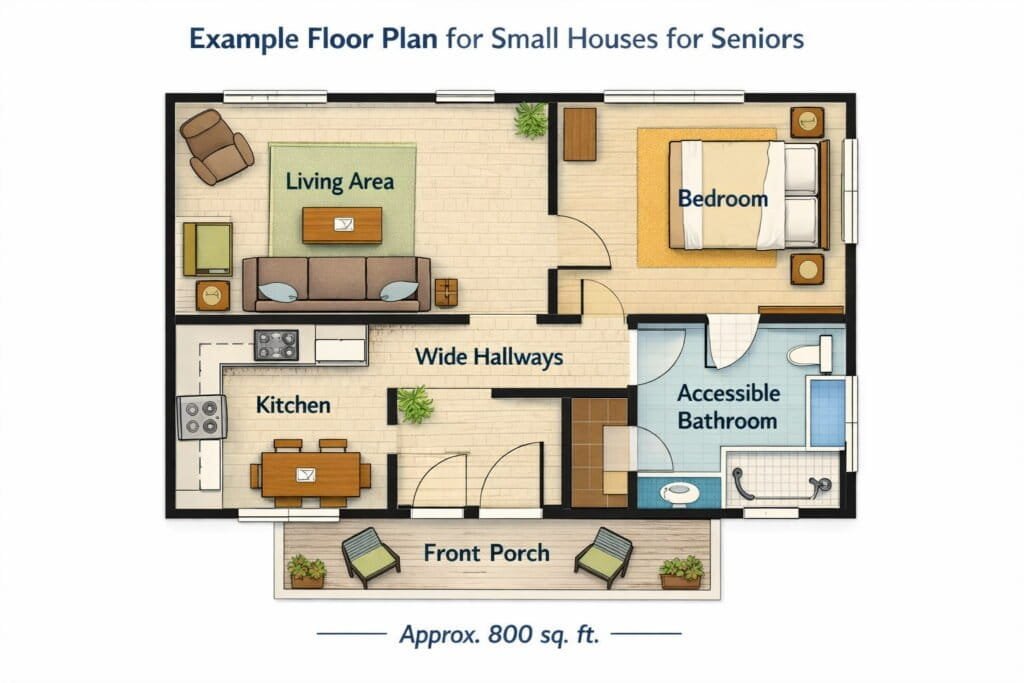
Many retirees prefer one-story small homes for seniors over 60 because they eliminate stairs and make daily movement easier throughout the home
Comfort and Mobility in Small Houses for Seniors
Comfort and mobility go hand in hand when designing small houses for seniors. A home that feels good to live in must also support smooth, confident movement throughout every room.
Mobility-friendly design reduces fatigue and preserves independence. Clear paths, ergonomic features, and practical spacing allow seniors to move freely without hesitation.
Mobility-Friendly Design Principles
- Continuous, level flooring with no transitions
- Hallways and walkways at least 36 inches wide
- Doorways that accommodate walkers and wheelchairs
- Minimal thresholds between indoor and outdoor spaces
Furniture selection also affects mobility. Chairs with firm cushions, higher seat heights, and supportive armrests make sitting and standing easier.
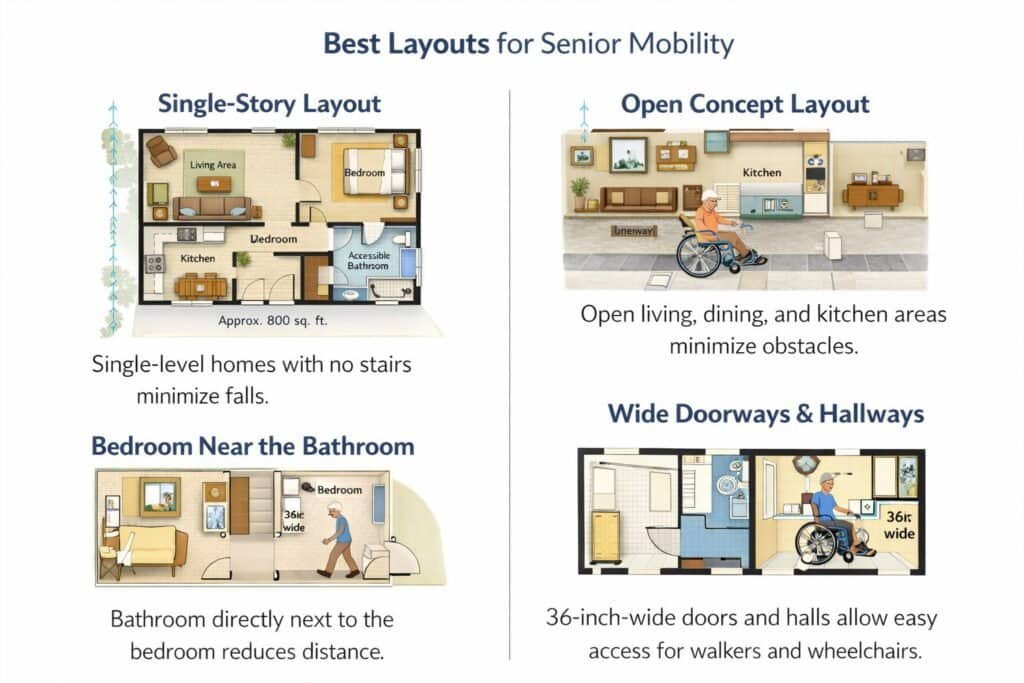
Best Layouts for Senior Mobility
Certain home layouts naturally support mobility and reduce the risk of accidents.
The most effective layouts include:
Single-Story Layout
Single-level homes eliminate the need for stairs, which significantly reduces fall risks and makes daily living easier.
Open Concept Layout
An open kitchen, dining, and living area removes tight corners and narrow walkways.
Bedroom Near the Bathroom
Placing the bathroom next to the bedroom minimizes nighttime walking distance.
Wide Doorways and Hallways
Doorways of at least 36 inches allow wheelchairs and walkers to move comfortably through the home.
Comfort Features That Matter Daily
- Balanced natural and artificial lighting
- Quiet insulation for better rest
- Climate control that maintains steady temperatures
- Soft-close cabinets and drawers
Small houses for seniors feel comfortable not because they are smaller, but because they are thoughtfully designed.
When mobility needs change, adaptable spaces prevent the need for major renovations or relocation.
Energy Efficiency and Cost Savings in Small Houses for Seniors
Energy efficiency is a major advantage of small houses for seniors. A smaller footprint requires less energy to heat, cool, and maintain, resulting in meaningful long-term savings.
Modern construction standards make it possible for seniors to live comfortably while keeping monthly costs predictable and manageable.
Energy-Saving Features Commonly Used
- High-performance insulation
- Energy-efficient windows and doors
- LED lighting throughout the home
- Energy Star–rated appliances
| Feature | Estimated Savings Impact |
| LED lighting | Up to 75% less energy use |
| Efficient HVAC | 20–30% lower heating costs |
| Insulated windows | Improved temperature stability |
| Solar panels | Reduced electricity bills |
Many small houses for seniors incorporate solar-ready roofs or compact solar systems. Even partial solar installations can significantly offset utility costs over time.
Why Efficiency Matters on Fixed Incomes
- Lower monthly bills
- Fewer unexpected expenses
- Reduced reliance on external assistance
Energy efficiency supports financial independence just as much as physical accessibility.
Location Choices for Small Houses for Seniors
Location plays a critical role in how well small houses for seniors support daily living. Even the best-designed home loses value if it sits far from essential services.
Smart location planning prioritizes convenience, safety, and social connection.
Best Location Factors to Consider
- Proximity to healthcare facilities
- Easy access to grocery stores and pharmacies
- Reliable public transportation
- Walkable neighborhoods
Comparing Location Options
| Location Type | Pros | Considerations |
| Urban areas | Healthcare access, transit | Higher land costs |
| Suburban areas | Quiet, balanced access | Driving may be needed |
| Rural settings | Peaceful, affordable land | Distance from services |
Many seniors prefer age-friendly communities that blend privacy with shared amenities. These neighborhoods often include walking paths, community centers, and maintenance services that reduce daily burdens.
“The right location can make a small house feel larger by connecting it to the right community.”
A well-chosen location enhances independence, safety, and long-term satisfaction.
Custom-Built vs. Prefab Small Houses for Seniors
Choosing between a custom-built home and a prefabricated option is a major decision when planning small houses for seniors. Each approach offers distinct advantages depending on budget, timeline, and personal needs.
Custom-built small houses for seniors allow full control over layout, materials, and accessibility features. Everything can be tailored to current and future mobility requirements, making this option ideal for long-term aging in place.
Custom-Built Small Houses for Seniors
- Fully personalized floor plans
- Easier integration of accessibility features
- Greater flexibility in materials and finishes
- Longer construction timelines
Prefab small houses for seniors, on the other hand, are factory-built and assembled on-site. These homes follow standardized designs but often meet modern safety and efficiency standards.
Prefab Small Houses for Seniors
- Faster build and installation
- Predictable pricing
- Energy-efficient construction
- Limited customization options
| Factor | Custom-Built | Prefab |
| Build Time | 6–12 months | 8–16 weeks |
| Customization | High | Moderate |
| Cost Control | Variable | More predictable |
| Aging-in-Place Adaptability | Excellent | Good |
The best choice depends on whether flexibility or speed matters more.
Interior Design Tips for Small Houses for Seniors
Interior design in small houses for seniors goes beyond appearance. Good design improves safety, visibility, and everyday comfort while keeping spaces inviting and calm.
Color choices play a bigger role than many realize. High-contrast colors help distinguish walls, floors, and furniture, reducing visual confusion.
Senior-Friendly Interior Design Strategies
- Use warm, neutral tones with contrast accents
- Avoid glossy surfaces that create glare
- Choose matte finishes for floors and countertops
- Install layered lighting: ambient, task, and accent
Furniture should serve both comfort and stability. Lightweight yet sturdy pieces allow easy movement without sacrificing support.
Lighting That Supports Daily Living
- Under-cabinet lighting in kitchens
- Night lighting in hallways and bathrooms
- Dimmable fixtures for eye comfort
Well-lit rooms reduce accidents and make small houses feel more open and welcoming.
Common Mistakes to Avoid When Choosing Small Houses for Seniors
Many buyers focus on appearance or cost alone, overlooking long-term functionality. Avoiding common mistakes helps ensure that small houses for seniors remain comfortable and practical for years.
Mistakes That Limit Aging in Place
- Choosing multi-level designs without future planning
- Ignoring doorway and hallway widths
- Underestimating storage needs
- Prioritizing style over safety
Another frequent error involves selecting a home that works today but cannot adapt later. Mobility changes are natural with age, and homes must evolve accordingly.
Planning Smart from the Start
- Design for accessibility even if not immediately needed
- Include flexible spaces for caregivers or equipment
- Budget for quality materials that last
“The cost of fixing poor design later is often higher than building smart from the beginning.”
Avoiding these pitfalls protects both comfort and investment.
One-Story Small House Designs for Seniors
One-story homes are often the safest and most convenient option for older adults. Without stairs, daily tasks such as cleaning, cooking, and moving between rooms become much easier.
Popular one-story designs include:
- Small ranch homes
- Compact cottages
- Prefab senior homes
- Backyard accessory dwelling units (ADUs)
These designs allow seniors to live independently while maintaining a comfortable and manageable space.
Small Houses for Seniors Under 1,000 Sq Ft
Small houses for seniors under 1,000 square feet strike a balance between comfort, affordability, and easy maintenance. Many retirees discover that a thoughtfully designed smaller home provides everything needed for daily living while eliminating the burden of unused space.
Homes within this size range typically include one or two bedrooms, an accessible bathroom, and an open living area that allows easy movement. Thoughtful layouts make these houses feel spacious while keeping utilities, upkeep, and property taxes manageable.
Aging in place becomes easier when every square foot is designed intentionally.
“Downsizing does not mean sacrificing comfort. Smart design often creates better living spaces in smaller homes.”
Why Seniors Prefer Homes Under 1,000 Sq Ft
Retirees increasingly choose smaller homes because they simplify life in many practical ways. Maintenance tasks become manageable, mobility improves, and living expenses remain predictable.
Several benefits stand out.
Key Advantages
Lower maintenance
- Smaller homes require less cleaning
- Exterior upkeep becomes easier
- Fewer repairs and maintenance costs
Reduced utility bills
- Heating and cooling smaller spaces costs less
- Energy efficiency improves naturally
- Monthly expenses stay predictable on fixed incomes
Better mobility
- Shorter distances between rooms
- Easier navigation with walkers or wheelchairs
- Less risk of falls on stairs or large floor areas
Improved safety
- Single-story designs eliminate stair hazards
- Smaller layouts allow better lighting coverage
- Emergency response becomes easier
Many seniors also appreciate the psychological comfort of manageable living spaces. A home that is easy to maintain supports independence longer.
Ideal Size Range for Senior-Friendly Small Homes
Small houses can vary widely in size. Each range offers different advantages depending on lifestyle needs.
| Home Size | Typical Layout | Best For |
| 500–600 sq ft | Studio or 1 bedroom | Minimalist retirees |
| 600–800 sq ft | 1 bedroom + living area | Singles or couples |
| 800–1000 sq ft | 1–2 bedrooms | Couples or visiting family |
Homes closer to 900–1000 sq ft often feel spacious enough for hobbies, guests, or a small office.
Example Layouts for Small Houses for Seniors Under 1,000 Sq Ft
Thoughtful layouts make smaller homes feel significantly larger. Designers often focus on open spaces, natural lighting, and easy movement.
Here are several popular layouts that work exceptionally well.
1. The 600 Sq Ft Senior Cottage
Small cottages offer charm and simplicity while providing essential living space.
Typical layout
- One bedroom
- Open kitchen and living area
- Accessible bathroom
- Small porch or patio
Why it works
- Compact footprint
- Minimal upkeep
- Cozy and comfortable atmosphere
Many retirement communities use this design because it encourages community interaction while maintaining privacy.
2. The 750 Sq Ft Accessible Ranch
Accessible ranch-style homes remain one of the most popular choices for retirees.
Key features
- Single-story layout
- Wide hallways
- Step-free entrance
- Open living room and kitchen
This type of home allows seniors to move safely between spaces without obstacles.
3. The 850 Sq Ft Downsizing Bungalow
Bungalows under 1,000 sq ft provide slightly more flexibility.
Typical features include:
- Two small bedrooms
- Open kitchen and dining space
- Accessible bathroom
- Storage closets
- Outdoor seating area
Many seniors choose this design because it provides space for visiting grandchildren or caregivers.
4. The 900 Sq Ft Retirement Cottage
Retirement cottages often emphasize comfort and natural light.
Common elements include:
- Large windows
- Open living areas
- Covered porch
- Accessible shower
Natural lighting plays a major role in senior-friendly design. Bright interiors improve visibility, mood, and safety.
5. The 950 Sq Ft Compact Farmhouse
Farmhouse-style small homes combine traditional design with modern accessibility.
Design highlights
- Open kitchen island
- Large living area
- One or two bedrooms
- Walk-in shower
- Covered front porch
A porch becomes more than decoration. It creates a space for relaxation and social interaction.
Smart Space-Saving Design Strategies
Design determines whether a small house feels cramped or comfortable. Clever design choices dramatically improve functionality.
Popular space-saving strategies
Open floor plans
- Kitchen, dining, and living spaces merge together
- Fewer walls create visual openness
Multi-purpose rooms
- Guest room doubles as office
- Dining space becomes hobby area
Built-in storage
- Cabinets integrated into walls
- Hidden storage under seating
Pocket doors
- Sliding doors save space
- Easier for seniors with mobility aids
Accessibility Features for Homes Under 1,000 Sq Ft
Accessibility should always be integrated into the initial design. Retrofitting later can be expensive and inconvenient.
Important aging-in-place features include:
- Step-free entrances
- Wide doorways (36 inches minimum)
- Walk-in showers
- Non-slip flooring
- Lever-style door handles
- Lower kitchen counters
- Good lighting throughout the home
Small homes become far more functional when accessibility is considered from the beginning.
Estimated Costs for Small Houses Under 1,000 Sq Ft
Construction and purchase prices vary by region, materials, and design choices. Still, typical ranges provide useful planning guidance.
| Home Size | Estimated Cost Range |
| 500–600 sq ft | $80,000 – $150,000 |
| 600–800 sq ft | $100,000 – $180,000 |
| 800–1000 sq ft | $120,000 – $250,000 |
Prefab and modular homes often reduce costs compared to custom builds.
Land prices, permits, and site preparation may increase total expenses.
Real-Life Example: A Senior Downsizing Case Study
Margaret, a 68-year-old retiree from Oregon, moved from a 2,300 sq ft suburban house into a 780 sq ft retirement cottage.
Her experience highlights the advantages of downsizing.
Before downsizing
- High maintenance costs
- Rooms rarely used
- Expensive heating bills
After moving to a smaller home
- Utility bills dropped by nearly 40%
- Cleaning time reduced dramatically
- Home became easier to navigate safely
Margaret described the transition simply:
“The smaller house feels more comfortable, not smaller.”
Key Considerations Before Choosing a Small Senior Home
Selecting the right size involves more than just square footage. Lifestyle, health needs, and long-term plans all matter.
Important factors include:
- Future mobility needs
- Proximity to healthcare
- Space for visiting family
- Outdoor living areas
- Storage requirements
- Accessibility features
Careful planning ensures the home remains comfortable for decades rather than just a few years.
Why Small Homes Under 1,000 Sq Ft Work So Well for Seniors
Smaller homes support a lifestyle focused on comfort, simplicity, and independence. Reduced expenses, easier maintenance, and safer layouts allow retirees to focus on enjoying their time rather than managing a large property.
Thoughtful design ensures that even modest spaces provide everything necessary for comfortable living.
Many retirees ultimately discover that less space often leads to a better quality of life.
Cost Breakdown: What Small Houses for Seniors Typically Cost
Understanding the real cost of small houses for seniors helps buyers plan with confidence. Prices vary by location, materials, and whether the home is custom-built or prefabricated, yet smaller homes consistently offer better long-term affordability than traditional houses.
Most small houses for seniors fall within a 600–1,200 square foot range, which significantly reduces construction and ownership costs.
Typical Cost Ranges
| Cost Category | Estimated Range |
| Prefab small house | $60,000 – $120,000 |
| Custom-built small house | $120,000 – $250,000 |
| Land (location dependent) | $20,000 – $150,000 |
| Monthly utilities | $80 – $150 |
| Annual maintenance | 30–40% less than large homes |
Lower utility usage, smaller roofs, and fewer mechanical systems reduce ongoing expenses. Seniors living on fixed incomes benefit from predictable costs and fewer financial surprises.
Smaller homes don’t just cost less to build—they cost less to live in year after year.
Long-term savings often outweigh the initial investment, especially when aging-in-place features reduce the need for assisted living later.
Some seniors with limited income explore grants or housing assistance programs. Understanding tiny house free qualification requirements can help determine whether financial support programs are available.
Who Should Consider Small Houses for Seniors?
Small houses for seniors are not a one-size-fits-all solution, yet they suit a wide range of lifestyles and retirement goals. The key factor is a desire for independence without unnecessary complexity.
Ideal Candidates
- Independent seniors wanting to age in place
- Couples downsizing after children move out
- Retirees seeking lower housing expenses
- Seniors prioritizing safety and simplicity
These homes work especially well for individuals who prefer manageable spaces over excess square footage. Less space often means more freedom—freedom from cleaning, repairs, and constant upkeep.
When Small Houses for Seniors May Not Be Ideal
- Those needing full-time medical care
- Seniors who prefer multi-generational living
- Individuals uncomfortable with downsizing
Choosing the right housing option requires honest lifestyle evaluation rather than following trends.
Special housing programs also exist for groups such as veterans, where tiny houses for veterans are used as affordable housing solutions and community support programs
FAQ: Small Houses for Seniors
What size house is best for seniors?
The ideal house size for seniors usually ranges between 600 and 1,200 square feet. Homes within this range are easier to maintain, require less cleaning, and can still provide enough space for comfortable living. Many seniors prefer single-story layouts to avoid stairs and improve mobility.
Are small houses good for seniors?
Yes, small houses can be an excellent option for seniors. They reduce maintenance, lower utility costs, and make daily living easier. When designed with aging-in-place features like wider doorways, step-free entrances, and accessible bathrooms, small houses can support independence for many years.
What features should small houses for seniors include?
Senior-friendly small houses should prioritize safety, accessibility, and comfort. Important features often include:
- Step-free entrances
- Wider doorways and hallways
- Non-slip flooring
- Walk-in showers with grab bars
- Good lighting throughout the home
- Single-level floor plans
These features help reduce fall risks and support mobility as people age.
How much do small houses for seniors cost?
The cost of small houses for seniors varies depending on size, location, and construction type. In many areas, prices typically range from $80,000 to $250,000. Prefabricated homes or modular houses may cost less, while custom-built homes with accessibility features can cost more.
Are prefab small houses a good option for seniors?
Prefab small houses can be a practical choice for seniors because they are often more affordable and quicker to build than traditional homes. Many manufacturers also offer customizable layouts that include accessibility features such as wider doorways, accessible bathrooms, and step-free entryways.
Can seniors age in place in a small house?
Yes, small houses can be designed specifically for aging in place. Features like single-level living, accessible bathrooms, lever-style door handles, and smart home technology can make a small house comfortable and safe for long-term living.
Where are small houses for seniors commonly located?
Small houses for seniors can be found in several settings, including retirement communities, suburban neighborhoods, rural areas, and backyard accessory dwelling units (ADUs). Some seniors choose small homes in communities designed for older adults because they offer shared amenities and social opportunities.
What is the difference between tiny homes and small houses for seniors?
Tiny homes are typically under 400 square feet, while small houses for seniors are usually larger, often between 600 and 1,200 square feet. Small houses provide more living space, larger kitchens, and accessible layouts that may be better suited for long-term senior living.
Do small houses reduce living expenses for seniors?
Yes, smaller homes usually come with lower utility bills, reduced maintenance costs, and sometimes lower property taxes. These savings can be especially helpful for seniors living on a fixed retirement income.
Is downsizing to a small house a good idea for retirement?
Downsizing to a small house can help simplify life during retirement. Many seniors appreciate having fewer rooms to maintain, lower expenses, and a home that is easier to navigate. A thoughtfully designed small house can provide both comfort and independence.
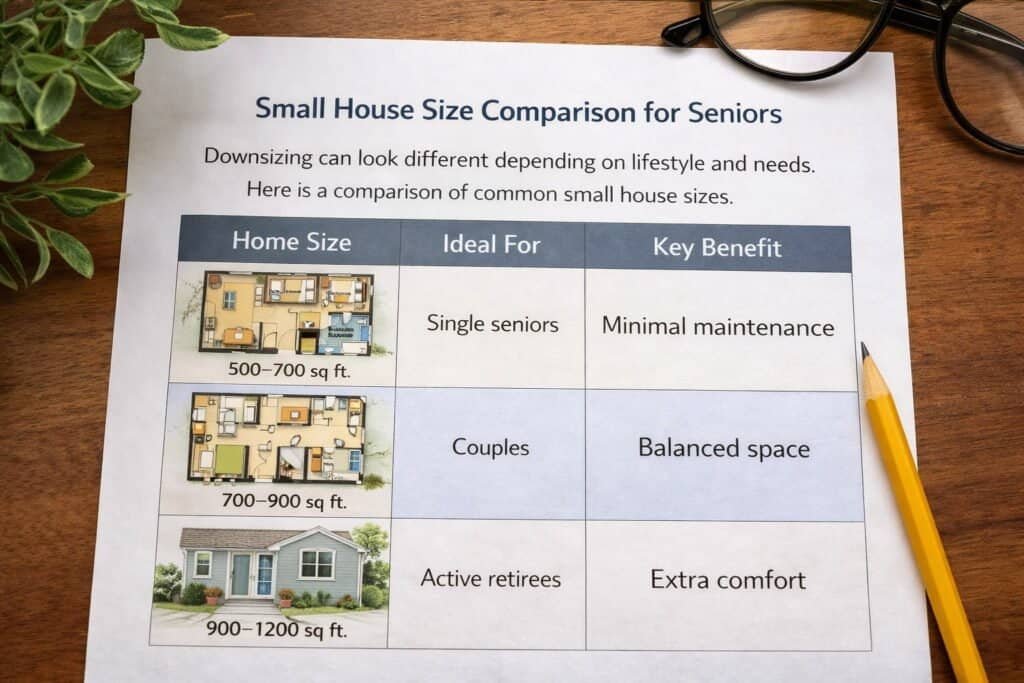
Small House Size Comparison for Seniors
Downsizing can look different depending on lifestyle and needs. Here is a comparison of common small house sizes.
| Home Size | Ideal For | Key Benefit |
|---|---|---|
| 500–700 sq ft | Single seniors | Minimal maintenance |
| 700–900 sq ft | Couples | Balanced space |
| 900–1200 sq ft | Active retirees | Extra comfort |
Final Thoughts: Are Small Houses for Seniors the Right Choice?
Small houses for seniors represent a thoughtful response to changing needs later in life. They blend comfort, safety, affordability, and independence into a housing solution that supports aging with dignity.
Rather than focusing on what is lost when downsizing, many seniors discover what is gained:
- Easier daily living
- Greater financial security
- Reduced physical strain
- Peace of mind for the future
Well-designed small houses for seniors allow people to stay connected to their routines, neighborhoods, and sense of autonomy—often for far longer than traditional homes allow.
For authoritative guidance on aging, housing, and long-term planning, resources from the National Institute on Aging offer valuable, research-backed insights into aging-in-place housing considerations: https://www.nia.nih.gov
Choosing the right home is not about square footage—it’s about living well, safely, and confidently at every stage of life.
