
Tiny black ants can take over your kitchen or sink area almost overnight—but the good news is you can kill tiny black ants naturally without harsh chemicals or expensive treatments.
This guide walks you through fast-acting natural solutions, why ants keep showing up, and how to stop them for good—especially in small homes and tiny houses where space (and food smells) are harder to control.
Whether you’re dealing with a few stray ants or a growing trail across your countertop, you’ll learn exactly what works, what doesn’t, and how to fix the problem at the source.
In This Article
Quick Answer: How to Kill Tiny Black Ants Naturally (Fast Fix Guide)
Need results right now? These natural methods can eliminate tiny black ants quickly and safely.
Fastest Natural Ant Killers
- Vinegar Spray (1:1 with water)
Instantly kills ants on contact and erases their scent trails. - Lemon Juice Barrier
Disrupts their navigation system and keeps them from returning. - Baking Soda + Sugar Bait
Sugar attracts ants, baking soda reacts internally and kills them. - Boiling Water (for outdoor nests)
Effective for destroying colonies near your home’s foundation.
When to Use Each Method
| Situation | Best Natural Solution |
| Ants on counters | Vinegar spray |
| Entry points/windows | Lemon juice or essential oils |
| Ongoing infestation | Baking soda + sugar bait |
| Outdoor nest | Boiling water |
Safety Tip
Natural doesn’t always mean harmless. Keep solutions like baking soda mixtures out of reach of pets and small children. Vinegar and lemon are generally safe for most surfaces but can damage natural stone.
What Are Tiny Black Ants? (And Why They Invade Your Home)
Those tiny black ants you see marching in lines are usually sugar ants or pavement ants—both extremely common in U.S. homes.
They’re not random visitors. They’re highly organized foragers searching for three things:
- Food (especially sweets and greasy crumbs)
- Water (leaky pipes, damp sinks, condensation)
- Shelter (cracks, gaps, and hidden entry points)
Why They Appear So Suddenly
One day your kitchen is clean. The next day, there’s a trail of ants.
Here’s what’s really happening:
- A scout ant finds food and leaves a pheromone trail
- Other ants follow that invisible trail
- Within hours, you have a steady stream of ants
Killing visible ants isn’t enough—the colony is still active and sending reinforcements.
Common Entry Points You Might Be Missing
- Tiny cracks around windows and doors
- Gaps under baseboards
- Openings around plumbing pipes
- Unsealed food storage areas
Small homes and tiny houses often have more compact layouts, which means ants can quickly move from one area to another without being noticed.
Top Causes of Tiny Black Ant Infestations (Most People Miss This)
Most people assume ants show up because of obvious messes. In reality, the biggest triggers are often hidden in plain sight.
Hidden Causes That Attract Ants
- Microscopic food residue
Even a thin film of sugar on a countertop can attract ants. - Moisture buildup
Damp sinks, drains, and pipes are major attractants. - Trash habits
Overflowing bins or sticky recycling containers invite infestations. - Outdoor nesting nearby
Colonies often live just outside your walls and send scouts inside.
What Most People Get Wrong
Cleaning alone won’t solve the problem.
Here’s why:
- Ants follow scent trails, not just food
- Colonies keep sending new ants even after cleaning
- Moisture issues often go untreated
Real-World Example
In many tiny homes, the kitchen and living space overlap. A single forgotten coffee spill or fruit bowl can attract ants quickly—and because space is limited, the infestation spreads faster than in larger homes.
Best Natural Ways to Kill Tiny Black Ants (Proven & Non-Toxic)
Natural solutions can be incredibly effective—if you use the right method for the situation. Some kill ants instantly, while others target the colony over time.
Vinegar Solution (Kills + Erases Trails)
Mix equal parts white vinegar and water in a spray bottle.
- Spray directly on ants to kill them instantly
- Wipe down surfaces to remove scent trails
- Reapply daily in problem areas
Best for: countertops, sinks, entry points
Watch out: Avoid using on granite or natural stone
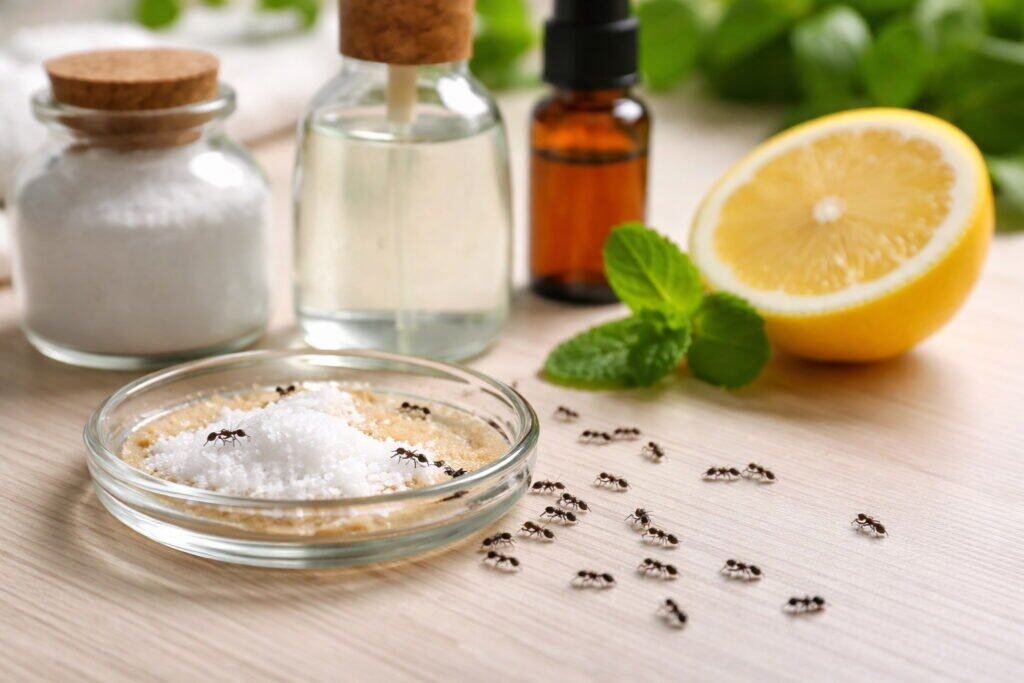
Baking Soda + Sugar Bait (Colony Killer)
This method targets the root of the problem—the colony.
- Mix equal parts baking soda and sugar
- Place in shallow containers near ant trails
- Ants carry it back to the nest, eliminating others
Why it works: baking soda reacts inside ants’ digestive systems
Best for: persistent infestations
Diatomaceous Earth (Natural Dehydrator)
Food-grade diatomaceous earth is a fine powder that damages ants’ exoskeletons.
- Sprinkle along baseboards, cracks, and entry points
- Leave undisturbed for 24–48 hours
- Vacuum and reapply as needed
Best for: dry indoor areas
Important: use food-grade only and avoid inhaling dust
Essential Oils (Natural Repellent + Disruptor)
Strong scents confuse and repel ants.
- Peppermint, tea tree, and clove oils work best
- Mix 10–15 drops with water in a spray bottle
- Apply to entry points and trails
Best for: prevention and light infestations
Bonus: leaves your home smelling fresh
Boiling Water (Outdoor Colony Destroyer)
For nests outside your home:
- Locate the ant mound or entry hole
- Pour boiling water directly into it
- Repeat if necessary
Best for: pavement ants near foundations
Limitation: may not reach deep colonies
Quick Comparison: Which Natural Method Should You Use?
| Method | Kills Instantly | Kills Colony | Best Use Case |
| Vinegar spray | ✔ | ✖ | Indoor surfaces & trails |
| Baking soda + sugar | ✖ | ✔ | Ongoing infestations |
| Diatomaceous earth | ✔ | Partial | Entry points & dry areas |
| Essential oils | ✖ | ✖ | Prevention & light control |
| Boiling water | ✔ | ✔ | Outdoor nests |
Best strategy: combine 2–3 methods for faster, long-lasting results.
Step-by-Step: How to Eliminate Tiny Black Ants Naturally (From Start to Finish)
Random treatments won’t solve the problem. A structured approach ensures you eliminate both the ants you see and the colony behind them.
Step 1: Identify the Ant Trail
Watch where ants are coming from and where they’re going.
- Look along walls, edges, and under cabinets
- Follow the line to locate entry points
Step 2: Kill Visible Ants Immediately
Use vinegar spray or soapy water to stop the active trail.
- This provides instant relief
- Prevents more ants from reinforcing the trail
Step 3: Destroy Scent Trails (Critical Step)
Ants rely on invisible chemical trails to navigate.
- Wipe surfaces with vinegar or lemon solution
- Clean thoroughly, not just where you see ants
Skipping this step is the #1 reason ants return.
Step 4: Set Natural Bait Traps
Place baking soda + sugar mixture near active areas.
- Avoid spraying repellents nearby (it can deter ants from taking bait)
- Give it 24–48 hours to work
Step 5: Locate and Treat the Nest
If possible:
- Treat outdoor nests with boiling water
- Apply diatomaceous earth near suspected indoor nesting spots
Step 6: Seal Entry Points
Once activity slows:
- Caulk cracks and gaps
- Seal around windows, doors, and pipes
Step 7: Monitor and Repeat if Needed
Check for new activity over the next few days.
- Reapply bait if necessary
- Stay consistent with cleaning and prevention
Consistency beats intensity when it comes to natural pest control.
Natural Ant Repellents That Actually Keep Them Away
Killing ants is only half the battle. Repelling them prevents future invasions—especially in compact spaces where reinfestation happens quickly.
Most Effective Natural Repellents
- Lemon juice & citrus peels
Break scent trails and create a barrier ants avoid - Cinnamon
Strong smell disrupts their navigation - Coffee grounds
Useful for outdoor perimeters and garden edges - Vinegar perimeter spray
Works well around windows and door frames - Chalk or talcum powder
Creates a physical barrier ants hesitate to cross
When Repellents Work (and When They Don’t)
Repellents are great for:
- Preventing new ants from entering
- Blocking known entry points
- Supporting other treatments
Repellents are not ideal for:
- Active infestations with established colonies
- Situations where ants need to carry bait back to the nest
Pro Tip Most Homeowners Miss
Don’t use repellents and bait in the same spot.
Repellents push ants away, while bait needs ants to approach and carry it back. Using both together cancels out their effectiveness.
Common Mistakes When Trying to Kill Tiny Black Ants Naturally
Natural methods work—but only if you avoid the pitfalls that cause ants to keep coming back.
Only Killing the Ants You See
Spraying a few ants on your counter feels satisfying, but it doesn’t solve the problem.
- The colony remains active
- More ants will follow the same trail within hours
Real fix: combine instant kill (vinegar) with bait that targets the nest.
Skipping Scent Trail Removal
Ants don’t wander randomly—they follow invisible pheromone paths.
- Ignoring trails = guaranteed reinfestation
- Even spotless surfaces can still carry scent markers
Solution: always wipe down with vinegar or lemon after killing ants.
Using Repellents Too Early
Repellents seem like a good idea, but timing matters.
- They block ants from reaching bait
- Colonies remain untouched and continue growing
Better approach: use bait first, repellents later for prevention.
Inconsistent Application
Natural methods aren’t “set it and forget it.”
- Skipping days allows ants to regroup
- Partial treatment reduces effectiveness
Key takeaway: consistency is what makes natural solutions work.
Ignoring Moisture Issues
Food isn’t the only attractant—water is just as important.
- Leaky pipes under sinks
- Damp sponges or dishcloths
- Condensation in small kitchens
Fixing moisture problems often reduces ant activity dramatically.
How to Prevent Tiny Black Ants Naturally (Long-Term Protection)
Once the ants are gone, prevention becomes your best defense—especially in small homes where a single crumb can attract a new colony.
Daily Habits That Make a Big Difference
- Wipe down countertops after every meal
- Store food in airtight containers
- Sweep or vacuum high-traffic areas
- Rinse dishes instead of leaving them overnight
Small effort, big impact.
Weekly Cleaning Routine
- Deep clean under appliances
- Wash trash cans and recycling bins
- Check pantry shelves for spills or crumbs
Tiny homes benefit from frequent micro-cleaning, since everything is closer together.
Seal and Secure Your Home
- Caulk cracks along baseboards
- Seal gaps around pipes and wiring
- Install door sweeps if needed
Blocking entry points is one of the most effective long-term fixes.
Control Moisture at the Source
- Fix leaks quickly
- Use a small dehumidifier in humid areas
- Keep sinks and drains dry overnight
Dry spaces are far less attractive to ants.
Outdoor Prevention Tips
- Keep vegetation trimmed away from walls
- Avoid placing food waste near the house
- Treat outdoor nests early
A proactive approach outside reduces pressure indoors.
How This Problem Affects Tiny Homes and Small Spaces
Tiny black ants behave differently in compact living environments—and the impact can be much more noticeable.
Why Infestations Spread Faster in Small Homes
- Shorter distances between food and nesting areas
- Fewer barriers to slow movement
- Open layouts that connect kitchen and living spaces
In a tiny house, ants don’t need to travel far—they can reach everything quickly.
Limited Storage Increases Risk
Small kitchens often mean:
- Open shelving
- Multi-use counters
- Less space for sealed containers
Even minor food exposure becomes a bigger issue.
Multi-Use Spaces Create Hidden Hotspots
When your kitchen, dining, and living area overlap:
- Crumbs travel easily
- Spills go unnoticed
- Ant trails spread across multiple zones
This is why tiny homes require faster response times to pest issues.
Smart Strategies for Tight Spaces
- Use compact, sealed storage containers
- Clean immediately after cooking
- Focus on “high-risk zones” like sinks and trash areas
- Rotate natural treatments (bait + cleaning + sealing)
Related Issues in Small Homes
Tiny black ants are often just one piece of a bigger puzzle—especially in compact living spaces. When one pest shows up, others may not be far behind.
Ants in Sinks and Drains
Moisture-rich areas like sinks are prime hotspots.
- Food residue builds up in drains
- Constant water access attracts ants
- Hidden entry points exist around plumbing
If this sounds familiar, it’s worth diving deeper into how to handle ants specifically in sink areas, since the approach is slightly different from general infestations.
Other Tiny Crawling Bugs You Might Notice
Not every small bug is an ant. In small homes, you might also encounter:
- Mites
- Springtails
- Drain flies
- Gnats
Each thrives in moist or overlooked areas, which often overlap with ant-prone zones.
Pantry Pests (A Hidden Source of Infestation)
Sometimes ants are drawn in by existing pest issues.
- Weevils in grains
- Beetles in dry goods
- Open packaging attracting multiple pests
A quick pantry inspection can reveal hidden triggers.
Moisture Problems That Attract Multiple Pests
Moisture is a common denominator across infestations.
- Leaky pipes
- Poor ventilation
- Condensation buildup
Fixing moisture doesn’t just stop ants—it improves overall home health.
Helpful Next Reads
To fully protect your space, consider exploring:
- How to deal with tiny black ants in sinks
- Identifying small crawling bugs in bathrooms
- Preventing pests in compact kitchens
These topics naturally connect and help you build a complete pest-control system for small living.
Natural vs Chemical Ant Killers: Which Works Better?
Choosing between natural and chemical solutions depends on your priorities—speed, safety, and long-term control.
Side-by-Side Comparison
| Factor | Natural Methods | Chemical Methods |
| Safety | ✔ Safe for pets & kids (generally) | ✖ Can be toxic |
| Cost | ✔ Low-cost DIY | ✖ Higher cost over time |
| Effectiveness | ✔ Effective with consistency | ✔ Fast and powerful |
| Environmental Impact | ✔ Eco-friendly | ✖ Potentially harmful |
| Ease of Use | Moderate | Easy (ready-made products) |
When Natural Methods Are Enough
- Small to moderate infestations
- Early detection
- Homes with pets or children
- Preventive maintenance
Consistency is the key factor here.
When You Might Need Stronger Solutions
- Large, persistent colonies
- Ants nesting inside walls
- Repeated reinfestations despite treatment
Even then, many homeowners start natural and only escalate if needed.
When Natural Methods Don’t Work (And What to Do Next)
Sometimes, despite your best efforts, ants keep coming back. That’s usually a sign of a deeper issue.
Warning Signs of a Larger Infestation
- Multiple ant trails in different rooms
- Ants appearing at all times of day
- Activity returning within 24–48 hours
- No visible outdoor nest
Hidden Problems You Shouldn’t Ignore
- Colonies inside wall voids
- Entry points you haven’t sealed
- Outdoor nests too large for DIY treatment
In these cases, surface-level fixes won’t be enough.
Next Steps That Actually Work
- Reassess your bait placement strategy
- Expand treatment to outdoor areas
- Combine multiple natural methods
- Monitor consistently for a full week
If the problem persists, professional pest control may be the most efficient option.
FAQ: How to Kill Tiny Black Ants Naturally
How do you get rid of tiny black ants overnight naturally?
Use a combination of vinegar spray to kill visible ants and baking soda + sugar bait to target the colony. While instant relief is possible, full elimination usually takes 24–48 hours.
What kills ants instantly but is safe for pets?
Vinegar and soapy water sprays kill ants on contact and are generally safe when used properly. Avoid essential oils around sensitive pets like cats.
Does vinegar really kill ants permanently?
Vinegar kills ants instantly and removes scent trails, but it doesn’t eliminate the colony. Pair it with bait for long-term results.
Why do ants keep coming back after cleaning?
Cleaning removes food, but not always pheromone trails or the colony itself. Without bait or deeper treatment, ants will return.
What smell do ants hate the most?
Strong scents like peppermint, vinegar, citrus, and clove oil disrupt ants’ navigation and act as natural repellents.
Is baking soda safe and effective for ants?
Yes, when mixed with sugar, it’s an effective natural bait. However, it should be kept away from pets and children.
Quick Checklist: Natural Ant Control Plan
Use this simple checklist to stay on track:
- ✔ Kill visible ants immediately (vinegar spray)
- ✔ Wipe down surfaces to remove scent trails
- ✔ Set baking soda + sugar bait traps
- ✔ Fix moisture issues (leaks, damp areas)
- ✔ Seal entry points (cracks, gaps)
- ✔ Maintain consistent cleaning habits
Save this list—it’s your go-to system for long-term control.
For additional guidance on safe, eco-friendly pest control practices, you can refer to resources from the U.S. Environmental Protection Agency (EPA):
👉 https://www.epa.gov/safepestcontrol
Getting rid of tiny black ants naturally isn’t about one quick fix—it’s about using the right combination of methods and staying consistent.
Start with the fast solutions, follow through with colony control, and lock in prevention habits. Once you dial in that system, your home—no matter how small—can stay clean, comfortable, and completely ant-free.
