
Finding a tiny house for sale in Kansas City, Missouri, can be an exciting step toward affordable homeownership, a simpler lifestyle, or a smaller property that is easier to maintain. Whether you want a modern tiny house on wheels, a cozy foundation-based home, or a prefab model on your own land, the Kansas City area offers several options worth exploring.
The key is knowing what to look for before spending your money. Tiny house prices vary depending on size, construction quality, features, and whether land is included. Local zoning rules, financing options, and utility requirements also play a major role in determining which homes are suitable for full-time living.
This guide covers where to find tiny homes for sale in Kansas City, how much they may cost, which types offer the best value, and what to check before buying. You’ll also learn how to avoid common purchasing mistakes and choose a tiny home that fits your budget and long-term plans.
In This Article
Where to Find a Tiny House for Sale in Kansas City, Missouri
Searching for a tiny house in Kansas City involves more than browsing traditional real estate listings. Some homes are sold as residential properties, while others are marketed by tiny house builders, prefab manufacturers, private owners, or specialized online marketplaces.
The best place to start depends on whether you want a move-in-ready home, a custom-built tiny house, or a mobile unit that you can transport to an approved location.
Local Real Estate Websites and Tiny Home Marketplaces
Traditional real estate platforms are useful for finding small houses, compact cottages, and properties that may accommodate a tiny home. Search for terms such as tiny homes for sale in Kansas City, MO, small houses with land, and compact homes near Kansas City.
You may not find many listings specifically labeled as tiny houses. Some properties are advertised as cabins, cottages, park models, or small detached homes instead.
When searching online, consider these options:
- Traditional real estate websites: Look for small residential properties, cottages, and homes with modest floor plans.
- Specialized tiny house marketplaces: Search for mobile tiny homes, custom-built units, and used models offered by individual owners.
- Local classified listings: Explore privately sold tiny houses, but verify ownership, construction details, and the legitimacy of the seller.
- Real estate agents: Ask agents familiar with smaller properties or unusual residential structures to help identify suitable listings.
Expand your search beyond central Kansas City to nearby communities in the metropolitan area. A wider search may reveal more choices, particularly if you’re interested in purchasing land along with the home.
Before contacting a seller, check whether the advertised price includes land, appliances, utility connections, delivery, and installation. A low listing price may represent only the structure itself.
Tiny House Builders and Prefab Home Dealers
Buying directly from a tiny house builder can be a good option if you want a modern layout, energy-efficient features, or a home designed around your daily routine.
Builders may offer models with sleeping lofts, downstairs bedrooms, compact kitchens, full bathrooms, and built-in storage. Some also provide customization options, allowing you to choose finishes, windows, cabinetry, and heating systems.
When comparing builders, ask about:
- The total price of the completed home.
- Construction materials and insulation specifications.
- Whether appliances, plumbing, and electrical systems are included.
- Delivery costs to Kansas City and the surrounding area.
- Warranty coverage and after-sales support.
- Applicable building standards and documentation.
- Whether the home is designed for permanent residential use or recreational use.
Prefab tiny homes can reduce the amount of on-site construction, but they still require a suitable location and potentially additional work before you can move in.
Important: Never assume that a manufacturer can legally install or place a tiny house on every residential lot. Confirm local requirements before paying a deposit, particularly if the property will be your primary residence.
Private Sellers and Owner-Built Tiny Homes
Buying a used tiny house directly from an owner may help you find a lower-priced option. You might discover a completed home with appliances, custom storage, and other features already installed.
Used homes also require more careful inspection. Poor waterproofing, damaged framing, inadequate insulation, and improperly installed electrical systems can turn an attractive bargain into an expensive project.
Before agreeing to purchase, request:
- Clear photographs of the interior, exterior, roof, and underside.
- The home’s dimensions, age, and construction details.
- Receipts for major repairs or upgrades.
- Ownership documents and any applicable certification records.
- Information about previous leaks, structural problems, and water damage.
- Details about the trailer, if the home is built on wheels.
Arrange an in-person inspection whenever possible. For a substantial purchase, consider hiring a qualified inspector who understands the home’s construction type.
A seller’s statement that a tiny house is ready to live in does not automatically establish that it meets local requirements for permanent occupancy.
How Much Does a Tiny House Cost in Kansas City?
The cost of a tiny house in Kansas City, Missouri, depends on the type of home, its condition, its construction quality, and where you plan to place it. A basic used unit may cost considerably less than a custom-built home with premium finishes.
The biggest budgeting mistake is focusing only on the advertised purchase price. Transportation, land, site preparation, utility connections, and permits can substantially increase the amount you need to spend.
Entry-Level Tiny Houses and Budget-Friendly Models
Budget-friendly tiny houses may appeal to first-time buyers, people downsizing, and anyone looking to reduce their housing expenses.
Lower-priced options generally involve simpler layouts, fewer custom features, smaller floor plans, or previously owned construction. Some units are sold unfinished, meaning the buyer must complete interior work before the home is ready for use.
The following figures are illustrative budgeting ranges, not verified current Kansas City listings or market averages. Actual prices can vary widely by seller, condition, and specifications.
| Tiny house type | Illustrative purchase price |
| Basic used tiny house | 10,000–30,000 |
| Entry-level new tiny house on wheels | 30,000–60,000 |
| Mid-range finished tiny house | 60,000–100,000 |
| Premium or custom tiny house | 100,000–150,000+ |
| Small foundation-based home | Varies significantly by land, construction, and local requirements |
These ranges are intended to help you organize your initial search, not to establish the value of a specific property.
A used tiny house listed for $20,000, for example, might look more affordable than a new model priced at $50,000. However, the used unit could need roof repairs, new appliances, or electrical upgrades. The newer model might include warranties and more efficient systems.
Compare the total cost of getting the home ready for legal occupancy, rather than the purchase price alone.
Mid-Range and Premium Tiny Homes
Mid-range and premium tiny homes generally offer more finished interiors, better-quality materials, and additional convenience features.
Depending on the builder, a higher-priced home might include:
- Full-size or upgraded kitchen appliances.
- A more spacious bathroom with a shower.
- Custom cabinetry and integrated storage.
- Improved insulation and energy-efficient windows.
- Heating and cooling equipment suited to the local climate.
- Larger windows and more natural light.
- A downstairs sleeping area instead of relying entirely on a loft.
Premium models may also offer higher ceilings, larger living areas, upgraded exterior materials, and custom floor plans.
Kansas City’s seasonal temperature changes make insulation, air sealing, and reliable heating and cooling particularly important. A well-designed home should be comfortable during both cold winters and hot, humid summers.
Before paying more for a premium model, identify which features genuinely improve your daily life. Someone living alone may prefer a compact, easy-to-maintain layout, while a couple working from home might benefit more from a separate sleeping area and a dedicated workspace.
The Costs Beyond the Purchase Price
The total cost of a tiny house can be much higher than the seller’s advertised price, especially if you need to purchase land or prepare a site.
Here are the main expenses to consider:
| Expense | What to budget for |
| Land or lot rental | Purchase price, rent, deposits, and any applicable property taxes |
| Site preparation | Grading, drainage, foundation work, or a suitable parking pad |
| Transportation | Delivery, towing, permits for transport, and specialized equipment if required |
| Utilities | Electrical connections, water, sewer, or an approved alternative system |
| Permits and inspections | Applicable building, installation, and site-related approvals |
| Insurance | Coverage appropriate for the structure and its intended use |
| Furnishings and appliances | Items not included in the advertised price |
| Maintenance | Roof repairs, exterior upkeep, plumbing, and mechanical systems |
For example, imagine you find a tiny house listed for $45,000. You may still need to pay for land, delivery, utility hookups, and site preparation before you can move in.
Those expenses could significantly increase your total investment, so request written estimates before making a commitment.
Also consider recurring costs. A tiny home does not automatically mean low monthly expenses if you have expensive lot rent, financing payments, utility bills, or ongoing maintenance.
A useful buying rule: Set a total project budget first, then work backward to determine how much you can afford to spend on the home itself.
Tiny Houses for Sale in Kansas City, Missouri: Which Type Fits Your Lifestyle?
Not every tiny house works for every buyer. Some are designed for mobility, others are intended to remain on a permanent foundation, and some are delivered as factory-built structures that require additional work on-site.
Choosing the right type early will help you narrow your search and avoid buying a home that does not suit your intended use.
Tiny Houses on Wheels
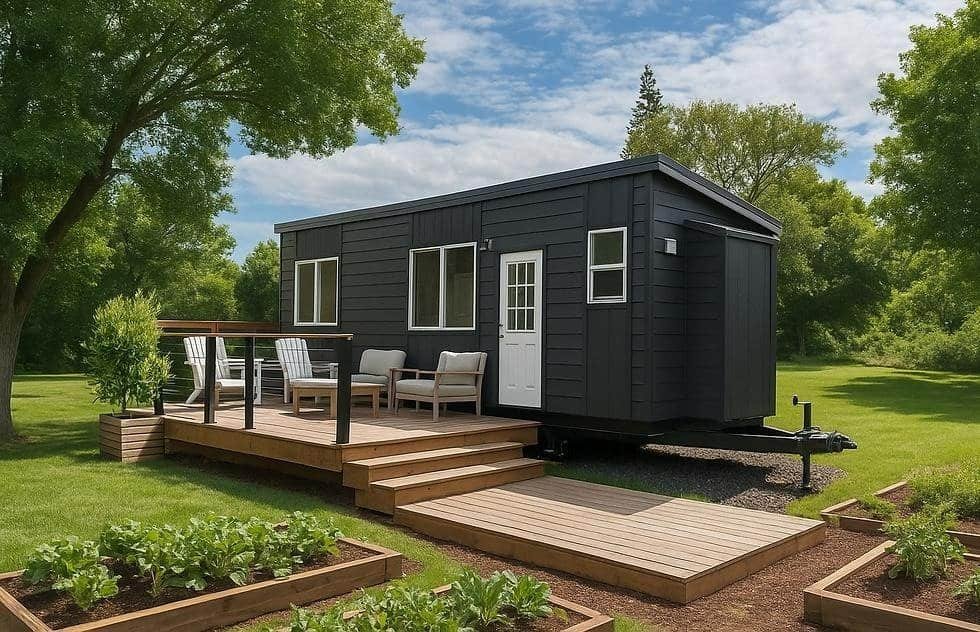
Tiny houses on wheels are popular with buyers who value compact living and the possibility of relocating their home in the future.
These homes typically sit on a purpose-built trailer and may include a kitchen, bathroom, sleeping loft, and small living area. Their layouts often prioritize multipurpose furniture and built-in storage.
Advantages include:
- The potential to relocate the home when circumstances change.
- A compact design that can reduce furnishing and maintenance needs.
- A wide range of interior styles, from rustic cabins to modern minimalist homes.
- The ability to purchase a completed unit rather than manage an entire construction project.
There are important limitations, however. Not every tiny house on wheels is suitable for frequent travel, and moving one may require a suitable tow vehicle, correct weight ratings, and professional transport.
You also need a legal place to keep it. Permission to park an RV or trailer does not necessarily mean you can live in it permanently.
Before buying, verify the trailer’s condition, gross vehicle weight rating, actual loaded weight, and any relevant registration requirements. Check the intended parking location’s rules separately.
Foundation-Based Tiny Homes
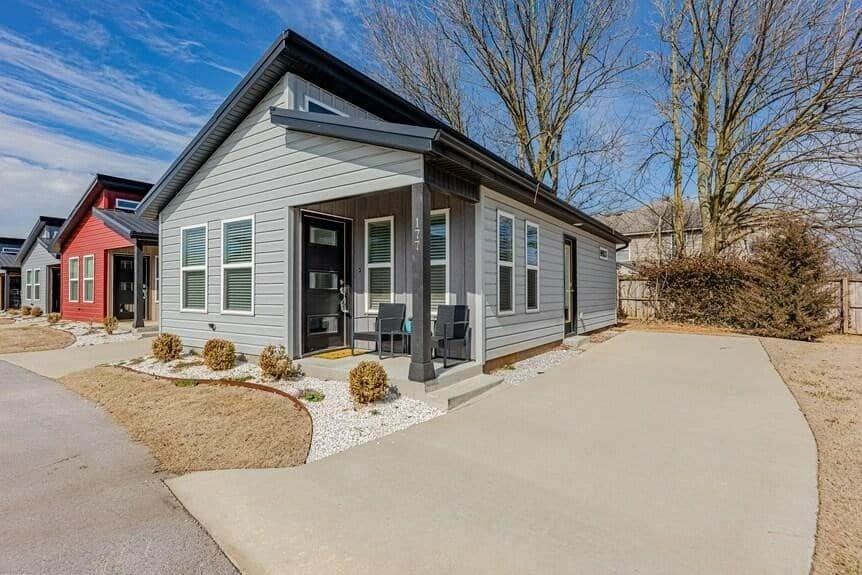
Foundation-based tiny homes are designed to remain in one place. Depending on the property and applicable rules, they may be treated as small detached dwellings or fall under another building classification.
This option may appeal to buyers who want a more traditional residential setup without maintaining a trailer.
Potential benefits include:
- A permanent location for daily living.
- Greater freedom to design entrances, porches, and outdoor spaces.
- The possibility of owning the home and land together.
- A layout that may be easier to adapt for long-term accessibility.
A foundation-based tiny home still needs to meet the requirements that apply to its specific location and classification. Small size alone does not exempt a structure from building codes, zoning restrictions, or minimum dwelling requirements.
Check whether the lot allows the proposed dwelling, whether the structure can be permitted, and whether utilities can be connected before purchasing either the land or the home.
For some buyers, a small conventional house may be worth comparing with a purpose-built tiny home. The conventional property could offer a simpler financing or resale process, depending on the circumstances.
Prefab and Modular Tiny Homes
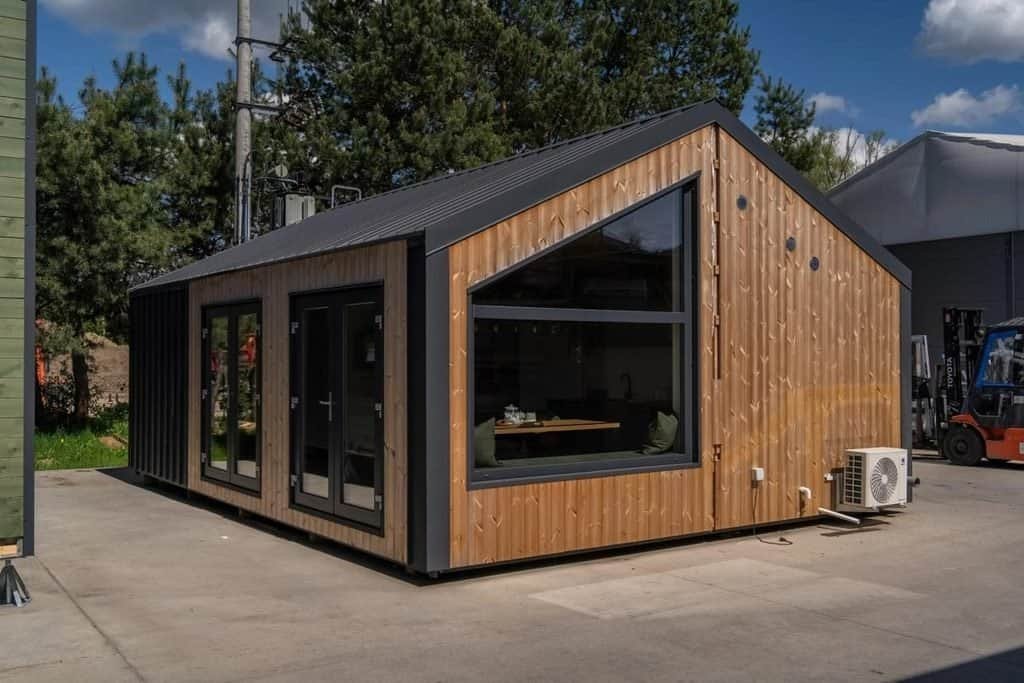
Prefab tiny homes are manufactured partly or largely in a factory before being transported to the property. Modular models may arrive in sections that are assembled on-site.
These homes can appeal to buyers who want a more standardized building process or a predictable selection of layouts and finishes.
Depending on the manufacturer, benefits may include:
- Factory-controlled construction.
- Several floor plans to choose from.
- Options for interior finishes and appliances.
- Reduced on-site construction time.
- A clearer breakdown of included features and optional upgrades.
However, prefabricated does not automatically mean approved for residential use. A model marketed as a cabin, shed, or recreational unit may not meet the requirements for a permanent dwelling.
Ask the manufacturer for detailed specifications, installation instructions, and documentation showing which building standards the model is designed to meet.
Confirm the required foundation, delivery access, crane or lifting needs, and utility connections. A prefab unit may have an attractive base price but require considerable site work before it is usable.
Used Versus Brand-New Tiny Houses
Deciding between a used and a new tiny house comes down to your budget, tolerance for repairs, and desired level of customization.
| Consideration | Used tiny house | Brand-new tiny house |
| Initial price | May be lower | Often higher |
| Customization | Usually limited | More options may be available |
| Repairs | May require immediate work | Often fewer age-related repairs |
| Warranty | May be limited or unavailable | May include manufacturer coverage |
| Availability | Depends on local listings | Depends on builder schedules |
| Inspection needs | Especially important | Still necessary before acceptance |
A used home can offer excellent value if it has been maintained well and comes with reliable documentation. A newer model may be preferable if you want modern systems, a specific layout, or a clearer warranty arrangement.
Neither option is automatically better.
Before deciding, compare the purchase price, expected repairs, delivery expenses, included appliances, and suitability for your intended location. Ask for an independent inspection if the condition or construction quality is uncertain.
The best tiny house for sale in Kansas City, Missouri, is not necessarily the smallest or cheapest one. It is the home that meets your needs, fits your complete budget, and can be legally placed where you intend to live.
Best Kansas City Areas to Consider for Tiny House Living
Finding the right tiny house is only half the decision. You also need a location that fits your lifestyle, budget, commute, and plans for long-term living.
The Kansas City metropolitan area includes urban neighborhoods, established suburbs, and communities farther from the city center. Each offers different possibilities, but the availability of land does not automatically mean a tiny house is permitted there.
Kansas City Neighborhoods and Nearby Communities
Buyers who want convenient access to employment, shopping, restaurants, and healthcare may prefer locations within Kansas City or established nearby communities.
Consider the following areas as starting points for your property search:
- North Kansas City and the Northland: Explore smaller residential properties and nearby suburban locations while checking the requirements for each municipality.
- Independence: Consider searching for small houses and properties east of central Kansas City.
- Gladstone: This established suburban community may appeal to buyers who want access to metropolitan amenities.
- Raytown: Look for smaller residential properties and investigate whether a particular lot can accommodate your intended home.
- Lee’s Summit: Buyers interested in suburban living can explore small homes and available land, subject to local requirements.
These are suggested search areas, not confirmations that tiny houses are currently available or permitted in every neighborhood.
When comparing locations, consider more than the distance to downtown. Check access to grocery stores, medical facilities, public transportation, employment centers, and major roads.
Also pay attention to the surrounding properties. A compact home on a busy street may be less appealing than one in a quieter location, even if the purchase price is similar.
Suburban and Rural Areas Around Kansas City
If you prefer privacy, outdoor space, or room for a garden, consider expanding your search beyond the central city.
Depending on your budget and preferred commute, you could investigate properties around Liberty, Smithville, Grain Valley, or other communities within the broader metropolitan area.
More distant properties may offer larger lots, but rural living comes with additional considerations. A parcel may need a well, septic system, driveway improvements, or electrical service. Some sites may also have drainage issues or restrictions that limit residential development.
Before purchasing land, investigate:
- Whether the property is inside city limits or under county jurisdiction.
- Whether the proposed tiny house qualifies as a permitted dwelling.
- Minimum lot size and setback requirements.
- Access to public water and sewer or the feasibility of approved alternatives.
- Road access, easements, and any private-road maintenance obligations.
- Flood risk, drainage, and other site conditions.
Do not buy land simply because it looks suitable for a tiny house. Contact the relevant planning or building department and explain the exact type of structure you intend to place there.
A mobile tiny house, a factory-built modular unit, and a small permanent dwelling may be subject to different rules.
Buying a Tiny House With Land Versus Renting a Lot
One of the biggest decisions is whether to purchase a tiny house with land or place the home on a rented lot.
Both arrangements can work, but they have different financial and practical implications.
| Factor | Tiny house with owned land | Tiny house on a rented lot |
| Upfront cost | Usually higher if land must be purchased | May be lower |
| Monthly expenses | Property taxes, maintenance, and other ownership costs | Lot rent and any additional site fees |
| Control over the property | Greater, within applicable regulations | Limited by the lease and site rules |
| Long-term stability | Depends on ownership and financing | Depends on lease terms and renewal |
| Utility installation | May require substantial initial investment | Existing connections may be available |
| Resale considerations | Depends on the home and land’s value | Moving the home may be necessary if the lease ends |
Owning land can offer more control, but it does not eliminate zoning, permitting, or utility requirements. Renting a lot may reduce initial costs, yet you need to understand whether the site allows your specific type of tiny house and full-time occupancy.
Ask about lease duration, rent increases, utility charges, parking restrictions, and what happens if the property changes ownership.
For more ideas about possible locations and community-based living arrangements, explore related TinyHousel guides to tiny house communities, rentals, and locations.
Can You Legally Live in a Tiny House in Kansas City, Missouri?
Before purchasing a tiny house, confirm that you can legally place it on your intended property and use it as a full-time residence.
This is one of the most important steps in the buying process. A tiny house may be beautifully constructed and affordable but still unsuitable for a particular lot because of zoning, building, or occupancy restrictions.
Rules can differ between Kansas City, Missouri, nearby municipalities, and unincorporated county areas. The home’s classification and intended use also matter.
Zoning Rules and Minimum Dwelling Requirements
Zoning regulations determine how land may be used and what types of structures can be placed on a property. Building codes address matters such as structural safety, electrical systems, plumbing, and other construction requirements.
Depending on the location and type of home, you may need to verify:
- Whether a detached dwelling is permitted on the property.
- Whether accessory dwelling units are allowed and under what conditions.
- Whether the proposed home meets minimum size or room requirements.
- Required setbacks from property lines and other structures.
- Limits on the number of dwellings allowed on a lot.
- Applicable building permits and inspections.
- Restrictions on temporary or recreational structures used for residential purposes.
An accessory dwelling unit, sometimes called an ADU, is a secondary residential unit associated with a primary property. A tiny house may qualify in some circumstances, but the designation is not automatic.
Do not rely solely on a seller’s assurance that a tiny house is legal. Ask the local planning or building department about the exact property and provide details about the structure, including whether it has wheels or a permanent foundation.
Request written clarification when possible, particularly before paying a nonrefundable deposit.
Building Permits, Inspections, and Foundation Requirements
A tiny house built on a permanent foundation may need to comply with the building rules applicable to residential dwellings in that jurisdiction.
The requirements can depend on the structure’s size, construction method, intended use, and location. Factory-built homes may also have specific standards or approval processes.
Before purchasing, find out which permits are required for:
- Constructing or installing the dwelling.
- Building a foundation or preparing the site.
- Installing electrical, plumbing, and mechanical systems.
- Connecting the home to public utilities.
- Installing a private well or septic system, where applicable.
- Completing required inspections before occupancy.
Ask the seller for any available construction plans, inspection reports, certification records, and permit documentation.
If you are buying an unfinished tiny house, determine who will be responsible for completing the work and obtaining approvals. A home sold as a DIY project may require more time and money than expected.
Parking a Tiny House on Wheels
Tiny houses on wheels present a different set of questions because they may resemble recreational vehicles while being designed for everyday living.
Permission to park a tiny house is not necessarily permission to live in it. A property may allow temporary RV parking but prohibit permanent residential occupancy.
Before buying a mobile unit, confirm:
- Whether the intended location allows the specific type of vehicle or structure.
- Whether overnight or full-time occupancy is permitted.
- Whether the property has approved utility and wastewater connections.
- Whether the unit must be registered or meet particular construction standards.
- Whether there are restrictions on how long the unit can remain on the property.
If you intend to keep the tiny house in a designated RV park, obtain confirmation that the park accepts your unit and allows your planned length of stay.
If you intend to park it on private land, verify the applicable zoning and occupancy requirements directly with the relevant authority.
Utility Hookups and Wastewater Requirements
Water, electricity, heating, and wastewater systems are essential for a comfortable home. They can also create unexpected costs if the property is not already equipped for residential use.
A tiny house may need connections to public water and sewer services. Other properties may require approved alternatives, depending on local rules and site conditions.
Check the following before purchasing:
- Water: Confirm the availability and cost of a connection or approved water supply.
- Wastewater: Determine whether public sewer service is available or an approved septic system is feasible.
- Electricity: Find out whether the existing service can support the home’s electrical load.
- Heating and cooling: Choose equipment suitable for the home’s size and Kansas City’s seasonal climate.
- Internet: Verify that reliable service is available if you work remotely.
- Drainage: Check whether rainwater can drain away from the home without causing moisture problems.
Off-grid systems can be useful in some settings, but they must still meet applicable safety and property requirements.
If the home will be occupied throughout the year, prioritize insulation, ventilation, and moisture control. A compact home can become uncomfortable quickly if it has inadequate heating, poor airflow, or condensation problems.
Buying a Tiny House in Kansas City Without Overspending
A tiny house can reduce some housing expenses, but the purchase is not automatically affordable. The best way to protect your budget is to calculate the complete cost before committing to a property.
Start by deciding how much you can comfortably spend, including installation and ongoing expenses. Then compare homes that fit within that amount.
Calculate the Total Cost Before Making an Offer
Suppose you find a completed tiny house listed for $40,000. That price may look attractive, but it tells you very little about the total amount needed to move in.
You may also need to pay for transportation, site preparation, permits, utility connections, furnishings, and insurance.
Build a budget with separate categories for:
- Purchase price.
- Land purchase or lot rental.
- Delivery and installation.
- Foundation or parking-pad preparation.
- Utility connections.
- Permits and inspections.
- Immediate repairs and replacements.
- Insurance and recurring housing costs.
- An emergency reserve.
Request written estimates from contractors and service providers where possible. Guessing the cost of site work or utility installation can lead to serious budget problems.
It is also wise to compare the monthly cost of tiny house living with your current housing expenses. Include loan payments, rent, utilities, taxes, insurance, and maintenance rather than comparing mortgage payments alone.
Watch for These Tiny House Buying Red Flags
A low advertised price should encourage careful investigation, not an immediate purchase.
Be cautious if a seller:
- Requests a large deposit before allowing you to inspect the home.
- Cannot provide reliable proof of ownership.
- Refuses to share construction details or answer questions about defects.
- Advertises a home as fully legal without identifying its classification or relevant approvals.
- Provides vague information about delivery costs.
- Pressures you to pay quickly because another buyer is supposedly waiting.
- Uses photographs that do not clearly show the actual property for sale.
For online purchases, verify the seller’s identity and the home’s location before sending money. Never assume that a professional-looking website guarantees a legitimate transaction.
If a deal seems unusually inexpensive, investigate why. The home might need extensive repairs, lack essential systems, or be unsuitable for permanent occupancy.
Negotiate Based on the Home’s Condition
You may be able to negotiate a better price if the home needs repairs or the seller is motivated to complete the sale.
Arrange an inspection and use documented issues to guide your offer. For example, damaged roofing, faulty plumbing, missing appliances, or worn trailer components can affect the home’s value.
Before negotiating, research comparable properties and identify the maximum amount you are willing to pay.
A lower purchase price is only worthwhile if the home remains affordable after repairs and installation. If the seller cannot provide adequate documentation or allow a reasonable inspection, consider walking away.
Financing a Tiny House: What Kansas City Buyers Should Know
Financing a tiny house can be more complicated than financing a conventional home. The available options depend on the home’s construction, whether it is attached to land, how it is classified, and the lender’s requirements.
Before shopping seriously, find out which financing options are available for the exact type of property you want to purchase.
Personal Loans, RV Loans, and Mortgages
Different financing products serve different purposes.
Personal loans may be an option for some smaller purchases, particularly when the tiny house is not eligible for a traditional mortgage. Approval, interest rates, loan limits, and repayment periods depend on the lender and your financial circumstances.
RV loans may be available for certain tiny houses on wheels, particularly those that meet the lender’s requirements for recreational vehicles. Not every mobile tiny house qualifies.
Mortgages may be possible for qualifying residential properties, especially when the home is permanently installed on land and meets the lender’s property requirements.
Before applying, ask lenders:
- Does this type of tiny house qualify?
- Must the home be permanently attached to a foundation?
- Does the loan cover the land as well as the structure?
- What documentation or certification is required?
- Are there minimum loan amounts?
- What down payment, interest rate, and repayment terms apply?
- Can the loan cover site preparation or installation costs?
Compare the total borrowing cost rather than focusing only on the monthly payment.
Buying a Tiny House With Land
Buying a tiny house and land together may simplify some aspects of property ownership, but it can also increase the amount you need to finance.
Lenders may consider the land’s value, the dwelling’s classification, construction standards, and whether the property can be legally occupied.
If you plan to buy land first and build later, ask whether the lender offers financing appropriate for that arrangement. A loan for vacant land may have different terms from a conventional residential mortgage.
Before closing, verify that the intended dwelling is permitted and that the property has adequate access to utilities or an approved plan for providing them.
Insurance and Resale Considerations
Insurance availability depends on the home and how it is used. A tiny house on wheels may require different coverage from a permanent foundation-based dwelling.
Ask insurance providers about coverage for the structure, personal belongings, liability, transportation, and any risks specific to the home.
Resale is another consideration. A well-maintained home with clear documentation may be easier to market than a unit with uncertain construction history or restrictions on where it can be placed.
Keep copies of purchase documents, warranties, inspection reports, permits, maintenance records, and details about major upgrades.
Think about your exit plan before you buy. Even if you intend to live in the tiny house for many years, circumstances can change, and resale or relocation flexibility may become important.
What to Inspect Before Buying a Tiny House in Missouri
A tiny house should be inspected just as carefully as a larger home. Its compact size does not eliminate structural problems, moisture risks, faulty wiring, or expensive mechanical failures.
Arrange an in-person inspection before finalizing the purchase, especially when buying a used unit or a home from a private seller.
Exterior and Structural Condition
Start with the roof, siding, windows, doors, and the structure’s overall condition.
Look for:
- Water stains or soft spots near the roof and windows.
- Cracked sealant and gaps around exterior openings.
- Damaged siding or signs of wood rot.
- Uneven floors or visible structural movement.
- Poor drainage around the foundation.
- Rust, damage, or corrosion on a trailer frame.
Pay particular attention to moisture. Small leaks can damage framing and insulation, and repairs may be expensive if the problem has been present for a long time.
Insulation, Heating, and Cooling
Kansas City’s hot summers and cold winters make thermal performance especially important.
Ask about the insulation materials used in the walls, roof, and floor. Check for drafts, condensation, and areas that feel unusually cold or warm.
Test the heating and cooling systems, where possible. Confirm that the equipment is suitable for the home’s size and that its installation meets applicable requirements.
Good insulation and air sealing can improve comfort and reduce energy consumption, but ventilation is equally important. A tightly sealed tiny house needs adequate ventilation to help control moisture and indoor air quality.
Plumbing and Electrical Systems
Test the faucets, drains, toilet, shower, lights, outlets, and installed appliances.
Check for leaks beneath sinks, unusual odors, slow drains, and signs of previous water damage. Ask whether the plumbing system has been winterized or repaired in the past.
Electrical work should be checked for safety and suitability. Avoid assuming that a system is compliant simply because lights and appliances turn on.
If you are uncertain about the installation, hire qualified professionals to inspect the relevant systems.
Trailer Condition for Tiny Houses on Wheels
For a tiny house on wheels, the trailer is a critical part of the purchase.
Have a qualified professional examine the frame, suspension, tires, brakes, hitch, and other relevant components. Check the trailer’s identification and ownership documents.
Confirm the actual weight of the home when equipped with its furnishings, appliances, and belongings. The loaded weight must be compatible with the trailer, towing vehicle, and applicable legal limits.
Do not assume that every tiny house on wheels can be moved safely with a standard pickup truck.
Documents to Request Before Buying
Use this checklist when communicating with a seller.
- Proof of ownership and any applicable trailer documents.
- Construction specifications and floor plans.
- Available permits, inspection reports, and certification records.
- Appliance and mechanical-system information.
- Warranty details and repair history.
- Confirmation of included fixtures and appliances.
- Delivery and installation terms.
- Written information about known defects.
- Confirmation that the intended placement and use have been checked with the relevant authorities.
A professional inspection cannot guarantee that every problem will be discovered, but it can help you make a better-informed decision and identify issues that deserve further investigation.
Should You Buy a Tiny House or Build One Near Kansas City?
Buying an existing tiny house and building a new one can both make sense. The better choice depends on how quickly you want to move, how specific your design requirements are, and how much responsibility you want to take on.
Buying a Completed Tiny House
A completed tiny house may be the more convenient option if you want to avoid coordinating a construction project.
You can inspect the finished layout, test appliances, and evaluate the available storage before purchasing. Depending on the seller, the home may also be ready for delivery or occupancy once the relevant site and legal requirements are satisfied.
Advantages include:
- A clearer view of the finished product.
- Potentially shorter time to move-in readiness.
- Less involvement in selecting individual construction materials.
- The possibility of buying a used home at a lower price.
The main drawback is limited customization. You may need to compromise on the kitchen layout, sleeping arrangements, storage, or finishes.
Building a Custom Tiny House
Building a custom tiny house gives you more control over how the space is used.
You might choose a downstairs bedroom, a larger shower, extra storage, or a layout designed for accessibility. Custom construction can be particularly useful when you have specific requirements that are difficult to find in existing listings.
However, the process may involve design work, contractor coordination, material choices, inspections, and unexpected expenses.
Before construction begins, establish a detailed scope of work and confirm the applicable requirements for the intended location. Request written quotes and clarify what is included in each one.
If the project involves a builder, check references and review previous work. Agree on payment milestones and documentation rather than paying the entire amount upfront.
When a Prefab Tiny House Makes Sense
A prefab tiny house may offer a middle ground between buying a completed unit and managing a fully custom build.
You can often select from established floor plans and choose certain upgrades while relying on a manufacturer for much of the construction process.
Before ordering, verify the final price, delivery arrangements, foundation requirements, installation costs, and local approval requirements.
Ask whether the advertised price includes interior finishes, appliances, utility systems, and installation. A model displayed in a showroom may contain upgrades that are not included in its base price.
Compare the finished cost and timeline of all three options. A completed home may be the most practical choice, while a custom or prefab build may provide better value if your needs are more specific.
Is a Tiny House in Kansas City Right for You?
Tiny house living can suit a range of buyers, but it requires thoughtful planning. Smaller spaces can simplify everyday routines and reduce some housing costs, yet they also demand compromises in storage, privacy, and flexibility.
Buyers Looking to Downsize
A tiny house may appeal to homeowners who want to reduce the amount of space they maintain.
Smaller floor plans can mean fewer rooms to clean, less furniture to buy, and a simpler daily routine. Outdoor areas can also extend the usable living space when the property allows them.
Before downsizing, make a list of the belongings you genuinely need. Consider seasonal clothing, hobby equipment, tools, and items that cannot easily be stored elsewhere.
Think about visitors, too. If family members stay overnight regularly, a home with a downstairs sleeping area or a flexible guest space may be more practical than a layout that relies entirely on a loft.
First-Time Homeowners and Budget-Conscious Buyers
A tiny house may be attractive if you want a smaller initial purchase than a conventional home. However, it is important to compare the full financial picture.
Land costs, lot rent, insurance, maintenance, utilities, and financing can significantly affect affordability.
Some buyers may discover that a small existing house offers better long-term value once all expenses are considered. Others may prefer a tiny house because of its layout, lower maintenance needs, or compact lifestyle.
Compare at least a few realistic options before deciding.
A simple spreadsheet can help you evaluate the purchase price, setup costs, monthly housing expenses, and expected repairs side by side.
Remote Workers, Couples, and Minimalist Households
Tiny homes can work well for remote workers and couples who value a compact, organized living environment.
The layout matters enormously. A dedicated workspace, reliable internet, natural light, and adequate ventilation can make everyday living more comfortable.
Couples should also think about privacy and shared routines. Two people using the same small space throughout the day may need a flexible living area or separate workstations.
Buyers planning to stay in the home for many years should consider future needs, including accessibility, changing work arrangements, and the possibility of additional household members.
A tiny house should support your lifestyle rather than force you to reorganize every part of it around limited space.
Your Step-by-Step Plan for Buying a Tiny House in Kansas City, Missouri
Once you understand the available home types, local considerations, and likely expenses, you can approach the buying process with greater confidence.
Follow these steps to narrow your search and avoid expensive surprises.
Step 1: Set your total budget.
Decide how much you can spend on the home, land, delivery, installation, and repairs. Include recurring costs and keep an emergency reserve for unexpected expenses.
Step 2: Choose the right type of tiny house.
Decide whether you prefer a tiny house on wheels, a foundation-based dwelling, a prefab model, or a small existing house. Your choice will influence financing, placement, and inspection requirements.
Step 3: Search listings and contact sellers.
Compare online listings, local real estate options, builders, and private sellers. Ask for current pricing, photographs, specifications, and details about what is included.
Step 4: Confirm that the property can accommodate the home.
Contact the relevant planning or building department before paying a nonrefundable deposit. Verify zoning, occupancy, permits, utility connections, and other applicable requirements.
Step 5: Inspect the home and its documentation.
Examine the structure, roof, plumbing, electrical systems, insulation, and appliances. Arrange a professional inspection if necessary, and verify the ownership and construction documents.
Step 6: Arrange financing, insurance, and site preparation.
Get financing terms in writing, obtain appropriate insurance quotes, and confirm delivery and installation arrangements. Make sure the site is ready before scheduling the move.
Step 7: Finalize the purchase only after the important details are confirmed.
Review the purchase agreement, payment terms, warranties, and any outstanding conditions. Avoid making the final commitment until you understand the total cost and have verified that your intended use is permitted.
A little extra preparation at the beginning can help you avoid months of delays and unexpected expenses later.
Frequently Asked Questions About Tiny Houses for Sale in Kansas City, Missouri
How much does a tiny house cost in Kansas City, Missouri?
The price depends on the home’s size, condition, construction type, and included features. For initial budgeting, a basic used unit might fall around 10,000–30,000, while new or custom-built models can cost substantially more. These are illustrative ranges, not verified current listings. Land, delivery, installation, permits, and utility connections can increase the total cost.
Can I live in a tiny house year-round in Kansas City?
Year-round living may be possible if the home is suitable for the local climate and meets the applicable requirements for residential occupancy. Look for adequate insulation, reliable heating and cooling, proper ventilation, and suitable plumbing. Confirm the zoning and occupancy rules for your specific property before purchasing.
Are tiny houses on wheels legal in Kansas City, Missouri?
The answer depends on the unit, its location, and how you intend to use it. Rules governing RV parking do not necessarily permit permanent residential occupancy. Contact the relevant local authority to verify the requirements for your proposed location.
Can I buy a tiny house with land near Kansas City?
Yes, you can search for small homes sold with land or purchase a suitable parcel separately and arrange for a tiny house to be installed. Before committing, verify the property’s permitted uses, access, utility availability, and any minimum dwelling or lot requirements.
Are there affordable tiny homes for sale near Kansas City?
Potentially. Used tiny houses, simpler new models, and properties farther from the city center may provide additional options. Compare the total cost rather than the listing price alone, and check for repair needs, delivery expenses, lot rent, and utility installation.
Where can I park a tiny house near Kansas City?
Possible locations may include private property, approved tiny house communities, or certain RV and manufactured-home sites, provided the specific unit and intended occupancy are allowed. Obtain confirmation from the property owner and relevant local authorities before purchasing a home for a particular site.
Is it cheaper to buy a tiny house or a small traditional home in Kansas City?
It depends on the purchase price, land costs, installation, financing, and ongoing expenses. A tiny house may cost less upfront, but land preparation and utility connections can reduce the savings. Compare the complete cost of ownership for both options before deciding.
Can I finance a tiny house in Missouri?
Financing may be available through personal loans, certain RV loans, or mortgages for qualifying residential properties. Eligibility depends on the home’s classification, construction, land ownership, and lender requirements. Ask lenders whether they finance your specific type of tiny house before making an offer.
Do I need a building permit for a tiny house in Kansas City?
You may need permits depending on the home’s construction, location, classification, and intended use. Foundation-based homes and tiny houses on wheels can be subject to different requirements. Contact the appropriate local planning or building department to confirm which permits and inspections apply.
What should I check before buying a used tiny house?
Inspect the roof, framing, insulation, windows, plumbing, electrical systems, appliances, and any trailer components. Request proof of ownership, available permits, construction details, and maintenance records. Consider a professional inspection before completing the purchase.
Find the Right Tiny House for Your Kansas City Lifestyle
Finding a tiny house for sale in Kansas City, Missouri, is about more than choosing an attractive design or finding the lowest advertised price. The right home should fit your budget, suit your daily routine, and have a suitable location where you can legally live.
Start by comparing available homes, identifying the features you genuinely need, and calculating the complete cost of ownership. Then verify local requirements and inspect the property before making a commitment.
Ready to begin your search? Create a shortlist of three to five tiny houses, contact the sellers or builders for current prices, and check the placement requirements for your preferred locations. Taking those steps first will help you focus on homes that are practical, affordable, and right for your future.
