
The idea of a Palm Harbor Homes tiny house is gaining serious attention—and for good reason. If you want the simplicity of tiny living without the headaches of DIY building, this could be one of the most practical paths available today.
In this guide, you’ll learn exactly what Palm Harbor tiny homes offer, how they compare to traditional tiny houses, and whether they’re actually worth the investment. Expect real-world insights on layout, cost expectations, and what daily life is really like—not just brochure promises.
In This Article
Why “Palm Harbor Homes Tiny House” Is Trending in 2026
Tiny living has evolved. A few years ago, most people were obsessed with DIY builds and tiny houses on wheels. Today, many buyers are looking for something more predictable, financeable, and move-in ready.
That’s where Palm Harbor Homes enters the picture.
What’s driving the trend?
- Rising construction costs make DIY builds less attractive
- More buyers want financing options, not cash-only builds
- Increased interest in downsizing without sacrificing comfort
- Zoning laws often favor manufactured homes over tiny houses on wheels
Palm Harbor’s smaller models are being marketed—and perceived—as “tiny homes,” even though they technically fall into a different category.
Who is choosing this option?
From real-world observations, Palm Harbor-style tiny homes tend to appeal to:
- Retirees looking to simplify without going ultra-minimal
- First-time buyers priced out of traditional housing
- Homeowners adding a backyard unit for family or rental income
Key takeaway: This isn’t extreme tiny living. It’s practical downsizing with fewer compromises.
What Is a Palm Harbor Homes Tiny House, Really?
The term “Palm Harbor Homes tiny house” can be a bit misleading if you’re expecting a trailer-based micro home.
What Palm Harbor actually builds
Palm Harbor specializes in:
- Manufactured homes
- Modular homes
- Park model homes (closest to “tiny house” size)
These homes are factory-built, professionally inspected, and designed for long-term living—not just mobility.
Tiny house vs Palm Harbor: What’s the difference?
| Feature | Palm Harbor “Tiny” Home | Traditional Tiny House (THOW) |
| Mobility | Limited (transported, not frequently moved) | Highly mobile |
| Size | Typically 400–1,000 sq ft | Usually 100–400 sq ft |
| Financing | Often available | Rare |
| Zoning acceptance | Easier in many areas | Often restricted |
| Build quality | Professional, standardized | Varies widely |
Where they overlap
Even though they aren’t true tiny houses on wheels, Palm Harbor’s smaller models still offer:
- Compact layouts
- Efficient use of space
- Lower cost than traditional homes
Important: If your goal is mobility, this isn’t the right fit. If your goal is simple living with fewer legal barriers, it might be ideal.
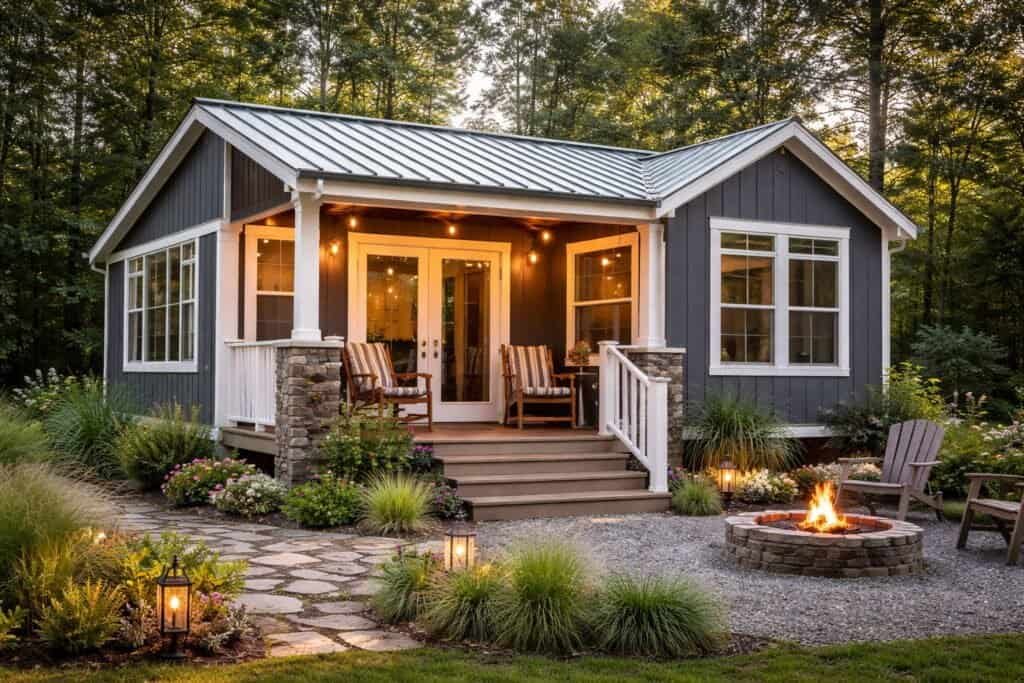
Popular Palm Harbor Tiny House Models & Floor Plans
Palm Harbor doesn’t label homes as “tiny houses” in the traditional sense, but several models fall into that small-living sweet spot.
Common layout styles you’ll see
Open Studio Layouts
- Combined living, kitchen, and sleeping space
- Feels larger due to fewer walls
- Best for singles or minimalist couples
Compact 1-Bedroom Designs
- Separate sleeping area for privacy
- More practical for long-term living
- Slightly larger footprint but still efficient
Loft-Style Options (Less Common)
- Occasionally included in park models
- Adds sleeping/storage space
- Can feel cramped for taller individuals
What these floor plans get right
- Full-size appliances (a major upgrade from many tiny homes)
- Real bathrooms with standard fixtures
- Built-in storage integrated into walls and cabinetry
What to keep expectations realistic about
- Ceiling heights may vary depending on the model
- “Tiny” is relative—some units feel closer to small apartments
- Customization is more limited than a DIY build
Pro tip: Always walk through a model in person if possible. Layout flow matters more than square footage on paper.
Inside a Palm Harbor Homes Tiny House: Features That Stand Out
One of the biggest reasons people choose a Palm Harbor Homes tiny house is simple: it feels like a real home, not a compromise.
Because these homes are built in a controlled factory environment, they benefit from consistent construction quality, less material waste, and better finishing compared to many DIY builds.
What you’ll notice right away
Full-Size, Functional Kitchens
- Standard appliances (full fridge, oven, microwave)
- Real cabinetry—not lightweight RV-style units
- More counter space than most tiny houses
Why it matters: Cooking in a Palm Harbor home feels normal, not like a workaround.
Real Bathrooms (Not Compromised Ones)
- Full showers or tubs
- Standard toilets and sinks
- Enough space to move comfortably
This is a huge upgrade over many tiny homes where bathrooms often feel cramped or improvised.
Built-In Storage That Actually Works
- Closets (yes, real ones)
- Overhead cabinets integrated into walls
- Hidden storage in seating or bed frames
Pro tip: Storage is more “invisible” here—it’s built into the structure rather than added later.
Energy Efficiency & Insulation
- Built to meet strict construction and safety standards
- Better insulation than most DIY tiny homes
- More stable indoor temperatures
Factory-built homes like these are designed to meet regulated building codes, which helps ensure durability and efficiency.
What makes them different from DIY tiny houses?
- More consistent build quality (no guesswork)
- Better long-term durability
- Less customization, but fewer mistakes
Reality check: You’re trading creative freedom for reliability—and for many buyers, that’s a smart trade.
How Much Does a Palm Harbor Homes Tiny House Cost?
Cost is where things get interesting—and where many buyers get surprised.
Typical price range
For smaller Palm Harbor models (including park models and compact homes), you can expect:
- $80,000 – $140,000+ for smaller units
- Roughly $120–$144 per square foot on average
Some compact models around 500–800 sq ft fall within this range depending on upgrades and location.
What’s usually included?
- Factory-built home structure
- Basic interior finishes
- Standard appliances
- Delivery (sometimes included, varies by dealer)
Hidden costs most people underestimate
This is where budgets often go off track.
| Cost Category | Typical Range |
| Land (if not owned) | Highly variable |
| Site prep & foundation | $10,000 – $30,000+ |
| Utility hookups (water, septic, electric) | $5,000 – $20,000+ |
| Permits & zoning | Varies by location |
| Upgrades (flooring, kitchen, etc.) | $5,000 – $25,000+ |
Many cost estimates already factor in site prep and setup, but always confirm with your local dealer—pricing can vary significantly depending on region and services included.
Financing vs DIY tiny homes
One major advantage:
- Financing is often available (similar to traditional homes)
- Lower upfront cash compared to DIY builds
Key takeaway: While not the cheapest option, Palm Harbor homes offer predictable costs and fewer surprises compared to building from scratch.
👉 If you’re planning your budget, it’s worth exploring a full tiny house cost breakdown to avoid missing hidden expenses.
Pros and Cons of Choosing Palm Harbor Homes for Tiny Living
No housing option is perfect. The key is knowing what you’re trading.
👍 Advantages
1. Professional Construction Standards
Built indoors with consistent materials and processes, which reduces defects and delays.
2. Faster Move-In Timeline
No months-long DIY build. Once your site is ready, installation is relatively quick.
3. Financing Options Available
Unlike most tiny houses on wheels, you can often secure loans or mortgages.
4. Easier Zoning Approval
Manufactured and park model homes are more widely accepted than trailer-based tiny homes.
👎 Limitations
1. Limited Customization
You choose from predefined layouts and upgrade packages—not a blank canvas.
2. Not Truly Mobile
These homes are transportable, but not designed for frequent moving.
3. Can Feel Less “Tiny”
If you’re chasing the minimalist aesthetic, this may feel more like a small apartment.
4. Costs Add Up Quickly
Base price looks attractive, but upgrades and site work can push totals higher.
Honest takeaway
A Palm Harbor Homes tiny house is ideal if you want:
- Simplicity without extreme minimalism
- A legal, financeable housing option
- Comfort similar to a traditional home
It’s not ideal if your dream is a fully custom, off-grid, mobile tiny house.
Where Can You Put a Palm Harbor Tiny House? (Legal Reality Check)
Placement is where a Palm Harbor Homes tiny house often has a major advantage over traditional tiny houses—but it’s not completely hassle-free.
Why placement is usually easier
Palm Harbor homes are typically classified as:
- Manufactured homes
- Park model homes (RV-style in some cases)
These categories are already recognized in many local zoning codes, which makes approvals more straightforward than tiny houses on wheels (THOW).
Common placement options
Mobile Home Parks or Manufactured Home Communities
- The most straightforward option
- Utilities and infrastructure already set up
- Monthly lot rent usually required
Private Land
- Offers more freedom and privacy
- Requires permits, foundation, and utility setup
- Must comply with local zoning rules
Tiny Home Communities (Limited but growing)
- Some communities accept park model homes
- Shared amenities and like-minded neighbors
The zoning reality you shouldn’t ignore
Even though Palm Harbor homes are easier to place, you still need to check:
- Minimum square footage requirements
- Foundation type (permanent vs temporary)
- Utility connections (septic, water, electricity)
- Local building codes
Important: Regulations vary widely depending on location.
For accurate and up-to-date zoning information, check your local municipality or refer to resources like the U.S. Department of Housing and Urban Development (HUD):
👉 https://www.hud.gov/program_offices/housing/rmra/mhs
Practical tip from experience
Before buying anything:
- Call your local zoning office
- Ask specifically about manufactured or park model homes
- Get confirmation in writing if possible
Skipping this step is one of the most expensive mistakes buyers make.
Palm Harbor Homes Tiny House vs Traditional Tiny Houses
At first glance, they seem similar—but living in a Palm Harbor Homes tiny house feels very different from living in a traditional tiny house on wheels.
Side-by-side comparison
| Feature | Palm Harbor Tiny Home | Traditional Tiny House (THOW) |
| Mobility | Transported once, rarely moved | Designed for frequent movement |
| Comfort | High (full-size features) | Moderate to minimal |
| Space | Larger, more open | Compact and highly optimized |
| Legal acceptance | Easier in many areas | Often restricted |
| Financing | Available | Rare |
| Customization | Limited | Highly customizable |
Which one is better for you?
Choose a Palm Harbor-style tiny home if:
- You want a stable, long-term residence
- Comfort matters more than mobility
- You prefer fewer legal hurdles
Choose a traditional tiny house if:
- You want flexibility to move frequently
- You enjoy DIY design and customization
- You’re comfortable navigating zoning challenges
The honest difference
A Palm Harbor home is closer to a small house lifestyle.
A traditional tiny house is closer to a minimalist lifestyle experiment.
Neither is better—it depends on how you actually want to live day to day.
Is It Truly “Tiny Living”? What Daily Life Feels Like
Marketing can make everything look perfect. Real life is a bit more nuanced.
Living in a Palm Harbor Homes tiny house feels less like “tiny living” and more like efficient living.
What daily life actually looks like
Space feels manageable—not extreme
- You won’t feel constantly cramped
- Rooms are smaller, but still functional
- No need to climb ladders daily (in most layouts)
Storage is easier—but still limited
- Built-in closets help a lot
- You’ll still need to downsize belongings
- Clutter builds up quickly if unmanaged
Utilities feel normal
- Standard plumbing and electrical systems
- Typically connected to the grid
- Off-grid setups are possible but less common
The biggest adjustment
The shift isn’t about space—it’s about intentional living.
- You become more aware of what you own
- Cleaning takes less time
- Every item needs a purpose
Who adapts best?
- People who already prefer simple lifestyles
- Couples comfortable sharing smaller spaces
- Anyone tired of maintaining large homes
Common challenges to expect
- Limited room for guests
- Less privacy in smaller layouts
- Outdoor space becomes more important
Real-world insight
Many people who move into these homes say:
“It doesn’t feel tiny—it just feels right-sized.”
That’s the key difference. You’re not sacrificing comfort—you’re removing excess.
Smart Design Tips to Maximize a Palm Harbor Tiny House
Even though a Palm Harbor Homes tiny house offers more space than a typical tiny house on wheels, smart design choices still make a huge difference in how comfortable it feels day to day.
Make every square foot work harder
- Choose multi-functional furniture
Think beds with storage drawers, fold-out tables, or ottomans with hidden compartments. - Use vertical space aggressively
Wall-mounted shelves, hooks, and cabinets free up valuable floor space. - Keep sightlines open
Avoid bulky furniture that blocks views—open space makes your home feel bigger instantly.
Light and color can transform the space
- Stick to lighter color palettes to reflect natural light
- Use mirrors strategically to create depth
- Maximize window exposure—natural light is your best asset
Pro tip: Even small upgrades like brighter lighting or lighter curtains can make your home feel significantly larger.
Upgrade storage intentionally
Instead of adding random storage, focus on:
- Built-in solutions that blend with walls
- Under-bed or under-sofa compartments
- Decluttering regularly (this matters more than buying storage)
👉 If you want more ideas, explore space-saving design strategies specifically for tiny homes.
Common Mistakes Buyers Make (And How to Avoid Them)
Buying a Palm Harbor Homes tiny house is simpler than building from scratch—but there are still costly mistakes you’ll want to avoid.
Underestimating total costs
Many buyers focus only on the base price and forget:
- Site preparation
- Utility connections
- Permits and upgrades
Avoid it: Build a full budget before committing—not after.
Ignoring zoning restrictions
Even though these homes are easier to place, zoning still matters.
Avoid it: Confirm local regulations before you buy or sign anything.
Choosing the wrong floor plan
A layout that looks great online might not fit your lifestyle.
Avoid it:
- Visit a model in person if possible
- Think about daily routines (cooking, working, relaxing)
Skipping upgrades that matter
Some base models cut corners in key areas.
Smart upgrades to consider:
- Better insulation
- Higher-quality flooring
- Kitchen and bathroom improvements
Not planning outdoor space
With limited indoor space, outdoor areas become essential.
Avoid it: Plan for a deck, patio, or small yard from the beginning.
Who Should (and Shouldn’t) Buy a Palm Harbor Homes Tiny House
This type of home works incredibly well for some people—and not at all for others.
Best fit for:
- Downsizers who want less maintenance without sacrificing comfort
- First-time buyers looking for a more affordable entry into homeownership
- Buyers who need financing instead of paying cash upfront
- People who prefer stability over mobility
Not ideal for:
- Hardcore minimalists who want ultra-small, creative spaces
- Off-grid enthusiasts seeking full independence from utilities
- Frequent movers who need a portable home
- DIY lovers who want full creative control
Honest perspective
A Palm Harbor Homes tiny house sits right in the middle:
- Not too small
- Not too complex
- Not too restrictive
That balance is exactly why it appeals to so many buyers today.
FAQ: Palm Harbor Homes Tiny House
Are Palm Harbor homes considered tiny houses legally?
Not exactly. They are usually classified as manufactured homes or park model homes, which often makes them easier to place legally than traditional tiny houses.
Can you move a Palm Harbor tiny house?
Yes, but not easily or frequently. These homes are designed to be transported to a site and stay there long-term.
Are they cheaper than building a tiny house yourself?
In many cases, yes—especially when you factor in time, tools, mistakes, and labor. However, total costs can still add up with land and setup.
Do Palm Harbor homes hold their value?
They can hold value reasonably well depending on location, condition, and market demand, but they typically don’t appreciate like traditional real estate.
Can you live in one full-time?
Yes. These homes are built for full-time living with standard utilities, making them far more practical than many tiny houses on wheels.
Is a Palm Harbor Homes Tiny House Worth It?
Choosing a Palm Harbor Homes tiny house comes down to what kind of lifestyle you actually want—not just what looks good online.
If you’re looking for:
- A simpler, lower-maintenance home
- A legal and financeable housing option
- A space that feels comfortable, not restrictive
…then this could be one of the smartest ways to step into small living.
On the other hand, if your goal is mobility, full customization, or off-grid independence, a traditional tiny house may be a better fit.
Ready to take the next step?
Before making a decision:
- Explore local zoning rules
- Compare floor plans in person
- Run a full cost breakdown
A well-planned move into tiny living can save you money, reduce stress, and simplify your life—but only if you choose the right type of home from the start.
