
Creating a wooden kitchen cabinet for small camper house living isn’t just about storage—it’s about making a tiny space feel functional, beautiful, and truly livable. When every inch matters, the right cabinet design can transform a cramped camper into a smart, efficient kitchen you actually enjoy using.
This guide breaks down everything you need to know—from design principles and material choices to space-saving ideas and real-world solutions. Whether you’re building from scratch or upgrading an existing setup, you’ll discover practical ways to maximize space without sacrificing style.
In This Article
Why Wooden Kitchen Cabinets Are Perfect for Small Camper Houses
Wooden cabinets remain a top choice for camper kitchens—and for good reason. They strike a balance between functionality, durability, and aesthetics that’s hard to beat in small spaces.
Natural warmth in a compact space
Small camper interiors can feel tight or sterile. Wood instantly adds warmth and texture, making the space feel more like a home than a vehicle.
- Light wood tones brighten the interior
- Natural grain patterns add visual depth
- Works well with minimalist or rustic styles
Strong yet adaptable material
Wood offers a unique combination of strength and flexibility. It can be cut, shaped, and customized to fit awkward corners or tight layouts.
- Easy to modify for custom builds
- Compatible with modular and foldable designs
- Durable under daily use
Better than plastic or metal in tiny kitchens
Plastic cabinets often feel cheap, while metal can make the space look industrial and cold. Wood sits right in the middle—practical yet inviting.
| Material | Pros | Cons |
| Wood | Warm, customizable, durable | Needs sealing |
| Plastic | Lightweight, cheap | Less durable, looks basic |
| Metal | Strong, modern | Heavy, cold appearance |
Psychological comfort matters
Living in a small camper is as much about how it feels as how it functions. Wooden cabinets create a cozy, grounded environment, especially for long-term travel or tiny house living.
Key Challenges of Designing a Camper Kitchen (and How Cabinets Solve Them)
Designing a camper kitchen comes with unique constraints. The right wooden cabinet setup helps solve most of them—if planned carefully.
Limited space and awkward layouts
Camper kitchens often lack standard dimensions, making traditional cabinetry impractical.
Smart cabinet solutions:
- Slim-depth cabinets for narrow walkways
- Vertical storage to use wall height
- Custom-fit units for irregular spaces
Weight restrictions in mobile homes
Every added kilogram affects fuel efficiency and mobility. Heavy cabinetry can quickly become a problem.
What works better:
- Lightweight wood like plywood or bamboo
- Hollow-core cabinet doors
- Minimalist framing instead of solid blocks
Multi-functional needs
A camper kitchen must do more with less. Storage, prep space, and appliances often overlap.
Cabinets can help by:
- Integrating pull-out countertops
- Hiding appliances inside cabinets
- Combining drawers with shelving
Moisture, heat, and movement
Unlike stationary homes, campers deal with constant vibration, humidity, and temperature shifts.
Key cabinet considerations:
- Moisture-resistant finishes
- Secure latches to prevent opening during travel
- Reinforced joints for durability
Wooden Kitchen Cabinet for Small Camper House: Must-Have Design Principles
A successful wooden kitchen cabinet for small camper house layouts follows a few essential design rules. These principles ensure your kitchen stays efficient, safe, and visually appealing.
Maximize storage without crowding
The goal isn’t to add more cabinets—it’s to make each cabinet work harder.
- Use vertical space up to the ceiling
- Add internal dividers and organizers
- Avoid bulky designs that block movement
Choose lightweight but durable materials
Not all wood is equal when it comes to camper use.
Best options include:
- Plywood (strong and lightweight)
- Bamboo (eco-friendly and moisture-resistant)
- Paulownia wood (ultra-lightweight option)
Build flexibility into your design
Rigid layouts don’t work well in small, evolving spaces. Flexible cabinets make daily use easier.
- Fold-down cabinet doors that double as work surfaces
- Modular units that can be rearranged
- Removable shelves for customization
Balance open and closed storage
Too many closed cabinets can make a space feel cramped, while too many open shelves can look cluttered.
A smart mix works best:
- Closed cabinets for hidden storage
- Open shelving for frequently used items
- Glass-front cabinets to create visual openness
Prioritize accessibility and flow
Every cabinet should be easy to reach and use—especially in tight quarters.
- Place daily-use items at waist to eye level
- Keep walkways clear of protruding doors
- Use sliding or lift-up cabinet mechanisms
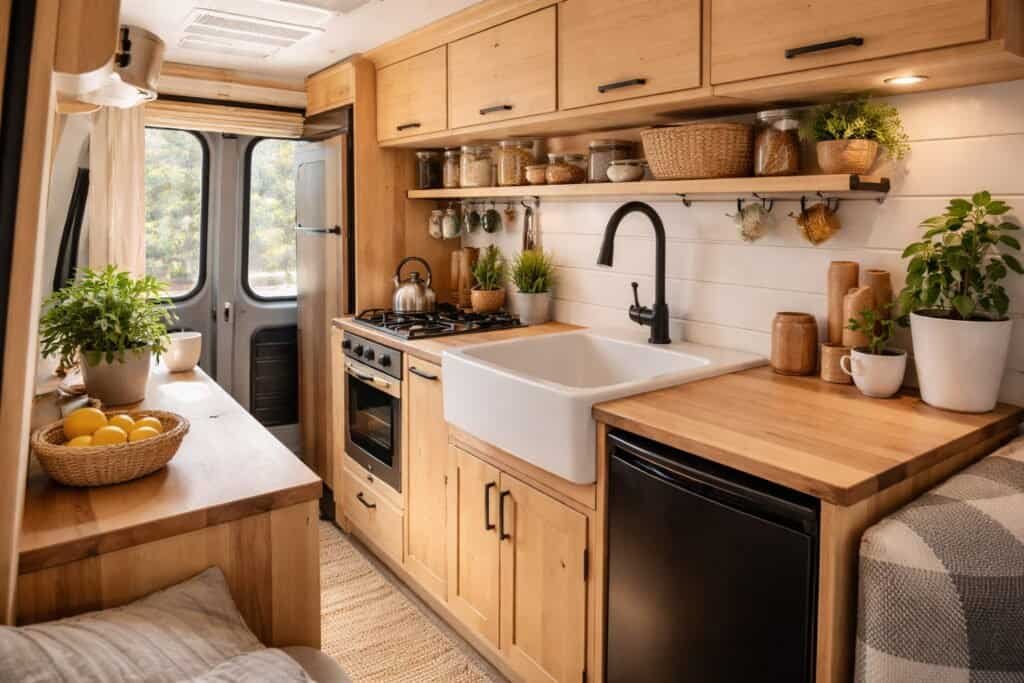
Best Types of Wood for Camper Kitchen Cabinets
Choosing the right material is where many camper builds succeed—or fail. The ideal wood for a wooden kitchen cabinet for small camper house setups should be lightweight, durable, and resistant to moisture.
Solid wood vs engineered wood: what actually works?
Solid wood looks premium, but it’s not always practical for mobile living.
| Type | Pros | Cons | Best Use |
| Solid Wood | Strong, beautiful grain | Heavy, expensive, can warp | Small accents, cabinet frames |
| Plywood | Lightweight, stable, affordable | Edges need finishing | Main cabinet structure |
| MDF | Smooth, cheap | Heavy, poor moisture resistance | Avoid in campers |
| Bamboo Panels | Eco-friendly, moisture-resistant | Slightly higher cost | Doors, visible surfaces |
Pro tip: High-quality plywood (marine-grade if possible) is often the sweet spot for camper cabinets.
Lightweight wood options that make a big difference
Weight adds up quickly in a small camper. Choosing the right wood can significantly improve fuel efficiency and handling.
- Paulownia wood – extremely light, surprisingly strong
- Birch plywood – excellent strength-to-weight ratio
- Bamboo – naturally resistant to humidity
These materials allow you to build sturdy cabinets without overloading your vehicle.
Moisture resistance is non-negotiable
Camper kitchens deal with condensation, cooking steam, and changing climates. Unprotected wood won’t last long.
Look for:
- Water-resistant sealants or varnishes
- Laminate or veneer coatings for added protection
- Edge banding to prevent water absorption
Budget vs premium: where to invest
Not every part of your cabinet needs to be high-end.
- Invest in: cabinet frames, hinges, and structural panels
- Save on: decorative finishes or interior shelving
This approach keeps costs manageable while ensuring long-term durability.
Space-Saving Cabinet Ideas That Actually Work in Campers
In a small camper, smart storage isn’t optional—it’s everything. The best wooden kitchen cabinet for small camper house designs focus on squeezing function out of every inch.
Go vertical: use wall height wisely
Unused vertical space is a missed opportunity.
- Install cabinets up to the ceiling
- Add narrow upper cabinets for lightweight items
- Use stacked compartments instead of one large box
Tall cabinets draw the eye upward, making the space feel larger.
Pull-out cabinets and hidden storage
Traditional cabinets waste space. Pull-out systems make everything accessible.
- Slim pull-out pantry cabinets
- Slide-out spice racks
- Hidden drawers under countertops
These features reduce clutter and eliminate “dead zones.”
Make corners work harder
Corners are often the most underutilized part of a camper kitchen.
Smart solutions include:
- Lazy Susan rotating shelves
- Angled drawers for easier access
- Swing-out corner storage
Multi-functional cabinet designs
Every cabinet should do more than one job.
- Cabinets with fold-out tables
- Drawer systems that double as prep areas
- Storage benches integrated into cabinetry
This is where small camper kitchens truly shine—function layered on function.
Wall-mounted wooden organizers
Not everything needs to be inside a cabinet.
- Magnetic knife strips with wooden backing
- Hanging racks for utensils
- Open wooden shelves for daily essentials
These additions free up cabinet space while keeping items within reach.
Wooden Kitchen Cabinet Layout Ideas for Small Camper Houses
Layout determines how your kitchen feels and functions. Even the best cabinets won’t help if the layout is inefficient.
Galley-style: the most efficient use of space
The galley layout is a favorite for campers because it maximizes both sides of a narrow space.
Why it works:
- Everything is within arm’s reach
- Allows for continuous countertop space
- Easy to divide storage and appliances
Ideal for vans and narrow camper builds.
L-shaped layouts for better flow
An L-shaped kitchen creates a more open feel while still providing ample storage.
- Great for slightly larger campers
- Improves movement and accessibility
- Creates a natural work triangle
Single-wall minimalist setups
For ultra-small campers, simplicity wins.
- All cabinets and appliances on one wall
- Clean, uncluttered look
- Easier installation and lower cost
This layout works best when combined with vertical storage solutions.
Convertible kitchen layouts
Flexibility is key in small spaces. Convertible layouts allow your kitchen to adapt throughout the day.
- Fold-away countertops attached to cabinets
- Slide-out kitchen modules
- Hidden cabinets that disappear when not in use
These designs are perfect for multi-purpose living areas.
Smart Features to Include in Wooden Camper Cabinets
A well-designed wooden kitchen cabinet for small camper house living isn’t just about structure—it’s about the details that make daily use smoother and safer on the road.
Secure latches for travel safety
Movement is constant in a camper. Without proper locks, cabinets can swing open while driving.
- Push-button latches or RV locks
- Magnetic closures for lightweight doors
- Child-lock style mechanisms for extra security
Tip: Test latches on rough roads before finalizing your setup.
Soft-close hinges and drawer slides
Tiny spaces amplify noise. Soft-close hardware keeps things quiet and prevents wear.
- Reduces slamming during travel
- Extends cabinet lifespan
- Adds a premium feel to your build
Sliding doors vs hinged doors
Traditional cabinet doors can block walkways in tight kitchens.
| Door Type | Best For | Why It Works |
| Sliding Doors | Narrow spaces | No swing clearance needed |
| Hinged Doors | Larger areas | Easier full access |
| Lift-Up Doors | Upper cabinets | Keeps headroom clear |
Sliding or lift-up designs are often the smartest choice in compact campers.
Built-in appliance compartments
A clutter-free kitchen starts with smart integration.
- Dedicated space for mini fridge or stove
- Hidden compartments for coffee makers or cooktops
- Ventilated cabinets for heat-producing appliances
This keeps countertops clear and improves overall flow.
Integrated lighting inside cabinets
Lighting transforms usability—especially at night or in dim interiors.
- LED strip lights under cabinets
- Motion-sensor lighting inside drawers
- Warm lighting to enhance wood tones
Good lighting makes a small kitchen feel larger and more functional.
DIY vs Custom vs Pre-Made Wooden Cabinets: Which Is Right for You?
Choosing how to source your cabinets can impact your budget, timeline, and final result. Each option has clear advantages depending on your priorities.
DIY cabinets: maximum control, lower cost
Building your own cabinets is popular among camper enthusiasts.
Best for:
- Hands-on builders
- Unique or irregular layouts
- Budget-conscious projects
Pros:
- Fully customizable
- Lower material costs
- Personal satisfaction
Cons:
- Time-intensive
- Requires tools and skill
- Mistakes can be costly
Custom-built cabinets: perfect fit, higher price
Hiring a professional ensures a polished result tailored to your space.
Best for:
- Complex camper layouts
- High-end builds
- Those who want a flawless finish
Pros:
- Precision fit
- Professional craftsmanship
- Optimized storage design
Cons:
- Higher cost
- Longer lead times
Pre-made cabinets: fast and convenient
Ready-made cabinets can work in some camper setups—but require compromises.
Best for:
- Simple layouts
- Quick renovations
- Limited customization needs
Pros:
- Easy to install
- Widely available
- Predictable pricing
Cons:
- Limited size options
- May waste space
- Often heavier than custom solutions
Quick decision guide
| Priority | Best Option |
| Lowest cost | DIY |
| Perfect fit | Custom |
| Fastest setup | Pre-made |
Real-world insight: Many camper builders combine approaches—DIY for structure, pre-made doors, and custom touches where needed.
Wooden Kitchen Cabinet for Small Camper House: Styling & Finishing Ideas
Function matters—but style is what makes your camper feel like home. The right finish can visually expand your space and elevate the entire interior.
Light wood tones to open up the space
Dark cabinets can make small areas feel tighter. Lighter finishes reflect more light and create an airy feel.
- Birch, maple, or light oak tones
- Whitewashed or natural finishes
- Matte coatings to reduce glare
Rustic vs modern vs Scandinavian styles
Different styles create very different moods—even in the same layout.
- Rustic: warm woods, visible grain, cozy feel
- Modern: clean lines, minimal hardware, smooth finishes
- Scandinavian: light wood, white accents, simple and functional
Tip: Scandinavian style is especially popular for small camper houses because it balances warmth and minimalism.
Matte vs glossy finishes
The finish you choose affects both aesthetics and maintenance.
- Matte: hides fingerprints, softer look, more natural
- Glossy: reflects light, modern feel, easier to wipe clean
In small campers, matte finishes often feel more relaxed and less overwhelming.
Mixing wood with other materials
Pure wood is beautiful—but mixing materials adds contrast and interest.
- Wood + white panels for brightness
- Wood + black metal for a modern edge
- Wood + stone or laminate countertops for durability
Small details that make a big impact
Tiny upgrades can transform your cabinets:
- Minimalist handles or push-to-open systems
- Matching wood grain across doors
- Coordinated color palette throughout the camper
These finishing touches tie everything together and make your kitchen feel intentionally designed—not improvised.
Maintenance Tips to Keep Wooden Cabinets Looking New on the Road
A well-built wooden kitchen cabinet for small camper house living can last for years—but only with proper care. Constant movement, humidity, and temperature changes make maintenance essential.
Protect against moisture and humidity
Wood’s biggest enemy in a camper is moisture buildup.
- Use a dehumidifier or ventilation fan when cooking
- Wipe down cabinets after exposure to steam or spills
- Apply water-resistant sealant annually
Clean regularly without damaging the finish
Harsh cleaners can strip protective coatings and dull the wood.
- Use mild soap and a damp cloth
- Avoid abrasive sponges or chemicals
- Dry surfaces immediately after cleaning
Prevent wear and tear during travel
Vibration can loosen joints and cause scratches over time.
- Add felt pads inside cabinet doors
- Tighten hinges and screws periodically
- Use liners to protect shelves from shifting items
Re-seal and refresh when needed
Even the best finishes wear down.
- Light sanding + re-coating every 1–2 years
- Touch up scratches with wood markers or oils
- Replace worn sealant before damage spreads
Consistent maintenance keeps your cabinets looking intentional, not worn out.
Common Mistakes to Avoid When Installing Camper Kitchen Cabinets
Even small missteps can create big problems in a tight space. Avoiding these mistakes will save time, money, and frustration.
Choosing materials that are too heavy
Heavy cabinets impact fuel efficiency and vehicle handling.
- Avoid thick solid wood for large sections
- Stick with lightweight plywood or bamboo
Ignoring proper ventilation
Trapped heat and moisture lead to long-term damage.
- Leave space around appliances
- Install vents where needed
- Avoid sealing cabinets too tightly
Skipping secure locking systems
Unsecured cabinets are not just inconvenient—they’re dangerous.
- Always install travel-safe latches
- Test them under real driving conditions
Overcrowding the kitchen layout
More cabinets don’t always mean better storage.
- Prioritize accessibility over quantity
- Leave breathing room for movement
Poor measurement and planning
In a camper, even a few centimeters matter.
- Measure twice (or three times)
- Plan around doors, windows, and appliances
- Mock up layouts before building
Budget Planning: How Much Do Wooden Camper Cabinets Cost?
Costs can vary widely depending on materials, size, and approach. Planning ahead helps you avoid overspending.
Typical cost breakdown
| Component | Estimated Cost Range |
| Plywood materials | $100 – $500 |
| Hardware (hinges, slides, latches) | $50 – $200 |
| Finishes & sealants | $30 – $150 |
| Tools (if DIY) | $50 – $300 |
| Custom labor | $500 – $2,500+ |
Budget ranges by project type
- DIY basic build: $200 – $800
- Mid-range custom mix: $800 – $1,500
- High-end custom cabinets: $1,500 – $3,000+
Where to save vs where to invest
Save on:
- Interior shelves
- Decorative finishes
- Non-visible components
Invest in:
- Structural materials
- Hinges and drawer slides
- Moisture protection
Smart budgeting ensures your cabinets last without draining your resources.
Small Camper Kitchen Inspiration: Real-Life Cabinet Ideas
Sometimes the best ideas come from real builds. These examples show how creative a wooden kitchen cabinet for small camper house design can be.
Minimalist micro camper kitchens
- Clean lines and clutter-free surfaces
- Hidden storage behind flat-panel cabinets
- Neutral tones for a calm, open feel
Cozy rustic tiny house kitchens
- Warm wood tones with visible grain
- Open shelving mixed with closed cabinets
- Vintage-style hardware for character
Modern compact camper interiors
- Flat-front cabinets with no handles
- Mixed materials like wood and matte black
- Integrated lighting for a sleek finish
Clever storage hacks from real builds
- Toe-kick drawers under cabinets
- Slide-out pantry towers
- Foldable cabinet extensions for extra workspace
These ideas prove that even the smallest kitchens can feel thoughtfully designed and highly functional.
Related Ideas: Maximizing Small Camper Interiors Beyond the Kitchen
A smart kitchen is just one piece of the puzzle. Expanding your design thinking to the entire camper creates a more cohesive and livable space.
Multi-purpose furniture for tiny homes
- Beds with built-in storage
- Foldable dining tables
- Convertible seating areas
Compact dining and seating solutions
- Wall-mounted drop-leaf tables
- Bench seating with hidden compartments
- Stackable or foldable chairs
Smart storage ideas for small camper bedrooms
- Overhead cabinets above sleeping areas
- Under-bed drawers
- Vertical shelving systems
Linking these ideas together helps create a camper that feels spacious, organized, and efficient.
Final Thoughts: Designing a Wooden Kitchen That Works as Hard as You Travel
Designing a wooden kitchen cabinet for small camper house living is about more than saving space—it’s about creating a kitchen that supports your lifestyle wherever the road takes you.
Focus on lightweight materials, smart layouts, and multi-functional design, and you’ll end up with a kitchen that feels bigger than it is. Small, intentional choices—like the right hinges, finishes, and layout—make a massive difference over time.
For additional guidance on improving small-space living and functionality, this resource from the
👉 https://www.nationalgeographic.com/travel/article/tiny-house-living-benefits
offers useful insights into why thoughtful design matters in compact environments.
FAQ: Wooden Kitchen Cabinets for Small Camper Houses
What is the best wood for camper kitchen cabinets?
Plywood and bamboo are among the best choices because they are lightweight, durable, and resistant to moisture.
How do I make my camper cabinets lightweight?
Use thin plywood, hollow-core panels, and minimalist framing while avoiding heavy solid wood.
Are wooden cabinets safe in a moving camper?
Yes, as long as they are properly secured with strong latches, reinforced joints, and stable installation.
How can I maximize storage in a small camper kitchen?
Use vertical cabinets, pull-out systems, and multi-functional designs like fold-out surfaces and hidden drawers.
Do wooden cabinets require a lot of maintenance?
Not much—regular cleaning, occasional sealing, and basic upkeep will keep them in great condition for years.
Ready to build or upgrade your camper kitchen? Start by sketching your layout, choosing the right materials, and applying these space-saving ideas—your future self on the road will thank you.
