
Tiny red bugs not clover mites in the house can be confusing—and honestly, a little unsettling. You spot them crawling on walls, near windows, or even around your plants, and your first thought is “clover mites.” But what if they’re not?
This guide breaks down exactly what these tiny red bugs could be, how to tell them apart from clover mites, and—most importantly—how to get rid of them fast and keep them from coming back. If you live in a small home or tiny house, where pests spread quickly, getting this right matters even more.
In This Article
Tiny Red Bugs in Your House (Not Clover Mites)
If you’re seeing tiny red bugs but they don’t match typical clover mite behavior, here are the most likely culprits:
Most Common Tiny Red Bugs Indoors
- Spider mites – Often found on houseplants; may leave fine webbing
- Bird mites – Can appear after birds nest near your home
- Chiggers – Rare indoors but possible if brought in on clothing
- Red velvet mites – Usually harmless and prefer outdoor environments
Fast Identification Clues
- Found on plants? Likely spider mites
- Near windows or sunny walls? Could still be clover mites or similar invaders
- Biting or causing irritation? Bird mites are a strong possibility
- Bright red and fuzzy-looking? Possibly red velvet mites
Quick takeaway:
If the bugs are biting, clustering in unusual places (like beds), or appearing suddenly in large numbers, you’re likely dealing with something other than clover mites.
What Are These Tiny Red Bugs? (Complete Identification Guide)
Correct identification is the difference between solving the problem quickly—or wasting time on the wrong fix.
Size, Color, and Appearance
- Extremely small (often smaller than a pinhead)
- Bright red, reddish-brown, or rust-colored
- Oval or round body shape
- Some may appear slightly hairy (velvet mites)
Where You’ll Typically Find Them
- Window sills and walls
- Indoor plants and soil
- Near HVAC vents or baseboards
- Bedding or furniture (in rare mite infestations)
Behavior Patterns That Matter
- Fast-moving bugs → Often clover mites or similar outdoor invaders
- Slow-moving, clustered near plants → Spider mites
- Active at night, spreading indoors → Bird mites
- Appearing after yard work or outdoor activity → Possibly chiggers
Indoor vs Outdoor Origin
- Outdoor invaders enter through cracks, especially during seasonal changes
- Indoor-origin pests usually come from plants, pets, or nesting animals
Pro insight:
Most homeowners misidentify these bugs because they rely only on color. Behavior and location are far more reliable clues.
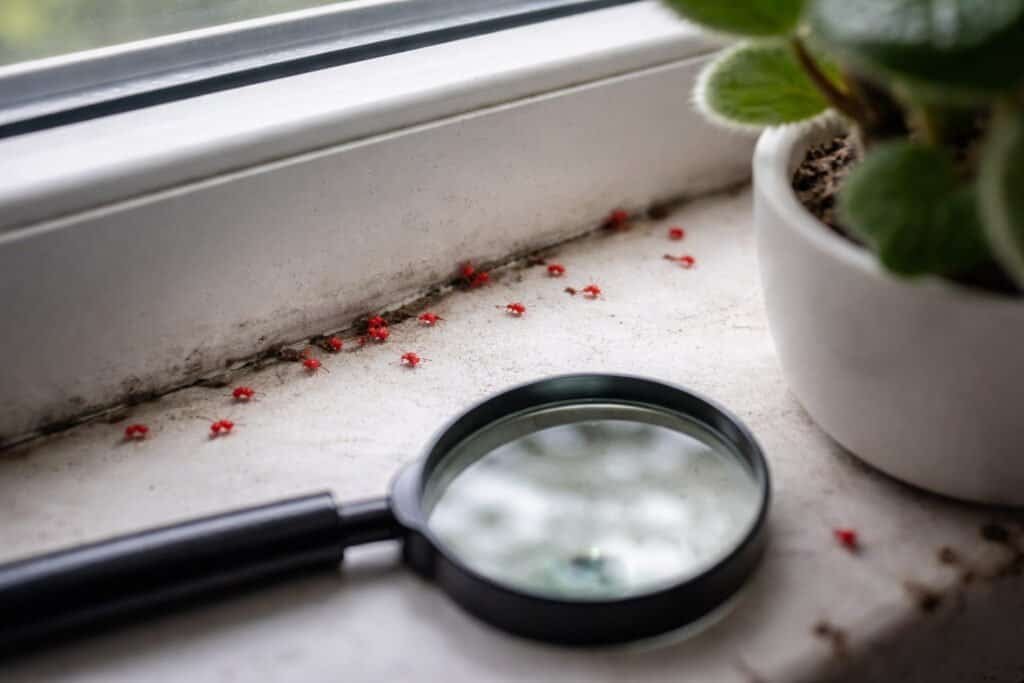
Tiny Red Bugs Not Clover Mites: Side-by-Side Comparison
Misidentification leads to ineffective treatments. Use this quick comparison to spot the difference fast:
| Feature | Clover Mites | Spider Mites | Bird Mites | Red Velvet Mites |
| Size | Tiny | Tiny | Tiny | Slightly larger |
| Movement | Fast | Slow | Moderate | Slow |
| Found On | Walls, windows | Plants | Beds, furniture | Outdoors mostly |
| Bites Humans? | No | No | Yes (can irritate) | No |
| Leaves Red Stain? | Yes | No | No | No |
| Source | Outdoors | Indoor plants | Bird nests | Soil |
Why People Get This Wrong
- All are red and tiny, making visual ID tricky
- Early infestations look similar
- Many guides oversimplify and label everything as clover mites
Top Causes: Why Tiny Red Bugs Are Appearing in Your House
Tiny red bugs don’t just show up randomly. There’s always a trigger—and identifying it is the fastest way to stop the problem at its source.
Seasonal Changes Bring Them Indoors
Warmer spring days and cooler fall temperatures often drive bugs inside. Walls that get direct sunlight become hotspots, especially in well-insulated homes.
Indoor Plants Are a Major Culprit
Houseplants are one of the most common sources of tiny red bugs not clover mites.
- Overwatered soil attracts mites
- New plants may carry hidden infestations
- Poor airflow encourages rapid reproduction
If the bugs are concentrated around greenery, your plants are the likely source.
Easy Entry Points You Might Overlook
Even newer homes and tiny houses aren’t immune.
- Small cracks around windows and doors
- Gaps near utility lines or vents
- Poorly sealed siding or trim
In compact spaces, a single entry point can lead to a full-blown infestation quickly.
Nearby Nests and Outdoor Activity
Bird mites, in particular, often come from:
- Nests in roof eaves or vents
- Nearby trees or gutters
- Rodent activity around the home
Once the host leaves, these mites move indoors looking for a new food source.
Humidity and Indoor Conditions
Moist environments make it easier for mites to thrive.
- High humidity levels
- Damp basements or poorly ventilated rooms
- Overcrowded furniture layouts (common in small homes)
Warning Signs You’re Dealing With the Wrong Pest
Not all tiny red bugs behave the same. These signs help you quickly determine if you’re dealing with something more serious than clover mites.
You’re Getting Bitten or Feeling Irritation
Clover mites don’t bite. If you notice:
- Itchy skin
- Small red bumps
- Crawling sensations
…it’s likely bird mites or another biting species.
Bugs Are Showing Up in Beds or Furniture
Finding them in places like:
- Mattresses
- Sofas
- Curtains
…points away from clover mites and toward indoor infestations that need immediate attention.
Sudden Population Explosion
A rapid increase usually means:
- Active breeding indoors
- A nearby nest or infestation source
- Favorable indoor conditions (humidity, warmth)
Unusual Movement Patterns
- Clustering in soil or plant leaves? Likely spider mites
- Scattered across ceilings or walls at night? Possibly bird mites
- Slow, almost invisible movement? Could indicate a different mite species
Pets Acting Unusual
Scratching, restlessness, or avoiding certain areas may signal biting mites in the environment.
Do This Immediately: Fast Ways to Get Rid of Tiny Red Bugs
When you spot tiny red bugs not clover mites in your house, quick action makes all the difference—especially in smaller living spaces.
Start With Safe Removal
Avoid crushing them directly, as some species can stain or spread.
- Use a vacuum with a hose attachment
- Empty the vacuum outside immediately
- Wipe surfaces with a damp microfiber cloth
Use Simple, Effective Cleaning Solutions
A mild solution works better than harsh chemicals in most cases.
- Mix water with a few drops of dish soap
- Wipe down walls, windows, and affected areas
- Repeat daily until activity stops
This disrupts their environment without introducing toxins into your home.
Isolate the Source Right Away
Containment prevents spread.
- Move infested plants away from others
- Wash bedding, curtains, and fabrics in hot water
- Block off affected areas if possible
Set Traps to Monitor Activity
Sticky traps help you:
- Track where bugs are coming from
- Measure how severe the infestation is
- Confirm whether your efforts are working
What NOT to Do (This Makes It Worse)
- Don’t crush bugs on walls or fabrics
- Don’t spray random pesticides indoors
- Don’t ignore entry points or plant sources
Quick action checklist:
- Vacuum thoroughly
- Clean surfaces daily
- Isolate plants and fabrics
- Identify the source
Taking these steps immediately can often stop a minor issue before it turns into a persistent infestation.
Best Long-Term Solutions to Eliminate Tiny Red Bugs
Quick fixes help, but long-term control is what keeps tiny red bugs not clover mites from coming back—especially in smaller homes where reinfestation happens fast.
Seal Entry Points (Your First Line of Defense)
Even tiny gaps can let mites inside.
- Use caulk around windows, doors, and baseboards
- Install weather stripping where needed
- Check vents, outlets, and utility openings
In small homes, sealing even a few gaps can dramatically reduce pest issues.
Treat and Maintain Indoor Plants Properly
If plants are the source, surface cleaning won’t solve the problem.
- Remove heavily infested leaves
- Rinse plants with water to dislodge mites
- Replace contaminated soil if needed
- Improve airflow and avoid overwatering
For persistent infestations, consider neem oil or insecticidal soap.
Control Indoor Environment
Mites thrive in specific conditions—make your home less inviting.
- Keep humidity moderate (30–50%)
- Increase ventilation, especially in tight spaces
- Avoid clutter where bugs can hide
Use Targeted Pest Control (When Needed)
Not all infestations require professionals, but some do.
- Apply indoor-safe insecticides only where necessary
- Focus on cracks, entry points, and baseboards
- Avoid overuse—more isn’t better
Know When to Call a Professional
Call pest control if:
- Bugs keep returning after multiple treatments
- You suspect bird mites or biting species
- The infestation spreads to multiple rooms
Professional treatment is often faster and more cost-effective than repeated DIY attempts.
Tiny Red Bugs Not Clover Mites: Prevention Checklist
Prevention is easier than elimination. Use this simple checklist to keep your home bug-free year-round.
Weekly Habits That Make a Big Difference
- Vacuum floors, corners, and window sills
- Wipe down surfaces where bugs appear
- Inspect plants for early signs of pests
Smart Plant Care Routine
- Avoid overwatering
- Space plants to improve airflow
- Quarantine new plants before bringing them indoors
Seal and Protect Entry Points
- Check window seals every season
- Repair cracks in walls or foundation
- Install door sweeps if needed
Outdoor Maintenance Matters
- Keep grass and plants away from your home’s foundation
- Remove bird nests near vents or roofs
- Reduce mulch buildup near exterior walls
Seasonal Prevention Strategy
- Spring/Fall: Inspect for entry points and seal gaps
- Summer: Monitor plants and humidity
- Winter: Watch for indoor nesting activity
Quick prevention summary:
- Clean regularly
- Control moisture
- Inspect plants
- Seal your home
Common Mistakes That Make the Infestation Worse
Many infestations linger because of simple, avoidable mistakes. Fix these, and you’ll solve the problem much faster.
Crushing the Bugs
It’s tempting—but it often makes things worse.
- Some leave red stains
- Others spread residue that attracts more pests
Misidentifying the Pest
Treating spider mites like clover mites won’t work.
- Wrong treatment = wasted time
- Infestation continues to grow unnoticed
Overusing Pesticides Indoors
More chemicals don’t equal better results.
- Can harm indoor air quality
- Often misses the actual source
- May drive bugs deeper into hidden areas
Ignoring the Root Cause
Surface cleaning alone won’t solve:
- Infested plants
- Bird or rodent nests
- Entry points
If the source isn’t removed, the bugs will return—guaranteed.
Waiting Too Long to Act
Small problems grow quickly, especially in compact spaces.
- Faster reproduction cycles indoors
- Easier spread across rooms
- Harder to control over time
Bottom line:
The sooner you act—and the more accurately you identify the pest—the easier this problem is to eliminate.
Are Tiny Red Bugs Dangerous? (Bites, Health Risks & Myths)
Seeing tiny red bugs not clover mites in your house can feel alarming—but not all of them pose a real threat. The key is understanding which ones matter.
Which Tiny Red Bugs Are Harmless?
- Clover mite lookalikes – Mostly a nuisance
- Red velvet mites – Completely harmless and don’t survive long indoors
- Spider mites – Damage plants, not people
Which Ones Can Bite or Cause Issues?
- Bird mites – Can bite humans and cause itching or irritation
- Chiggers – Rare indoors, but bites can be very itchy
Common Symptoms to Watch For
- Small red bumps or rashes
- Itchy skin, especially at night
- Crawling sensation without visible bites
Myths That Cause Confusion
- “All red bugs bite” → False
- “They live permanently in beds” → Usually false (except specific mites)
- “You need strong chemicals to kill them” → Often unnecessary
Important:
Most tiny red bugs are more annoying than dangerous. However, biting species should always be addressed quickly, especially in small, enclosed living spaces.
How This Problem Affects Tiny Homes and Small Living Spaces
Tiny red bugs not clover mites behave very differently in compact homes compared to larger houses.
Faster Spread in Small Areas
Limited square footage means:
- Bugs reach all areas quickly
- Infestations feel more intense
- Containment is harder
Limited Ventilation Can Make It Worse
Tiny homes often rely on controlled airflow.
- Humidity builds up faster
- Warm, enclosed spaces attract mites
- Poor airflow encourages reproduction
Higher Contact With Surfaces
In small living spaces:
- You’re closer to walls, windows, and furniture
- Bugs are more noticeable—and more disruptive
- Sleeping areas are often near potential entry points
Why Early Action Is Critical
A minor issue in a large home can become a full infestation in a tiny house within days.
If you’re dealing with recurring pest problems, it’s worth reviewing your overall pest prevention strategy. For example, issues like tiny ants often follow similar patterns—this guide on tiny ant infestations can help you spot overlapping entry points and prevention methods.
Related Issues in Small Homes & Indoor Living Spaces
Tiny red bugs rarely exist in isolation. They often point to broader pest or maintenance issues—especially in compact homes.
Other Common Indoor Pest Problems
- Tiny ants invading kitchens and walls
- Fungus gnats from overwatered plants
- Moisture-loving bugs in bathrooms or under sinks
Shared Root Causes
- Small entry gaps
- Excess humidity
- Overlapping indoor-outdoor environments
- Poor plant maintenance
Why This Matters for Tiny House Living
Small homes amplify every issue:
- Less space to isolate infestations
- Faster spread between zones
- Greater impact on daily comfort
If you’re building or maintaining a compact home, learning how to prevent multiple pest types at once can save time and effort. A broader approach to tiny house maintenance and pest control helps avoid recurring issues instead of treating them one by one.
Expert Tips to Keep Your Home Bug-Free Year-Round
Consistent habits make the biggest difference. These expert-backed tips are simple but highly effective.
Build a Seasonal Inspection Routine
- Check windows and doors every few months
- Look for early signs of bugs near light sources
- Inspect plant leaves and soil regularly
Be Strategic With Plant Placement
- Keep plants away from beds and upholstery
- Avoid overcrowding greenery in tight spaces
- Rotate plants to improve airflow
Use Natural Deterrents the Right Way
- Peppermint oil sprays for entry points
- Vinegar solutions for surface cleaning
- Essential oils as mild repellents (not full treatments)
Keep High-Risk Zones Under Control
Focus on:
- Window sills
- Baseboards
- Behind furniture
- Around vents and outlets
Think Minimalist for Better Pest Control
Clutter creates hiding spots. A cleaner, simpler layout:
- Makes bugs easier to spot
- Reduces breeding areas
- Improves airflow
Pro tip:
In small homes, less clutter = fewer pests. It’s one of the simplest but most overlooked strategies.
FAQ: Tiny Red Bugs in House (Not Clover Mites)
What are tiny red bugs crawling on my walls?
They’re often spider mites or clover mite lookalikes entering from outside, especially during seasonal changes.
Can tiny red bugs live in beds?
Most don’t, but bird mites can temporarily infest bedding if a nearby nest is disturbed.
Do all tiny red bugs bite humans?
No—many are harmless. Only certain mites, like bird mites, may cause irritation.
How do I know if they’re coming from plants?
Check for leaf damage, tiny webs, or bugs clustered in the soil or under leaves.
Why do tiny red bugs keep coming back after cleaning?
The source hasn’t been removed—common causes include entry points, nests, or infested plants.
Are tiny red bugs common in small homes or apartments?
Yes, because limited space and airflow can make infestations spread faster and feel more noticeable.
When to Call Pest Control (And What to Expect)
Sometimes DIY methods aren’t enough. Knowing when to escalate can save time and frustration.
Signs You Need Professional Help
- Bugs keep returning after multiple treatments
- You suspect biting mites (like bird mites)
- Infestation spreads across several rooms
- You can’t locate the source
What Pest Control Typically Does
- Identifies the exact species
- Locates hidden sources (nests, entry points)
- Applies targeted, safe treatments
- Provides prevention recommendations
Cost vs DIY Approach
- DIY works for minor, early-stage problems
- Professional treatment is faster for persistent infestations
- Long-term savings often favor expert intervention
For more guidance on identifying mites and pest-related health concerns, the Centers for Disease Control and Prevention (CDC) provides reliable information: https://www.cdc.gov/parasites/
Tiny red bugs not clover mites in your house don’t have to turn into a long-term problem. Once you identify the type, remove the source, and lock down entry points, most infestations can be handled quickly—even in small spaces.
If you’re dealing with recurring pests in a compact home, take this as a signal to upgrade your prevention strategy—not just fix the symptom. Start with one area today (plants, windows, or cleaning routine), and you’ll see results faster than you expect.
