
Tiny ants in house at night can feel like they appear out of nowhere—one evening your kitchen is clean, the next you’re spotting a steady trail across the counter. If this sounds familiar, you’re not alone. Nighttime ant activity is one of the most common (and frustrating) household issues, especially in small homes where every inch matters.
This guide breaks down why tiny ants show up at night, what’s really attracting them, and how to stop them quickly before the problem spreads. You’ll also learn how to prevent future infestations using simple, practical strategies that actually work.
In This Article
Quick Answer: Why Do I See Tiny Ants in My House at Night?
Tiny ants in house at night are usually searching for food, water, or shelter when your home is quiet and undisturbed. Nighttime gives them the perfect opportunity to explore safely and build scent trails without interruption.
Here’s the short version:
- Food residue (especially sugar or grease) attracts ants fast
- Moisture sources like sinks, pipes, or condensation draw them in
- Cooler nighttime temperatures make foraging easier
- Less human activity allows ants to move freely
- Entry points like cracks, gaps, and windows give easy access
Most common culprits:
- Sugar ants
- Odorous house ants
- Pavement ants
If you’re only seeing ants at night, that’s actually a clue—it often means they’ve already found a reliable food or water source and are optimizing their routine around your habits.
Top Causes of Tiny Ants in House at Night (Ranked by Likelihood)
Understanding the cause is half the battle. Most infestations come down to a few predictable triggers.
Food Left Behind (The #1 Reason)
Even small crumbs or sticky spots can attract ants within hours.
Common problem areas:
- Kitchen counters and stovetops
- Trash bins (especially overnight)
- Pet food left out
- Spills that weren’t fully cleaned
Key insight: Ants don’t need much. A tiny sugar residue is enough to start a trail.
Hidden Moisture Sources
Ants need water just as much as food. Nighttime humidity makes this worse.
Check for:
- Leaky pipes under sinks
- Damp sponges or dishcloths
- Condensation near windows
- Bathroom moisture
Nighttime = Safe Foraging Time
Ants are strategic. They “choose” nighttime because:
- Fewer disturbances from people or pets
- Less cleaning activity
- Lower risk of being killed
This is why you might not see a single ant during the day—but dozens at night.
Weather & Seasonal Changes
Outdoor conditions often push ants inside.
- Heavy rain floods nests → ants move indoors
- Heat or drought → ants search for water
- Seasonal shifts → colonies expand and explore
Nearby Outdoor Nests
If ants are consistently showing up, there’s likely a nest close by.
Common locations:
- Along your home’s foundation
- Under concrete slabs
- In garden beds or mulch
Once they find a food source inside, they’ll create a direct trail between the nest and your home.
Why Ants Prefer Nighttime: The Hidden Behavior Most People Miss
Most people assume ants are random invaders. They’re not. Their behavior is highly organized—and nighttime plays a big role in that.
They Follow Invisible Highways (Pheromone Trails)
Ants communicate using scent trails. Once one ant finds food, it leaves a chemical path for others.
At night:
- Trails remain undisturbed longer
- More ants can follow the same route efficiently
- Colonies can scale up food collection quickly
That’s why a few ants can turn into dozens overnight.
Less Competition, More Efficiency
During the day, ants deal with:
- Foot traffic
- Cleaning
- Light exposure
At night, those obstacles disappear. The result? Faster, more confident foraging.
Temperature & Humidity Advantage
Ants are sensitive to environmental conditions.
Nighttime offers:
- Cooler surfaces (better for movement)
- Higher humidity (reduces dehydration risk)
This combination makes your home especially attractive after dark.
Not All Ants Are Fully Nocturnal
Some species are strictly nocturnal, while others simply adapt.
- Opportunistic ants adjust to your schedule
- If your home is quiet at night, they’ll exploit it
Bottom line: Seeing tiny ants in house at night is not random—it’s a sign of a patterned, repeatable behavior that you can interrupt once you understand it.
What Type of Tiny Ants Are Invading Your House? (Identification Guide)
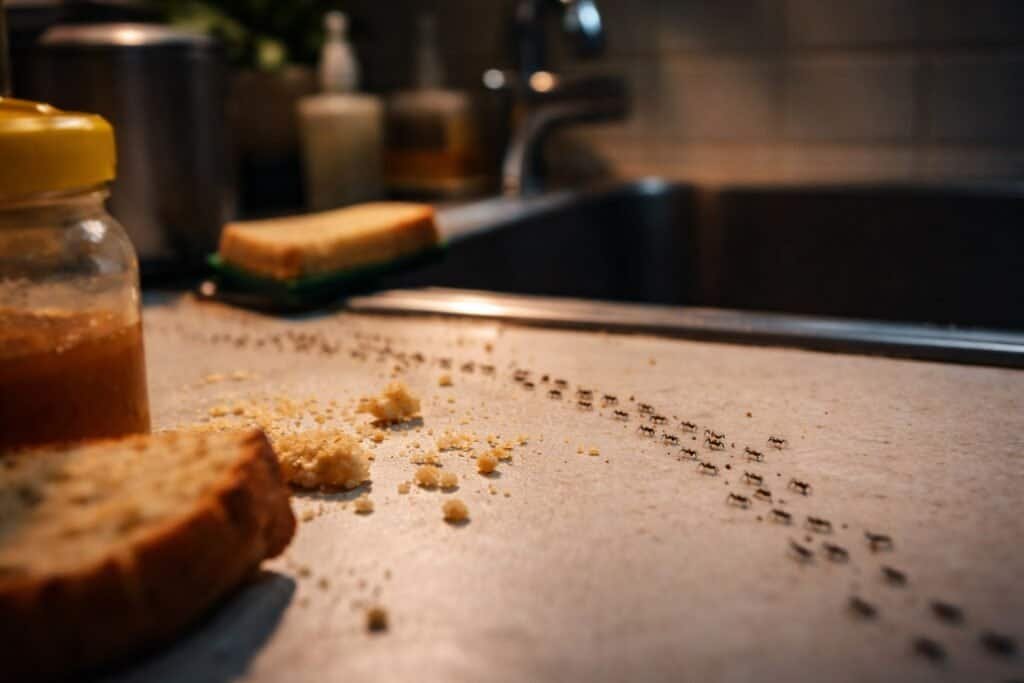
Not all tiny ants behave the same way. Identifying the type helps you choose the right treatment method instead of guessing.
Common Tiny Ants Found Indoors
Sugar Ants (General Term)
- Attracted to sweets and carbs
- Often seen in kitchens and pantries
- Light brown to black in color
Odorous House Ants
- Emit a rotten or “coconut-like” smell when crushed
- Love sugary foods and moisture
- Form long, consistent trails
Pavement Ants
- Typically nest outdoors but enter through cracks
- Prefer greasy and protein-based foods
- Slightly darker and more structured in movement
Ghost Ants
- Extremely small, almost translucent bodies
- Hard to spot unless in large numbers
- Common in warm, humid areas (bathrooms, kitchens)
Quick Identification Table
| Ant Type | Color | What They Want | Where You’ll See Them |
| Sugar Ants | Light to dark | Sweets, crumbs | Counters, pantry |
| Odorous House Ants | Brown/black | Sugar, moisture | Sinks, trash, trails |
| Pavement Ants | Dark brown/black | Grease, protein | Floors, cracks, baseboards |
| Ghost Ants | Pale/translucent | Sugar, moisture | Bathrooms, kitchens |
Pro tip: If ants are showing up mostly at night near your sink or trash area, odorous house ants are often the culprit.
Warning Signs You Have a Growing Ant Problem (Not Just Random Visitors)
Seeing a few ants once doesn’t always mean infestation. Repeated nighttime activity, however, is a different story.
Hidden Problems You Shouldn’t Ignore
- Consistent trails at night
Ants following the same path every evening means a stable food source has been found. - Ants appearing in multiple rooms
This suggests the colony is expanding or multiple entry points exist. - Clusters near water sources
Kitchens, bathrooms, and laundry areas are prime hotspots. - Numbers increasing over time
A slow buildup usually signals the colony is growing—not just passing through. - Visible entry points or cracks
Gaps in walls, windows, or flooring act like open doors.
What Most People Get Wrong
Many homeowners assume:
- “It’s just a few ants”
- “They’ll go away on their own”
In reality, ants rarely leave once they’ve established a reliable food source. Ignoring early signs often leads to a much larger infestation within days.
Do This Immediately If You See Tiny Ants at Night
When you spot tiny ants in house at night, quick action can stop the problem before it spreads.
Immediate Action Checklist
- Wipe out visible ants and trails
Use a vinegar-water solution or lemon spray to erase scent trails. - Deep-clean key surfaces before bed
Focus on counters, sinks, and floors where crumbs or residue may be hiding. - Remove overnight food sources
- Store leftovers in sealed containers
- Empty trash bins
- Don’t leave pet food out
- Dry out moisture areas
- Wipe sinks and faucets
- Hang damp cloths
- Fix obvious leaks if possible
- Place ant baits strategically
Set them near trails or entry points—nighttime is when ants are most likely to take bait back to the colony.
Quick Night Routine That Makes a Big Difference
Before going to bed, take 5 minutes to:
- Clean surfaces
- Remove food
- Check for moisture
This simple habit alone can dramatically reduce nighttime ant activity within a few days.
Step-by-Step: How to Get Rid of Tiny Ants in Your House at Night
Getting rid of tiny ants in house at night isn’t about killing what you see—it’s about eliminating the colony behind the scenes. Follow this method for lasting results.
Step 1: Find the Source (Don’t Skip This)
Track where ants are coming from and where they’re going.
Look for:
- Entry points (cracks, window gaps, baseboards)
- Food sources (trash, pantry, pet bowls)
- Moisture zones (under sinks, bathrooms)
Tip: Observe at night when activity is highest.
Step 2: Cut Off Food and Water Access
Ants won’t stay where they can’t survive.
- Store food in airtight containers
- Clean surfaces thoroughly before bed
- Fix leaks and dry damp areas
- Take trash out regularly
Small changes here often make a big impact within 24–48 hours.
Step 3: Use Ant Baits (The Right Way)
Baits are far more effective than sprays because they target the colony, not just the workers.
- Place bait along ant trails
- Avoid spraying near bait (it repels ants)
- Be patient—ants need time to carry bait back
Expect results in 3–7 days, not instantly.
Step 4: Seal Entry Points Permanently
Once activity drops, close the door for good.
- Use caulk to seal cracks and gaps
- Install weather stripping around doors/windows
- Repair damaged screens
Focus on areas where you’ve seen consistent trails.
Step 5: Monitor and Repeat if Needed
Ant control isn’t always one-and-done.
- Recheck hotspots nightly
- Replace bait if activity continues
- Stay consistent with cleaning routines
Consistency is what prevents reinfestation.
Best Solutions That Actually Work (Natural vs Chemical Options)
Choosing the right solution depends on how severe your problem is and how quickly you want results.
Natural Remedies (Best for Light Infestations)
- Vinegar spray → disrupts scent trails instantly
- Baking soda + sugar → DIY bait option
- Lemon juice → natural repellent barrier
- Essential oils (peppermint, tea tree) → short-term deterrents
Pros: Safe, affordable, eco-friendly
Cons: Often temporary, less effective on large colonies
Chemical Solutions (Best for Persistent Problems)
- Ant bait stations → slow but highly effective
- Gel baits → precise placement, strong results
- Residual insecticides → long-lasting barrier
Pros: Targets the colony, longer-lasting
Cons: Requires careful use, not always instant
Which Option Is Better for You?
| Situation | Best Choice |
| A few ants at night | Natural remedies |
| Repeated nightly trails | Bait stations |
| Large or spreading infestation | Chemical + sealing |
Key takeaway: Start with bait for lasting results, then use natural methods for maintenance.
Common Mistakes That Make Night Ant Infestations Worse
Even with good intentions, certain actions can actually make tiny ants in house at night harder to control.
Mistakes to Avoid
- Killing only visible ants
This ignores the colony, which continues producing more workers. - Using sprays too early
Sprays scatter ants and disrupt bait effectiveness. - Leaving food out overnight
Even small crumbs reset the infestation cycle. - Ignoring moisture problems
Water sources keep ants coming back. - Not sealing entry points
Without closing gaps, ants will return—even after treatment.
What Most People Overlook
Many homeowners rely on quick fixes and expect instant results. Ant control, however, works best when you:
- Combine bait + cleaning + prevention
- Stay consistent for several days
- Focus on long-term solutions, not just quick kills
Avoiding these common mistakes can cut your ant problem in half almost immediately.
How to Prevent Tiny Ants in Your House at Night (Long-Term Strategy)
Once you’ve eliminated the current infestation, prevention becomes your best defense. Tiny ants in house at night usually return when the same conditions are left unchanged.
Simple Prevention Checklist That Works
- Clean surfaces every night
Wipe down counters, tables, and stovetops before bed - Store food properly
Use airtight containers for snacks, sugar, and pet food - Eliminate moisture
Fix leaks, dry sinks, and avoid leaving damp cloths overnight - Seal entry points
Check for cracks, gaps, and openings around doors and windows - Maintain outdoor areas
Trim plants, remove debris, and keep mulch away from your foundation
Small Habits, Big Results
A consistent nightly routine—even just 5 minutes—can dramatically reduce the chances of ants returning.
Prevention is always easier (and cheaper) than dealing with another infestation.
How This Problem Affects Tiny Homes and Small Living Spaces
In tiny homes and compact living spaces, ant problems escalate faster—and feel more intrusive.
Why Small Spaces Are More Vulnerable
- Limited separation between areas
Kitchen, dining, and sleeping spaces are often close together - Faster spread
Ants can move across the entire home quickly - Harder to isolate the issue
One food source can affect the whole space - Higher impact on daily life
Even a small infestation feels overwhelming
Smart Strategy for Tiny Living
If you live in a compact home, prevention should be part of your daily routine.
A clean, dry, sealed environment is essential.
If you’re dealing with recurring pest issues in a small space, it helps to follow a structured approach.
You can explore our guide on handling pests in compact spaces for deeper strategies, especially if you’re optimizing a tiny home lifestyle.
Related Issues in Small Homes: Ants, Roaches & Other Night Pests
Tiny ants in house at night are often just one part of a bigger picture—especially in smaller homes.
Common Nighttime Pest Problems
- Tiny black ants that behave similarly but may prefer different food sources
- Cockroaches drawn to moisture and food residue
- Drain flies linked to damp environments
- Spiders that follow other insects indoors
Why This Matters
Pests thrive in the same conditions:
- Food availability
- Moisture
- Easy access
If one pest appears, others may follow.
If you’ve noticed different types of ants, you might want to understand the differences.
Our breakdown of tiny black ants in the house can help you identify and treat them more effectively.
When to Call a Professional (And What It Costs)
Sometimes, DIY methods aren’t enough—especially if the infestation keeps coming back.
Signs You Need Professional Help
- Ants return despite using bait and cleaning
- Multiple rooms are affected
- You can’t locate the nest
- Activity increases instead of decreases
What Pest Control Professionals Do Differently
- Locate hidden nests (including inside walls)
- Use targeted treatments not available in stores
- Apply long-term prevention strategies
Typical Cost in the U.S.
- One-time treatment: $100–$300
- Ongoing service: $30–$60/month
Costs vary depending on infestation size and location, but professional help can save time and frustration if the problem persists.
FAQ: Tiny Ants in House at Night
Why do ants suddenly appear at night?
Ants become more active at night due to cooler temperatures, less human activity, and better foraging conditions.
Are tiny ants dangerous?
Most are harmless, but they can contaminate food and become a hygiene concern if left untreated.
Why only at night and not during the day?
Nighttime offers safer and more efficient conditions for ants to explore and collect food without disturbance.
How do I find where ants are coming from?
Follow their trail at night, check entry points like cracks or gaps, and inspect areas near food and moisture.
Do ant baits work overnight?
Yes, ants will collect bait at night, but it usually takes several days to eliminate the colony.
How long does it take to get rid of ants completely?
With proper treatment, most infestations are controlled within 3–7 days, though prevention is ongoing.
Expert Tips to Keep Your Home Ant-Free at Night
A few smart strategies can make a lasting difference.
- Use bait first, not spray
Target the colony instead of scattering ants - Focus on nighttime cleaning
That’s when it matters most - Think like an ant
Remove what they need: food, water, access - Combine methods
Cleaning + bait + sealing = best results
For deeper guidance on safe pest control practices, you can also refer to trusted resources like the Environmental Protection Agency, which offers recommendations on effective and responsible pest management.
Tiny ants in house at night can feel frustrating, but the solution is usually simpler than it seems. With the right approach, you can stop the problem quickly—and prevent it from coming back.
Start with one small habit tonight: clean your surfaces before bed and remove any food sources.
That single step can make a noticeable difference by tomorrow.
