
Small prefab buildings for seniors are quickly becoming one of the most practical housing solutions for aging comfortably and independently. Rising housing costs, the desire to downsize, and the need for safer, low-maintenance homes are all pushing seniors—and their families—to rethink traditional living options.
This guide breaks down everything you need to know: what prefab buildings are, why they work so well for seniors, how much they cost, and how to choose the right one. Whether you’re planning ahead or helping a loved one transition, you’ll find clear, actionable insights here.
In This Article
Why Small Prefab Buildings Are Changing Senior Living
A noticeable shift is happening in how people approach retirement living. Large homes with stairs, high maintenance demands, and unused space no longer make sense for many seniors.
Small prefab buildings offer a simpler, smarter alternative.
The Rise of Aging in Place
More seniors want to stay independent instead of moving into assisted living facilities. Prefab homes support this by offering:
- Single-level layouts
- Easy accessibility
- Customizable safety features
A well-designed prefab home allows seniors to remain in control of their daily lives while reducing physical strain.
Downsizing Without Sacrificing Comfort
Letting go of a long-time home can be emotional. However, downsizing doesn’t mean giving up comfort—it means prioritizing what truly matters.
Small prefab buildings make it possible to:
- Reduce clutter and simplify daily living
- Lower utility bills and maintenance costs
- Create a cozy, personalized space
Faster, More Predictable Housing Solutions
Traditional construction can take months or even years. Prefab homes are built off-site and assembled quickly, which means:
- Shorter construction timelines
- Fewer delays due to weather or labor shortages
- More predictable costs
For seniors who need a quick transition, this speed is a major advantage.
What Exactly Are Small Prefab Buildings?
Before choosing one, it’s important to understand what “prefab” actually means—and what it doesn’t.
A Simple Definition
Small prefab buildings are homes constructed partially or entirely in a factory, then transported and assembled on-site. This controlled environment improves efficiency and quality.
Types of Prefab Construction
Prefab is an umbrella term that includes several building methods:
- Modular homes – Built in sections and assembled on a permanent foundation
- Manufactured homes – Fully built in a factory and placed on-site
- Panelized homes – Walls and components are prefabricated, then assembled
- Pre-cut kits – Materials are cut to size and delivered for assembly
Each type offers different levels of customization and cost.
Prefab vs Tiny Homes vs ADUs
These terms are often used interchangeably, but they’re not identical:
| Type | Key Feature | Best For |
| Prefab Home | Factory-built structure | Long-term living |
| Tiny Home | Very small footprint (often mobile) | Minimalist lifestyle |
| ADU (Accessory Dwelling Unit) | Secondary unit on existing property | Living near family |
Small prefab buildings for seniors often overlap with ADUs, especially when placed in a backyard for family support.
Benefits of Small Prefab Buildings for Seniors
Prefab living isn’t just trendy—it solves real problems that seniors face daily.
Accessibility Built In
Modern prefab homes can be designed with aging-friendly features from the start, such as:
- Step-free entrances
- Wider doorways for mobility aids
- Walk-in showers with grab bars
This reduces the need for expensive renovations later.
Lower Costs Without Compromise
Compared to traditional homes, prefab buildings are often more affordable due to:
- Streamlined construction processes
- Reduced labor costs
- Less material waste
Many seniors find they can own a comfortable home outright instead of carrying a mortgage.
Minimal Maintenance Living
Smaller space means less cleaning, fewer repairs, and lower upkeep overall. That translates into:
- More free time
- Less physical strain
- Reduced reliance on outside help
Energy Efficiency That Saves Money
Prefab homes are typically built with modern insulation and energy-efficient systems, leading to:
- Lower electricity bills
- More consistent indoor temperatures
- Reduced environmental impact
Flexibility for Changing Needs
Health and mobility can change over time. Prefab homes can adapt more easily with:
- Modular upgrades
- Smart home integrations
- Layout adjustments
This flexibility makes them a future-proof housing option for seniors.
Popular Types of Small Prefab Buildings for Seniors
Not all prefab homes are the same. Choosing the right type depends on lifestyle, budget, and whether family support is nearby.
Backyard ADUs for Multigenerational Living
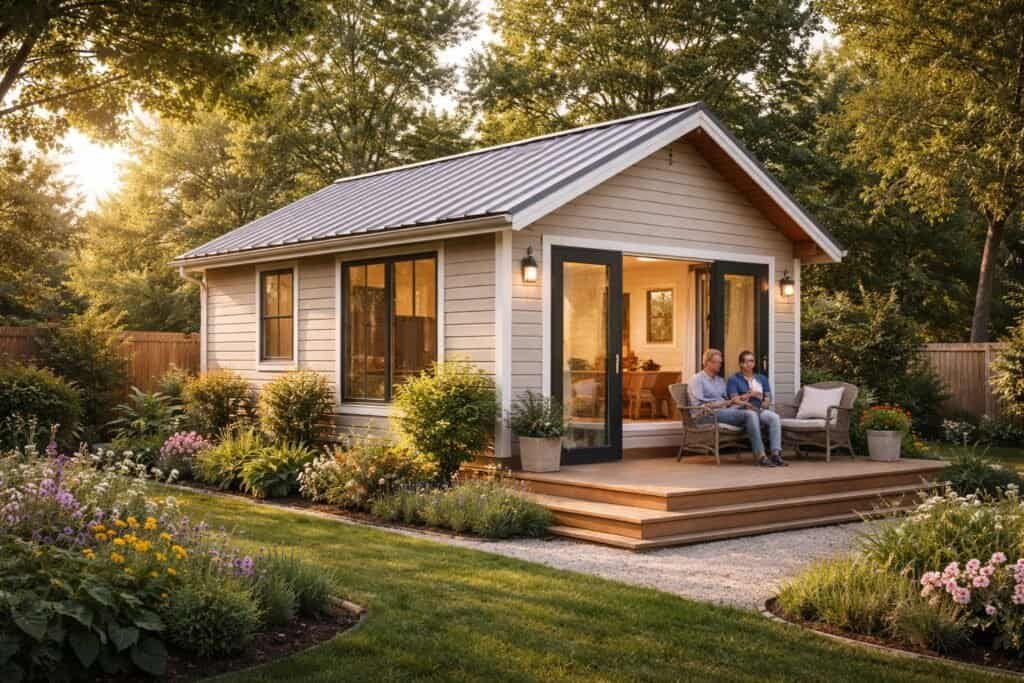
Accessory Dwelling Units (ADUs) are one of the most popular options right now. These small prefab buildings sit on the same property as a main home.
They work especially well for seniors who want independence with support close by.
Why they’re appealing:
- Easy access to family when needed
- Lower land costs (since it’s already owned)
- Shared utilities in some cases
This setup balances privacy and peace of mind.
Compact Standalone Prefab Cottages
For seniors who prefer full independence, standalone prefab cottages offer a complete living solution on a separate plot of land.
These homes typically include:
- A full kitchen
- One or two bedrooms
- A comfortable living area
They feel like a traditional home—just smaller, smarter, and easier to manage.
Modular Granny Flats and Garden Suites
Granny flats are designed specifically for senior living. They’re compact, efficient, and often placed in a backyard or garden setting.
Key advantages:
- Purpose-built for aging-in-place
- Cozy, quiet environment
- Often customizable for accessibility needs
Garden suites, in particular, can create a peaceful, nature-connected lifestyle.
Portable Prefab Cabins for Rural Living
Some seniors dream of a quieter life away from busy cities. Portable prefab cabins make that possible.
These homes are ideal for:
- Rural or off-grid locations
- Retirement retreats
- Nature-focused living
Many come with solar options and water-saving systems, making them both independent and sustainable.
Key Features Seniors Should Prioritize
A beautiful prefab home means little if it doesn’t support safety and comfort. The right features can make daily life significantly easier.
Step-Free and Mobility-Friendly Design
Mobility challenges can appear gradually, so it’s smart to plan ahead.
Look for:
- No-step entryways
- Wide hallways and doors (at least 32 inches)
- Open floor layouts for easy movement
These features ensure the home remains usable for years to come.
Safe and Functional Bathrooms
Bathrooms are one of the highest-risk areas for falls. A senior-friendly prefab home should include:
- Walk-in showers (no tubs to step over)
- Grab bars near toilets and showers
- Non-slip flooring
Small upgrades here can make a huge difference in safety.
Smart Home Technology for Convenience
Technology can simplify everyday tasks and add an extra layer of safety.
Popular options include:
- Voice-controlled lighting and appliances
- Smart thermostats
- Emergency alert systems
These features help seniors maintain independence while staying connected.
Natural Light and Ventilation
A well-lit home isn’t just about aesthetics—it affects mood, health, and energy levels.
Prioritize:
- Large windows
- Cross ventilation
- Skylights where possible
Bright, airy spaces feel larger and more welcoming.
Smart Storage Without Clutter
Storage should be easy to access without bending or reaching too high.
Consider:
- Built-in cabinets at reachable heights
- Pull-out shelves
- Multi-functional furniture
The goal is to keep essentials accessible while maintaining a clean, open feel.
Real Cost Breakdown: Are Small Prefab Buildings Worth It?
Cost is often the biggest deciding factor—and prefab homes can be surprisingly cost-effective when you look at the full picture.
Average Price Ranges
Prices vary based on size, materials, and customization, but here’s a general idea:
| Type of Prefab | Estimated Cost |
| Basic prefab unit | $20,000 – $60,000 |
| Mid-range modular home | $60,000 – $120,000 |
| High-end custom prefab | $120,000 – $250,000+ |
These figures usually cover the structure itself—not the full setup.
Hidden Costs to Plan For
Many buyers underestimate the additional expenses involved.
Be prepared for:
- Land preparation and foundation
- Utility connections (water, electricity, sewage)
- Permits and local fees
- Delivery and installation
These can add 20%–50% on top of the base price, depending on location.
Long-Term Savings Compared to Traditional Homes
Even with upfront costs, prefab homes often save money over time.
Key savings include:
- Lower energy bills
- Reduced maintenance costs
- No large mortgage in many cases
For retirees on fixed incomes, this financial predictability is a major benefit.
Financing Options and Support
Options are expanding as prefab housing becomes more mainstream.
Possible routes:
- Personal loans or home equity loans
- Specialized prefab financing programs
- Government grants or senior housing assistance (location-dependent)
It’s worth researching local programs that support aging-in-place housing solutions.
Design Ideas That Make Small Spaces Feel Spacious
A smaller home doesn’t have to feel cramped. Thoughtful design can make small prefab buildings for seniors feel open, calm, and surprisingly roomy.
Open Layouts That Breathe
Walls can make a small space feel boxed in. Open floor plans create flow and flexibility.
Focus on:
- Combining kitchen, dining, and living areas
- Minimizing unnecessary partitions
- Using furniture to define zones instead of walls
This approach improves mobility while making the home feel larger.
Multi-Functional Furniture That Works Hard
Every piece of furniture should serve more than one purpose.
Smart choices include:
- Sofa beds for guests
- Fold-down tables or desks
- Storage ottomans or benches
This reduces clutter without sacrificing functionality.
Warm Minimalism Over Cold Minimalism
Minimalism works best when it feels inviting—not sterile.
Aim for:
- Neutral tones with warm accents
- Soft textures like wood, linen, and wool
- Personal items that add meaning without overcrowding
The goal is a balanced space that feels both simple and lived-in.
Indoor-Outdoor Living for Extra Space
Extending living areas outdoors can dramatically improve how a small home feels.
Consider:
- Small patios or decks
- Sliding glass doors
- Garden seating areas
Even a modest outdoor setup can act as an “extra room” for relaxation.
Lighting That Expands the Space
Lighting can transform how a space is perceived.
Use:
- Layered lighting (ambient, task, accent)
- Mirrors to reflect light
- Light-colored walls to enhance brightness
A well-lit prefab home feels more open, safer, and more comfortable.
Best Locations for Installing Small Prefab Homes
Where you place a prefab home matters just as much as the design itself. The right location can enhance comfort, accessibility, and long-term value.
Backyard Living Near Family
One of the most practical setups is placing a prefab home in a family member’s backyard.
Benefits include:
- Immediate support if needed
- Shared resources and lower costs
- Stronger family connection without losing independence
This is often the top choice for aging parents.
Retirement Communities vs Private Land
Both options have pros and trade-offs.
Retirement communities:
- Built-in social environment
- Access to shared amenities
- Less responsibility for maintenance
Private land:
- More privacy and control
- Greater customization freedom
- Potential long-term investment value
The right choice depends on lifestyle preferences and desired level of independence.
Zoning Laws and Regulations to Check First
Rules around prefab homes vary widely by location. Overlooking this step can lead to costly delays.
Check for:
- Minimum size requirements
- ADU regulations
- Setback rules and property limits
- Utility and infrastructure requirements
Local authorities or planning offices can provide clear guidance before you commit.
Climate and Environmental Considerations
A prefab home should match the environment it’s placed in.
Think about:
- Insulation for hot or cold climates
- Ventilation in humid areas
- Weather resistance (rain, wind, earthquakes)
Choosing the right materials and design ensures comfort year-round.
Small Prefab Buildings for Seniors vs Traditional Downsizing
Downsizing often means moving into a smaller home—but not all options offer the same lifestyle benefits.
Comparing Popular Downsizing Options
Here’s how small prefab buildings stack up against common alternatives:
| Option | Pros | Cons |
| Condo | Low maintenance, central location | HOA fees, less privacy |
| Apartment | Easy living, rental flexibility | Limited ownership, less control |
| Prefab Home | Independence, customization, lower long-term cost | Setup effort, land requirements |
Prefab homes stand out for offering ownership, flexibility, and independence in one package.
Privacy and Independence Matter More Than Ever
Many seniors value their autonomy. Prefab homes provide:
- A private living space
- No shared walls or noise issues
- Freedom to design and personalize
This creates a sense of control that’s often missing in apartments or condos.
Long-Term Adaptability
Traditional housing options can be difficult to modify as needs change.
Prefab homes, on the other hand, allow:
- Easier upgrades and modifications
- Integration of accessibility features over time
- Potential relocation in some cases
This makes them a more adaptable solution for aging in place.
Resale Value and Future Flexibility
Prefab homes can also serve as an investment, especially when used as ADUs.
Potential benefits:
- Increased property value
- Rental income opportunities
- Flexible use for guests or caregivers
This added versatility makes prefab living not just practical—but financially smart.
How to Choose the Right Prefab Builder
The builder you choose can make or break your experience. A well-built prefab home should last for decades, so it’s worth taking the time to choose carefully.
What to Look for in a Reputable Company
Start with the basics—credibility and transparency.
Look for:
- Proven experience with small prefab buildings for seniors
- Clear pricing and detailed contracts
- Strong customer reviews and real project photos
- Compliance with local building codes
A trustworthy builder will be open, communicative, and willing to answer detailed questions.
Customization vs Pre-Designed Models
Some companies offer fully customizable homes, while others provide ready-made designs.
Pre-designed models:
- Faster and often more affordable
- Tested layouts that work well
Custom builds:
- Tailored to specific mobility or health needs
- Greater design flexibility
The best choice depends on how specific your requirements are.
Questions to Ask Before Buying
Before committing, ask practical questions that reveal how the builder operates:
- What is the total timeline from order to move-in?
- What’s included in the base price?
- Do you handle permits and installation?
- What warranties are provided?
Clear answers now can prevent costly surprises later.
Red Flags to Watch Out For
Not every builder delivers quality.
Be cautious if you notice:
- Vague pricing or hidden fees
- Lack of proper licensing
- Poor communication or delayed responses
- No verifiable past projects
A little due diligence upfront can save a lot of stress.
Common Mistakes to Avoid When Buying Small Prefab Buildings for Seniors
Even a great idea can go wrong without proper planning. Many buyers make avoidable mistakes that impact comfort and budget.
Ignoring Accessibility from the Start
Retrofitting accessibility features later can be expensive and inconvenient.
Plan early for:
- Mobility-friendly layouts
- Bathroom safety features
- Easy navigation throughout the home
Designing for the future ensures long-term usability.
Underestimating Total Costs
The base price of a prefab home is only part of the equation.
Commonly overlooked expenses:
- Site preparation
- Utility hookups
- Delivery and crane services
A realistic budget should include everything needed for move-in readiness.
Choosing Style Over Function
Aesthetic appeal matters—but not at the expense of practicality.
Avoid:
- Tight layouts that restrict movement
- Trendy features that don’t age well
- Hard-to-maintain materials
Focus on comfort, safety, and simplicity first.
Skipping Local Regulations
Failing to check zoning and permit requirements can delay or even block your project.
Always confirm:
- Land use permissions
- Building codes
- Size and placement restrictions
Working with local authorities early prevents major setbacks.
Future Trends in Small Prefab Senior Housing
Prefab housing is evolving quickly, and seniors are benefiting from smarter, more innovative designs.
Smart Homes That Support Health and Safety
Technology is becoming a standard feature in modern prefab homes.
Expect:
- Health monitoring systems
- Fall detection sensors
- Remote check-ins for family members
These tools enhance independence while providing reassurance.
Sustainable and Eco-Friendly Living
Sustainability is no longer optional—it’s a priority.
New prefab homes often include:
- Solar panels and energy storage
- Water-saving systems
- Eco-friendly building materials
This reduces both environmental impact and monthly expenses.
Community-Based Prefab Living
New housing models are emerging that combine privacy with social connection.
Examples include:
- Small prefab home clusters
- Shared green spaces
- Community support services
These setups offer a balanced lifestyle—independent yet connected.
Growing Demand and Better Options
As demand increases, so does innovation.
Future buyers can expect:
- More design choices
- Improved affordability
- Higher construction standards
Prefab living is becoming a mainstream solution, not a niche alternative.
Is a Small Prefab Building the Right Choice for You or Your Loved One?
Choosing the right housing option is deeply personal. Small prefab buildings for seniors can be an excellent fit—but not for everyone.
Key Factors to Consider
Ask yourself:
- Is independent living a priority?
- Are mobility needs likely to change?
- Is there access to land or space for installation?
- Does the budget allow for upfront costs?
Clear answers will guide the decision.
When Prefab Makes the Most Sense
Prefab homes are ideal when:
- Downsizing is necessary but independence matters
- A quick housing solution is needed
- Long-term cost savings are important
- Living near family is a priority
In these scenarios, prefab housing often delivers the best balance.
Related Ideas: Expanding Senior Living Options
If you’re exploring small prefab buildings, it’s worth considering a few closely related housing ideas.
Tiny Homes for Seniors
Tiny homes offer extreme simplicity and mobility, making them ideal for minimalist lifestyles.
Backyard Guest Houses and ADUs
ADUs provide flexible living arrangements for seniors who want to stay close to family while maintaining privacy.
Accessible Home Renovations
In some cases, modifying an existing home can be a better option than moving.
Helpful upgrades include:
- Installing ramps and grab bars
- Widening doorways
- Updating bathrooms for safety
For more guidance on creating safe and accessible living spaces, resources from the National Institute on Aging offer practical, research-backed advice.
Final Thoughts: Rethinking Independence with Small Prefab Living
Small prefab buildings for seniors represent more than just a housing trend—they’re a smarter way to live. They combine comfort, affordability, and independence in a way traditional housing often can’t match.
The key is thoughtful planning: choosing the right design, builder, and location to fit your lifestyle today—and tomorrow.
If you’re considering this path, start exploring options, compare models, and talk to reputable builders. The right prefab home can transform not just where you live—but how you live.
FAQ: Small Prefab Buildings for Seniors
Are small prefab buildings for seniors safe for long-term living?
Yes, modern prefab homes are built to meet strict building codes and can be just as durable and safe as traditional houses.
How long does it take to build and install a prefab home?
Most prefab homes can be completed within a few weeks to a few months, depending on customization and site preparation.
Can small prefab homes be customized for disabilities?
Absolutely. Many builders offer accessibility features such as wider doorways, step-free entrances, and adapted bathrooms.
Do prefab homes lose value over time?
Well-built prefab homes on permanent foundations can retain value similarly to traditional homes, especially in desirable locations.
Is land required for a prefab home?
Yes, unless placing it as an ADU on existing property. Land ownership or permission is essential for installation.
If you’re ready to simplify life and create a safer, more comfortable living space, exploring small prefab buildings for seniors could be one of the smartest decisions you make.
