
Noticing small crawling bugs in house can be frustrating—especially in tiny homes or compact living spaces where even a few bugs feel like a big problem. The good news? Most of these pests are manageable once you know what you’re dealing with.
This guide breaks down what these bugs are, why they show up, and exactly how to deal with them—without guesswork. You’ll learn how to identify the most common culprits, understand the root causes, and take practical steps to keep your home bug-free long-term.
In This Article
What Are Small Crawling Bugs in House? (Read This First)
Small crawling bugs in house are typically tiny insects or arthropods attracted by food, moisture, or shelter. Most are harmless but can quickly become a nuisance if ignored.
The most common types include:
- Ants
- Mites
- Beetles (especially carpet beetles)
- Silverfish
- Booklice
- Springtails
- Larvae (small worm-like bugs)
When should you worry?
- Occasional sightings → Usually harmless
- Frequent or increasing numbers → Likely an infestation
- Damage to food, fabric, or surfaces → Needs immediate action
Small Crawling Bugs in House: 7 Most Common Types You’ll See
Correct identification is the first step to solving the problem. Many bugs look similar at first glance, but their behavior reveals what they are.
Tiny Black Ants
- Found in kitchens, sinks, and food storage areas
- Move in visible trails
- Attracted to sugar and crumbs
👉 If you’re dealing with these specifically, you might want to check this guide on tiny ants in kitchens for deeper solutions.
Carpet Beetles
- Small, oval-shaped bugs (often brown or patterned)
- Larvae look fuzzy or bristly
- Damage fabrics, carpets, and clothing
Booklice (Psocids)
- Extremely tiny and pale
- Found near books, cardboard, or pantry items
- Thrive in humid environments
Silverfish
- Shiny, silver-gray with a fish-like movement
- Common in bathrooms, basements, and storage areas
- Feed on paper, glue, and fabrics
Springtails
- Tiny jumping bugs (often mistaken for fleas)
- Found near sinks, tubs, or damp soil
- Completely harmless but signal excess moisture
Mites
- Almost invisible to the naked eye
- Include dust mites, clover mites, or pantry mites
- Often linked to allergies or stored food
Larvae (Tiny Worm-Like Bugs)
- Found near drains, floors, or hidden corners
- Could be fly larvae, beetle larvae, or moth larvae
- Usually indicate a breeding source nearby
Quick Comparison Table
| Bug Type | Where Found | Main Cause | Risk Level |
| Ants | Kitchen, counters | Food | Low–Medium |
| Carpet Beetles | Carpets, closets | Organic fibers | Medium |
| Booklice | Books, pantry | Humidity | Low |
| Silverfish | Bathrooms, storage | Moisture | Low |
| Springtails | Damp areas | Water buildup | Low |
| Mites | Bedding, food | Dust/humidity | Low |
| Larvae | Floors, drains | Breeding source | Medium |
Why You’re Suddenly Seeing Small Crawling Bugs in House
Seeing bugs “out of nowhere” usually means your home environment has quietly changed in a way that attracts them.
Moisture Is the #1 Trigger
Even a small amount of excess humidity can invite bugs like:
- Silverfish
- Booklice
- Springtails
Common moisture sources:
- Leaky pipes
- Condensation in small spaces
- Poor ventilation
Hidden Food Sources You Didn’t Notice
Bugs don’t need much to survive.
- Crumbs under appliances
- Sticky spills behind counters
- Pet food left overnight
- Pantry items not fully sealed
Insight:
Even a clean-looking kitchen can still feed an infestation.
Easy Entry Points
Small crawling bugs in house often enter through:
- Cracks in walls or flooring
- Gaps around windows and doors
- Drain openings
- Utility line entry points
Tiny homes and older houses are especially vulnerable due to tighter or aging structures.
Seasonal Changes Play a Big Role
- Spring & summer → Increased activity and breeding
- Rainy periods → Bugs move indoors for shelter
- Temperature drops → Pests seek warmth
Small Space Living Makes It Worse
In compact homes, problems escalate faster because:
- Food, moisture, and shelter are closer together
- Bugs spread quickly between rooms
- Air circulation is often limited
Where Small Crawling Bugs Hide Indoors (Most Overlooked Spots)
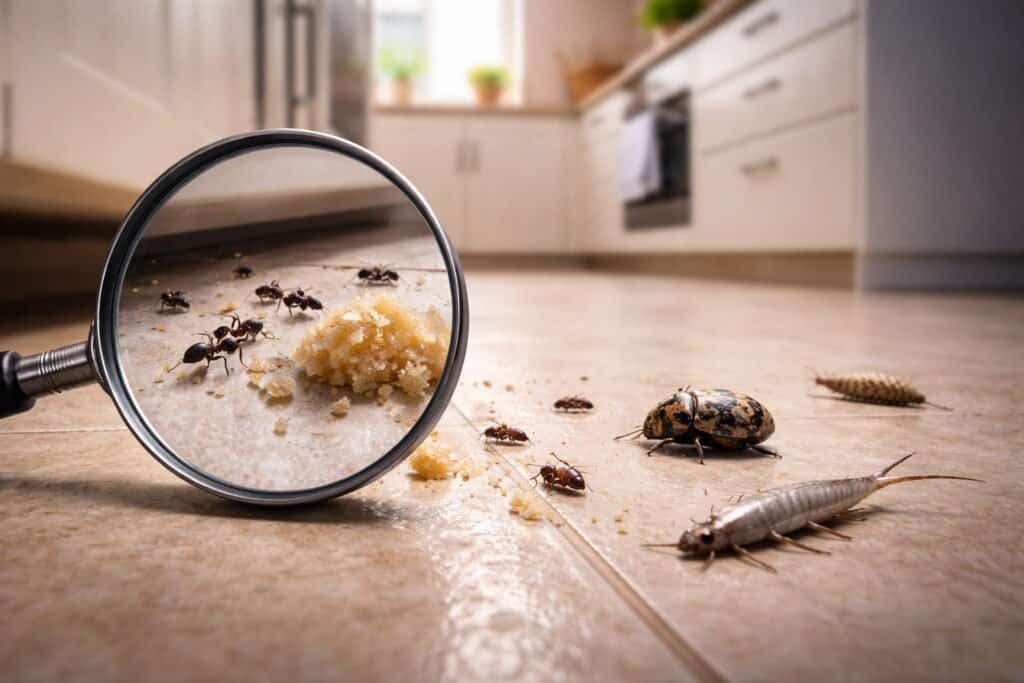
Spotting a few bugs usually means there are more hiding nearby. Small crawling bugs in house don’t wander randomly—they stay close to food, moisture, and safe nesting areas.
Kitchen: The #1 Hotspot
- Under refrigerators, dishwashers, and stoves
- Inside cabinets and pantry corners
- Around sinks and garbage bins
Why it matters: Grease, crumbs, and moisture create the perfect environment.
Bathroom: Moisture Magnet
- Around drains and pipes
- Behind toilets and under sinks
- Tile grout lines and damp corners
Silverfish, springtails, and mites thrive here because of constant humidity.
Bedroom: Hidden but Active
- Mattress seams and bed frames
- Carpets and rugs
- Baseboards and corners
Carpet beetles and mites often go unnoticed until damage appears.
Storage Areas & Closets
- Cardboard boxes and paper stacks
- Old clothing or fabrics
- Dark, undisturbed corners
Pro tip: Cardboard absorbs moisture—making it a hidden breeding ground.
Walls, Floors, and Structural Gaps
- Cracks in flooring or walls
- Gaps around baseboards
- Behind electrical outlets
These areas act as entry points and nesting zones, especially in older or tiny homes.
Warning Signs You Have a Bigger Infestation
Seeing one bug is normal. Seeing patterns is a red flag.
You Notice Bugs During the Day
Most small crawling bugs are nocturnal.
Daytime activity often means overcrowding or a growing colony.
Trails, Clusters, or Repeated Sightings
- Ant trails along counters
- Groups near moisture sources
- Bugs appearing in the same spot daily
This usually indicates a nearby nest.
Physical Evidence You Shouldn’t Ignore
- Shed skins (especially from larvae)
- Tiny droppings or dust-like debris
- Holes in fabrics, paper, or food packaging
The Problem Keeps Coming Back After Cleaning
Cleaning removes visible bugs—but not the source.
If bugs return within days, the root cause is still active.
Unusual Smells or Musty Odors
Some infestations create:
- Damp, moldy smells
- Slightly oily or unpleasant odors
This often points to moisture issues combined with hidden pest activity.
How to Get Rid of Small Crawling Bugs in House (Step-by-Step Guide)
Eliminating small crawling bugs in house isn’t about one quick fix—it’s about removing what attracts them and blocking their return.
Step 1: Identify the Bug Correctly
Different bugs require different solutions.
- Ants → bait systems work best
- Moisture bugs (silverfish, springtails) → fix humidity
- Fabric pests (carpet beetles) → deep cleaning
Tip: Take a photo and compare behavior—not just appearance.
Step 2: Remove Food and Water Sources
This step alone can drastically reduce activity.
- Wipe all surfaces thoroughly
- Store food in airtight containers
- Empty trash daily
- Fix leaks and dry damp areas
Step 3: Deep Clean Target Areas
Focus on places most people skip:
- Under appliances
- Behind furniture
- Inside cabinets and corners
- Along baseboards
Vacuuming is especially effective for eggs and larvae.
Step 4: Seal Entry Points
Stop new bugs from entering.
- Use caulk for cracks and gaps
- Install door sweeps
- Cover drains when not in use
- Repair window screens
Small spaces benefit the most from sealing—every gap matters.
Step 5: Apply Targeted Treatments
Choose based on severity:
Natural options:
- Vinegar spray for surfaces
- Diatomaceous earth for cracks
- Essential oils for repelling
Chemical options:
- Ant baits (more effective than sprays)
- Residual insecticides for persistent infestations
Step 6: Monitor and Prevent Re-Infestation
- Check problem areas daily for 1 week
- Reapply treatments if needed
- Keep humidity low (ideally below 50%)
Quick Summary Checklist:
- ✔ Identify the bug
- ✔ Remove food and moisture
- ✔ Deep clean hidden areas
- ✔ Seal all entry points
- ✔ Apply the right treatment
- ✔ Monitor consistently
Practical insight:
In small homes and tiny houses, consistent maintenance is more effective than aggressive treatments.
Best Natural Remedies That Actually Work
Natural solutions can be surprisingly effective for small crawling bugs in house—especially when the problem is caught early. The key is using the right remedy for the right situation.
Vinegar Cleaning Solution
- Mix equal parts white vinegar and water
- Spray on countertops, floors, and entry points
Why it works: Disrupts scent trails (especially for ants) and removes residue that attracts bugs.
Baking Soda & Sugar Traps
- Combine equal parts baking soda and sugar
- Place in shallow containers near activity areas
Best for: Ants and some crawling insects
How it works: Sugar attracts them, baking soda disrupts their system
Essential Oils (Peppermint, Tea Tree, Eucalyptus)
- Add 10–15 drops to water in a spray bottle
- Apply along baseboards, cracks, and windows
Bonus: Leaves your home smelling fresh while repelling bugs
Diatomaceous Earth (DE)
- Sprinkle a thin layer in cracks, under appliances, and along walls
- Use food-grade DE for safety
Why it works: Dehydrates insects by damaging their outer layer
Lemon & Citrus Sprays
- Mix lemon juice with water
- Spray around kitchens and entry points
Effective for: Ants and mild infestations
Added benefit: Cuts grease and removes food traces
When Natural Remedies Are Enough
Natural methods work best when:
- You’re dealing with a small or early-stage problem
- The bugs are linked to surface-level causes
- You’re consistent with cleaning and application
Important insight:
Natural remedies fail when the root cause (like moisture or hidden nests) is ignored.
When to Use Pest Control (And What to Expect)
Sometimes, DIY solutions aren’t enough. Knowing when to escalate can save time, money, and frustration.
Signs You Need Professional Help
- Bugs keep returning despite multiple treatments
- You see large numbers daily
- Damage to fabrics, food, or structures
- Infestation spreads to multiple rooms
What Pest Control Services Typically Do
- Identify the exact pest species
- Locate hidden nests or breeding areas
- Apply targeted treatments (not just surface sprays)
- Provide prevention recommendations
Cost Expectations (US-Based)
- Small treatment: $100–$300
- Moderate infestation: $300–$700
- Severe or recurring issues: $700+
Costs vary depending on home size and infestation type.
Safety Considerations
- Ask about pet- and child-safe treatments
- Request details on chemicals used
- Follow post-treatment instructions carefully
How to Choose the Right Service
- Look for licensed and insured providers
- Check reviews and real customer feedback
- Avoid companies that promise “instant permanent results”
Pro tip:
Targeted treatments (like bait systems) are often more effective than general spraying.
Common Mistakes That Make the Problem Worse
Many homeowners unintentionally make infestations harder to control. Avoiding these mistakes can speed up results dramatically.
Killing Visible Bugs Only
Spraying or squashing bugs doesn’t solve the root issue.
Reality: You’re only removing a small percentage of the population.
Overusing Chemical Sprays
Heavy spraying can:
- Scatter bugs into new areas
- Make infestations harder to track
- Reduce effectiveness over time
Ignoring Moisture Problems
Skipping this step guarantees bugs will return.
- Damp bathrooms
- Leaky pipes
- Poor ventilation
Moisture = ongoing invitation for pests
Poor Food Storage Habits
- Open packages in pantry
- Crumbs under appliances
- Unsealed trash bins
Even tiny amounts of food sustain entire colonies.
Skipping Follow-Up Treatment
One-time action is rarely enough.
- Eggs may hatch days later
- Hidden nests remain active
- Bugs reappear quickly
What Most People Get Wrong
They treat the symptoms, not the system.
Long-term success comes from:
- Fixing the environment
- Eliminating attractants
- Maintaining consistency
How to Prevent Small Crawling Bugs in House Long-Term
Getting rid of bugs is one thing—keeping them out is another. Long-term prevention is all about controlling the environment inside your home.
Daily Habits That Make a Big Difference
- Wipe down kitchen surfaces after every meal
- Sweep or vacuum high-traffic areas daily
- Take out trash regularly (especially in small spaces)
Consistency beats intensity. Small habits prevent big infestations.
Control Moisture Like a Pro
- Use a dehumidifier in damp areas
- Fix leaks immediately
- Run exhaust fans in kitchens and bathrooms
Ideal indoor humidity: below 50%
Smart Food Storage Solutions
- Store dry goods in airtight containers
- Avoid leaving pet food out overnight
- Clean under appliances weekly
Seal and Maintain Your Space
- Caulk cracks and gaps along walls and floors
- Install door sweeps and weather stripping
- Repair damaged screens
Tiny homes especially benefit from tight sealing—less space means fewer hiding options.
Seasonal Prevention Routine
- Spring: deep clean + inspect entry points
- Summer: monitor for increased activity
- Fall: seal gaps before temperatures drop
- Winter: maintain dryness indoors
Quick Prevention Checklist:
- ✔ Keep surfaces clean
- ✔ Eliminate moisture
- ✔ Store food properly
- ✔ Seal all entry points
- ✔ Inspect regularly
How Small Crawling Bugs Affect Tiny Homes and Small Spaces
In compact living environments, even minor pest issues can escalate quickly.
Faster Infestation Spread
- Bugs travel shorter distances
- Food, water, and shelter are close together
- Colonies establish faster
Harder to Isolate the Problem
- Open layouts make containment difficult
- Limited rooms mean fewer barriers
Moisture Builds Up More Easily
- Smaller bathrooms and kitchens trap humidity
- Poor ventilation worsens the issue
Storage Challenges Increase Risk
- Cluttered or multi-use spaces create hiding spots
- Cardboard boxes and tight storage areas attract pests
If you’re optimizing a compact space, it helps to think beyond pests. Smart layout and storage choices can reduce risk significantly. (This is where your tiny home design and maintenance strategies come into play.)
Related Issues in Small Living Spaces You Shouldn’t Ignore
Small crawling bugs in house often overlap with other common pest problems. Addressing related issues strengthens your overall pest control strategy.
Tiny Ants in Kitchens and Sinks
Persistent ant trails usually point to hidden food sources and entry gaps.
👉 You may want to explore your guide on tiny ants in sinks to eliminate them completely.
Tiny Worms in Drains
Often caused by organic buildup inside pipes.
👉 A deeper look at worms in drains can help you identify and remove the source.
Bugs That Only Appear at Night
Nocturnal pests may go unnoticed during the day, allowing infestations to grow.
Gnats and Moisture-Related Pests
Flying bugs often signal the same root issue: excess moisture.
Insight:
Treating these related problems together creates a stronger, longer-lasting solution.
FAQ: Small Crawling Bugs in House
Why do I have tiny bugs crawling on my walls?
Walls often have small cracks, warmth, and hidden pathways, making them ideal for movement and nesting.
Are small crawling bugs harmful to humans?
Most are harmless, but some can damage property or contaminate food if left untreated.
How do I know if they are mites or insects?
Mites are usually microscopic and appear as dust-like specks, while insects are visible and have defined body shapes.
Why do bugs appear even after cleaning?
Cleaning removes visible bugs, but hidden nests, eggs, or moisture sources may still remain.
What kills small bugs instantly at home?
Direct sprays (vinegar, soapy water, or insecticides) can kill on contact, but long-term control requires removing the source.
Can humidity alone cause bug infestations?
Yes. High humidity creates ideal conditions for bugs like silverfish, booklice, and springtails to thrive.
Quick Checklist: What to Do Immediately
If you’re dealing with small crawling bugs in house right now, start here:
- ✔ Clean all surfaces thoroughly
- ✔ Dry wet or damp areas
- ✔ Vacuum corners, cracks, and hidden spaces
- ✔ Seal visible gaps and entry points
- ✔ Apply a targeted treatment
- ✔ Monitor activity for the next 3–7 days
Learn More About Healthy Home Environments
Maintaining a bug-free home often overlaps with maintaining a healthy indoor environment. Moisture control, cleanliness, and airflow all play a role.
For deeper guidance on keeping your home safe and pest-resistant, you can explore resources from the Environmental Protection Agency, which offers practical advice on indoor air quality and pest prevention.
Take Control of Your Space Starting Today
Small crawling bugs don’t have to take over your home. With the right approach—identify, eliminate, and prevent—you can stop the problem at its source and keep it from coming back.
Start with one area today. Clean it thoroughly, remove moisture, and seal any gaps. Small actions, done consistently, make the biggest difference—especially in tiny homes and compact spaces.
If you’re building a smarter, more efficient living space, pest prevention should be part of your system—not an afterthought.
