
Interior trends 2027 are redefining what it means to feel truly at home. It’s no longer just about how a space looks—it’s about how it works, how it feels, and how well it adapts to real life.
If you’re planning to refresh your home, redesign a room, or simply stay ahead of design shifts, this guide will give you clear insights, practical ideas, and real-world inspiration. You’ll discover the key themes shaping interiors, the colors and materials dominating 2027, and how to apply these trends—whether you live in a spacious home or a compact space.
In This Article
The Big Shift: What Defines Interior Trends in 2027?
Interior design in 2027 marks a noticeable departure from fast-changing, aesthetic-driven trends. The focus has shifted toward livability, emotional comfort, and long-term value.
A Move From “Showroom Homes” to Real-Life Spaces
Perfect, untouched interiors are losing appeal. Instead, homeowners want spaces that:
- Feel lived-in yet intentional
- Support daily routines without friction
- Reflect personality rather than trends
A beautiful home still matters—but now it must also be functional and deeply personal.
Lifestyle Changes Driving Design
Several real-world shifts are influencing interior trends 2027:
- Hybrid work setups requiring flexible home offices
- Increased focus on mental health and relaxation
- Smaller living spaces in urban areas
- A growing awareness of sustainability
Design is no longer static. Homes need to adapt quickly to changing needs.
Why Trends Feel More Personal in 2027
Instead of copying Pinterest-perfect rooms, people are:
- Mixing styles freely
- Choosing pieces with meaning or history
- Prioritizing comfort over visual perfection
This creates a more authentic approach to design—where no two homes look the same.
Interior Trends 2027: The Key Themes You’ll See Everywhere
Certain themes consistently appear across homes, design magazines, and new builds. These are the foundations shaping interior trends 2027.
Human-Centered Design Takes Priority
Design now revolves around how people use their space. That means:
- Ergonomic furniture
- Layouts that improve flow
- Spaces designed for real habits, not idealized ones
Comfort is no longer optional—it’s essential.
Nature Integration Goes Beyond Plants
Bringing nature indoors is evolving into something deeper than adding a few houseplants.
Expect to see:
- Natural materials like wood, stone, and clay
- Organic shapes and soft lines
- Large windows and natural light optimization
The goal is to create a calming, grounded environment.
Technology That Blends In
Visible tech clutter is fading away. In 2027:
- Devices are integrated into furniture and walls
- Smart systems operate quietly in the background
- Charging stations and controls are hidden
Functionality remains high, but the aesthetic stays clean and peaceful.
Longevity Over Fast Trends
Fast furniture and short-lived decor are being replaced by:
- Investment pieces that last years
- Neutral foundations with flexible styling
- Timeless design elements
People are designing homes they won’t need to redo every two years.
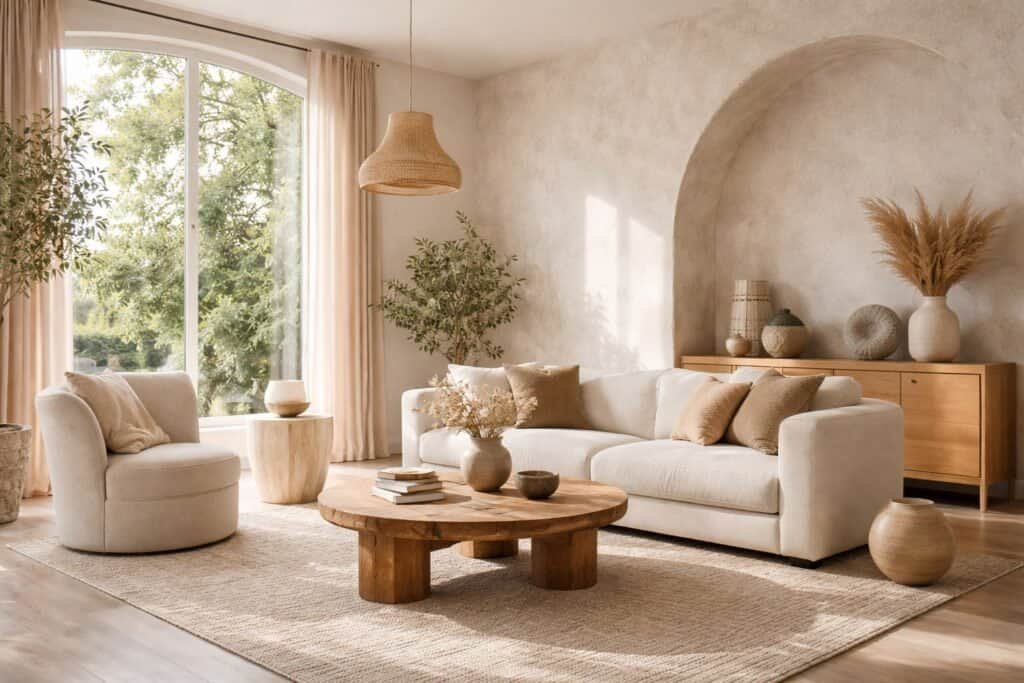
Color Stories for 2027: Beyond Neutrals
Color in interior trends 2027 moves away from flat minimalism toward rich, layered palettes that feel warm and grounded.
Earthy Tones With Depth
Neutral doesn’t mean boring anymore. Popular shades include:
- Warm clay and terracotta
- Soft olive and moss green
- Sand, taupe, and mineral beige
These colors create a natural, calming base that works across styles.
Muted but Rich Palettes Replace Stark Whites
Bright white interiors are being softened with:
- Creamy off-whites
- Dusty pastels
- Smoky undertones
This shift makes spaces feel more inviting and less clinical.
Strategic Bold Accents
Bold colors still have a place—but they’re used intentionally.
Common accent choices:
- Deep navy or midnight blue
- Forest green
- Oxblood and burgundy
Instead of dominating a room, these shades add depth and contrast.
How to Combine Colors Without Overwhelming a Space
A simple approach works best:
| Element | Recommended Approach |
| Base color | Neutral or earthy tone |
| Secondary color | Muted complementary shade |
| Accent color | Deep, bold tone (used sparingly) |
| Texture | Adds variation without new colors |
This layered method keeps your home feeling cohesive while still visually interesting.
Materials That Matter: Texture Takes Over
Flat, uniform surfaces are fading out. Interior trends 2027 lean heavily into texture-rich environments that feel warm, layered, and inviting the moment you walk in.
Tactile Materials Are Leading the Way
Design is becoming more sensory. Materials are chosen not just for looks, but for how they feel:
- Linen and cotton for softness and breathability
- Bouclé and wool for cozy, lived-in comfort
- Raw wood and stone for grounding, natural texture
Spaces now aim to create a subtle emotional response through touch.
Imperfection Is the New Luxury
Perfect finishes are being replaced by handcrafted, slightly imperfect details:
- Hand-thrown ceramics
- Limewash or plaster walls with variation
- Reclaimed wood with visible grain and wear
These elements bring authenticity and character—something mass-produced interiors often lack.
Sustainability Meets Style
Eco-conscious choices are no longer a compromise. In 2027, they’re part of the aesthetic:
- Recycled materials used in flooring and furniture
- Sustainably sourced wood and natural fibers
- Low-impact finishes and paints
Homes are designed to look good and reduce environmental impact.
How to Layer Texture Without Overdoing It
Texture works best when balanced:
- Combine soft + hard (e.g., linen sofa + stone table)
- Mix matte + subtle sheen finishes
- Stick to a consistent color palette to avoid visual clutter
The result is a space that feels rich and dimensional, not busy.
Furniture Trends 2027: Soft, Modular, and Multi-Functional
Furniture in interior trends 2027 is evolving to support flexible, real-life living. Think comfort, adaptability, and smarter use of space.
Rounded Shapes and Softer Silhouettes
Sharp edges are giving way to curves:
- Curved sofas and armchairs
- Oval dining tables
- Soft, sculptural forms
These shapes make spaces feel more relaxed and approachable.
Modular Furniture for Flexible Living
Homes need to adapt quickly, and modular pieces make that possible:
- Sectional sofas that can be rearranged
- Stackable or expandable tables
- Storage units that evolve with your needs
This flexibility is especially valuable in smaller homes.
Hidden Storage Becomes Essential
Clutter-free living is a priority, and furniture is stepping up:
- Beds with built-in drawers
- Coffee tables with concealed compartments
- Benches that double as storage
This is a key strategy for maximizing space without sacrificing style.
Investment Pieces vs Disposable Furniture
A noticeable shift is happening in buying habits:
| Type of Furniture | 2027 Approach |
| Trendy, cheap items | Less popular |
| High-quality pieces | Preferred for longevity |
| Multi-use furniture | Highly valued |
| Custom or handmade | Increasing demand |
People are choosing fewer pieces—but better ones.
The Return of Personality: Maximalism, But Smarter
Minimalism isn’t gone, but it’s evolving. Interior trends 2027 embrace personal expression, without tipping into chaos.
Curated Maximalism Explained
This isn’t about filling every surface. It’s about intentional layering:
- Displaying items with meaning
- Combining patterns in a controlled way
- Creating focal points instead of visual overload
Every piece has a reason to be there.
Mixing Old and New
One of the most powerful ways to add personality:
- Pair vintage furniture with modern lighting
- Combine antique decor with clean-lined interiors
- Blend different eras for a lived-in feel
This contrast creates depth and tells a story.
Displaying Collections the Right Way
Collections are making a comeback—but presentation matters:
- Group similar items together
- Use shelves or niches for structure
- Leave breathing room between objects
The goal is to feel curated, not cluttered.
How to Avoid Visual Chaos
A few simple rules keep things balanced:
- Stick to a consistent color palette
- Limit the number of dominant materials
- Use negative space intentionally
Personality should enhance your space—not overwhelm it.
Interior Trends 2027 for Small Spaces & Tiny Homes
Small-space living is no longer a limitation—it’s a design advantage. Interior trends 2027 focus heavily on efficiency, flexibility, and visual openness, making even compact homes feel spacious and functional.
Designing for Flexibility and Movement
Rigid layouts are being replaced with adaptable zones:
- Living areas that convert into workspaces
- Dining tables that double as desks
- Open layouts that allow easy reconfiguration
The goal is to make every square meter work harder without feeling cramped.
Multi-Use Rooms Become the Norm
Rooms are no longer defined by a single purpose:
- Guest room + office combinations
- Living room + entertainment + workspace setups
- Bedroom corners transformed into productivity zones
This shift reflects how people actually live today.
Visual Tricks That Instantly Expand a Space
Smart design can dramatically change how a space feels:
- Mirrors to reflect light and create depth
- Low-profile furniture to open up sightlines
- Consistent flooring across rooms for flow
Light, color, and proportion become powerful tools in small interiors.
Smart Layouts That Maximize Every Inch
Practical layout strategies include:
- Wall-mounted storage instead of bulky cabinets
- Built-in furniture to reduce wasted space
- Sliding doors instead of swing doors
These ideas are especially useful for tiny homes and compact apartments, where efficiency is everything.
Lighting as a Design Feature (Not Just Function)
Lighting in interior trends 2027 is no longer an afterthought. It’s a central design element that shapes mood, highlights features, and enhances daily living.
Layered Lighting Creates Depth
A single ceiling light won’t cut it anymore. Modern interiors use layers:
- Ambient lighting for overall brightness
- Task lighting for specific activities
- Accent lighting to highlight decor or architecture
This layered approach makes a space feel dynamic and adaptable.
Sculptural Fixtures as Statement Pieces
Lighting is doubling as art:
- Oversized pendant lights
- Unique floor lamps with organic shapes
- Minimalist fixtures with bold forms
These pieces act as focal points without overwhelming the room.
Warmer Lighting for Comfort
Cool white lighting is being replaced by warmer tones:
- Soft yellow hues for relaxation
- Dimmable lighting to adjust mood
- Indirect lighting to reduce harsh shadows
This creates a cozier, more inviting atmosphere, especially in living and sleeping areas.
Maximizing Natural Light
Natural light remains one of the most valuable design elements:
- Sheer curtains instead of heavy drapes
- Larger windows or glass partitions
- Strategic mirror placement to bounce light
A well-lit home feels bigger, cleaner, and more uplifting.
Smart Homes, Invisible Tech
Technology is still advancing rapidly—but in interior trends 2027, it’s designed to disappear into the background.
Hidden Tech Integration
Clutter from cables and devices is being eliminated:
- Built-in speakers and hidden sound systems
- Wireless charging integrated into surfaces
- Concealed outlets and controls
Everything works seamlessly without disrupting the visual flow.
AI-Assisted Living Spaces
Homes are becoming more intuitive:
- Smart systems that adjust lighting and temperature automatically
- Voice-controlled environments
- Personalized settings based on daily habits
Convenience is increasing, but without adding complexity to the design.
Minimal Look, Maximum Function
The key balance in 2027 interiors:
- Clean, uncluttered surfaces
- High-performance functionality behind the scenes
- Tech that supports lifestyle rather than dominates it
This approach ensures your home feels calm and intentional, not overly digital.
Wellness-Centered Interiors: Designing for How You Feel
Interior trends 2027 place a strong emphasis on well-being at home. Design is no longer just visual—it directly supports mental clarity, relaxation, and overall health.
The Evolution of Biophilic Design
Biophilic design is moving beyond adding plants. It now includes:
- Natural airflow and ventilation
- Materials that connect you to nature (wood, stone, clay)
- Layouts that encourage calm movement and openness
The result is a space that feels grounded and restorative.
Air Quality and Material Choices
Health-conscious design decisions are becoming standard:
- Low-VOC paints and finishes
- Natural fibers instead of synthetic materials
- Air-purifying elements like indoor plants
Cleaner air and non-toxic materials create a safer, more comfortable environment.
Spaces Dedicated to Rest and Focus
Homes are being divided more intentionally:
- Quiet corners for reading or meditation
- Dedicated work zones with minimal distractions
- Bedrooms designed purely for rest (no work spillover)
This zoning helps improve both productivity and relaxation.
Why Wellness Is No Longer Optional
Fast-paced lifestyles have made the home a sanctuary. In 2027:
- Comfort is prioritized over aesthetics alone
- Stress-reducing design becomes essential
- Homes actively support mental health
A well-designed space doesn’t just look good—it helps you feel better every day.
Sustainable Interior Trends 2027: Eco Without Compromise
Sustainability is no longer a niche—it’s a core pillar of interior trends 2027. The difference now is that eco-friendly design feels elevated, modern, and desirable.
Circular Design and Upcycling
Waste reduction is influencing design choices:
- Repurposed furniture with new finishes
- Vintage items given a modern context
- Materials reused in creative ways
This approach adds both character and environmental value.
Locally Sourced Materials
Sourcing closer to home is gaining traction:
- Locally crafted furniture
- Regional materials that suit the climate
- Reduced transportation impact
It also supports local artisans and creates more unique interiors.
Energy-Efficient Living Spaces
Efficiency is built into design from the start:
- Better insulation and window placement
- Energy-saving lighting systems
- Smart climate control
These features reduce costs while supporting sustainability goals.
When Sustainability Meets Style
Eco-friendly design in 2027 doesn’t feel restrictive. Instead:
- Natural textures add warmth and depth
- Neutral palettes feel timeless and elegant
- Handmade elements bring uniqueness
Sustainability is becoming synonymous with good design, not a compromise.
Walls, Ceilings & Surfaces: The New Design Canvas
Surfaces are no longer just backgrounds—they’re becoming key design features in interior trends 2027.
Textured Walls Take Center Stage
Flat paint is being replaced with more expressive finishes:
- Limewash for a soft, cloud-like texture
- Microcement for a modern, seamless look
- Plaster finishes with subtle movement
These treatments add depth without overwhelming the space.
Statement Ceilings Gain Attention
Ceilings are finally getting the spotlight:
- Painted ceilings in muted tones
- Wood paneling for warmth
- Subtle beams or architectural details
Looking up is now part of the design experience.
Built-In Features Add Function and Style
Custom elements are becoming more common:
- Integrated shelving units
- Wall niches for decor display
- Seamless storage solutions
These features improve both aesthetics and usability.
Subtle Patterns Over Bold Statements
Bold wallpaper isn’t gone—but it’s evolving:
- Tone-on-tone patterns
- Organic, nature-inspired designs
- Soft geometric textures
The focus is on quiet visual interest, rather than loud, dominating patterns.
Interior Styling Ideas: How to Bring Interior Trends 2027 Into Your Home
Adopting interior trends 2027 doesn’t require a full renovation. Small, intentional changes can make a noticeable difference.
Start With Easy, High-Impact Upgrades
Focus on elements that transform a space quickly:
- Swap out lighting fixtures for something sculptural
- Add textured textiles like throws, rugs, or cushions
- Introduce earthy tones through decor or paint
These updates instantly align your space with current trends.
Budget-Friendly Ways to Stay Current
You don’t need to overspend to create a modern interior:
- Thrift or source vintage pieces for character
- Repaint walls instead of replacing furniture
- Rearrange layouts to improve flow
Smart styling often matters more than buying new items.
Blend Trends With Timeless Design
Avoid creating a space that feels outdated in a year:
- Use trends as accents, not the foundation
- Keep large furniture pieces neutral
- Layer in seasonal or trend-driven decor
This approach keeps your home flexible and future-proof.
Common Mistakes to Avoid
Even great trends can go wrong without balance:
- Overloading a space with too many textures
- Ignoring functionality in favor of aesthetics
- Following trends without considering your lifestyle
The best interiors reflect how you actually live, not just what’s trending.
Visual Inspiration: Real-Life Interior Trends 2027 Looks
Seeing trends in action makes them easier to apply. Here are a few practical style directions inspired by interior trends 2027.
Modern Organic Living Room
- Neutral base with layered earthy tones
- Linen sofa paired with a raw wood coffee table
- Soft lighting and minimal decor
The result feels calm, natural, and inviting.
Cozy Minimalist Bedroom
- Warm, muted color palette
- Textured bedding (linen, wool)
- Low-profile furniture with clean lines
This creates a restful, clutter-free environment.
Compact Multifunctional Tiny Home
- Built-in storage and modular furniture
- Foldable or extendable surfaces
- Consistent materials to maintain visual flow
Perfect for maximizing small spaces without sacrificing style.
Indoor-Outdoor Blended Space
- Large openings or glass doors
- Natural materials carried from inside to outside
- Plants integrated into the design
This style enhances light, air, and connection to nature.
Final Thoughts: Designing a Home That Still Feels Right in 2030
Interior trends 2027 offer more than just style—they provide a blueprint for creating a home that evolves with you.
Trends come and go, but comfort, functionality, and authenticity remain timeless. The smartest approach is to:
- Invest in quality where it matters
- Stay flexible with layout and decor
- Design around your real lifestyle
A well-designed home should feel just as good in five years as it does today.
FAQ: Interior Trends 2027
What are the biggest interior trends in 2027?
Interior trends 2027 focus on sustainability, natural materials, textured finishes, and multi-functional spaces designed for real-life living.
Are minimalist interiors still popular in 2027?
Minimalism is evolving into a warmer, more personal style with layered textures and curated decor rather than stark, empty spaces.
What colors are trending in 2027 interiors?
Earthy tones like clay, olive green, and warm neutrals dominate, with deep accent colors such as navy, forest green, and burgundy.
How can I update my home to match interior trends 2027 on a budget?
Start with small changes like lighting, textiles, and paint. Rearranging furniture and adding texture can make a big impact without major costs.
Are sustainable materials worth it for interior design?
Yes, they offer long-term durability, healthier indoor environments, and align with modern design values focused on longevity and responsibility.
For a deeper understanding of how sustainable design impacts both homes and well-being, you can explore this resource from the World Green Building Council:
👉 https://www.worldgbc.org
Ready to transform your space? Start small, stay intentional, and use these interior trends 2027 as a guide—not a rulebook. Your home should reflect you first, trends second.
