
Living in a tiny house community offers more than a place to park a small home. It creates an opportunity to enjoy a simpler lifestyle, share resources, connect with like-minded neighbors, and potentially reduce everyday living expenses. However, community living also comes with rules, monthly fees, and practical considerations that can affect your experience.
Whether you already own a tiny home, are considering renting one, or simply want to understand how tiny house villages work, choosing the right community is an important decision. Not every development offers the same amenities, privacy, legal arrangements, or long-term affordability.
This guide explains what tiny house communities are really like, what facilities residents can expect, how much it costs to live in one, and what to consider before signing a lease or moving your home onto a community lot.
In This Article
What Is a Tiny House Community? How These Neighborhoods Work
A tiny house community is a residential development where multiple small homes are located within a shared property or planned neighborhood. These homes are typically designed for people who prefer smaller living spaces, lower maintenance responsibilities, and a more intentional lifestyle.
Unlike a traditional neighborhood where every homeowner generally manages an individual property, tiny house communities often include shared facilities, common outdoor areas, and community guidelines. Residents may have their own private homes while sharing gardens, laundry rooms, recreational spaces, and other amenities.
Some communities are designed for permanent residents, while others operate as vacation destinations or rental villages. The ownership structure also varies. Residents might own their tiny houses but rent the land underneath them, lease fully furnished units, or purchase homes within a cooperative development.
How Does a Tiny House Community Work?
Most tiny house communities operate through a property owner, developer, homeowners association, cooperative, or management company. The organization responsible for the property establishes the rules, maintains shared infrastructure, and collects applicable fees.
Residents generally have a designated space for their homes, along with access to certain shared facilities.
The arrangement usually works in one of three ways:
- Land rental: Residents own their tiny homes but pay monthly rent to use a designated lot. The property owner typically maintains shared roads, landscaping, and common facilities.
- Home rental: Residents rent an entire tiny house, often with utilities or basic amenities included in the monthly payment.
- Community ownership: Residents purchase homes and may also own a share of the land or participate in a cooperative ownership arrangement.
The exact arrangement matters because owning a tiny house does not automatically mean owning the land beneath it. Someone who purchases a home in a land-lease community may still depend on the property owner to maintain the agreement and continue providing a legal place to live.
For example: Imagine purchasing a 300-square-foot tiny house on wheels and placing it in a professionally managed community. You own the home, but the community charges you monthly lot rent and provides water connections, electricity access, waste disposal, and shared recreational facilities.
This setup can make tiny living more convenient, although your long-term housing costs will still depend on the land agreement and community fees.
Tiny House Community vs. RV Park vs. Mobile Home Park
These three residential options may look similar at first, but their intended uses, infrastructure, and regulations can be quite different.
| Feature | Tiny House Community | RV Park | Mobile Home Park |
| Primary housing | Tiny homes | Recreational vehicles | Manufactured or mobile homes |
| Long-term living | Depends on approval | Depends on local rules and park policy | Commonly permitted |
| Home ownership | Varies | Usually vehicle ownership | Usually home ownership or rental |
| Lot arrangement | Rental or ownership | Usually rental | Rental or ownership |
| Shared amenities | Often included | Common | Varies |
| Community lifestyle | Often intentional and social | Often travel-oriented | Residential neighborhood |
One major distinction is that a tiny house community may be designed specifically around permanent or extended tiny home living. An RV park, on the other hand, may primarily accommodate temporary visitors.
However, the name of a development does not determine its legal status. A property marketed as a tiny house village might still operate under RV park regulations or another land-use classification.
Before choosing a location, verify whether the property is approved for your intended type of occupancy.
Common Types of Tiny House Communities
Not every tiny home neighborhood follows the same model. Understanding the different types can help you narrow down your options.
Permanently Owned Tiny Houses on Leased Lots
This arrangement is popular among people who want to own their homes without purchasing a full parcel of land.
Residents purchase or build their tiny houses and place them on designated lots within an established community. They then pay monthly or annual land rental fees.
Typical features include:
- Individual utility connections or shared utility systems.
- Defined parking spaces and outdoor areas.
- Community maintenance and landscaping.
- Rules covering home appearance, pets, guests, and modifications.
The biggest advantage is that residents can invest in their own homes without taking on the cost of buying land. However, they should carefully review lease renewal conditions, rent increases, and what happens if the community stops accepting their type of dwelling.
Rental-Based Tiny House Villages
Rental communities are designed for people who want to experience tiny living without purchasing a home.
Residents pay for a furnished or unfurnished tiny house, usually through a monthly rental agreement. Some developments also offer weekly stays, making them attractive to travelers and people testing the lifestyle before committing.
These communities can be especially useful for retirees, remote workers, couples, and individuals who want a smaller living space without the responsibilities of homeownership.
Resident-Owned and Cooperative Communities
Resident-owned communities operate differently because residents may have an ownership interest in the land or participate in collective property management.
Depending on the legal structure, members might share responsibility for:
- Maintaining roads and common facilities.
- Managing community expenses.
- Establishing residential guidelines.
- Making decisions about future development.
This model can offer residents greater involvement in community decisions, although it may require membership fees, shared financial responsibilities, and participation in meetings.
Inside a Tiny House Community: Amenities, Shared Spaces, and Daily Life
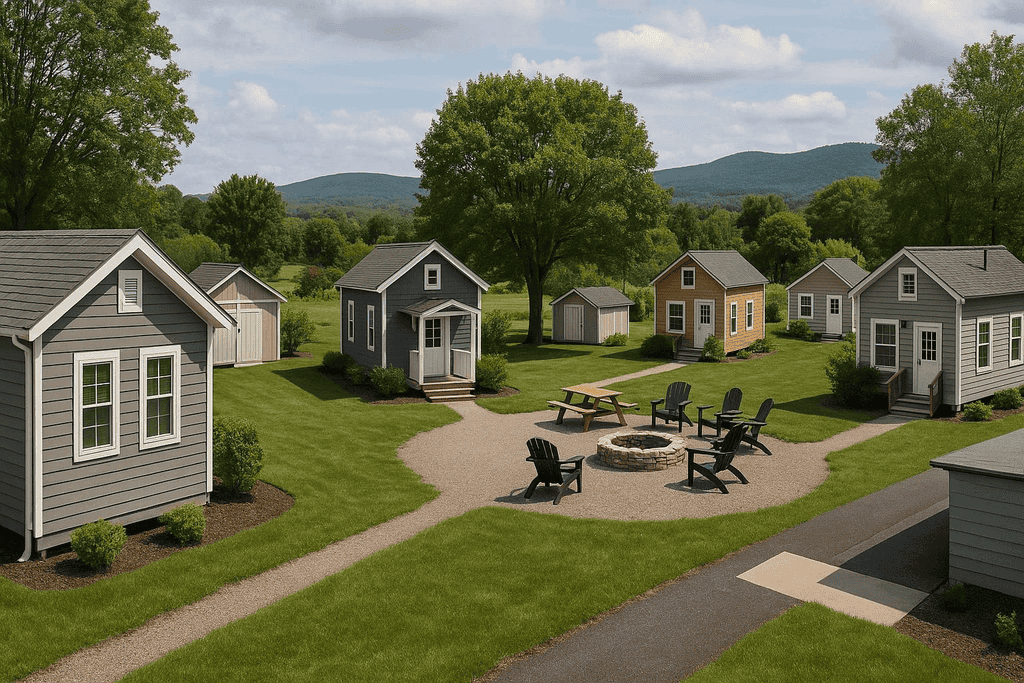
One of the biggest attractions of tiny house community living is access to facilities that might be difficult or expensive to include in an individual tiny home.
A compact home may have limited storage, a small bathroom, and a basic kitchen. However, a well-planned community can provide additional space through shared amenities.
The quality of these facilities varies considerably. Some communities offer little more than utility connections and parking, while others feature landscaped gardens, clubhouses, outdoor recreation areas, and organized social activities.
Essential Amenities to Look for in a Tiny House Community
Reliable infrastructure should be one of your first considerations when comparing communities. Attractive landscaping and stylish tiny homes are appealing, but they cannot compensate for poor water access, unreliable electricity, or inadequate waste management.
Water, Electricity, and Sewage Connections
Access to dependable utilities makes everyday living much easier.
Most established communities provide some combination of:
- Potable water connections.
- Electricity hookups or individual metering.
- Approved wastewater and sewage systems.
- Trash and recycling collection.
- Stormwater drainage.
Some locations may use septic systems, private wells, or shared wastewater infrastructure rather than municipal services.
Ask how utility expenses are calculated. A community might include water in the monthly lot rent but charge separately for electricity, while another may use individual meters for every home.
Tiny homes on wheels also need appropriate connections that accommodate their design. A standard RV-style hookup may not provide everything required for a permanent residential setup.
Laundry Facilities, Parking, and Storage
Laundry is one of the most useful shared amenities, particularly in communities where individual homes have limited room for washing machines and dryers.
Dedicated laundry buildings can free up valuable interior space and reduce plumbing requirements inside each tiny house.
Other useful facilities include:
- Designated resident and guest parking.
- Bicycle storage.
- Secure storage sheds.
- Package delivery areas.
- Maintenance and equipment storage.
Parking deserves particular attention. Some communities allow residents to park beside their homes, while others require vehicles to remain in a separate parking area.
This can affect convenience, especially for people who regularly commute or need space for work equipment.
Reliable Internet for Remote Workers
Internet access has become an important consideration for people choosing alternative housing.
Remote workers, freelancers, and online business owners may need stable broadband for video meetings, file transfers, and daily work.
Before moving into a tiny house community, check:
- Whether wired broadband is available.
- Actual upload and download speeds.
- Mobile network coverage.
- Whether residents share bandwidth.
- Whether internet service is included in the monthly fees.
A community advertising free Wi-Fi does not necessarily guarantee reliable service for working from home.
If possible, test the connection during a normal weekday rather than relying entirely on advertised speeds.
Shared Spaces That Make Tiny House Community Living More Enjoyable
Shared spaces can transform a collection of small houses into a genuine neighborhood.
They provide room for activities that would otherwise require additional square footage inside individual homes.
Clubhouses and Community Gathering Areas
A clubhouse can function as an extension of residents’ living spaces.
Depending on the development, it might include comfortable seating, communal dining tables, a kitchen, meeting rooms, or recreational facilities.
These areas are particularly useful during bad weather when outdoor gatherings are not practical.
Some communities also organize movie nights, shared dinners, workshops, and seasonal celebrations.
Gardens, Walking Paths, and Outdoor Kitchens
Outdoor spaces are valuable because they allow residents to enjoy activities without expanding their homes.
Common features include:
- Community vegetable gardens.
- Landscaped walking paths.
- Picnic tables and outdoor seating.
- Fire pits and gathering areas.
- Shared grilling stations.
- Pet-friendly green spaces.
Community gardens can be especially appealing to residents interested in growing vegetables, herbs, and seasonal produce.
However, shared outdoor facilities need regular maintenance. Ask whether gardening plots are assigned individually or managed collectively.
Workshops and Recreational Facilities
Some tiny house communities provide workshops where residents can complete small repairs, build furniture, or work on personal projects.
Other recreational facilities may include fitness areas, yoga spaces, swimming pools, playgrounds, and multipurpose rooms.
These amenities can add significant value, but they may also increase monthly community fees.
Consider which facilities you will actually use rather than paying extra for amenities that sound attractive but do not fit your lifestyle.
What Does a Typical Day Look Like in a Tiny House Community?
Daily life depends on the residents, location, and management style, but community living often creates more opportunities for casual social interaction.
A remote worker might spend the morning working inside a compact home, take a break in a shared garden, and use the clubhouse for an afternoon meeting.
A retired couple might enjoy a morning walk, prepare lunch in their private kitchen, and meet neighbors for an evening gathering.
Someone living alone may appreciate having nearby neighbors without sacrificing the privacy of a separate home.
However, shared living does not mean everyone is expected to socialize constantly. A well-designed tiny house community should allow residents to participate in activities while maintaining their own routines.
The best communities balance shared experiences with personal space. Private outdoor areas, thoughtful home placement, landscaping, and reasonable noise policies all contribute to a more comfortable residential environment.
How Much Does It Cost to Live in a Tiny House Community?
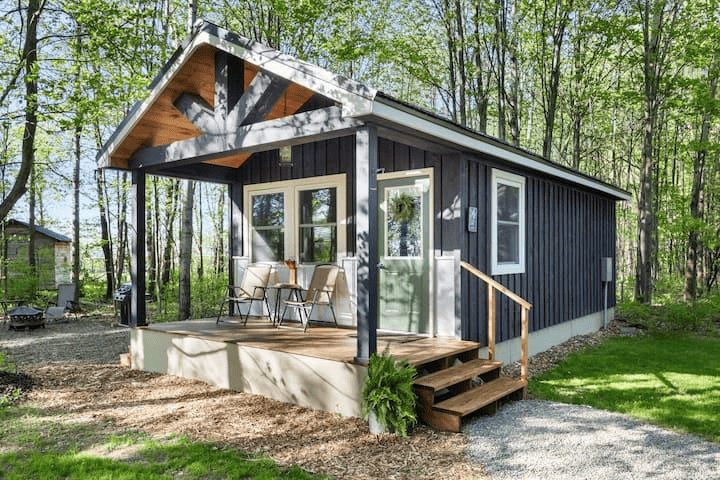
The cost of living in a tiny house community depends on its location, amenities, rental arrangement, and whether you own or rent the home.
A basic land-lease community may be relatively affordable, while a professionally managed development with furnished homes, recreational facilities, and premium locations can cost considerably more.
Understanding the complete cost structure is essential because the advertised monthly lot rent rarely represents the entire expense of living there.
Common Tiny House Community Costs
Most residents encounter several recurring and one-time expenses.
The following figures are illustrative planning ranges in US dollars, not verified market averages or quotes from particular communities. Actual prices can vary significantly by state, city, and development.
| Expense | Illustrative cost range |
| Monthly lot rent | 300–900 |
| Electricity | 40–150/month |
| Water and sewer | 20–100/month |
| Internet | 40–100/month |
| Trash collection | 10–40/month |
| Community or maintenance fees | 25–150/month |
| Security deposit | 300–1,000 |
| Application or administrative fees | 25–150 |
Some communities combine several services into one monthly payment. Others charge separately for nearly everything.
A location with higher lot rent might actually offer better overall value if it includes water, sewage, internet, landscaping, and access to useful shared facilities.
Monthly Lot Rent and Land Lease Fees
Lot rent is often the largest recurring expense for someone who owns a tiny house but does not own the land.
The amount depends on several factors:
- Location and local property values.
- Size and position of the residential lot.
- Available utility connections.
- Community amenities.
- Lease duration and management arrangements.
A lot with a private outdoor area, convenient parking, and premium views may cost more than a basic interior lot.
Ask whether the lease allows annual rent increases and whether management must provide advance notice.
Utility Bills and Additional Monthly Expenses
Utility expenses depend on the size of the home, household habits, climate, and local service rates.
A tiny house with efficient insulation, LED lighting, and energy-saving appliances may use less electricity than a conventional house.
However, heating and cooling can still be expensive, particularly in regions with extreme temperatures.
Residents should also consider:
- Propane or other cooking fuel.
- Laundry expenses.
- Home insurance.
- Internet upgrades.
- Parking for additional vehicles.
- Pet fees.
- Routine home maintenance.
These expenses can make a meaningful difference when calculating the actual monthly cost.
Buying vs. Renting in a Tiny House Community
Choosing between ownership and renting depends on your financial situation, how long you plan to stay, and how much responsibility you want.
| Consideration | Owning a Tiny House | Renting a Tiny House |
| Initial expense | Higher purchase or construction cost | Usually deposit and initial rent |
| Monthly payment | Lot rent plus utilities and maintenance | Monthly rental payment plus applicable fees |
| Home modifications | Subject to community rules | Usually limited by rental agreement |
| Maintenance | Owner’s responsibility | Often partly handled by landlord |
| Flexibility | Relocation may be complicated | Usually easier to move |
| Long-term investment | You own the home, not necessarily the land | No home ownership |
Owning Your Tiny Home While Renting the Land
This option can work well for people who want control over their home’s interior design and layout without purchasing a full property.
You can choose your appliances, storage solutions, furniture, and finishes while paying a recurring fee for the residential lot.
However, there is an important financial consideration: your tiny house may be movable, but moving it is not necessarily simple or inexpensive.
Transportation, permits, utility disconnections, and finding another approved location can create substantial costs.
Before purchasing a home specifically for a community, confirm that the development accepts its dimensions, weight, foundation type, and utility configuration.
Renting a Fully Furnished Tiny House
Renting is often the easiest way to experience tiny living before making a major financial commitment.
Many rental properties include essential furniture, kitchen appliances, bathroom fixtures, and basic utility connections.
This arrangement can be useful for:
- People relocating to a new area.
- Retirees testing a smaller lifestyle.
- Remote workers seeking a different living environment.
- Couples who want to experience compact living together.
- Individuals who are not ready to purchase a tiny home.
The trade-off is that monthly rental payments do not build ownership equity.
Read the rental agreement carefully, particularly regarding utility limits, cleaning fees, maintenance responsibilities, and minimum stays.
Hidden Expenses That Can Affect Your Budget
Some costs are easy to overlook when comparing tiny house communities.
Home transportation and installation: Moving a tiny house onto a community lot may require professional towing, route planning, permits, leveling, and utility connections.
Insurance requirements: Some communities require specific coverage for the home, liability, or transportation. Coverage availability and pricing depend on the home classification and location.
Lease termination expenses: Residents who own their tiny homes may face removal costs if their land agreement ends or the property changes ownership.
Community assessments: Resident-owned or cooperative developments may require additional contributions for major repairs, infrastructure improvements, or shared facility upgrades.
Rent increases: A low introductory lot fee may become less attractive if the agreement permits significant increases over time.
For a realistic budget, calculate the total monthly housing expense rather than comparing communities using lot rent alone.
A community charging $450 per month with utilities included could be more affordable than one charging $350 for the lot but adding separate utility, maintenance, and internet fees.
Tiny House Community Rules, Zoning Laws, and Legal Requirements
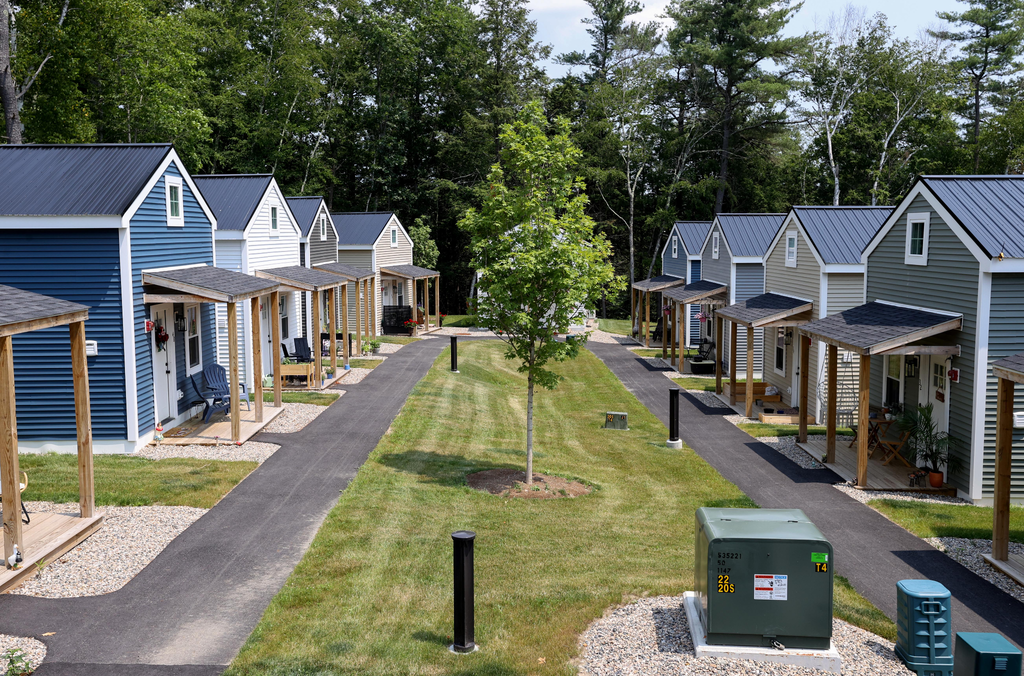
Finding an attractive tiny house community is only part of the process. You also need to make sure the property is legally approved for your intended type of housing and that its rules allow you to live there full-time.
Tiny house regulations can differ significantly between states, counties, and municipalities. Some communities operate under residential zoning, while others are approved as RV parks, campgrounds, or planned developments.
This distinction matters because a property that allows temporary recreational stays may not permit permanent residential occupancy.
Zoning and Land-Use Regulations: Can You Legally Live in a Tiny House Community?
Zoning determines how land can be used and what types of buildings or dwellings are permitted.
A tiny house community may need specific land-use approval before residents can legally occupy the homes. The requirements depend on whether the homes are built on permanent foundations, mounted on trailers, or classified as recreational vehicles.
Residential Zoning and Permitted Dwelling Types
Some communities are located on land zoned for residential development. These properties may allow small detached dwellings if they meet local building, sanitation, and occupancy requirements.
However, residential zoning does not automatically mean every tiny house is permitted.
Local authorities may distinguish between:
- Site-built tiny houses on permanent foundations.
- Factory-built or modular tiny homes.
- Tiny houses on wheels.
- Recreational vehicles used for temporary accommodation.
- Accessory dwelling units located on an existing residential property.
A community that accepts foundation-built tiny homes might not allow trailer-mounted models, even if both are marketed as tiny houses.
Ask management which dwelling classifications are approved and whether the development has the necessary permits for permanent occupancy.
Minimum Dwelling Sizes and Occupancy Requirements
Some jurisdictions have minimum dwelling-size requirements, while others allow smaller homes under specific building codes or alternative housing provisions.
Building regulations may also establish requirements for ceiling heights, emergency exits, natural light, ventilation, bathrooms, and kitchen facilities.
These requirements can affect the design and placement of homes within a community.
For example, a 180-square-foot tiny house might be acceptable under one local approval pathway but fail to qualify as a permanent dwelling under another.
The number of people allowed to occupy a home can also depend on local housing standards, bedroom arrangements, sanitation facilities, and property regulations.
Permanent Foundations vs. Tiny Houses on Wheels
The foundation type can significantly affect how a tiny house is regulated.
Foundation-built tiny homes are generally evaluated under applicable residential building requirements. They may need building permits, inspections, approved foundations, and certificates of occupancy.
Tiny houses on wheels can be treated differently depending on their construction, certification, intended use, and location. Some are classified as RVs rather than permanent residential structures.
This creates an important distinction when choosing a community. A development may accept certified park-model RVs but reject a custom-built tiny house on a trailer.
Before signing an agreement, confirm that your specific home is eligible, not simply that the community advertises itself as tiny-house-friendly.
Community-Specific Rules Every Resident Should Understand
Even when a tiny house community is legally approved, residents must follow its own rules.
These guidelines help management maintain shared facilities, protect residents’ privacy, and keep the property organized.
Common rules cover:
- Pets: Breed restrictions, leash requirements, designated pet areas, and limits on the number of animals.
- Parking: Where residents and visitors can park, whether additional vehicles are allowed, and restrictions on trailers.
- Guests: Visitor policies, overnight stays, and access to shared facilities.
- Noise: Quiet hours, outdoor gatherings, music, and construction activities.
- Exterior modifications: Fences, decks, sheds, landscaping, and home additions.
- Rentals: Whether residents can sublet their homes or offer short-term accommodation.
- Property maintenance: Responsibilities for outdoor spaces, waste disposal, and shared facilities.
These rules may seem minor before moving in, but they can strongly influence everyday comfort.
Someone who works night shifts, owns multiple pets, or frequently receives visitors may need a different type of community than someone with a quieter routine.
Documents to Review Before Signing an Agreement
Never rely entirely on a verbal promise that a community allows permanent tiny house living.
The written agreements should clearly explain your rights, responsibilities, and financial obligations.
Land Lease Agreements and Community Bylaws
If you own the tiny house but rent the lot, examine the land lease carefully.
Pay particular attention to:
- Lease length and renewal conditions.
- Monthly rent and permitted increases.
- Included utilities and additional charges.
- Maintenance responsibilities.
- Rules regarding home relocation.
- Conditions for ending the agreement.
- What happens if the property is sold or redeveloped.
Community bylaws are also important, particularly in resident-owned developments.
They may explain voting rights, shared expenses, architectural restrictions, and how disputes between residents are handled.
Utility Agreements, Insurance, and Maintenance Responsibilities
A separate utility agreement may explain how electricity, water, sewage, and internet services are billed.
Check whether utility charges are individually metered or divided among residents.
Insurance requirements deserve similar attention. Depending on the home classification, you may need coverage for the structure, personal belongings, liability, or transportation.
Clarify who is responsible for maintaining roads, drainage systems, communal buildings, landscaping, and shared infrastructure.
A community with unclear maintenance responsibilities can become difficult to manage over time.
Checking Local Planning and Building Requirements
The local planning or building department is an important place to verify a community’s legal status.
Ask whether the development has approval for the specific dwelling type and intended occupancy.
Useful government resources include the U.S. Department of Housing and Urban Development (HUD) for manufactured housing information and applicable federal housing programs.
You can also check local zoning ordinances, building departments, and planning commission records.
The safest approach is to verify the property’s approval independently rather than relying solely on a developer’s marketing materials.
Pros and Cons of Living in a Tiny House Community
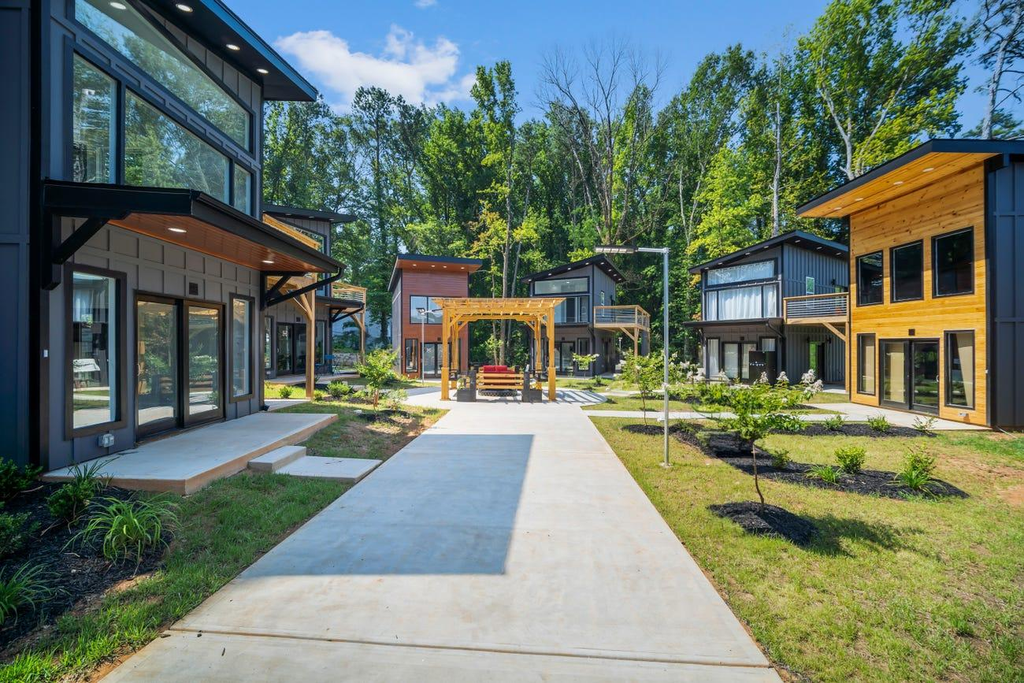
Tiny house community living can offer a comfortable alternative to traditional housing, especially for people who value simplicity, shared resources, and social connections.
However, it is not automatically the right choice for everyone.
The experience depends heavily on community management, neighborhood design, financial arrangements, and how much privacy you expect from your home.
The Biggest Advantages of Tiny House Community Living
Many people choose these communities because they combine the independence of having a private home with the convenience of shared facilities.
Stronger Social Connections and a Sense of Belonging
Living near people with similar interests can make it easier to build friendships and develop a supportive neighborhood.
Residents may share gardening projects, organize community meals, exchange practical skills, or help each other with everyday tasks.
This can be particularly appealing to people who have relocated, retired, or chosen a simpler lifestyle away from traditional residential developments.
Unlike isolated tiny house living, a community provides opportunities for interaction without requiring residents to share their private living spaces.
Shared Facilities Can Reduce Individual Expenses
Tiny homes are designed to use space efficiently, but some facilities are difficult to accommodate in a compact floor plan.
A shared laundry building, workshop, garden, or recreational area can reduce the need for additional rooms and equipment inside each home.
For example, a resident who uses a community laundry facility may not need to dedicate valuable floor space to a washer and dryer.
Shared infrastructure can also reduce individual maintenance responsibilities, provided the community manages its facilities effectively.
Less Property Maintenance and More Flexible Living
A traditional house often comes with responsibilities such as maintaining a large yard, repairing extensive exterior surfaces, and managing multiple household systems.
Tiny homes generally have smaller footprints, while professionally managed communities may take care of common landscaping, roads, and shared facilities.
This arrangement can appeal to people who want to spend less time maintaining property.
Some communities also provide flexible rental arrangements, allowing residents to experience a new location without purchasing land.
Opportunities for Sustainable and Minimalist Living
Many tiny house communities attract residents who want to consume fewer resources and reduce unnecessary possessions.
Smaller homes generally require less material to construct and can need less energy to heat or cool, depending on insulation, climate, and household behavior.
Communities may also encourage:
- Shared transportation.
- Community gardening.
- Recycling and composting.
- Water-efficient fixtures.
- Energy-efficient appliances.
- Shared tools and equipment.
These features can support a more sustainable lifestyle, although actual environmental benefits depend on construction methods, energy sources, infrastructure, and daily habits.
Potential Disadvantages You Should Consider
The advantages are attractive, but community living introduces responsibilities and limitations that may not suit every household.
Limited Privacy and Shared-Space Responsibilities
Living close to other tiny homes means neighbors may be only a few steps away.
Outdoor conversations, pets, visitors, and shared facilities can create noise or reduce privacy.
Small lots may also limit opportunities for private gardens, outdoor storage, and personal recreational spaces.
Before choosing a community, consider the distance between homes, window placement, fencing policies, and available private outdoor areas.
A well-designed layout should provide enough separation for residents to enjoy their homes comfortably.
Community Restrictions Can Limit Your Independence
Community guidelines help maintain order, but they can also restrict personal choices.
You may need approval before adding a deck, changing the exterior color, installing solar panels, or building a storage shed.
Some developments also restrict guest parking, home-based businesses, exterior decorations, and the number of pets allowed.
These rules are especially important for people who prefer customizing their homes or maintaining an independent lifestyle.
Read the community guidelines before committing rather than assuming you can make changes later.
Lot Rent Can Increase Over Time
Owning a tiny home does not eliminate housing expenses if you rent the land.
Monthly lot rent can increase, and additional community fees may be introduced for infrastructure repairs or amenity improvements.
Residents who have invested heavily in a home may find it difficult to relocate when housing costs rise.
This is one reason why lease duration, renewal provisions, and rent adjustment clauses deserve careful attention.
Limited Availability in Desirable Locations
Finding a suitable community can take time.
Some developments have waiting lists, limited lot sizes, or restrictions on the types of homes they accept.
Communities near employment centers, popular tourist destinations, and attractive natural areas may also have higher costs.
You may need to compromise between location, amenities, monthly expenses, and the type of tiny home you own.
Tiny House Community vs. Living Independently on Private Land
Both arrangements can support a simpler lifestyle, but they offer different levels of convenience, privacy, and responsibility.
| Factor | Tiny House Community | Private Land |
| Privacy | Depends on layout and lot spacing | Usually greater control |
| Social interaction | Easier access to neighbors | Depends on location |
| Utilities | Often available through shared infrastructure | Must be arranged individually |
| Maintenance | Some shared responsibilities | Mostly individual responsibility |
| Monthly expenses | May include lot rent and community fees | Property taxes, utilities, and maintenance |
| Personal freedom | Subject to community rules | Subject to local laws and property restrictions |
| Amenities | May include shared facilities | Usually self-provided |
| Relocation | Depends on lease and home type | Depends on ownership and property arrangements |
A tiny house community may be the better option for someone who values convenience and social interaction.
Private land may be more suitable for people who prioritize independence, outdoor space, and greater control over their property.
Neither option is automatically cheaper. The total cost depends on land prices, infrastructure, local regulations, maintenance, and long-term housing needs.
How to Find the Right Tiny House Community and Avoid Costly Mistakes
Finding a community that looks attractive online is relatively easy. Choosing one that meets your housing needs, financial expectations, and long-term plans requires more research.
A good location should provide more than attractive homes and landscaped surroundings. It should offer dependable infrastructure, clear legal arrangements, reasonable costs, and a management team that communicates openly with residents.
Where to Search for Tiny House Communities
Start by identifying locations where tiny house living is permitted and where established communities already operate.
Searching broadly without considering local regulations can lead to wasted time, particularly if a development does not accept your type of home.
Tiny House Directories and Community Websites
Dedicated tiny house directories can help you identify developments in different states.
Many communities maintain their own websites with information about:
- Available residential lots.
- Home rental options.
- Monthly fees.
- Amenities and shared facilities.
- Community rules.
- Application procedures.
Use these websites as a starting point rather than treating every advertised feature as guaranteed.
Contact management directly to confirm current availability, pricing, and occupancy conditions.
Tiny House Builders and Real Estate Networks
Tiny house builders sometimes work with landowners and established communities.
They may know which developments accept particular home models, especially homes with unusual dimensions or specialized utility requirements.
Local real estate agents can also help identify land-lease communities, cooperative developments, and properties designed for alternative housing.
When speaking with a builder, ask whether the home has previously been accepted by a community with similar requirements.
Online Groups and Resident Recommendations
Online tiny house groups can provide useful insights into the everyday experience of community living.
Residents may discuss management quality, maintenance issues, utility reliability, and whether advertised amenities match actual conditions.
Look for detailed experiences rather than relying on short promotional comments.
If possible, contact current or former residents directly. Their experiences may reveal practical issues that are not mentioned in marketing materials.
What to Inspect During an In-Person Visit
Photos can make almost any development look appealing. Visiting the property gives you a much better understanding of how it actually functions.
Try to visit during a normal weekday and, if possible, during a busier period when residents are using shared facilities.
Road Access, Drainage, and Utility Infrastructure
Start by examining the property’s physical condition.
Check whether roads are wide enough for your home to be delivered and whether turning areas can accommodate towing vehicles.
Pay attention to:
- Road surfaces and drainage.
- Flooding or standing water.
- Electricity connections and utility equipment.
- Water pressure and wastewater facilities.
- Street lighting and security.
- Internet and mobile network coverage.
Drainage is particularly important for tiny homes because poor site conditions can affect foundations, skirting, outdoor storage, and access during heavy rainfall.
If you are bringing a tiny house on wheels, make sure the route and designated lot can accommodate its dimensions.
Noise, Privacy, Security, and Maintenance
Walk around the community to evaluate the distance between homes.
Look for adequate space between windows, private outdoor areas, and landscaping that provides natural separation.
Notice whether common facilities are maintained and whether trash collection areas are clean and organized.
Pay attention to noise from roads, recreational areas, neighboring properties, and community activities.
A peaceful appearance during a quiet showing does not necessarily reflect everyday conditions.
Distance to Essential Services
A remote location may offer beautiful scenery and a quieter lifestyle, but it can become inconvenient if essential services are far away.
Consider the distance to:
- Grocery stores and pharmacies.
- Hospitals and medical clinics.
- Schools and childcare facilities.
- Employment centers.
- Public transportation.
- Restaurants and other everyday services.
Retirees may prioritize healthcare access, while remote workers may focus more on internet reliability and proximity to airports or coworking spaces.
Choose a location based on your actual routine rather than its appearance alone.
Questions to Ask Management and Current Residents
Speaking directly with management can help clarify the community’s financial and operational arrangements.
However, current residents can often provide a more realistic picture of everyday living.
Ask management questions such as:
- What is the complete monthly cost, including all additional fees?
- Are water, electricity, sewage, and internet included?
- Is permanent residential occupancy legally permitted?
- Are there restrictions on tiny house dimensions or construction types?
- Can residents install solar panels, decks, or storage sheds?
- How frequently can lot rent increase?
- What happens if a resident wants to sell or relocate their home?
- Are pets and long-term guests permitted?
You should also ask residents about their experience.
Useful questions include whether management responds quickly to maintenance requests, whether shared facilities are reliable, and whether the community rules are consistently enforced.
Their answers can help you distinguish between a well-managed neighborhood and a development that simply looks attractive in promotional photographs.
Common Mistakes to Avoid Before Signing an Agreement
A tiny house community can be a long-term home, so rushing into an agreement can create expensive problems.
Some of the most common mistakes include:
- Choosing based on appearance alone: Beautiful homes and landscaping do not guarantee good management, reliable utilities, or legal approval.
- Ignoring the full monthly cost: Comparing lot rent without including utilities, insurance, maintenance, and community fees can lead to an unrealistic budget.
- Assuming every tiny house is accepted: Communities may have restrictions on trailer-mounted homes, foundations, dimensions, and certifications.
- Skipping the lease review: Unclear renewal terms or strict relocation conditions can create problems later.
- Failing to visit the property: Online photos may not reveal drainage issues, noise, limited parking, or poorly maintained facilities.
- Overlooking future needs: A community that works for a single person may not be suitable after retirement, starting a family, or changing employment arrangements.
A careful evaluation before moving can save considerable time, money, and stress.
A Simple Checklist for Choosing the Right Tiny House Community
Before making a final decision, compare your preferred communities using a consistent set of criteria.
| Evaluation factor | What to check |
| Legal approval | Permitted home types and permanent occupancy |
| Monthly cost | Lot rent, utilities, and additional fees |
| Infrastructure | Water, electricity, sewage, and internet |
| Privacy | Lot spacing, outdoor areas, and noise |
| Amenities | Laundry, gardens, parking, and recreation |
| Management | Maintenance response and communication |
| Lease terms | Renewal, rent increases, and termination |
| Location | Access to healthcare, shopping, and work |
| Future flexibility | Home resale and relocation conditions |
The right community should fit your lifestyle today while giving you enough flexibility for future changes.
A lower monthly price may be attractive, but reliable infrastructure, clear agreements, and responsible management can be much more valuable over several years.
Frequently Asked Questions About Tiny House Communities
What Is a Tiny House Community?
A tiny house community is a residential development containing multiple small homes within a shared property or planned neighborhood. Residents typically have private living spaces while sharing amenities such as gardens, laundry facilities, parking, and recreational areas.
How Much Does It Cost to Live in a Tiny House Community?
Costs vary depending on location, amenities, and rental arrangements. Monthly lot rent might fall within an illustrative range of 300–900, with additional expenses for utilities, internet, insurance, and maintenance. Fully furnished tiny house rentals may cost considerably more.
Can You Permanently Live in a Tiny House Community?
Yes, some communities allow permanent residential occupancy. However, others are approved only for temporary stays or recreational vehicle use. Always verify local zoning, building approvals, and occupancy permissions before moving.
Are Tiny House Communities Legal in the United States?
Tiny house communities are legal in many parts of the United States, but individual developments must comply with applicable local land-use regulations, building codes, sanitation requirements, and occupancy rules. The legality of a particular home depends on its classification and the property’s approval.
Can You Rent a Tiny Home Instead of Buying One?
Yes. Many tiny house communities offer fully furnished or unfurnished homes for monthly or shorter-term rentals. Renting is a practical way to experience compact living before investing in a property.
Do Tiny House Communities Allow Pets?
Many communities allow pets, but their policies vary. Some restrict the number or size of animals, require leashes, or charge additional pet fees. Check the written pet policy before signing a rental or land lease agreement.
What Is the Difference Between a Tiny House Community and an RV Park?
A tiny house community is generally designed around small-home living and may provide residential lots, shared amenities, and longer-term housing arrangements. An RV park is typically intended for recreational vehicles and temporary accommodation, although some parks allow extended stays. Legal occupancy rules vary by location.
Can You Bring Your Own Tiny House Into an Existing Community?
Some communities accept privately owned tiny houses, while others only permit homes purchased through approved builders or models. Restrictions may cover dimensions, weight, foundations, certifications, utility connections, and exterior appearance. Confirm acceptance before purchasing or transporting your home.
Find a Tiny House Community That Fits Your Lifestyle
Living in a tiny house community can offer an appealing balance between private homeownership and shared neighborhood living. Residents can enjoy smaller homes, common facilities, social connections, and potentially more manageable housing expenses.
The experience, however, depends on choosing the right development. Monthly costs, land agreements, zoning approval, utility access, community rules, and management quality all deserve careful consideration.
Whether you want to rent a furnished tiny home, bring your own house into an established village, or join a resident-owned development, take time to compare your options before making a commitment.
Start exploring tiny house communities that match your budget, preferred location, and lifestyle. Visit potential properties, speak with current residents, and review the legal and financial arrangements before choosing where to make your tiny home your next place to live.

6 thoughts on “Tiny House Community: Costs, Rules, Benefits & Living Tips”