
Tiny house living for retirees is quickly becoming one of the most practical and appealing ways to simplify life after decades of work. Lower costs, less maintenance, and the freedom to live where you want are powerful reasons many retirees are trading large homes for smaller, smarter spaces.
This guide breaks down exactly what you need to know—from whether this lifestyle fits your retirement goals to the real pros, cons, and challenges you should expect. If you’re considering downsizing or exploring tiny house communities, you’ll find clear, experience-based insights to help you make a confident decision.
In This Article
Why Tiny House Living for Retirees Is Gaining Momentum
Traditional retirement used to revolve around paid-off suburban homes or downsized condos. That’s changing fast. Rising housing costs, property taxes, and maintenance demands are pushing many retirees to rethink what “comfortable living” really means.
Tiny house living offers a different path—one focused on freedom, efficiency, and intentional living.
Several key trends are driving this shift:
- Lower cost of living: Many retirees live on fixed incomes. Tiny homes reduce or eliminate mortgages, utility bills, and upkeep expenses.
- Minimal maintenance: No large yard, fewer repairs, and less cleaning means more time to enjoy retirement.
- Lifestyle flexibility: Some retirees choose mobile tiny homes, making travel and seasonal living possible.
- Debt-free retirement: Selling a traditional home can often fully fund a tiny house and leave extra savings.
Beyond finances, there’s also a mindset shift. Many retirees are realizing they don’t need 2,000+ square feet to live comfortably. A well-designed 200–400 sq ft home can feel surprisingly spacious when every inch is intentional.
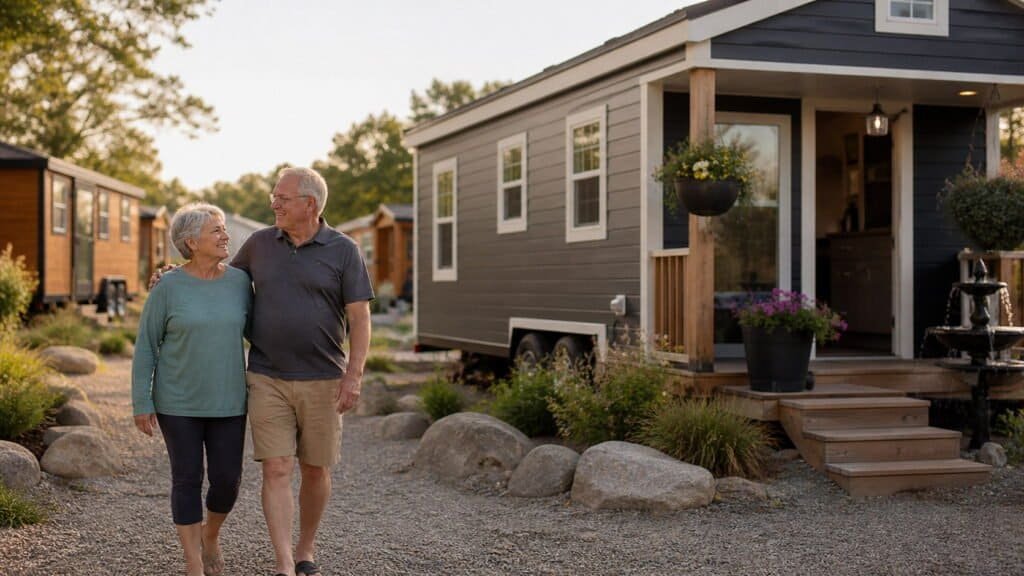
Is Tiny House Living Right for Your Retirement Lifestyle?
Tiny house living for retirees isn’t one-size-fits-all. It works beautifully for some—and can feel restrictive for others. The difference comes down to lifestyle preferences, health needs, and long-term planning.
Before making the move, take an honest look at these factors.
Lifestyle Fit: Freedom vs. Comfort Zone
Tiny living often means letting go of excess space and belongings. For retirees who enjoy simplicity, this feels liberating. For others, it can feel limiting.
Ask yourself:
- Do you enjoy minimalist living or prefer having extra space?
- Are you comfortable living in a compact environment full-time?
- Do you value mobility or staying rooted in one place?
Health and Accessibility Considerations
This is one of the most overlooked aspects.
Many tiny homes include loft bedrooms or narrow layouts that can become difficult over time. Planning ahead is essential.
Look for or design features like:
- Single-level floor plans (no ladders or stairs)
- Walk-in showers instead of tubs
- Wider doorways for mobility support
- Space for future modifications if needed
Social Life and Community Needs
Retirement isn’t just about where you live—it’s about how you live.
Tiny house communities can offer built-in social interaction, shared amenities, and a sense of belonging. On the other hand, rural or off-grid setups may feel isolating if you’re used to an active social life.
Think about:
- Proximity to friends and family
- Access to community activities
- Whether you prefer privacy or connection
Location and Climate Matter More Than You Think
A tiny house in a mild climate feels very different from one in extreme heat or cold. Heating, cooling, and insulation become more noticeable in a small space.
Smart retirees prioritize:
- Mild, stable climates
- Access to healthcare facilities
- Nearby grocery stores and essential services
Pros and Cons of Tiny House Living for Retirees
Tiny house living for retirees can be incredibly rewarding—but it’s not without trade-offs. Understanding both sides helps you avoid costly mistakes and unrealistic expectations.
The Biggest Benefits
Financial Freedom
- Lower upfront cost compared to traditional homes
- Reduced monthly expenses (utilities, taxes, maintenance)
- Opportunity to live mortgage-free
Simplified Daily Life
- Less cleaning and upkeep
- Easier organization and less clutter
- More time for hobbies, travel, or relaxation
Flexibility and Mobility
- Ability to relocate easily (especially with tiny homes on wheels)
- Option to live closer to family or explore new regions
- Seasonal living becomes more practical
The Real Challenges
Limited Space
- Storage is minimal and requires discipline
- Hosting guests can be difficult
- Privacy may feel reduced for couples
Zoning and Legal Restrictions
- Not all areas allow full-time tiny house living
- Parking and land use rules can be complicated
- Regulations vary widely by state and county
For accurate and up-to-date zoning information, check local regulations or review resources like the International Code Council’s guidelines: https://www.iccsafe.org
Healthcare and Long-Term Planning
- Proximity to hospitals becomes more important with age
- Some layouts may not support aging in place
- Transitioning out of a tiny home later can be challenging
Comfort Trade-Offs
- Smaller kitchens and bathrooms
- Limited storage for seasonal or medical items
- Adjusting to compact living takes time
Bottom line: Tiny house living works best when expectations match reality. Retirees who plan carefully—especially around health, location, and legal factors—tend to have the most success.
Downsizing Tips: How to Transition Into a Tiny House Smoothly
Moving into a tiny home isn’t just a physical shift—it’s a mental one. Many retirees underestimate how emotional and time-consuming downsizing can be. Done right, it feels freeing. Done too fast, it can feel overwhelming.
Start Early and Go Step-by-Step
Rushing the process is one of the biggest mistakes.
A simple downsizing approach:
- Begin 3–6 months before your move
- Tackle one room at a time
- Sort items into: keep, donate, sell, discard
- Measure your future tiny home storage before deciding what stays
Pro tip: If it doesn’t have a clear place in your tiny home, it probably doesn’t belong there.
Focus on Function, Not Just Sentiment
Letting go of items tied to memories can be difficult. The key is separating memories from physical objects.
- Keep a small, meaningful collection instead of everything
- Digitize photos and documents
- Pass heirlooms to family members now, rather than storing them
Less clutter = less stress in a small space.
Use Smart Storage for What Matters Most
Tiny homes reward creativity.
Helpful storage strategies:
- Multi-functional furniture (beds with drawers, fold-out tables)
- Vertical storage (shelves, wall hooks)
- Hidden compartments (under stairs, seating benches)
Consider renting a small external storage unit for seasonal or rarely used items—but avoid relying on it long-term.
Prepare Emotionally for the Transition
Many retirees are surprised by the emotional side of downsizing.
- Expect a mix of excitement and hesitation
- Give yourself time to adjust to a smaller environment
- Focus on what you’re gaining: freedom, simplicity, and flexibility
The goal isn’t just to live smaller—it’s to live better.
Smart Design Features for Aging Comfort in Tiny Homes
Tiny house living for retirees works best when the home is designed with long-term comfort in mind. A beautiful tiny home means little if it becomes difficult to navigate after a few years.
Skip the Loft: Think Single-Level Living
Lofts are common in tiny homes—but they’re not ideal for aging.
Better alternatives:
- Ground-floor bedrooms
- Murphy beds or convertible sleeping areas
- Studio-style layouts with clear walking paths
Safety and ease should always outweigh aesthetics.
Prioritize Bathroom Safety and Accessibility
Bathrooms are one of the most important areas to get right.
Must-have features:
- Walk-in showers (no step or low threshold)
- Grab bars for support
- Non-slip flooring
- Enough space to move comfortably
A slightly larger bathroom can make a huge difference in long-term usability.
Wider Pathways and Easy Entry
Standard tiny homes can feel tight. Small adjustments improve comfort significantly.
- Wider doorways (at least 32 inches if possible)
- Minimal steps or a gentle ramp at the entrance
- Lever-style door handles instead of knobs
These features don’t just help later—they improve daily comfort right now.
Climate Control and Insulation Matter More in Small Spaces
Temperature changes are more noticeable in a tiny home.
Invest in:
- High-quality insulation
- Energy-efficient heating and cooling systems
- Proper ventilation to prevent moisture buildup
Comfortable indoor temperatures are essential, especially for retirees sensitive to heat or cold.
Furniture That Works Harder
Every piece of furniture should serve more than one purpose.
- Foldable dining tables
- Seating with hidden storage
- Adjustable counters or workspaces
Well-designed interiors make tiny living feel spacious—not restrictive.
Legal and Zoning Considerations Retirees Must Understand
Tiny house living for retirees can quickly become stressful if legal details are ignored. Regulations vary widely, and what works in one area may not be allowed in another.
Where Tiny Homes Are Allowed
Tiny homes fall into different categories, which affects where you can legally live:
- Tiny homes on wheels (THOWs): Often classified as RVs
- Foundation-based tiny homes: Treated more like traditional houses
Some areas allow full-time living in tiny homes, while others restrict them to temporary or recreational use.
Always check local zoning laws before buying or building.
A reliable place to start is the International Code Council’s guidelines for tiny homes:
https://www.iccsafe.org
Understanding Local Zoning and Land Use Rules
Zoning determines:
- Minimum square footage requirements
- Whether tiny homes are allowed as primary residences
- Where you can park or place your home
Common restrictions include:
- Limits on living full-time in RV-style tiny homes
- Requirements for utility hookups
- Rules about accessory dwelling units (ADUs)
Retirement-Friendly States and Areas
Some states are more open to tiny house living than others.
- Texas – Flexible zoning in certain areas and tiny-friendly towns
- Florida – Popular for retirees, with several established communities
- California – Increasing acceptance through ADU laws (though costs are higher)
Smaller towns and rural counties often have fewer restrictions than major cities.
How to Avoid Costly Legal Mistakes
- Verify zoning before purchasing land
- Get everything in writing from local authorities
- Work with builders familiar with local codes
- Avoid assuming RV parks allow permanent residency
One wrong assumption can lead to fines, relocation, or forced removal.
Healthcare, Safety & Long-Term Planning in Tiny Living
Tiny house living for retirees works best when it supports not just your current lifestyle—but your future needs as well. Planning ahead can make the difference between a comfortable long-term home and a short-term solution.
Stay Close to Healthcare Services
Access to healthcare becomes increasingly important with age. A beautiful, remote location may lose its appeal if medical care is far away.
Prioritize locations that offer:
- Hospitals or urgent care within a reasonable drive
- Nearby pharmacies and specialists
- Reliable emergency services
Many retirees choose tiny house communities specifically because they’re located near established towns with healthcare infrastructure.
Emergency Access and Safety Features
Tiny homes need to be just as safe—if not safer—than traditional houses.
Key safety considerations:
- Easy entry and exit points (especially for emergency responders)
- Smoke detectors, fire extinguishers, and carbon monoxide alarms
- Well-lit pathways and outdoor areas
- Non-slip flooring throughout the home
Small spaces can be safer when designed thoughtfully, but they require intentional planning.
Plan for Aging in Place
A tiny home that works today may not work 10–15 years from now unless it’s designed for adaptability.
Think long-term:
- Can your layout accommodate mobility aids if needed?
- Is there space for a caregiver or visiting family member?
- Are essential areas (bedroom, bathroom, kitchen) easily accessible?
Some retirees choose slightly larger tiny homes (300–400 sq ft) to allow more flexibility over time.
Know When to Reevaluate
Tiny living doesn’t have to be permanent.
There may come a time when:
- Medical needs increase
- Mobility becomes more limited
- Daily tasks require more space or assistance
Having a backup plan—such as transitioning to assisted living or moving closer to family—keeps you in control of your future.
Off-Grid vs. Community Living: What Suits Retirees Better?
Tiny house living often brings up the idea of off-grid freedom. While that lifestyle can be appealing, it’s not always the best fit for retirees.
The Appeal of Off-Grid Living
Off-grid setups offer independence and lower utility costs.
Benefits include:
- Reduced monthly expenses
- Greater privacy and solitude
- Sustainable, eco-friendly lifestyle
However, off-grid living also comes with responsibilities that can become challenging over time.
The Reality: More Work Than Expected
Maintaining solar systems, water supplies, and waste systems requires ongoing effort.
Challenges retirees often face:
- Managing power usage and system maintenance
- Handling water storage and filtration
- Dealing with unexpected repairs without immediate help
This lifestyle tends to suit retirees who are highly independent and physically capable.
Why Many Retirees Prefer Communities
Tiny house communities offer a more balanced approach.
Advantages:
- Reliable utilities and infrastructure
- Social interaction and shared amenities
- Easier access to services and healthcare
- Less day-to-day maintenance responsibility
A Hybrid Option: Semi Off-Grid Living
Some communities offer eco-friendly setups with partial independence.
- Solar-assisted power with grid backup
- Shared water systems
- Sustainable design without full self-management
For most retirees, community living provides the best mix of freedom and convenience.
Common Mistakes Retirees Make When Going Tiny
Tiny house living for retirees can be incredibly rewarding—but avoidable mistakes can turn the experience into frustration.
Underestimating Space Limitations
Many people assume they can “figure it out later.”
- Overpacking leads to clutter and stress
- Lack of storage quickly becomes frustrating
- Daily routines feel cramped without proper planning
Solution: Design your space around your actual lifestyle—not an idealized version.
Ignoring Zoning and Legal Restrictions
Skipping research can lead to serious consequences.
- Being forced to relocate
- Fines or legal issues
- Inability to live full-time in your home
Solution: Always confirm local regulations before making any financial commitment.
Choosing the Wrong Location
A cheap or scenic location isn’t always practical.
- Long distances to healthcare or stores
- Isolation from family and community
- Limited emergency services
Solution: Balance affordability with accessibility.
Overspending on the Build
Some retirees invest heavily in features they rarely use.
- Luxury upgrades that don’t improve daily life
- Over-customization that reduces flexibility
- Budget overruns that affect retirement savings
Solution: Focus on comfort, safety, and functionality first.
FAQs About Tiny House Living for Retirees
Can retirees live full-time in a tiny house legally?
Yes, but it depends on local zoning laws. Some areas allow full-time tiny house living, while others restrict it to RV parks or designated communities.
What is the average monthly cost of tiny house living for retirees?
Most retirees spend between $500 and $1,200 per month, depending on location, land rent, and utilities.
Are tiny homes safe and comfortable for seniors?
They can be very safe when designed properly, with features like single-level layouts, non-slip flooring, and accessible bathrooms.
Is it better to rent or buy a tiny house in retirement?
Renting offers flexibility and lower upfront costs, while buying provides long-term savings and stability. The best choice depends on your financial situation and lifestyle goals.
How do retirees handle healthcare while living in a tiny house?
Most choose locations near hospitals and clinics. Access to healthcare is a key factor when selecting a community or placement location.
Tiny house living for retirees isn’t just about downsizing—it’s about designing a lifestyle that supports freedom, affordability, and comfort in your later years. With the right planning, it can become one of the most rewarding transitions you make.
If you’re seriously considering the move, start by exploring retiree-friendly tiny house communities, reviewing local zoning laws, and mapping out your downsizing plan. The sooner you prepare, the smoother your transition into tiny living will be.
